
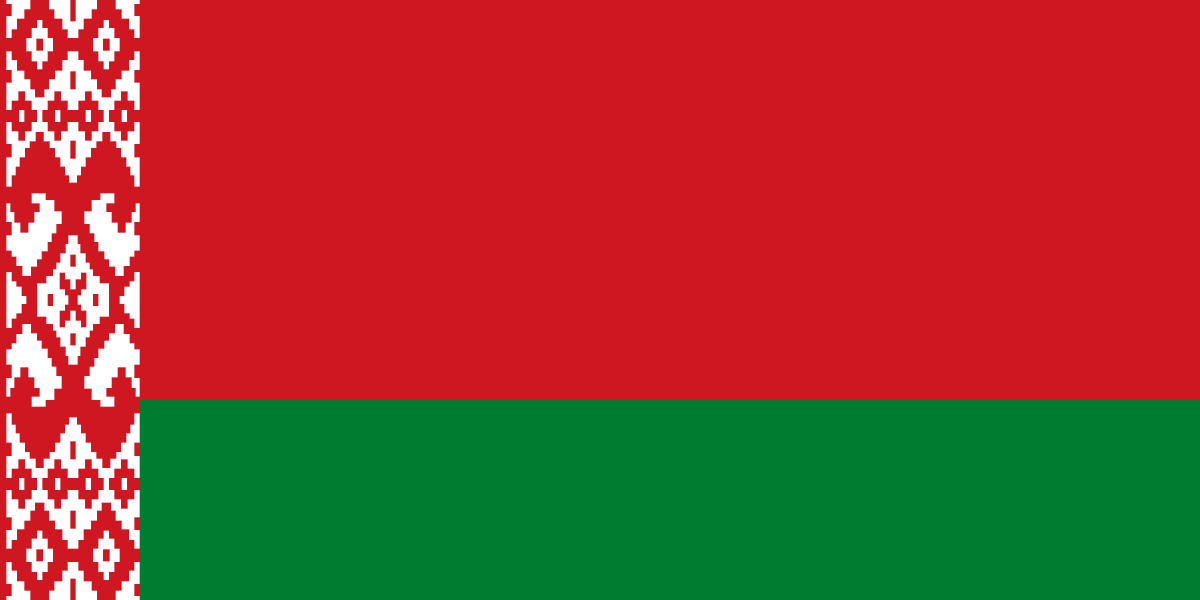
Belarusの治安
独立した4つの指数から算出した評価に加え、詐欺の手口、法律、そして何かあったときの対処
指数では測れない要因により評価を引き下げました:arbitrary detention of foreigners
指数の確認日:10.08.2026
世界の指数での順位
出発前に控えておくもの
全体の状況
The general picture: street crime is minimal and walking at any hour feels safe. Stations and the metro have a visible police presence at all times, which is reassuring or not depending on your temperament.
Photography: do not photograph government buildings, military sites, border infrastructure or anyone in uniform. This is taken seriously and can lead to your phone being examined and a long conversation.
Politics: avoid discussing politics with strangers and stay away from any gathering or demonstration. Comments made online can also attract attention, so keep your social media quiet while you are in the country.
Advisories: read your own government's travel advice carefully before booking, since several governments currently advise against travel to Belarus and consular assistance may be limited.
Documents: carry your passport or a good photograph of it. Street checks are uncommon, but foreign nationals are legally required to be able to identify themselves.
Roads: pedestrians are fined for crossing away from a crossing just as readily as drivers are for speeding. Wait for the green man even on an empty street.
In the forest: stay on marked trails in the reserves, and keep your distance from bison, which are large, fast and not remotely tame.
観光客はどう騙されるか
Belarus has very low street crime: Minsk is clean, calm and well lit, and safe at night. Organised deception of tourists barely exists. The main risks here are not criminal but legal and political.
Taxis. Yandex Go and local firms operate at low prices. Private drivers at the station and airport charge more.
Currency exchange. Only at banks and official offices — street exchange is illegal. Bank rates are fine and there is little to cheat on.
Restaurants and shops. Prices are low and deception is rare.
Car hire. Standard claims on return.
ATMs. A distinct practical difficulty: cards issued by EU and US banks do not work in Belarus because of sanctions. Russian Mir cards are accepted. Plan for this in advance or you will be left without money.
罰金や逮捕につながる行為
Politics is the main subject, and a serious one. Belarus applies provisions on "extremism", "discrediting the state" and participation in unsanctioned events. Many Telegram channels and media outlets are designated extremist, and subscribing, resharing or even a saved conversation can be grounds for detention. Foreigners have been detained and convicted under these provisions. The practical conclusion: check what is on your phone before travelling, and do not discuss politics publicly or in messages.
Phone checks. Your phone's contents may be examined at the border and on detention. This is lawful practice.
Photography. Military installations, security ministry buildings and border zones are off limits. Filming any street action is extremely risky.
Symbols. The white-red-white flag and associated symbols are designated extremist. Even a souvenir bearing them will create a problem.
Registration. Foreigners must register their place of stay. Hotels do this; in private accommodation you must go to the citizenship and migration department.
The Ukrainian border is closed, and a special regime applies at the EU frontiers.
Drugs. Among the harshest laws in the region: long sentences even for small quantities.
健康:予防接種、薬、医療
Vaccinations. None mandatory.
Water. Tap water in Minsk and the large cities is drinkable, though many people filter it.
Ticks. Belarus is endemic for tick-borne encephalitis and Lyme disease, with a season from April to October. Forests begin immediately outside the cities and the risk is real. For hiking, the vaccine is worth discussing.
Healthcare. The public system works and is decent by post-Soviet standards, with modern equipment at the republican centres. Treatment for foreigners is chargeable but inexpensive by world standards. Medical insurance is compulsory on entry — it is checked at the border and sold on the spot if you lack it.
Winter. Frosts to −25°C and ice underfoot. Falls are the main injury.
The Chernobyl legacy. The south-east of Homel region partly falls within the exclusion and contamination zone. Officially open areas are safe, but entering closed zones without authorisation is prohibited.
Emergency numbers: 102 police, 103 ambulance, 101 fire, 112 unified.
警察:どう対応するか
Street crime in Belarus is low and there is a heavy police presence. For an ordinary tourist that means a high level of everyday safety.
But the nature of the risk here is different. The main danger to a foreigner comes not from criminals but from enforcement: detention over phone contents, social media posts, or accidentally appearing in footage of a gathering. Judicial protection in such cases is limited.
Document checks. Police may stop and check you. Carry your passport.
Reporting theft. Reports are taken and certificates for insurers issued. The process runs in Russian without difficulty.
Traffic police. Cameras are numerous and fines arrive automatically. Unofficial payment has largely gone and the traffic police operate formally.
Consular assistance. A number of countries have reduced their presence in Minsk, and their capacity to help a detained citizen is limited.
What actually matters. Walking around Minsk at night is safer than in most European capitals. The danger lies elsewhere — in what is on your phone and what you say out loud.
あわせて確認したいこと
更新日
評価は公開されている国際指数と各国外務省の渡航情報に基づいており、一次情報へのリンクは上のカードにあります。状況は年次報告より速く変わります。出発前に最新の注意喚起をご確認ください。