
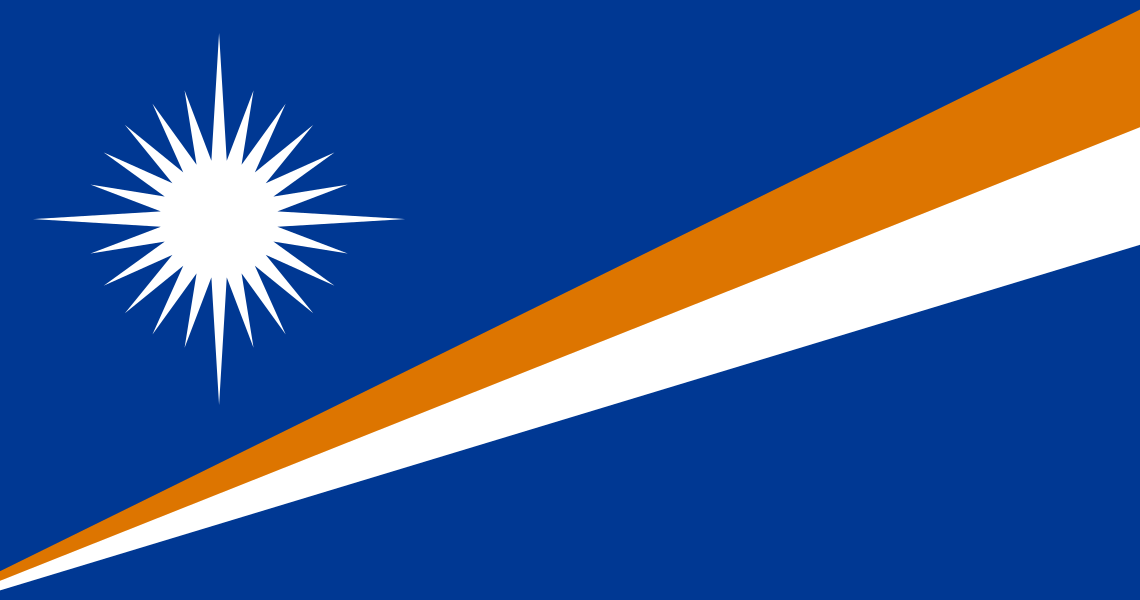
Marshall Islandsの治安
独立した4つの指数から算出した評価に加え、詐欺の手口、法律、そして何かあったときの対処
下記の指数から算出した評価です
指数の確認日:10.08.2026
世界の指数での順位
出発前に控えておくもの
全体の状況
Crime: Crime levels are low, though petty theft happens in the busier parts of Majuro. Do not leave bags unattended on the beach and keep hotel windows shut when you are out.
Sun: Equatorial sun is aggressive even under heavy cloud. Use factor fifty and always wear a hat, because heatstroke here arrives quickly and without much warning.
Reef life: When snorkelling, watch for sea urchins and fire coral. A pair of reef shoes will spare your feet some genuinely painful cuts.
Radiation: Background levels on Bikini and Enewetak are within safe limits for visitors, but local produce there is off the menu. Lagoon water is safe for long swims and diving.
Health: Medical facilities are limited across the country, so your travel policy must explicitly cover an air transfer to a hospital abroad. Check that wording before you buy, and carry any regular medication with you. It is also worth reading your own government's travel advisory before you go.
Weather: Storm season can cut transport links without warning. Always keep spare cash and spare days in hand in case you end up stuck on a distant atoll.
観光客はどう騙されるか
The Marshall Islands is twenty-nine atolls in the middle of the Pacific, among the world's most remote countries. Tourists are very few.
Majuro. The capital sits on a narrow strip of atoll. Street crime is low, though petty theft and drunken groups at night occur. Unlit stretches are best avoided.
Taxis. Shared taxis run along the atoll's single road at a low fixed fare, stopping on request.
Cash. The currency is the US dollar. Cards are accepted in a handful of places and ATMs are very few. Bring cash.
Prices. Everything is imported, so costs are high for modest quality.
Kwajalein. The atoll with the American military base is closed without permission. Neighbouring Ebeye is overcrowded and poor.
Bikini. Diving the sunken ships of the nuclear tests is arranged occasionally and costs a great deal. The logistics are complex.
罰金や逮捕につながる行為
The nuclear legacy. Bikini and Rongelap were affected by nuclear testing. Visits are possible, but permanent resettlement has not been restored and eating local produce on those atolls is not advised. Diving the wrecks is considered safe when the operator's rules are followed.
Kwajalein. A US military installation. Entry without permission is prohibited, as is photography.
Land and communities. The atolls belong to communities, and visiting outer islands requires permission and usually a small payment.
Drones. Permission is required; prohibited over military sites.
Marine life. Turtles and sharks are protected: the Marshall Islands created one of the world's largest shark sanctuaries. Shark fishing is prohibited entirely.
Drugs. The law is strict.
Dress. Society is conservative, and covering shoulders and knees is appropriate for women away from resort beaches.
健康:予防接種、薬、医療
Healthcare is the main risk. The hospital in Majuro is basic and the outer atolls have none. Anything serious means evacuation to Hawaii or Guam, and flights are few. Insurance with air evacuation is essential.
There is no hyperbaric chamber. Critical for divers: decompression sickness would mean many hours of evacuation. Diving must be a named item on your insurance.
Vaccinations. Hepatitis A and B, typhoid and tetanus.
Dengue. Outbreaks occur.
Water. Rainwater from cisterns and desalinated supply. Drink bottled, and note that water is scarce in dry periods.
Ciguatera. Reef fish poisoning is a real risk. Follow local choices.
Diabetes and diet. Low-quality imported food is a local problem that also shapes restaurant options. Fresh vegetables are scarce.
Climate and sea level. The atolls rise two metres above the ocean. Storm surges flood parts of Majuro. Typhoons are rare but occur.
警察:どう対応するか
The Marshall Islands is a calm country with low crime against foreigners.
Police. Few in number; English is official alongside Marshallese.
Reporting theft. Reports are taken; cases are rare.
Majuro at night. Alcohol is the main cause of incidents. Drunken groups outside bars can be noisy, but aggression toward foreigners is uncommon.
Communities. On the outer atolls the chiefs (iroij) play the real role. Visits are arranged through them.
What actually matters. In the Marshall Islands the danger comes from remoteness, the absence of healthcare and the ocean. This is a destination for divers and those interested in nuclear testing history, and logistics is the trip's main difficulty.
Emergency numbers: 625-3233 for Majuro police, 625-4144 for the hospital.
あわせて確認したいこと
更新日
評価は公開されている国際指数と各国外務省の渡航情報に基づいており、一次情報へのリンクは上のカードにあります。状況は年次報告より速く変わります。出発前に最新の注意喚起をご確認ください。