
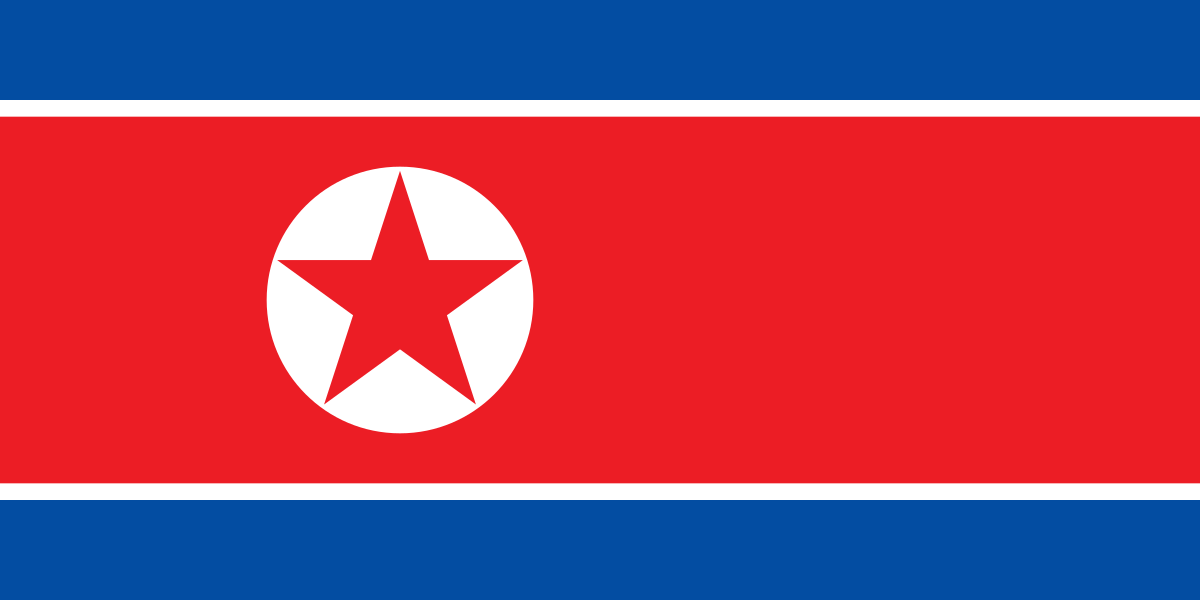
North Koreaの治安
独立した4つの指数から算出した評価に加え、詐欺の手口、法律、そして何かあったときの対処
指数では測れない要因により評価を引き下げました:independent travel is not permitted, arbitrary detention of foreigners
指数の確認日:10.08.2026
世界の指数での順位
出発前に控えておくもの
全体の状況
The picture: Street crime in the cities is essentially nil. You can feel secure while you are at approved locations on your itinerary in the company of your hosts.
The real risk: The genuine danger lies in breaking local law. Disrespect towards state symbols or the leadership is punished extremely harshly, up to immediate detention.
Guides: Your minders are the guarantors of your safety in an unfamiliar environment. Listen to their advice and never attempt to leave the hotel grounds on your own once the day's programme has finished.
Photography: Avoid photographing soldiers, checkpoints and anything strategic. Having images deleted at the border is the mildest consequence that can follow.
Medical care: Standards may not match what you are used to. Bring a generous supply of your own medication for every eventuality, since pharmacies in the familiar sense are scarce.
Politics: Discussing the political system or raising pointed questions is deeply unwise. Stay neutral and friendly in every conversation with locals and staff, and read your own government's travel advisory before committing to a trip.
Small things: A minor prank or an attempt to take a souvenir from a restricted area can lead to a prison sentence. Never touch state propaganda material or the posters displayed in hotels.
観光客はどう騙されるか
North Korea is the world's most closed country, and a trip there works fundamentally differently from anywhere else. Fraud in the usual sense does not exist, because independent movement does not either.
How entry works. Only through an accredited operator, only in a group, only on an approved itinerary, and accompanied by two guides who do not leave the group. Deviating from the programme is not possible. The country has periodically closed to tourists entirely, and access status should be checked immediately before travelling.
Money. International cards do not work. Cash euros, yuan or dollars are the only option. There is essentially nowhere for a tourist to spend won; all trade with foreigners is in hard currency.
Shops for foreigners. Prices are set and there is no haggling. Souvenirs, stamps and posters are the only purchases.
Guides. They are minders, interpreters and supervision at once. Tipping at the end of a tour is established practice.
The main thing to grasp: you are not travelling through the country, you are being shown it.
罰金や逮捕につながる行為
Legal risks for a foreigner here are incomparable with an ordinary country. Acts that would be minor anywhere else are treated as grave crimes against the state. Foreigners have been sentenced to years of hard labour for attempting to take a souvenir poster, for religious literature, and for careless remarks.
Images of the leaders. Portraits and statues of Kim Il Sung and Kim Jong Il are sacred objects. You may not crop them in a photograph, fold a newspaper across a portrait, point at them, or turn your back when photographing statues. Newspapers with portraits must not be crumpled or thrown away. This is the commonest source of conflict.
Photography. Only with your guide's permission. Do not photograph soldiers, construction sites, poverty, the countryside from a train window, or anything your guide considers unsuitable. Memory cards are inspected on departure and images deleted.
Religion. Importing religious literature and any missionary activity are grave offences.
Contact with locals. Conversations with ordinary residents outside the programme are unacceptable and create problems above all for them.
Communications. There is essentially no internet for tourists, and your phone may be inspected at the border. Satellite devices and GPS trackers are prohibited.
健康:予防接種、薬、医療
Healthcare is the trip's key risk. Standards in the country are low, and a foreigner's access is limited to a few facilities in Pyongyang. Equipment, medicines and specialists are short. Any serious problem means evacuation.
Evacuation. Extremely difficult: air links are limited to a handful of flights and removal is usually arranged via Beijing. This takes days rather than hours. Your insurance must expressly cover the DPRK — most policies exclude it.
Medicines. Bring everything with a surplus, a prescription and a translation. Buying locally is impossible.
Vaccinations. None mandatory, but a current set (hepatitis A, typhoid, tetanus) is sensible.
Water. Bottled only.
Food. Arranged at tourist hotels, but choice is limited. Anyone with allergies or dietary requirements must tell the operator in advance — there will be no options on the ground.
Climate. Continental: cold winters, hot humid summers, and a summer rainy season.
警察:どう対応するか
Street crime against foreigners does not exist in the DPRK: you are under constant escort, and any attack on a tourist would be a grave incident for the minders themselves.
But the risk here is of a different kind. The danger to a foreigner comes from the state rather than from criminals. Detention for breaching rules that are not always obvious to you is the main scenario to fear.
Consular assistance. Most countries have no embassy in Pyongyang. The Swedish embassy represents the interests of citizens of several states, but access to detainees is not always granted and not always promptly.
A note on US citizens. The State Department prohibits travel to the DPRK on American passports without special validation — a rare case of an outright ban.
What actually matters. The rules for a DPRK trip are simple and few: do not leave the group, photograph only with permission, do not touch politics or the leaders, do not attempt contact with locals, and take out nothing unauthorised. Those who follow them come back without incident. Those who do not, sometimes do not.
あわせて確認したいこと
更新日
評価は公開されている国際指数と各国外務省の渡航情報に基づいており、一次情報へのリンクは上のカードにあります。状況は年次報告より速く変わります。出発前に最新の注意喚起をご確認ください。