
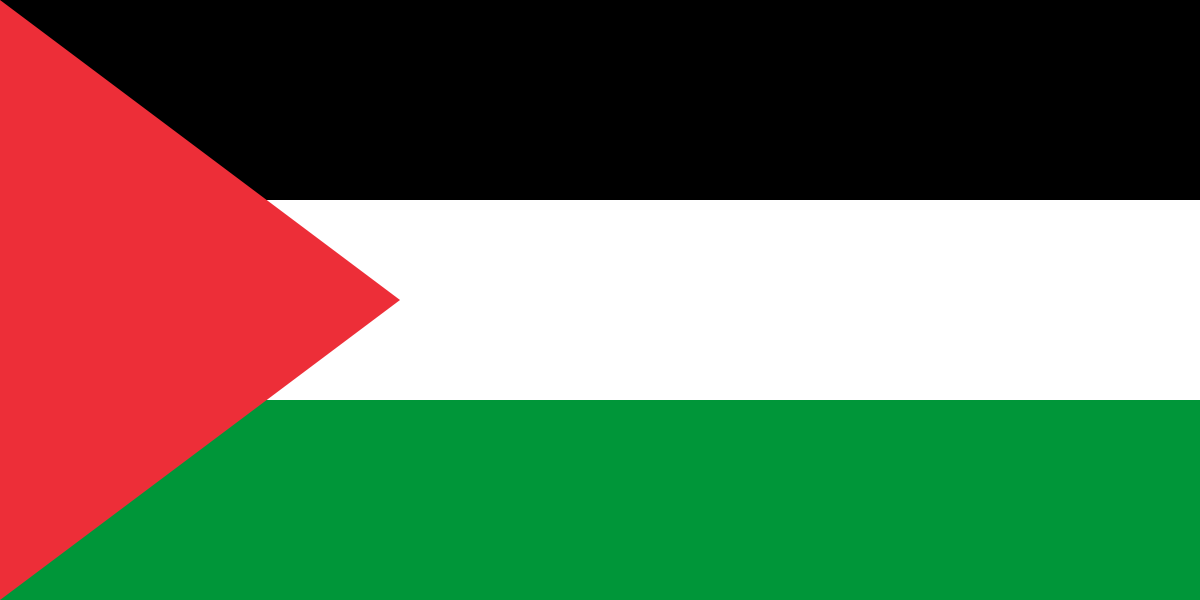
パレスチナ自治区の治安
独立した4つの指数から算出した評価に加え、詐欺の手口、法律、そして何かあったときの対処
下記の指数から算出した評価です
指数の確認日:10.08.2026
具体的には:the Gaza Strip。
This marker describes where fighting physically takes place, not the country’s role in the conflict. The rating measures risk to a visitor, which differs several-fold between parts of the country.
世界の指数での順位
出発前に控えておくもの
全体の状況
The political situation: conditions in the region change quickly. Check recent news before travelling, avoid demonstrations entirely, and read your own government's travel advisory before committing to a route.
At checkpoints: never photograph military installations, soldiers or the crossings themselves. It can lead to detention and confiscation of your equipment.
Water: tap water is not recommended for drinking. Buy bottled, particularly in the summer months when you will be getting through several litres a day.
Dress and manner: modest clothing keeps unwanted attention away. In Hebron, shoulders and knees should be covered completely.
Belongings: crime against tourists is low. Ordinary precautions against pickpockets in busy markets are all that is needed.
Settlements: in the West Bank settlements, avoid revealing clothing and do not drive through on the Sabbath.
At night: limit travel between towns after dark, since the roads are poorly lit and closures can appear without warning.
観光客はどう騙されるか
The Palestinian territories are two geographically separate areas with fundamentally different conditions, and they cannot be discussed as one place.
The Gaza Strip. The territory has been through devastating hostilities. The humanitarian situation is dire, infrastructure is destroyed, and access from outside is controlled and closed to ordinary travel. It is not a destination and no tourist routes lead there.
The West Bank. Conditions are unsettled but fundamentally different. Bethlehem, Jericho, Ramallah and Hebron receive pilgrims and tourists, and organised trips run regularly. Tension nonetheless persists, clashes and raids occur, and conditions change quickly.
Practical schemes. Unlicensed "guides" work around the Church of the Nativity in Bethlehem and in Hebron, and drivers quote inflated prices. Agree in advance. Souvenir shops selling "olive wood from the Holy Land" expect haggling.
Money. Israeli shekels, Jordanian dinars and dollars circulate. ATMs are few and cards are not universally accepted.
罰金や逮捕につながる行為
How access works. The West Bank is divided into zones under different administration. Israeli citizens are barred by Israeli law from Area A; foreigners enter at their own risk. Virtually all tourists reach Bethlehem and Jericho on organised tours or by Palestinian transport — a car hired in Israel is usually not insured in these territories.
Checkpoints. Numerous, and passing through them can take hours. Always carry documents.
Photography. Military installations, checkpoints, soldiers, settlements and any clashes must not be filmed. This is the commonest source of trouble.
Hebron. The city is divided, and area H2 operates under a special regime with checkpoints inside the city. The atmosphere is tense and it should only be visited with a guide.
Politics. The subject is maximally charged on all sides. Statements and symbols create risk.
Drones. Prohibited entirely.
Dress. Modest, especially in Hebron and Nablus. Religious sites require covered shoulders and knees.
健康:予防接種、薬、医療
The West Bank. Healthcare functions, with acceptable hospitals in Ramallah and Nablus, though complex cases are usually handled in Israeli clinics, which a foreigner can reach more easily than local residents. Insurance is needed — check that it extends to the Palestinian territories, as many policies exclude them.
The Gaza Strip. The healthcare system is destroyed. The subject there is a humanitarian situation rather than medical provision in any ordinary sense.
Water. West Bank supply is uneven and rationed in some areas. Drink bottled.
Vaccinations. None mandatory. Hepatitis A is advised.
Heat. Jericho lies below sea level and is among the hottest places in the region: above 45°C in summer. Excursions go early.
Desert. Wadi Qelt and the routes to the monasteries are genuine walks in heat with no water sources.
Emergency numbers: 100 police, 101 ambulance (Palestine Red Crescent).
警察:どう対応するか
Conditions in the Palestinian territories are determined by the political and military situation rather than ordinary policing.
The West Bank. Palestinian police operate in the areas under their administration, alongside Israeli forces. Raids, arrests and clashes occur, more often at night and in refugee camps — Jenin, Nablus, Tulkarm. Tourists do not go to those areas.
Bethlehem and Jericho. The calmest points, visited by organised groups, and safe on ordinary days. That is precisely why pilgrimage tourism continues there.
Check conditions on the day of travel. The situation here changes by the day rather than the week. What was calm yesterday may be closed today.
Consular assistance. Capacity is limited, especially in areas diplomats are advised not to enter.
What actually matters. Gaza is inaccessible and dangerous. The West Bank is visited, but only on organised terms, only to known places, and only after checking current conditions. Improvisation has no place here.
あわせて確認したいこと
更新日
評価は公開されている国際指数と各国外務省の渡航情報に基づいており、一次情報へのリンクは上のカードにあります。状況は年次報告より速く変わります。出発前に最新の注意喚起をご確認ください。