
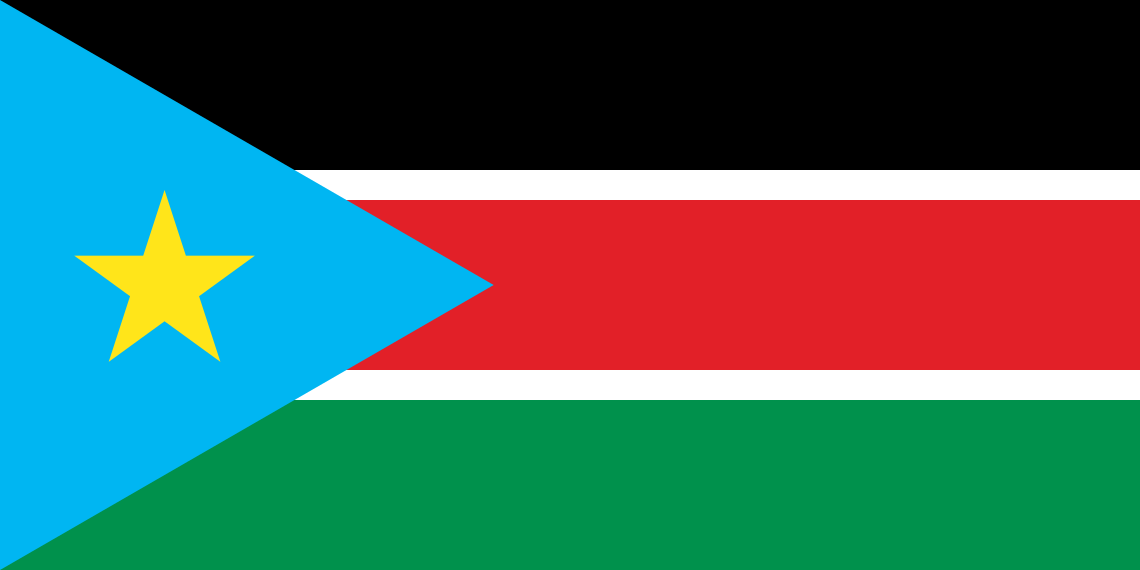
South Sudan: visa and entry rules
What you need to get in, how long you may stay, and what an overstay costs
South Sudan's borders: every crossing point
Other 1
South Sudan's land border crossings, listed by the neighbour they lead to:
With Uganda: Nimule - Elegu in the south, the main working crossing and the country's principal supply route.
With Kenya: Nadapal in the southeast.
With Ethiopia: crossings in the east, working irregularly.
With Sudan: the direction is affected by conflict on both sides.
With the DR Congo and the Central African Republic the links run along roads that are hard to reach.
The country has no access to the sea, and all freight goes through Uganda and Kenya.
The main way in is Juba International Airport.
Driving into South Sudan
Temporary import into South Sudan is handled under local rules, and those differ from country to country and change: find out the permitted period and the carnet requirement in advance.
Insurance has to be local.
An International Driving Permit is required.
Travelling around the country carries a direct risk, and roads away from the main routes are impassable in the rainy season.
Travelling to South Sudan with a pet
An international veterinary certificate is required, endorsed by the state veterinary service of the country you are leaving.
The rabies vaccination must be valid on the date of entry.
An import permit is arranged in advance.
Before bringing an animal into South Sudan, check with two authorities: your country's veterinary service and the carrier. Either of the two lists can stop you.
Where the situation is unstable the veterinary services work erratically, and the paperwork takes an unpredictable amount of time.
Overstaying your visa in South Sudan
A fine is charged for staying beyond the permitted period and is paid on departure.
The amount is calculated at the moment of departure. Published rates for South Sudan contradict one another and go out of date - count on cash and an extra hour at the border.
Where the situation is unstable an overstay is more dangerous than usual: document checks are more frequent and the consequences less predictable.
Extensions are arranged in advance, before the permitted period expires.
What else to check before you go
更新日
Entry rules change faster than anything else on this site, and they change without notice. We cross-check every page against several sources and state the date it was verified, but that does not replace the main step: before you travel, check an official source — the country’s consulate, its immigration service or its e-visa portal. Especially if more than a couple of months have passed since our check.