
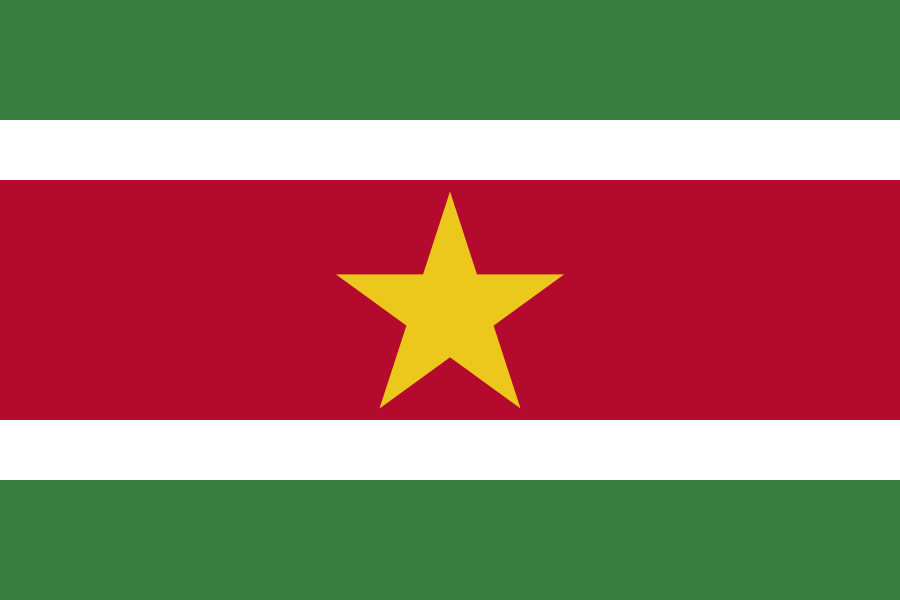
Surinameの治安
独立した4つの指数から算出した評価に加え、詐欺の手口、法律、そして何かあったときの対処
下記の指数から算出した評価です
指数の確認日:10.08.2026
世界の指数での順位
出発前に控えておくもの
全体の状況
After dark: do not walk alone through the Palmentuin park or the empty lanes of the historic centre once the sun goes down. Take a taxi instead.
Valuables: leave the heavy gold jewellery and the professional camera rig out of sight, since visible wealth is exactly what pickpockets work from.
In the bush: stepping off the trail without a guide is genuinely dangerous because of snakes, and the rivers carry strong hidden currents that are easy to misjudge.
Sun: the tropical sun here is deceptive. Use high-factor cream even on cloudy days, and especially on boat trips where the water doubles the glare.
Police and soldiers: photographing police stations or military personnel is forbidden and can turn into a long argument and a fine.
Insects: malaria and dengue are the reason to carry a strong DEET repellent and to cover up in the evenings.
Advisories: conditions in the interior shift with the season, so check your own government's travel advisory before you commit to a route.
観光客はどう騙されるか
Suriname, the former Dutch Guiana, is a country of unusual cultural composition and vast tracts of rainforest. Tourists are few.
Paramaribo. Pickpockets at the market and in the centre, and theft from cars. Nobody walks at night, especially around Palmentuin and along the river.
Taxis. No meters; agree in advance. Local apps operate.
Jungle tours. The main reason to come: rivers, Maroon villages and the Central Suriname Nature Reserve. Arranged through operators in Paramaribo. Check the licence, the state of the boats, and whether there is communication en route.
Currency exchange. The Surinamese dollar is unstable and official and parallel rates have differed. Change at banks; street exchange is illegal.
Cash. Cards work on a limited basis. Bring euros or dollars.
罰金や逮捕につながる行為
Drugs. Suriname is a cocaine transit country, the law is strict, and the airport is screened very thoroughly. Never carry anyone else's belongings or parcels.
Gold mining. Illegal prospectors work in the interior, and the mining areas are dangerous and not visited.
Photography. Military installations, police, the presidential palace and the airport are off limits.
Drones. Permission is required.
Maroon and Indigenous territories. Visiting villages requires the community's permission and an escort. Your guide will explain the rules of conduct, and they are observed.
Wildlife. Turtles at Galibi are protected and night excursions follow set rules.
Roads. Beyond the coastal strip there are almost none; travel is by boat and light aircraft.
Driving on the left. A legacy of the Dutch period, unusual for South America.
健康:予防接種、薬、医療
Yellow fever. Vaccination is advised and a certificate is required from arrivals out of endemic countries.
Malaria. Risk in the interior and the jungle. The coastal strip and Paramaribo are largely free of it. Prophylaxis is matched to your route.
Dengue. Present.
Vaccinations. Hepatitis A and B, typhoid and rabies.
Water. Paramaribo's tap water is broadly safe; inland, bottled or boiled only.
Jungle. Insects, snakes and leeches. Fresh water holds piranhas and rays — swim only where your guide indicates.
Healthcare. Paramaribo has acceptable hospitals. The jungle has none, and evacuation takes many hours by light aircraft. Insurance with evacuation cover is essential.
Heat and humidity. An equatorial climate year-round.
Emergency number is 115 for police.
警察:どう対応するか
Suriname sits mid-table in Latin America on corruption, and police are generally correct with tourists.
Reporting theft. Reports are taken and certificates issued. The language is Dutch, with English in the tourism sector and Sranan Tongo widely spoken.
Paramaribo at night. Travel by car. The historic centre, a UNESCO site, is calm by day.
Checkpoints. These occur on the roads.
Jungle. The main risk is not criminal: getting lost, injury, and no communications. Always with a guide.
What actually matters. Suriname's main risks are malaria in the interior, the jungle and logistics. Urban crime is moderate.
Emergency number is 115.
あわせて確認したいこと
更新日
評価は公開されている国際指数と各国外務省の渡航情報に基づいており、一次情報へのリンクは上のカードにあります。状況は年次報告より速く変わります。出発前に最新の注意喚起をご確認ください。