
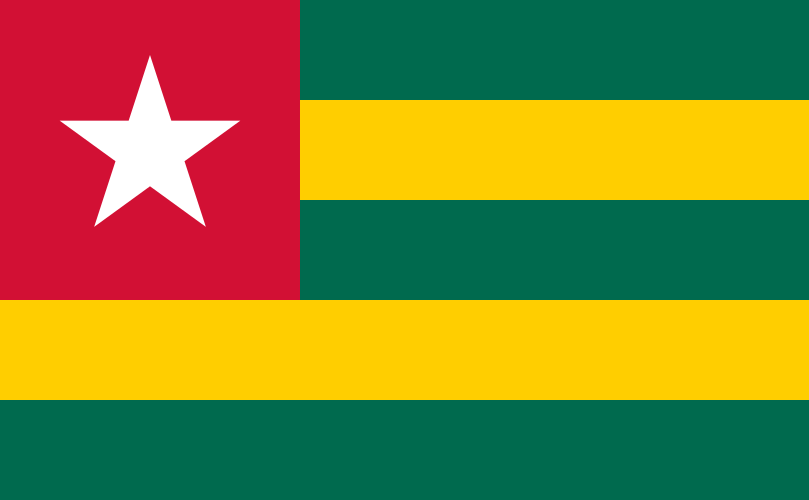
トーゴ: visa and entry rules
What you need to get in, how long you may stay, and what an overstay costs
Togo's borders: every crossing point
Other 4
Airports 1
Togo's land border crossings, listed by the neighbour they lead to:
With Ghana: Lome - Aflao, right on the western edge of the capital. One of the busiest crossings in West Africa.
With Benin: Sanvee Condji on the coast and Ketao inland.
With Burkina Faso: Cinkasse in the north. This direction is complicated by the situation on the Burkinabe side.
The capital stands on the border: the western districts of Lome run right up to the Ghanaian barrier, and the crossing is literally made on foot from one city into the other.
The main way in is Lome-Tokoin International Airport.
Driving into Togo
Check on a case-by-case basis how long a vehicle is allowed to stay in Togo and whether a carnet is needed. The rules change, and a general figure for the region will not help you here.
Insurance has to be local, and it is bought at the border.
An International Driving Permit is required.
Traffic police are active on the highways, and documents are checked often.
Travelling to Togo with a pet
An international veterinary certificate is required, endorsed by the state veterinary service of the country you are leaving.
The rabies vaccination must be valid on the date of entry.
An import permit is arranged in advance with the veterinary service.
Check the vaccination, microchip and quarantine requirements for bringing an animal into Togo with your airline before you book.
Overstaying your visa in Togo
A fine is charged for staying beyond the visa's validity and is paid on departure.
Exactly how much will be determined when you leave. The amount cannot be confirmed in advance in Togo, as the rates change. Carry cash and do not book a tight connection.
Extensions are arranged in advance, before the permitted period expires.
A serious overstay means detention and deportation at your own expense.
The short validity of the visa on arrival is the main cause of overstays: the seven days run out sooner than people are ready for.
What else to check before you go
更新日
Entry rules change faster than anything else on this site, and they change without notice. We cross-check every page against several sources and state the date it was verified, but that does not replace the main step: before you travel, check an official source — the country’s consulate, its immigration service or its e-visa portal. Especially if more than a couple of months have passed since our check.