
국가별 드론 규정
등록이 필요한 곳, 몇 그램부터인지, 그리고 드론을 아예 가져갈 수 없는 나라

The drone must be registered with the GCAA before import, and flights require a permit.

The drone must be registered; tourists need no pilot licence.
Registration is mandatory for tourists.
Registration is mandatory for tourists.
DGAC registration applies to drones over 100 g — a lower threshold than usual. Check your model in the regulator's drone selector.

The drone must be registered before the first flight; no pilot licence is needed.

Common EASA rules apply: operator registration is required for drones from 250 g, and for any drone with a camera — which covers virtually every consumer model. You also need the free A1/A3 online test, and the operator ID must be stuck on the drone. One registration is valid across the whole EU.

Since 2021 (joint Defence and Transport communiqué) any flight is prohibited without authorisation, and drones must be registered with the Air Force staff and ANNA. Violations mean confiscation and prosecution.

NCAA approval must be requested at least 60 days ahead; there is no weight exemption and the drone is declared on arrival.

An NCAA permit is mandatory and expensive; flying without one is illegal.
The CAA UAS Regulation 2026 applies: importing needs a permit with security clearance, and the drone is declared on entry. Registration from any weight, the pilot needs training and an assessment, and non-residents need CAA approval.
Flying for fun is only allowed over your own property; anything else needs RPAS registration and a pilot licence. National parks are closed.
Common EASA rules apply: operator registration is required for drones from 250 g, and for any drone with a camera — which covers virtually every consumer model. You also need the free A1/A3 online test, and the operator ID must be stuck on the drone. One registration is valid across the whole EU.
Flights require CAAN approval; the Himalayas and airport areas have extra limits, and trekking zones are often closed.

Common EASA rules apply: operator registration is required for drones from 250 g, and for any drone with a camera — which covers virtually every consumer model. You also need the free A1/A3 online test, and the operator ID must be stuck on the drone. One registration is valid across the whole EU.
No registration required. But you need the landowner's consent — which means no flying in DOC national parks and many famous spots without a permit. Maximum 120 m, visual line of sight only.
Registration or authorisation is mandatory for foreign visitors.

Flying is effectively not permitted, and importing requires a permit — without it the drone is seized.

Registration applies to drones over 2 kg, and liability insurance is mandatory. Almost all of Seoul is restricted airspace requiring advance permission. The border zone with North Korea is fully closed.

Common EASA rules apply: operator registration is required for drones from 250 g, and for any drone with a camera — which covers virtually every consumer model. You also need the free A1/A3 online test, and the operator ID must be stuck on the drone. One registration is valid across the whole EU.
Drone registration and a pilot licence are required.
Drones over 2 kg must be registered with IDAC and insured. Lighter models need no registration.

Common EASA rules apply: operator registration is required for drones from 250 g, and for any drone with a camera — which covers virtually every consumer model. You also need the free A1/A3 online test, and the operator ID must be stuck on the drone. One registration is valid across the whole EU.

Government approval is required and rarely granted; without it the drone is seized.

Common EASA rules apply: operator registration is required for drones from 250 g, and for any drone with a camera — which covers virtually every consumer model. You also need the free A1/A3 online test, and the operator ID must be stuck on the drone. One registration is valid across the whole EU.
Because of the war most regions have UAV flight bans in force and launching a drone leads to detention. The peacetime rules — Rosaviatsia registration above 150 g and local permission to fly over a city — are of little practical use right now.

Permits are issued through the Lebanese Army, and some popular DJI models are refused. Customs may hold the drone until departure.

Common EASA rules apply: operator registration is required for drones from 250 g, and for any drone with a camera — which covers virtually every consumer model. You also need the free A1/A3 online test, and the operator ID must be stuck on the drone. One registration is valid across the whole EU.

Common EASA rules apply: operator registration is required for drones from 250 g, and for any drone with a camera — which covers virtually every consumer model. You also need the free A1/A3 online test, and the operator ID must be stuck on the drone. One registration is valid across the whole EU.

Flights require RCAA approval, requested in advance.

The civil aviation authority prohibits flights without prior permission or a licence, and there is no procedure for tourists.

Common EASA rules apply: operator registration is required for drones from 250 g, and for any drone with a camera — which covers virtually every consumer model. You also need the free A1/A3 online test, and the operator ID must be stuck on the drone. One registration is valid across the whole EU.
Common EASA rules apply: operator registration is required for drones from 250 g, and for any drone with a camera — which covers virtually every consumer model. You also need the free A1/A3 online test, and the operator ID must be stuck on the drone. One registration is valid across the whole EU.

Tourists are not allowed to fly; recreational operations are prohibited.

A pilot licence and drone registration with the civil aviation department are required.
Drones from 250 g are registered with CAAM. Kuala Lumpur and airport surroundings are closed.

In January 2026 the government approved a draft decree on civil drones; the text is unpublished and there are no terms for foreigners.

Drones from 250 g must be registered with AFAC. Filming over INAH archaeological sites (Chichen Itza, Teotihuacan and others) is prohibited without a permit.

Flights require authorisation; the principality is small and densely built up, with almost no free zones.
Importing drones is banned: they are seized at the airport and not always returned. Flying without government permission is illegal. Simply do not bring a drone to Morocco.
You need to register the drone with the DCA and hold a foreign pilot licence.
Written IACM approval is required before flying, and the drone must be imported legally.
Rules are aligned with EASA: operator registration from 250 g and for any drone with a camera, plus the online test. National regulators word this differently — check the local authority before you travel.
Rules are aligned with EASA: operator registration from 250 g and for any drone with a camera, plus the online test. National regulators word this differently — check the local authority before you travel.
Flights require regulator approval; filming over resorts without the hotel's consent is not allowed.
Common EASA rules apply: operator registration is required for drones from 250 g, and for any drone with a camera — which covers virtually every consumer model. You also need the free A1/A3 online test, and the operator ID must be stuck on the drone. One registration is valid across the whole EU.
Foreign visitors need registration and a pilot licence. Drones over 15 kg require CAAM inspection, with a 25 kg ceiling.
FAA registration is mandatory for drones from 250 g ($5 for 3 years). All recreational flyers, regardless of weight, must pass the free TRUST test and carry the certificate. Remote ID is required. Flying is banned in US national parks.
Importing drones is banned and they are seized at the border; flying can bring criminal charges.
Registration with the civil aviation authority must be completed before arrival.

Registration is mandatory for any drone and flights require prior permission.
Drone imports are suspended: you need an exemption, a customs declaration and a Telecommunications Unit licence (BBD 30).
Vatican airspace is closed — it is a permanent no-fly zone inside Rome.

Registration and a permit are required, plus a customs deposit of half the drone's appraised value.

You need CAAB approval; importing without it ends in confiscation.

The drone must be registered with the authorities before flying.
A pilot licence and drone registration are required.
Since 1 July 2026, a drone must be registered before use regardless of weight. A flight permit exemption applies only to recreational flights with aircraft strictly below 250 g, within visual line of sight and outside prohibited and restricted zones. Registration and separate import or temporary import procedures still apply. A foreign pilot needs a Vietnamese guarantor, either an organization or an individual. Aircraft of 250 g or more require a pilot licence and a flight permit unless another statutory exemption applies. Submit an ordinary flight application at least 7 days ahead; a complete application is reviewed within 5 working days. If a NOTAM is required, apply at least 12 days ahead. When military or civil flight operations are affected, notify the local military and police authorities and the flight control facility.

Common EASA rules apply: operator registration is required for drones from 250 g, and for any drone with a camera — which covers virtually every consumer model. You also need the free A1/A3 online test, and the operator ID must be stuck on the drone. One registration is valid across the whole EU.

Flights require prior clearance from the authorities, and border areas are closed.
Recreational flying by tourists is banned. Commercial import is only possible through an authorised local company.
Rules are aligned with EASA: operator registration from 250 g and for any drone with a camera, plus the online test. National regulators word this differently — check the local authority before you travel.

Flying without government permission is banned and importing requires prior clearance.

Drones over 250 g are registered online; models from 6 kg pay a registration fee.

Registration is mandatory; tourists need no pilot licence.
A pilot licence and ANAC drone registration are required.
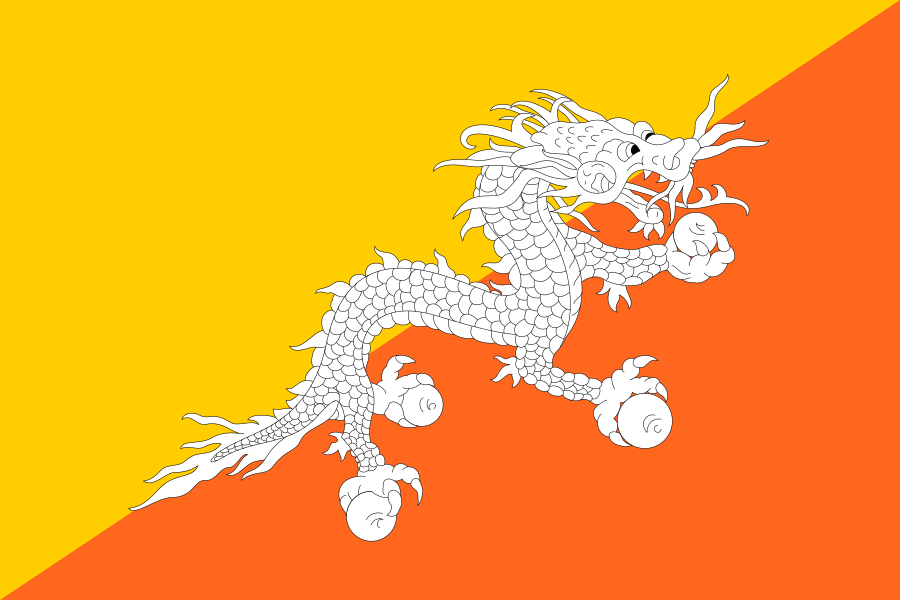
Civilian flights are banned and importing is possible only with special permission.

Rules are aligned with EASA: operator registration from 250 g and for any drone with a camera, plus the online test. National regulators word this differently — check the local authority before you travel.
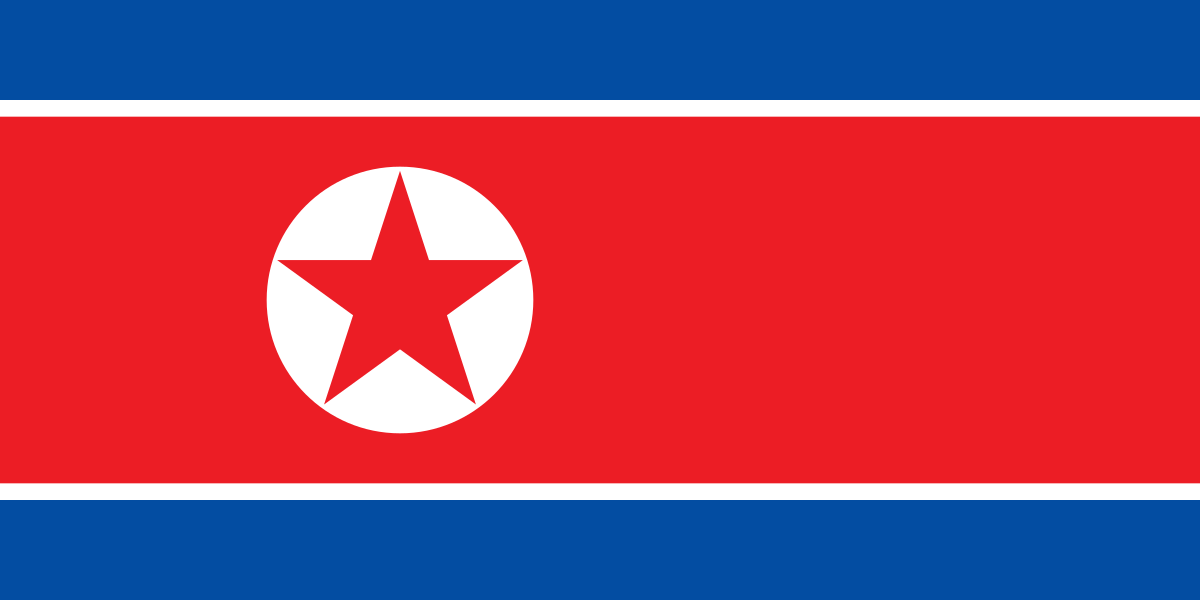
Foreign visitors are banned from flying and tourists cannot obtain authorisation.

Common EASA rules apply: operator registration is required for drones from 250 g, and for any drone with a camera — which covers virtually every consumer model. You also need the free A1/A3 online test, and the operator ID must be stuck on the drone. One registration is valid across the whole EU.

Drones from 250 g are registered with ANAC (SISANT system) and flights are cleared through SARPAS. Liability insurance is mandatory for drones over 250 g.
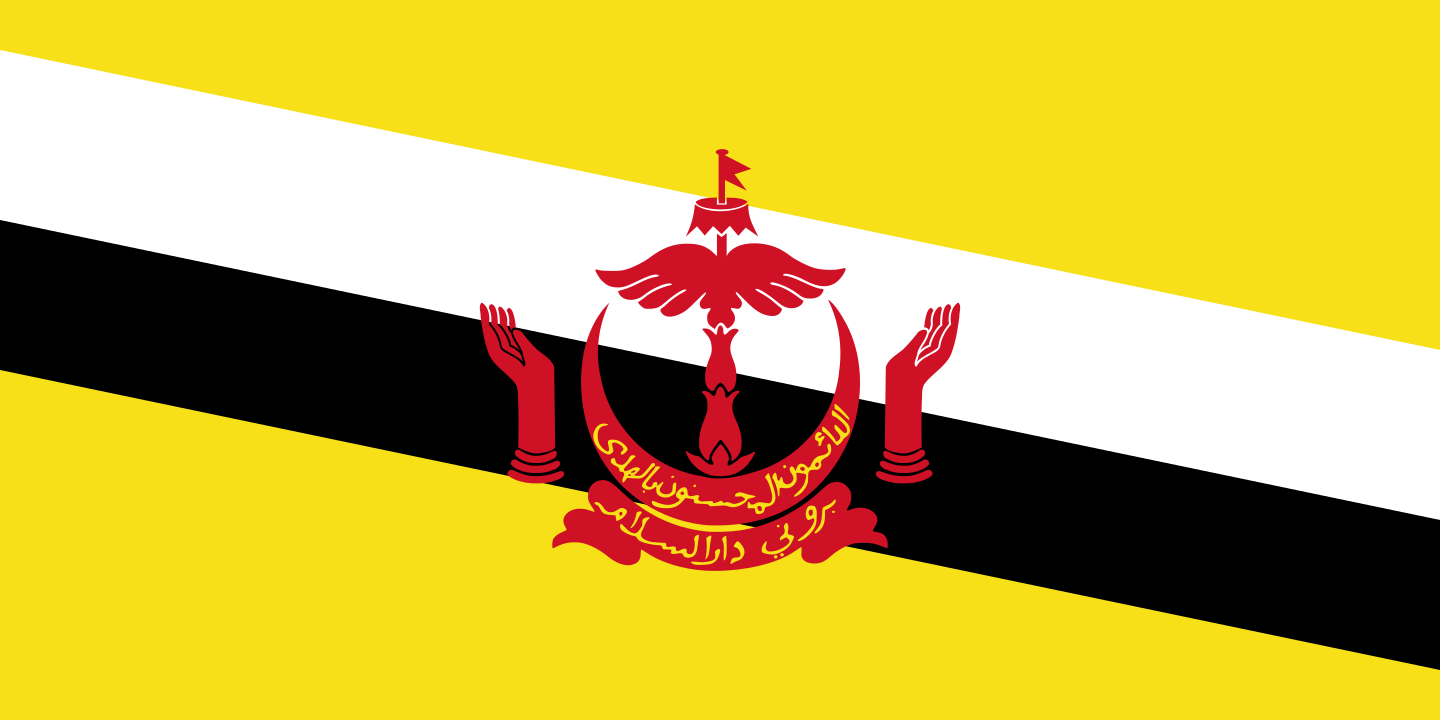
The civil aviation department (DCA) registers drones; per its guide, short-stay foreigners are exempt from registration, but every flight needs DCA permission.

Every drone needs a permit from the transport ministry (MWTI): WST 100 for leisure use, applied for at least 7 working days ahead. Insurance is required only for commercial flights and within 4 km of an aerodrome.

GACA registration is mandatory for any drone, and each flight needs a permit. Filming people and sensitive sites is prohibited, and violations are punished harshly.

Tourists may fly up to 120 m, within line of sight, no further than 500 m away and over 1 km from airfields. No registration or test is needed, but you must notify the San Marino civil aviation authority (info@caa-mna.sm) before flying and carry liability insurance.

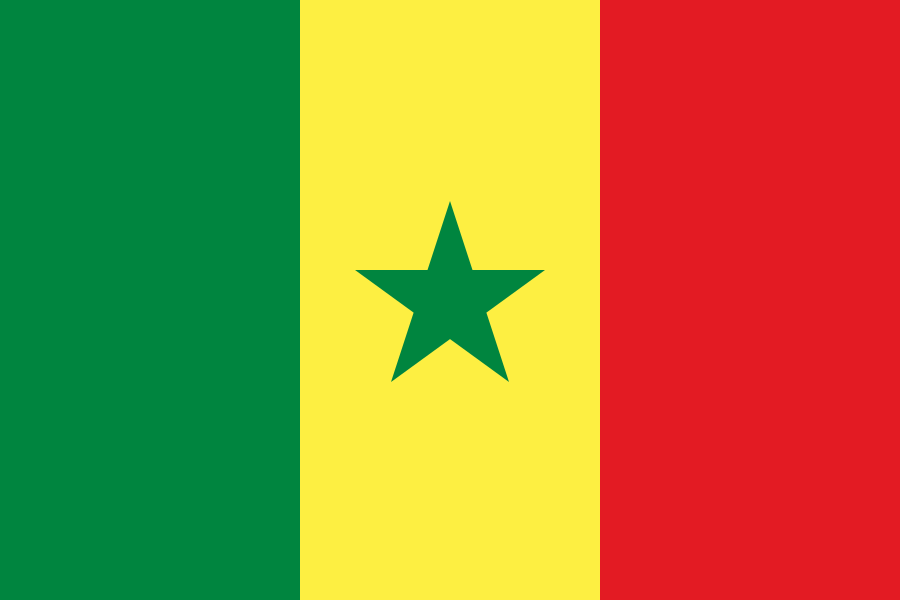
You need an ANACIM import licence and written flight approval before arrival — without them the drone will not be let through.
A foreign drone needs CAD flight authorization and third-party liability insurance valid in Serbia, including below 250 g. CAD says the aircraft itself does not need registration. Operator registration is a separate legal requirement: from 250 g, with a personal-data sensor such as a camera, and in other specified cases; confirm the procedure with CAD. Foreign A1/A3 and A2 certificates are not recognized; a local exam depends on the flight location and parameters. Aerial filming also needs a Defence Ministry permit through a Serbian company. Submit documents at least 25 days ahead, as recommended. Ask Customs about carrying a drone across the border.
Registration is mandatory from 200 g — lower than the usual 250 g. Insurance is not required but recommended.

Registration is mandatory for tourists.
No registration is required, but the general altitude and distance limits apply.
Tourists need no registration; the general flight rules apply.
There are no drone-specific rules, but any flight by any aircraft needs prior aviation authority permission (AIC A 09/2025). Drones are banned near Mogadishu airport.
Registration or authorisation is required before flying.

There are no rules, a civil war is ongoing and airports are hit by drone strikes. There is no legal route for a tourist.
Registration or authorisation must be obtained before flying.
CAASL registration and a permit for each flight are mandatory, and processing takes time.

Common EASA rules apply: operator registration is required for drones from 250 g, and for any drone with a camera — which covers virtually every consumer model. You also need the free A1/A3 online test, and the operator ID must be stuck on the drone. One registration is valid across the whole EU.

Common EASA rules apply: operator registration is required for drones from 250 g, and for any drone with a camera — which covers virtually every consumer model. You also need the free A1/A3 online test, and the operator ID must be stuck on the drone. One registration is valid across the whole EU.
Common EASA rules apply: operator registration is required for drones from 250 g, and for any drone with a camera — which covers virtually every consumer model. You also need the free A1/A3 online test, and the operator ID must be stuck on the drone. One registration is valid across the whole EU.
Common EASA rules apply: operator registration is required for drones from 250 g, and for any drone with a camera — which covers virtually every consumer model. You also need the free A1/A3 online test, and the operator ID must be stuck on the drone. One registration is valid across the whole EU.
Common EASA rules apply: operator registration is required for drones from 250 g, and for any drone with a camera — which covers virtually every consumer model. You also need the free A1/A3 online test, and the operator ID must be stuck on the drone. One registration is valid across the whole EU.
Foreign visitors are banned from flying and there is no formal import procedure.

Registration or authorisation is required before the first flight.
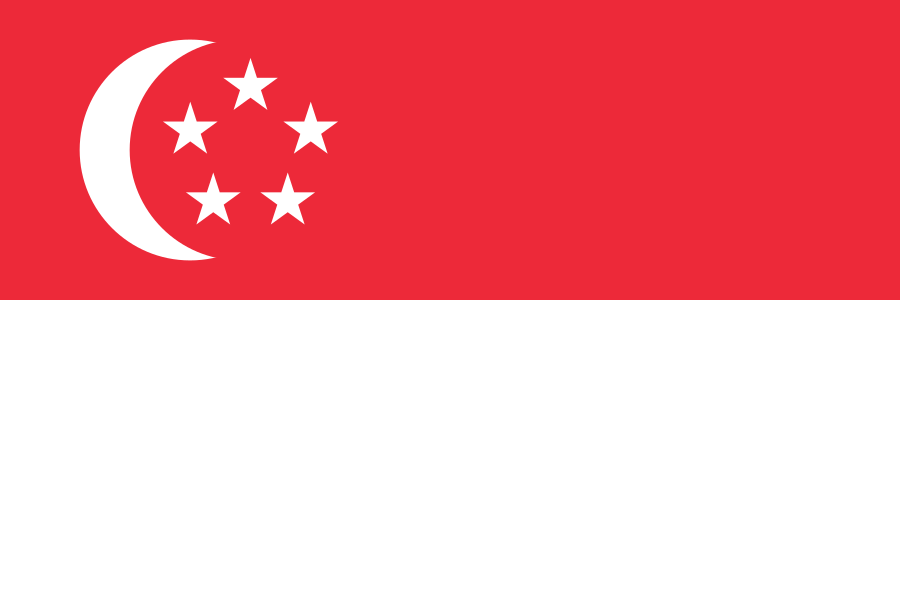
CAAS registration applies to drones over 1.5 kg. But the city-state is almost entirely covered by restricted zones: without a permit you may fly only at a handful of sites, with a 60 m altitude cap.

Every drone must be registered with the GCAA, plus the DCAA in Dubai. Flying is allowed only in designated zones with permission; areas around airports are strictly off limits. Bringing a drone in without prior registration can end with confiscation at customs.
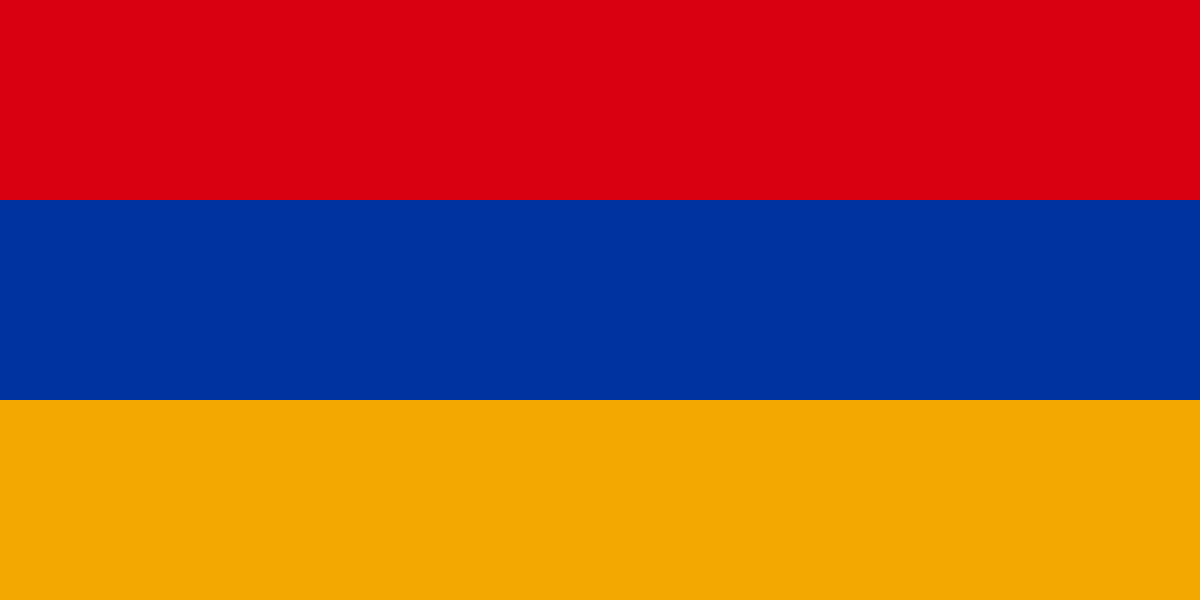
Registration is not required for tourists, and drones under 250 g are fully exempt. Keep the drone in sight and stay below 50 m without permission.

Every drone must be registered with ANAC, and flying beyond visual line of sight requires a pilot certificate.
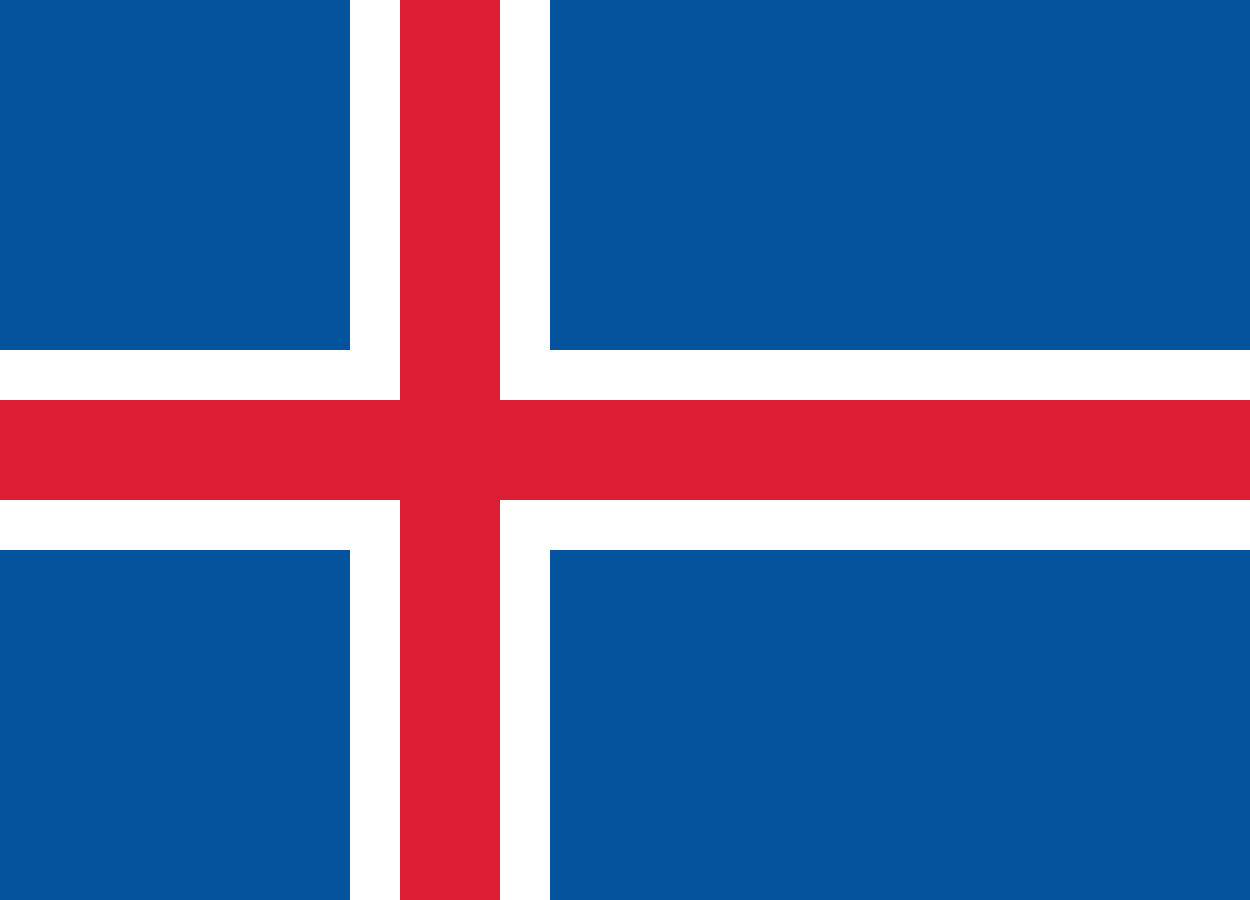
Common EASA rules apply: operator registration is required for drones from 250 g, and for any drone with a camera — which covers virtually every consumer model. You also need the free A1/A3 online test, and the operator ID must be stuck on the drone. One registration is valid across the whole EU.
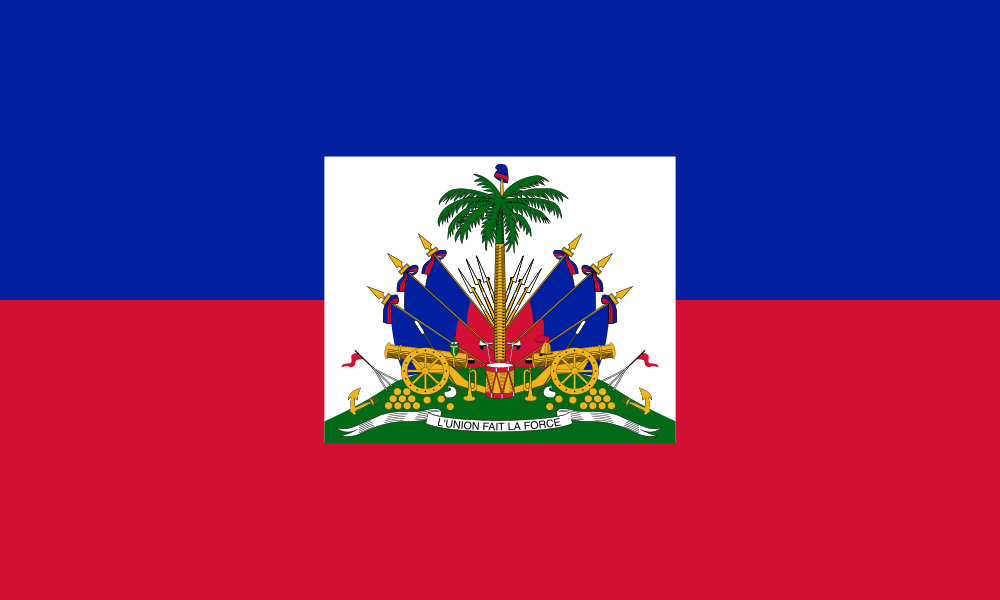
There are no drone rules. The state itself uses strike drones against gangs and Port-au-Prince airport is closed to US flights, so flying is unsafe.

Common EASA rules apply: operator registration is required for drones from 250 g, and for any drone with a camera — which covers virtually every consumer model. You also need the free A1/A3 online test, and the operator ID must be stuck on the drone. One registration is valid across the whole EU.
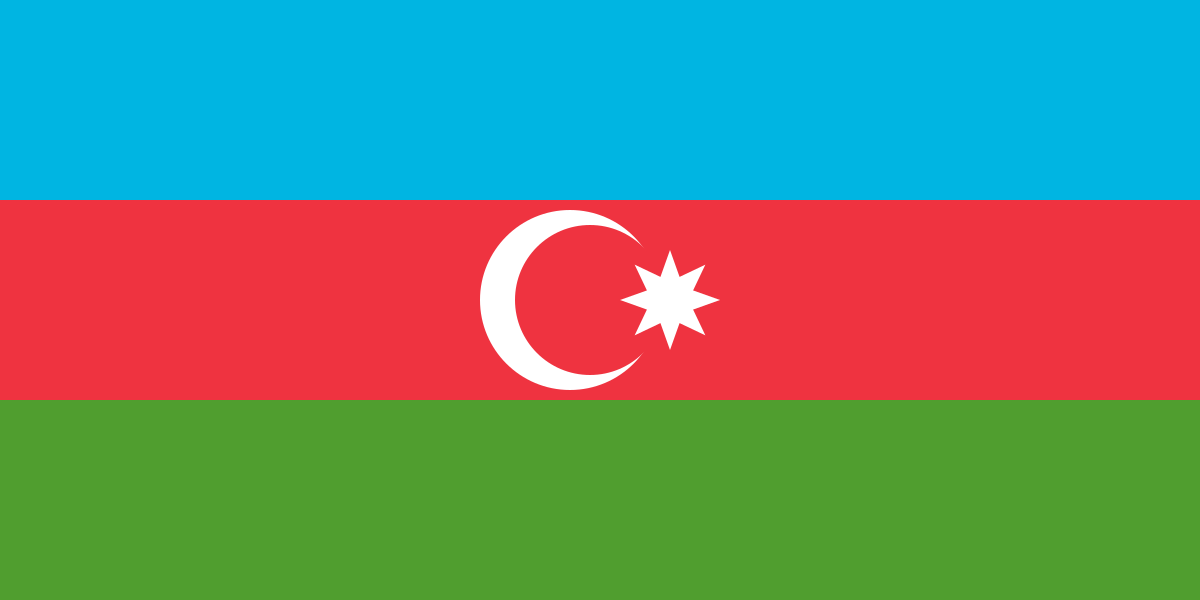
Flights require State Civil Aviation Agency approval, and imports are restricted: without prior clearance the drone is seized at the airport.

No rules have been published since 2021. In 2025 the Taliban detained an American tourist and her translator for flying without permission.

Since 2025 (Decree 316/2025) the rules follow the EU model: open-category flights need no permit, but drones over 250 g must be registered with the ministry and insured. The e-tramits procedure still asks for an Andorran NIA number, and it is unclear how a non-resident gets through it, so a drone under 250 g is the simpler option. The Sorteny, Comapedrosa and Madriu natural parks, heliports and border posts are no-fly zones.

Rules are aligned with EASA: operator registration from 250 g and for any drone with a camera, plus the online test. National regulators word this differently — check the local authority before you travel.
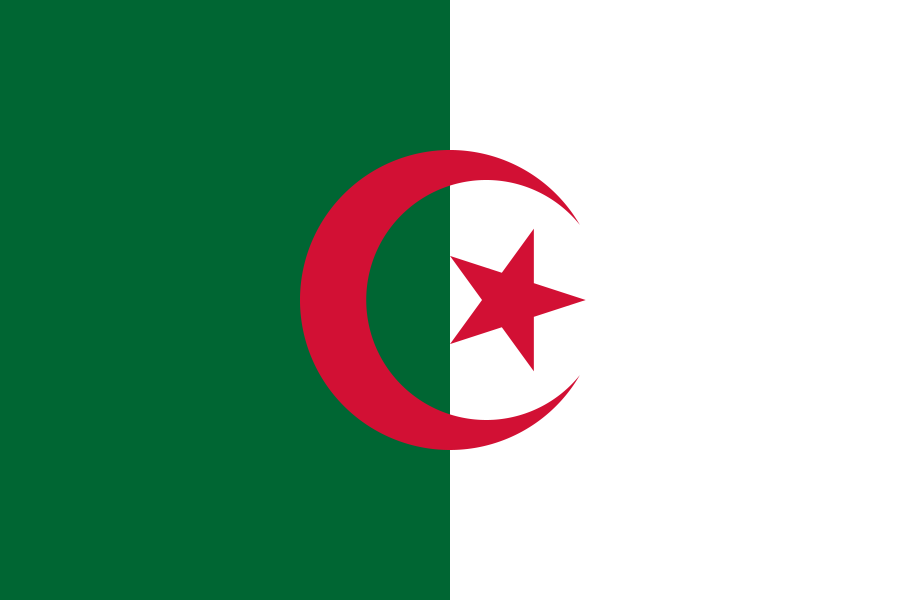
Importing and using drones privately is prohibited.

There is no dedicated law: the drone is registered with the Interior Ministry weapons and explosives department, then cleared by the aviation authority. Practically out of reach for tourists.

Tourists need no registration — only the general rules apply: keep it in sight, away from airports and people.
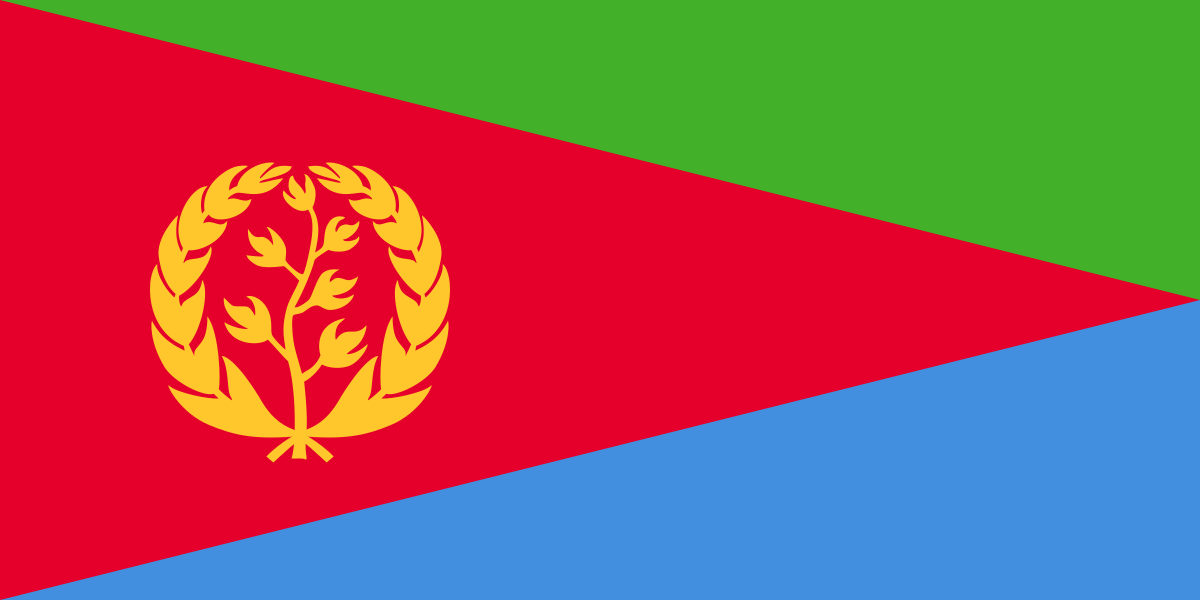
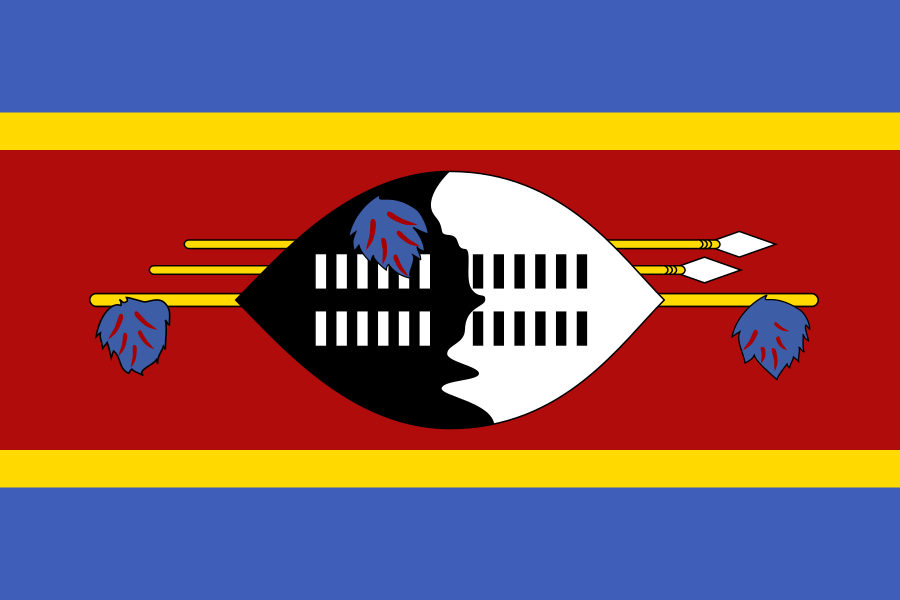
You need an import licence and written SWACAA approval, both arranged before arrival.

Common EASA rules apply: operator registration is required for drones from 250 g, and for any drone with a camera — which covers virtually every consumer model. You also need the free A1/A3 online test, and the operator ID must be stuck on the drone. One registration is valid across the whole EU.

Tourists need no registration. Customs let in a drone worth up to $500 duty-free; above that the duty reaches 35%. The Galapagos are closed to flying.

Importing drones without government approval is banned and they are confiscated at customs.

Drone registration, a pilot licence and insurance are required.
You need an Operator ID (paid registration, from 250 g or for any drone with a camera) and a Flyer ID — a free online test. Both are issued on the CAA website. Keep 150 m away from crowds and built-up areas.

The mainland is a war zone with no legal way to fly. On Socotra drones are allowed for a fee of USD 100–150, collected by the tour agency or officials at Hadiboh airport; no flying over the airport or homes.

You need civil aviation authority approval both to bring the drone in and for each flight, arranged in advance.
Recreational flying needs no registration — just follow the CASA rules: below 120 m, within visual line of sight, 30 m away from people, one drone at a time. Registration is only required for commercial operations.

Common EASA rules apply: operator registration is required for drones from 250 g, and for any drone with a camera — which covers virtually every consumer model. You also need the free A1/A3 online test, and the operator ID must be stuck on the drone. One registration is valid across the whole EU.

A pilot licence and drone registration are required; insurance is recommended.

Bringing a drone in without government approval is banned — customs will seize it. Flights require civil aviation clearance.

You need UCAA approval and import clearance, otherwise the drone is seized at the border.

Registration only applies to heavy drones from 25 kg, so tourist gear is exempt. The general flight rules still apply.
Importing, selling and using drones has been banned since 2015, with criminal liability under article 244-4. Since 2024 a first offence brings a fine rather than prison, but the drone is seized at customs on arrival. Permits go only to state bodies and film crews.

Civilian flights are banned under martial law — launching a drone leads to detention. The peacetime rules (registration from 250 g) do not apply right now.
Since 2026 the ICAR 124 regulations apply: flights need prior approval from the aviation authority and security agencies. In practice drones are confiscated at airports, Erbil included.

Importing and flying are banned without government permission, and drones are seized at the border. The risk is not just losing the gear but facing espionage accusations — leave it at home.
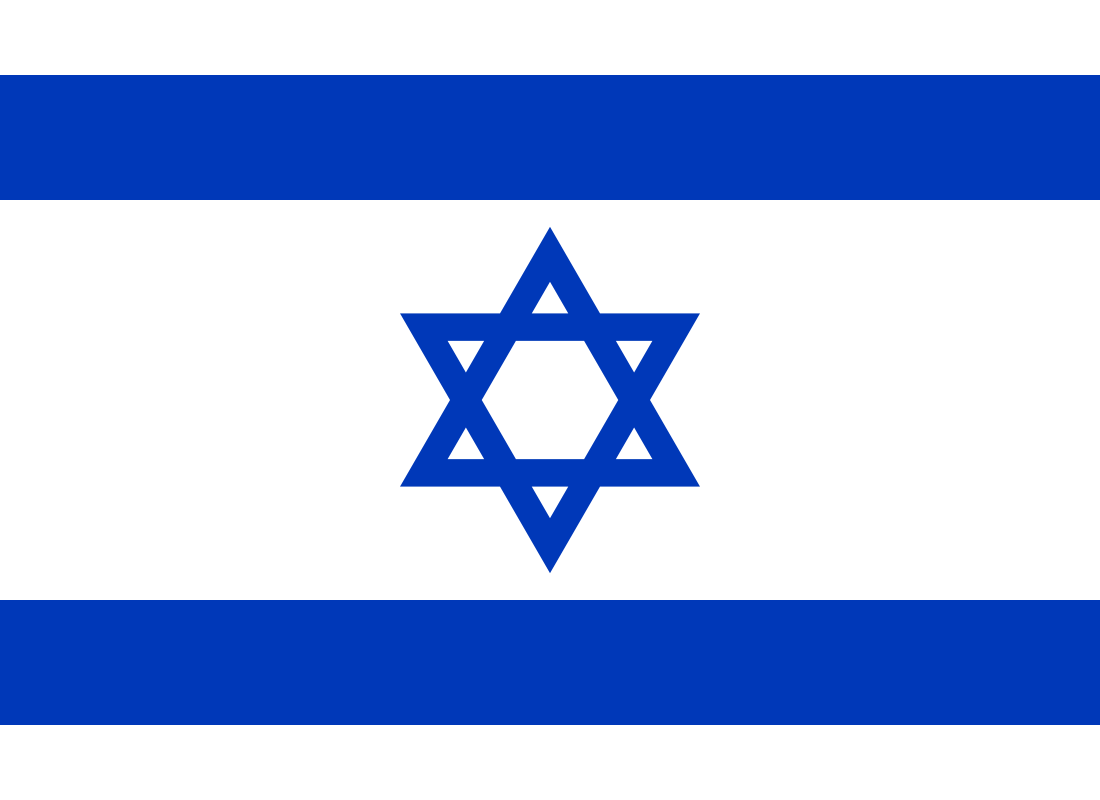
Drones from 250 g must be registered with the Civil Aviation Authority. Large parts of the country are closed to flying, with strict bans around military sites and borders.

Importing and flying drones without Ministry of Defence approval is prohibited, and customs will confiscate them. Aerial filming of the pyramids requires an official permit.

Common EASA rules apply: operator registration is required for drones from 250 g, and for any drone with a camera — which covers virtually every consumer model. You also need the free A1/A3 online test, and the operator ID must be stuck on the drone. One registration is valid across the whole EU.
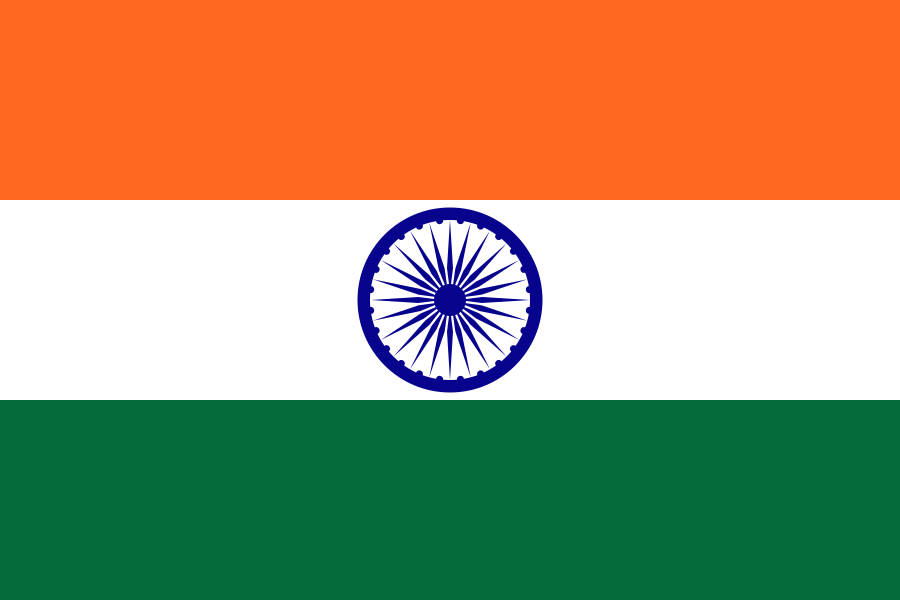
Formally, drones over 250 g are registered on the DigitalSky portal and require a pilot certificate and insurance. In practice foreigners cannot fly: only Indian citizens or companies may register a drone, and private imports are banned — customs will seize it.

Drones from 250 g are registered via SIDOPI-GO. Bali adds its own limits: temples, ceremonies and most beach resorts are closed to filming, and there is a no-fly zone around Ngurah Rai airport.
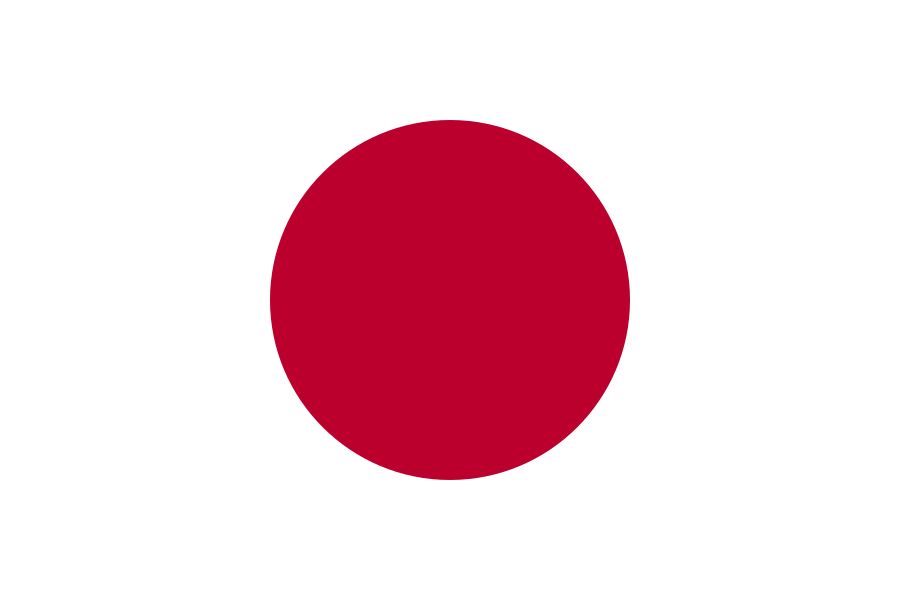
This is one of the lowest thresholds in the world — the popular 249 g models do not get you off the hook here. Remote ID is required. Flights over densely inhabited districts (DID) — which covers most of Tokyo and Osaka — need permission, and city parks are off limits.
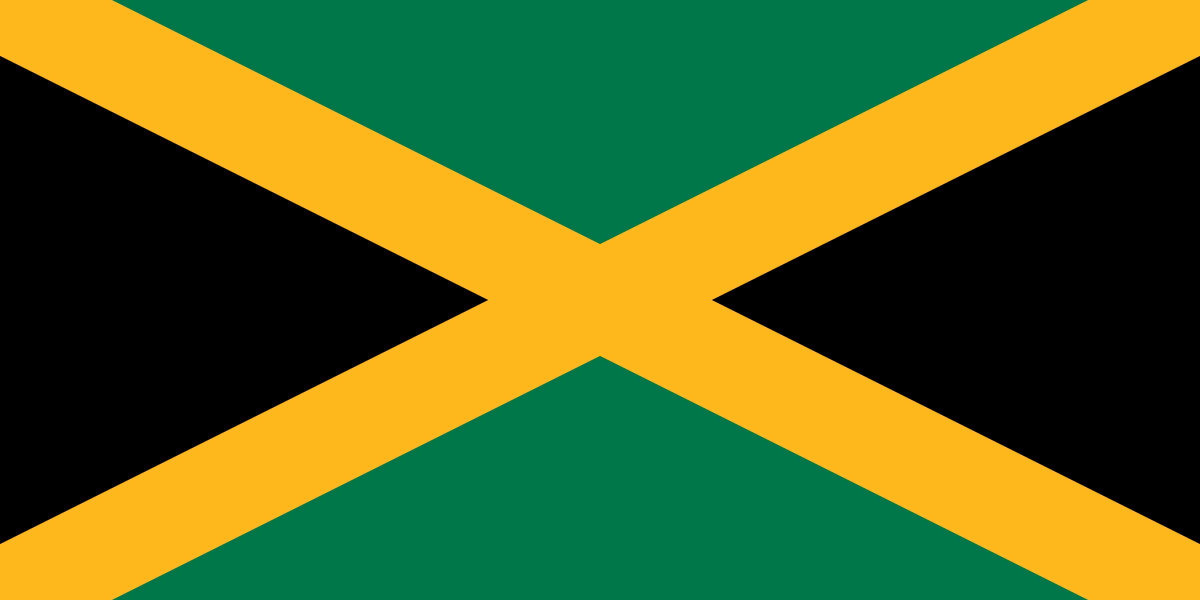
Registration is mandatory for tourists; a personal drone needs no separate import licence, a commercial one does.
You need a remote pilot licence, drone registration and ZCAA approval for temporary import with customs clearance.

Prior Defence Ministry authorisation is required, the rules are unpublished, and drones get confiscated.

One of the most drone-friendly countries: recreational flying with light drones needs no registration. The usual limits apply — no airports, military sites or crowds.
Real-name registration is mandatory for drones from 250 g via the CAAC website — a Chinese phone number is needed. Beijing and its surroundings are almost entirely closed, as are border areas and Tibet.
A Defence Ministry order of 21.12.2023 suspended all drone permits. New requests go to the Defence Ministry 7 days ahead, and unregistered drones are shot down.

The CAAZ application must be filed at least 30 days before arrival, plus a temporary import permit from the revenue authority.

Neither registration nor a pilot licence is needed — but the country is unstable and filming military sites is prohibited.

Common EASA rules apply: operator registration is required for drones from 250 g, and for any drone with a camera — which covers virtually every consumer model. You also need the free A1/A3 online test, and the operator ID must be stuck on the drone. One registration is valid across the whole EU.

Drones over 750 g are registered with the DGAC; flying over people or built-up areas needs separate permits.

CCAA authorisation must be requested at least 30 days in advance; importing is allowed.
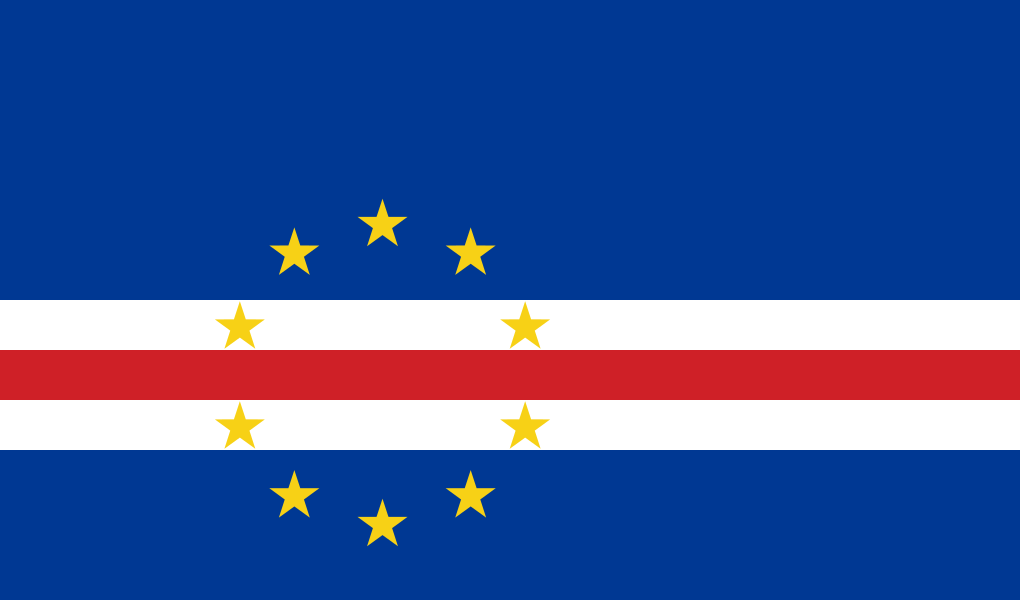
No registration is required, but every flight must be cleared with the regulator.
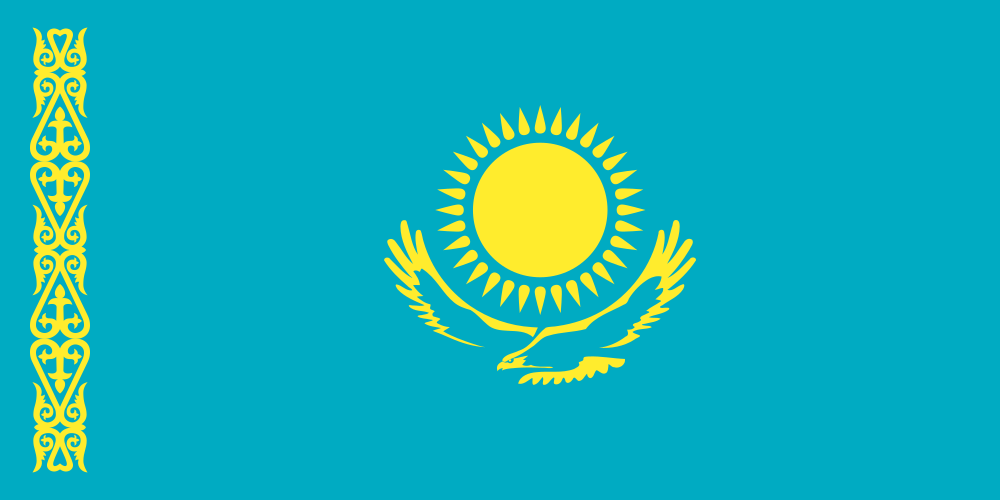
Registration is mandatory for foreign visitors regardless of weight. Border and restricted zones are closed, and Astana and Almaty require clearance.

Every drone must be registered with the civil aviation authority and each flight needs a separate permit. Doha is almost entirely closed.
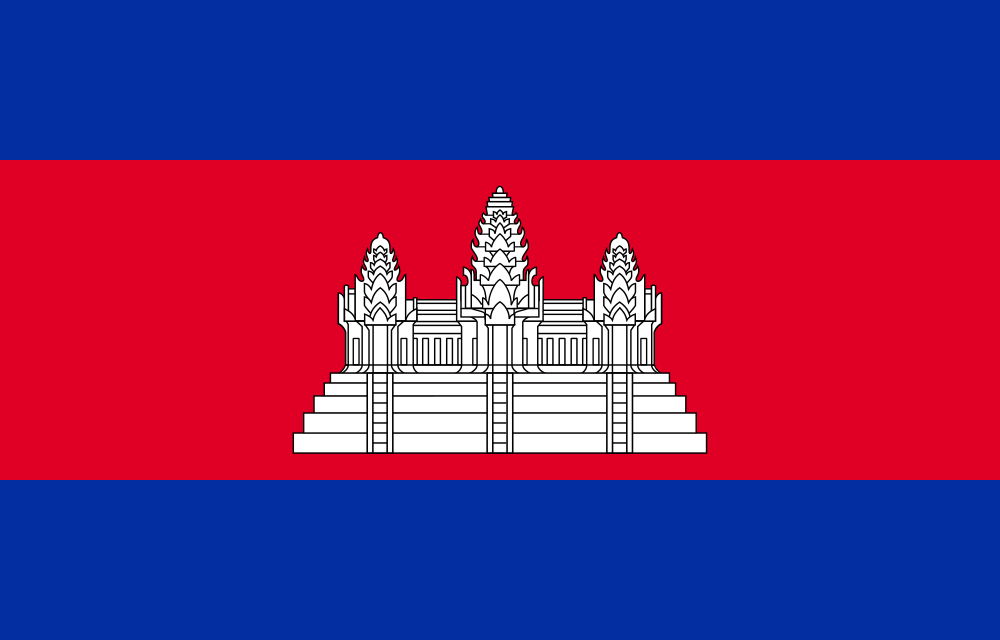
SSCA approval is mandatory, and Angkor and Phnom Penh are closed without clearance.

Drones from 250 g to 25 kg must be registered with Transport Canada and marked with the registration number. A pilot certificate (paid Basic Operations exam) is required. Drones under 250 g need no registration.

The drone must be registered with the KCAA and importing needs separate approval — without it the drone is seized at the airport. Flying in national parks requires a licence.
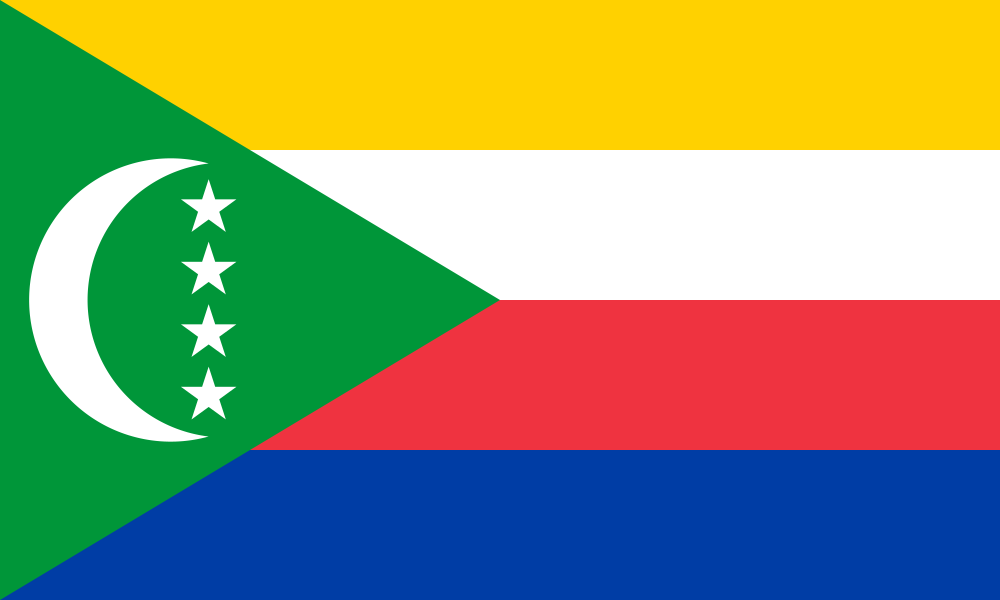
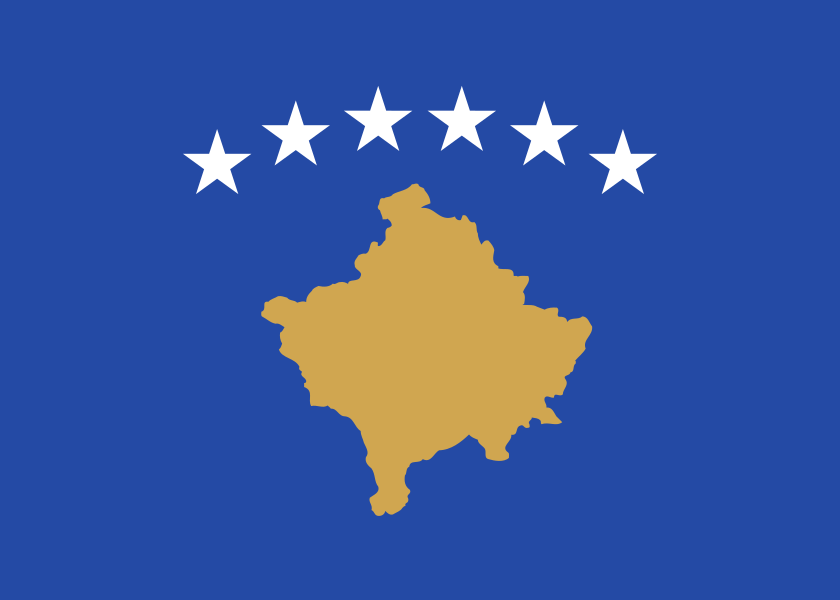
Registration is mandatory for foreign visitors.
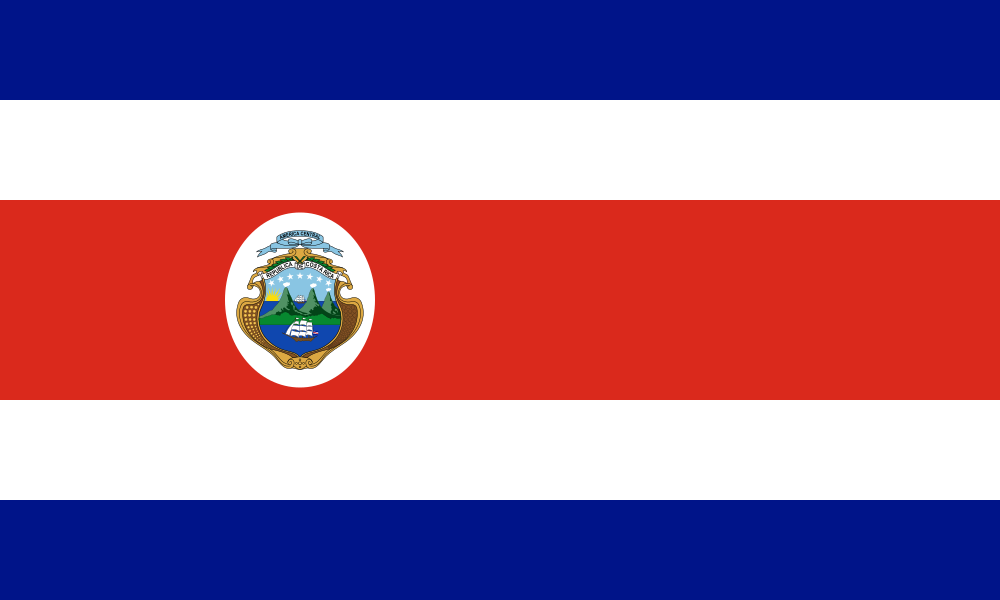
The drone must be registered with the DGAC before the first flight, with no weight threshold. National parks are closed to flying.

You need ANAC authorisation and drone registration, but a foreigner can only register through a local sponsor — a company or resident.

Drones from 250 g are registered with Aerocivil, and commercial filming requires a pilot certificate.

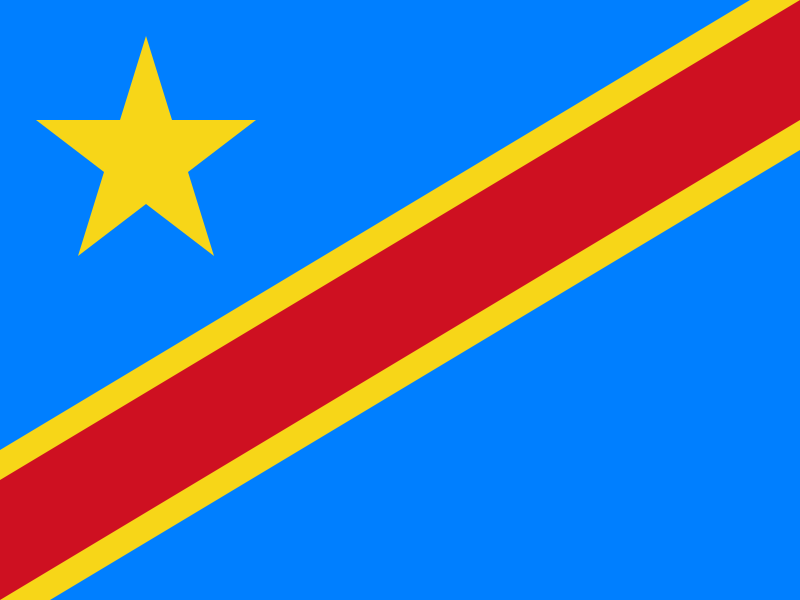
Registration is mandatory for tourists; flying in conflict areas is prohibited.

Private imports of drones are banned — they are seized at customs and often not returned on departure.

Private flying is effectively prohibited, and importing without Interior Ministry approval means seizure at the border.
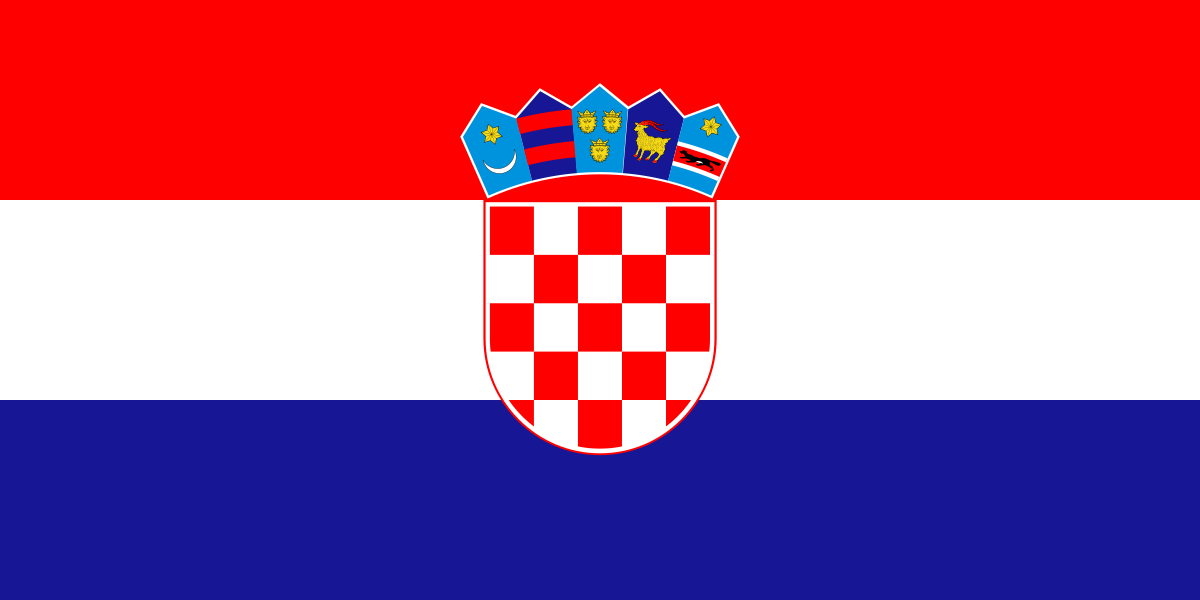
Common EASA rules apply: operator registration is required for drones from 250 g, and for any drone with a camera — which covers virtually every consumer model. You also need the free A1/A3 online test, and the operator ID must be stuck on the drone. One registration is valid across the whole EU.
Since 2026 (civil aviation agency instruction) any drone with a camera and any drone over 150 g must be registered with the Civil Aviation Agency: foreigners get temporary registration, applying within 10 working days of entry, with up to 10 working days to process. The operator needs a certificate — an online test of 10 questions on the Air Code. One drone for personal use can be brought in. Border areas, airports and military sites are off limits.
Common EASA rules apply: operator registration is required for drones from 250 g, and for any drone with a camera — which covers virtually every consumer model. You also need the free A1/A3 online test, and the operator ID must be stuck on the drone. One registration is valid across the whole EU.
Foreign tourists are not permitted to fly; the Ministry of Transport handles requests case by case.
You need TCAA registration and an import permit; filming in national parks costs extra and is expensive.
Every drone must be registered with the NBTC as a radio transmitter, and a drone with a camera (or any drone from 2 kg) also with the CAAT: an online pilot test plus liability insurance of at least 1 million baht. Registration requires a Thai SIM card, so you cannot complete it all before arrival; flight requests go to the CAAT at least 3 days ahead. Flying without CAAT registration risks a fine up to 40,000 baht, up to a year in prison, or both; an unregistered transmitter under NBTC rules, according to Thai press reports, up to 100,000 baht and up to 5 years.
ANAC authorisation and drone registration are required.

The drone and operator must be registered before arrival, and customs inspects the gear.
There are no flight rules. Tour operators report that drones are a prohibited import and are confiscated at Ashgabat airport customs.
Importing drones is banned without Ministry of Defence approval, and they are seized at the airport.
Drones over 500 g must be registered with the SHGM, which requires a Turkish ID number — awkward for tourists. Drones under 500 g need no registration. Local bans are common over historical sites and beaches.

Foreign operators must meet the TTCAA in person before the first flight, and the drone is registered on import.
You need drone registration and a foreign pilot permit, with no weight threshold.
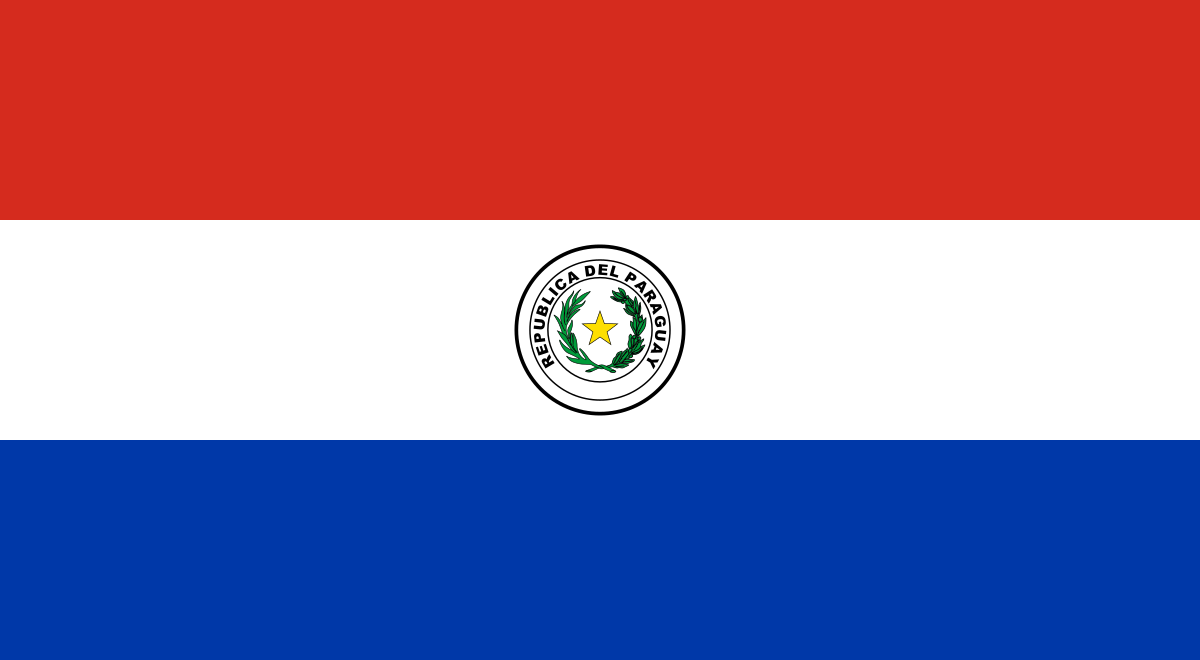
A pilot licence and DINAC drone registration are required.
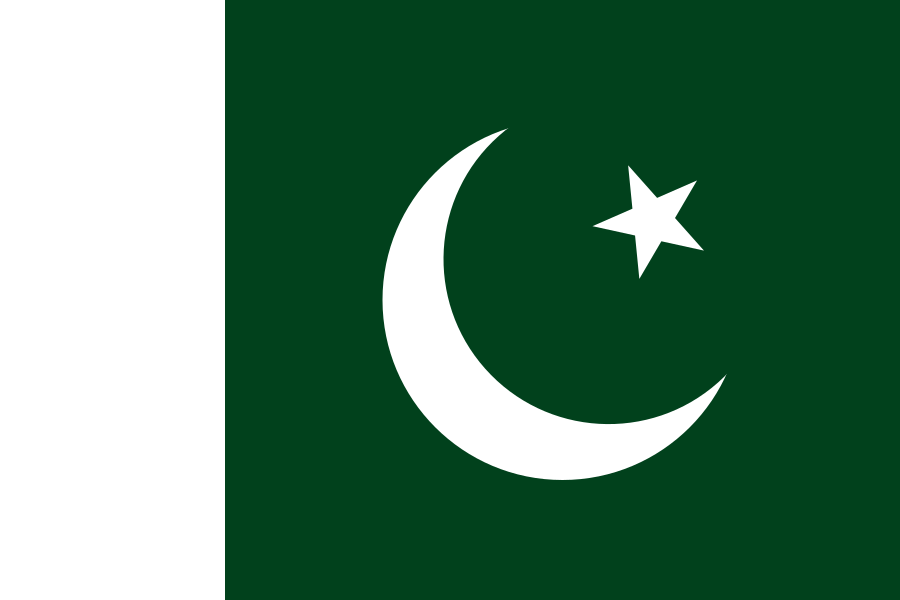
The PCAA framework is still being developed: formally no licence or registration is required, but imports are controlled and rules keep changing — check with the PCAA before you fly out.
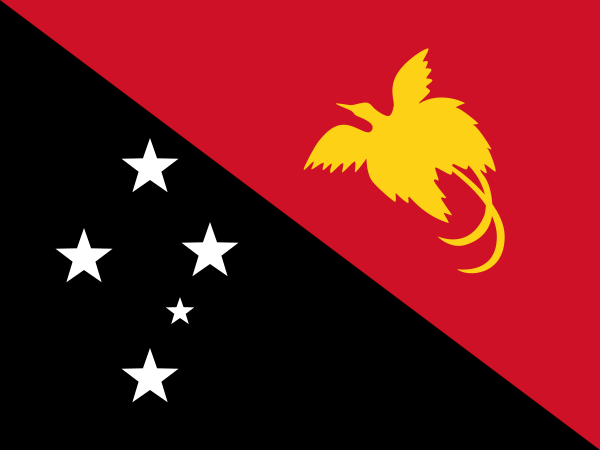
Registration and authorisation are mandatory for foreign visitors, with no weight threshold.

Registration is mandatory for foreign visitors.


The drone must be registered with the DGAC, and flying over archaeological sites (including Machu Picchu) is banned without Ministry of Culture approval.

Common EASA rules apply: operator registration is required for drones from 250 g, and for any drone with a camera — which covers virtually every consumer model. You also need the free A1/A3 online test, and the operator ID must be stuck on the drone. One registration is valid across the whole EU.

Common EASA rules apply: operator registration is required for drones from 250 g, and for any drone with a camera — which covers virtually every consumer model. You also need the free A1/A3 online test, and the operator ID must be stuck on the drone. One registration is valid across the whole EU.

Common EASA rules apply: operator registration is required for drones from 250 g, and for any drone with a camera — which covers virtually every consumer model. You also need the free A1/A3 online test, and the operator ID must be stuck on the drone. One registration is valid across the whole EU.
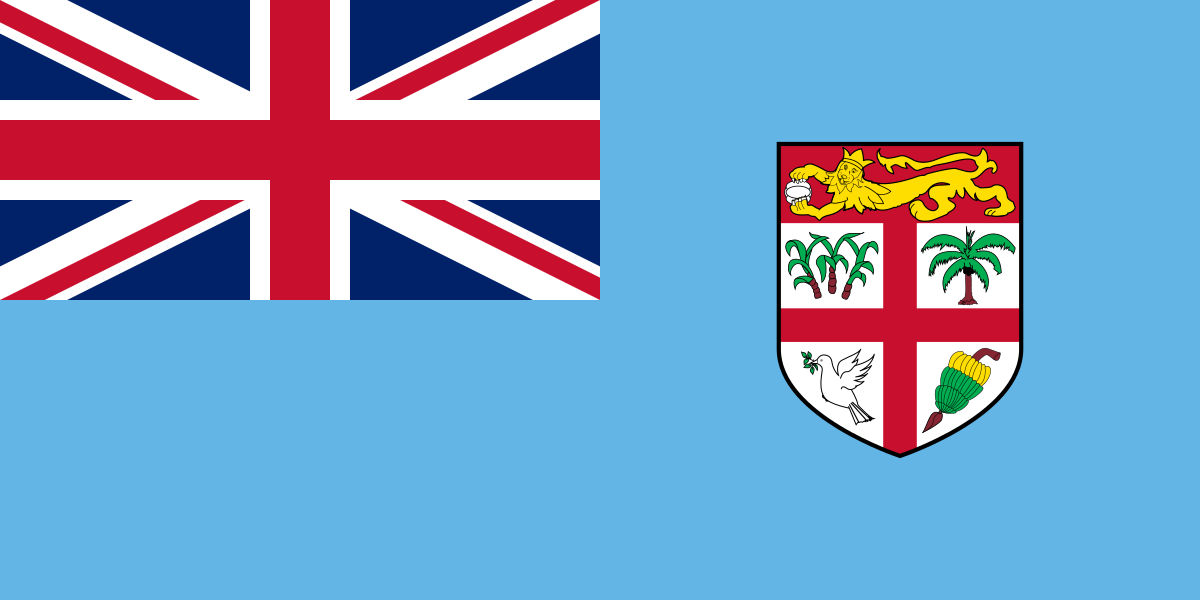
You need drone registration and a permit; models over 2 kg require commercial authorisation.

Common EASA rules apply: operator registration is required for drones from 250 g, and for any drone with a camera — which covers virtually every consumer model. You also need the free A1/A3 online test, and the operator ID must be stuck on the drone. One registration is valid across the whole EU.

The drone must be registered with CAAP; flying beyond visual line of sight or over people is prohibited.

Common EASA rules apply: operator registration is required for drones from 250 g, and for any drone with a camera — which covers virtually every consumer model. You also need the free A1/A3 online test, and the operator ID must be stuck on the drone. One registration is valid across the whole EU.
Drones from 250 g are registered with the CAD, and models over 250 g require online training. There are few places where you may fly.
순위에 포함된 국가: 197
무게 등급: 왜 모두가 250그램을 이야기할까
거의 모든 나라에서 요건은 기종이 아니라 이륙 중량으로 정해집니다. 기준값은 다르지만 논리는 같습니다. 드론이 가벼울수록 서류가 적습니다.
Drone rules in popular destinations
Yes, with registration from 100 g. This is one of the lowest thresholds in the world — the popular 249 g models do not get you off the hook here. Remote ID is required. Flights over densely inhabited districts (DID) — which covers most of Tokyo and Osaka — need permission, and city parks are off limits. Country overview
Yes, with registration. Common EASA rules apply: operator registration is required for drones from 250 g, and for any drone with a camera — which covers virtually every consumer model. You also need the free A1/A3 online test, and the operator ID must be stuck on the drone. One registration is valid across the whole EU. Country overview
Yes, with registration. FAA registration is mandatory for drones from 250 g ($5 for 3 years). All recreational flyers, regardless of weight, must pass the free TRUST test and carry the certificate. Remote ID is required. Flying is banned in US national parks. Country overview
Yes, with registration. Drones from 250 g must be registered with AFAC. Filming over INAH archaeological sites (Chichen Itza, Teotihuacan and others) is prohibited without a permit. Country overview
Yes, with registration. Drones from 250 g are registered via SIDOPI-GO. Bali adds its own limits: temples, ceremonies and most beach resorts are closed to filming, and there is a no-fly zone around Ngurah Rai airport. Country overview
Yes, with registration. Drones over 500 g must be registered with the SHGM, which requires a Turkish ID number — awkward for tourists. Drones under 500 g need no registration. Local bans are common over historical sites and beaches. Country overview
Yes, but every drone must be registered. Every drone must be registered with the NBTC as a radio transmitter, and a drone with a camera (or any drone from 2 kg) also with the CAAT: an online pilot test plus liability insurance of at least 1 million baht. Registration requires a Thai SIM card, so you cannot complete it all before arrival; flight requests go to the CAAT at least 3 days ahead. Flying without CAAT registration risks a fine up to 40,000 baht, up to a year in prison, or both; an unregistered transmitter under NBTC rules, according to Thai press reports, up to 100,000 baht and up to 5 years. Country overview
Yes, but every drone must be registered. Since 1 July 2026, a drone must be registered before use regardless of weight. A flight permit exemption applies only to recreational flights with aircraft strictly below 250 g, within visual line of sight and outside prohibited and restricted zones. Registration and separate import or temporary import procedures still apply. A foreign pilot needs a Vietnamese guarantor, either an organization or an individual. Aircraft of 250 g or more require a pilot licence and a flight permit unless another statutory exemption applies. Submit an ordinary flight application at least 7 days ahead; a complete application is reviewed within 5 working days. If a NOTAM is required, apply at least 12 days ahead. When military or civil flight operations are affected, notify the local military and police authorities and the flight control facility. Country overview
In practice, no. Importing drones is banned: they are seized at the airport and not always returned. Flying without government permission is illegal. Simply do not bring a drone to Morocco. Country overview
Yes, without registration. One of the most drone-friendly countries: recreational flying with light drones needs no registration. The usual limits apply — no airports, military sites or crowds. Country overview
드론을 날릴 수 있는 곳과 세관에서 압수당하는 곳
여행지의 드론은 좋은 영상을 주지만 장비를 잃을 위험도 있습니다. 규정 차이는 큽니다. 호주와 뉴질랜드에서는 취미 비행에 등록이 전혀 필요 없고, 일본은 100g부터 등록해야 하며, 모로코나 이집트에서는 공항에서 압수되고 돌려받지 못하는 경우도 있습니다.
출발 전에 확인할 것: 드론을 반입할 수 있는지, 등록이 필요한지와 몇 그램부터인지, 조종자 시험과 배상 책임 보험이 필요한지. 일부 국가는 등록에 몇 주가 걸리고 현지 전화번호나 세금 번호를 요구합니다. 미리 시작하세요.
지역별 금지도 따로 확인하세요. 국립공원, 유적지, 사원, 해변 리조트, 도심은 비행이 전반적으로 허용된 나라에서도 금지인 경우가 많습니다.
공개 자료와 각국 항공 당국 규정을 바탕으로 정리했습니다. 요건은 자주 바뀌므로 출발 전 해당국 항공 당국 사이트에서 다시 확인하세요.