
Ülkelere göre drone kuralları
Nerede kayıt gerekiyor, hangi ağırlıktan itibaren ve drone’u nereye hiç sokamazsınız

Foreign visitors are not permitted to fly.

Common EASA rules apply: operator registration is required for drones from 250 g, and for any drone with a camera — which covers virtually every consumer model. You also need the free A1/A3 online test, and the operator ID must be stuck on the drone. One registration is valid across the whole EU.
FAA registration is mandatory for drones from 250 g ($5 for 3 years). All recreational flyers, regardless of weight, must pass the free TRUST test and carry the certificate. Remote ID is required. Flying is banned in US national parks.

Foreign visitors are not permitted to fly and there is no separate framework.

Foreign visitors are not permitted to fly and there is no tourist registration.

Tourists need no registration — only the general rules apply: keep it in sight, away from airports and people.

Every drone must be registered with ANAC, and flying beyond visual line of sight requires a pilot certificate.

Rules are aligned with EASA: operator registration from 250 g and for any drone with a camera, plus the online test. National regulators word this differently — check the local authority before you travel.
Recreational flying needs no registration — just follow the CASA rules: below 120 m, within visual line of sight, 30 m away from people, one drone at a time. Registration is only required for commercial operations.

Common EASA rules apply: operator registration is required for drones from 250 g, and for any drone with a camera — which covers virtually every consumer model. You also need the free A1/A3 online test, and the operator ID must be stuck on the drone. One registration is valid across the whole EU.
Flights require State Civil Aviation Agency approval, and imports are restricted: without prior clearance the drone is seized at the airport.

Registration and a permit are required, plus a customs deposit of half the drone's appraised value.

Registration is mandatory for any drone and flights require prior permission.

You need CAAB approval; importing without it ends in confiscation.
Drone imports are suspended: you need an exemption, a customs declaration and a Telecommunications Unit licence (BBD 30).

Flights require prior clearance from the authorities, and border areas are closed.

Common EASA rules apply: operator registration is required for drones from 250 g, and for any drone with a camera — which covers virtually every consumer model. You also need the free A1/A3 online test, and the operator ID must be stuck on the drone. One registration is valid across the whole EU.
Recreational flying by tourists is banned. Commercial import is only possible through an authorised local company.

The drone must be registered with the authorities before flying.

Every drone must be registered with the GCAA, plus the DCAA in Dubai. Flying is allowed only in designated zones with permission; areas around airports are strictly off limits. Bringing a drone in without prior registration can end with confiscation at customs.
You need an Operator ID (paid registration, from 250 g or for any drone with a camera) and a Flyer ID — a free online test. Both are issued on the CAA website. Keep 150 m away from crowds and built-up areas.

Drones over 250 g are registered online; models from 6 kg pay a registration fee.
Rules are aligned with EASA: operator registration from 250 g and for any drone with a camera, plus the online test. National regulators word this differently — check the local authority before you travel.

Flying without government permission is banned and importing requires prior clearance.

Drones from 250 g are registered with ANAC (SISANT system) and flights are cleared through SARPAS. Liability insurance is mandatory for drones over 250 g.
Foreign visitors are not permitted to fly and cannot bring a drone in for recreation.

Common EASA rules apply: operator registration is required for drones from 250 g, and for any drone with a camera — which covers virtually every consumer model. You also need the free A1/A3 online test, and the operator ID must be stuck on the drone. One registration is valid across the whole EU.
A pilot licence and ANAC drone registration are required.

Registration is mandatory; tourists need no pilot licence.
Civilian flights are banned and importing is possible only with special permission.
No registration is required, but every flight must be cleared with the regulator.
Importing and using drones privately is prohibited.
Foreign visitors are not permitted to fly.

You need ANAC authorisation and drone registration, but a foreigner can only register through a local sponsor — a company or resident.

Neither registration nor a pilot licence is needed — but the country is unstable and filming military sites is prohibited.

Common EASA rules apply: operator registration is required for drones from 250 g, and for any drone with a camera — which covers virtually every consumer model. You also need the free A1/A3 online test, and the operator ID must be stuck on the drone. One registration is valid across the whole EU.

Real-name registration is mandatory for drones from 250 g via the CAAC website — a Chinese phone number is needed. Beijing and its surroundings are almost entirely closed, as are border areas and Tibet.
Drones from 250 g are registered with the CAD, and models over 250 g require online training. There are few places where you may fly.

Common EASA rules apply: operator registration is required for drones from 250 g, and for any drone with a camera — which covers virtually every consumer model. You also need the free A1/A3 online test, and the operator ID must be stuck on the drone. One registration is valid across the whole EU.
Drones over 2 kg must be registered with IDAC and insured. Lighter models need no registration.
Drone registration and a pilot licence are required.

Tourists need no registration. Customs let in a drone worth up to $500 duty-free; above that the duty reaches 35%. The Galapagos are closed to flying.

Foreign visitors are not permitted to fly and there is no registration.

Drone registration, a pilot licence and insurance are required.

Drones from 250 g are registered via SIDOPI-GO. Bali adds its own limits: temples, ceremonies and most beach resorts are closed to filming, and there is a no-fly zone around Ngurah Rai airport.
Foreign visitors are not permitted to fly.
Registration is not required for tourists, and drones under 250 g are fully exempt. Keep the drone in sight and stay below 50 m without permission.

Common EASA rules apply: operator registration is required for drones from 250 g, and for any drone with a camera — which covers virtually every consumer model. You also need the free A1/A3 online test, and the operator ID must be stuck on the drone. One registration is valid across the whole EU.
You need an import licence and written SWACAA approval, both arranged before arrival.

Importing drones without government approval is banned and they are confiscated at customs.

Importing drones is banned: they are seized at the airport and not always returned. Flying without government permission is illegal. Simply do not bring a drone to Morocco.
You need drone registration and a permit; models over 2 kg require commercial authorisation.

The drone must be registered with CAAP; flying beyond visual line of sight or over people is prohibited.


Common EASA rules apply: operator registration is required for drones from 250 g, and for any drone with a camera — which covers virtually every consumer model. You also need the free A1/A3 online test, and the operator ID must be stuck on the drone. One registration is valid across the whole EU.

Common EASA rules apply: operator registration is required for drones from 250 g, and for any drone with a camera — which covers virtually every consumer model. You also need the free A1/A3 online test, and the operator ID must be stuck on the drone. One registration is valid across the whole EU.

The drone must be registered; tourists need no pilot licence.
Registration is mandatory for tourists.

The drone must be registered with the GCAA before import, and flights require a permit.

Foreign visitors are not permitted to fly and there is no registration.

Foreign visitors are not permitted to fly.

The drone must be registered before the first flight; no pilot licence is needed.

DGAC registration applies to drones over 100 g — a lower threshold than usual. Check your model in the regulator's drone selector.

Registration is mandatory for tourists.

Flying for fun is only allowed over your own property; anything else needs RPAS registration and a pilot licence. National parks are closed.

Registration applies to drones over 2 kg, and liability insurance is mandatory. Almost all of Seoul is restricted airspace requiring advance permission. The border zone with North Korea is fully closed.
Foreign visitors are not permitted to fly and there is no registration.

One of the most drone-friendly countries: recreational flying with light drones needs no registration. The usual limits apply — no airports, military sites or crowds.
Foreign visitors are not permitted to fly and there is no framework.
Common EASA rules apply: operator registration is required for drones from 250 g, and for any drone with a camera — which covers virtually every consumer model. You also need the free A1/A3 online test, and the operator ID must be stuck on the drone. One registration is valid across the whole EU.
Formally, drones over 250 g are registered on the DigitalSky portal and require a pilot certificate and insurance. In practice foreigners cannot fly: only Indian citizens or companies may register a drone, and private imports are banned — customs will seize it.
Common EASA rules apply: operator registration is required for drones from 250 g, and for any drone with a camera — which covers virtually every consumer model. You also need the free A1/A3 online test, and the operator ID must be stuck on the drone. One registration is valid across the whole EU.

A pilot licence and drone registration are required; insurance is recommended.

Foreign visitors are not permitted to fly and there is no registration procedure.

Importing and flying are banned without government permission, and drones are seized at the border. The risk is not just losing the gear but facing espionage accusations — leave it at home.

Common EASA rules apply: operator registration is required for drones from 250 g, and for any drone with a camera — which covers virtually every consumer model. You also need the free A1/A3 online test, and the operator ID must be stuck on the drone. One registration is valid across the whole EU.

Common EASA rules apply: operator registration is required for drones from 250 g, and for any drone with a camera — which covers virtually every consumer model. You also need the free A1/A3 online test, and the operator ID must be stuck on the drone. One registration is valid across the whole EU.
Drones from 250 g must be registered with the Civil Aviation Authority. Large parts of the country are closed to flying, with strict bans around military sites and borders.

Common EASA rules apply: operator registration is required for drones from 250 g, and for any drone with a camera — which covers virtually every consumer model. You also need the free A1/A3 online test, and the operator ID must be stuck on the drone. One registration is valid across the whole EU.

Common EASA rules apply: operator registration is required for drones from 250 g, and for any drone with a camera — which covers virtually every consumer model. You also need the free A1/A3 online test, and the operator ID must be stuck on the drone. One registration is valid across the whole EU.

Common EASA rules apply: operator registration is required for drones from 250 g, and for any drone with a camera — which covers virtually every consumer model. You also need the free A1/A3 online test, and the operator ID must be stuck on the drone. One registration is valid across the whole EU.
Common EASA rules apply: operator registration is required for drones from 250 g, and for any drone with a camera — which covers virtually every consumer model. You also need the free A1/A3 online test, and the operator ID must be stuck on the drone. One registration is valid across the whole EU.

Registration is mandatory for tourists; a personal drone needs no separate import licence, a commercial one does.
This is one of the lowest thresholds in the world — the popular 249 g models do not get you off the hook here. Remote ID is required. Flights over densely inhabited districts (DID) — which covers most of Tokyo and Osaka — need permission, and city parks are off limits.
SSCA approval is mandatory, and Angkor and Phnom Penh are closed without clearance.

CCAA authorisation must be requested at least 30 days in advance; importing is allowed.

Drones from 250 g to 25 kg must be registered with Transport Canada and marked with the registration number. A pilot certificate (paid Basic Operations exam) is required. Drones under 250 g need no registration.
Rules are aligned with EASA: operator registration from 250 g and for any drone with a camera, plus the online test. National regulators word this differently — check the local authority before you travel.

Every drone must be registered with the civil aviation authority and each flight needs a separate permit. Doha is almost entirely closed.
Registration is mandatory for foreign visitors regardless of weight. Border and restricted zones are closed, and Astana and Almaty require clearance.

The drone must be registered with the KCAA and importing needs separate approval — without it the drone is seized at the airport. Flying in national parks requires a licence.
Common EASA rules apply: operator registration is required for drones from 250 g, and for any drone with a camera — which covers virtually every consumer model. You also need the free A1/A3 online test, and the operator ID must be stuck on the drone. One registration is valid across the whole EU.

Foreign visitors are not permitted to fly, and there is no separate framework — do not count on a grey area.
Foreign visitors are not permitted to fly.

Drones from 250 g are registered with Aerocivil, and commercial filming requires a pilot certificate.

Foreign visitors are not permitted to fly.

Foreign visitors are not permitted to fly and there is no registration.
Registration is mandatory for tourists; flying in conflict areas is prohibited.
Registration is mandatory for foreign visitors.
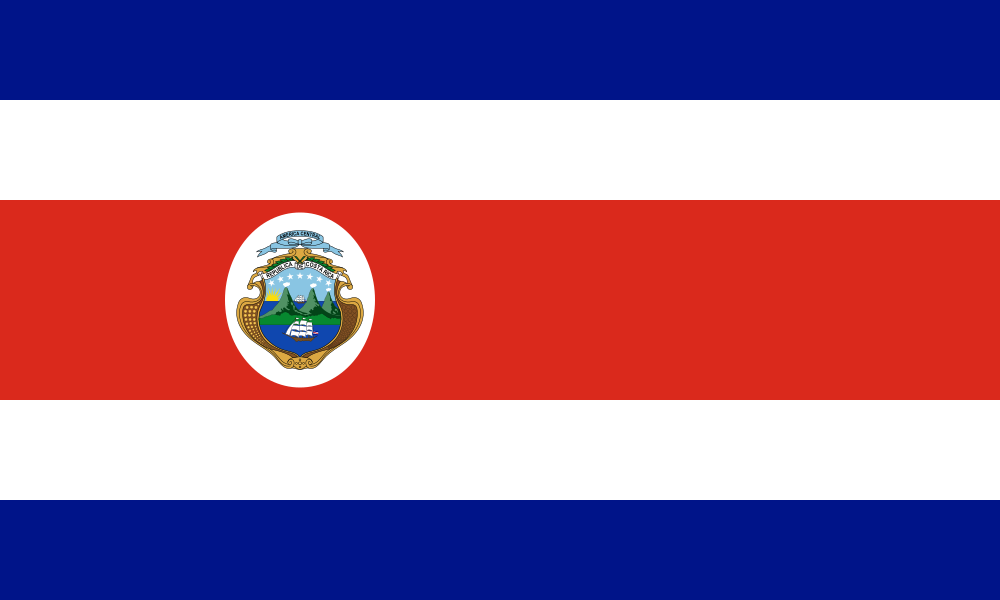
The drone must be registered with the DGAC before the first flight, with no weight threshold. National parks are closed to flying.

Private flying is effectively prohibited, and importing without Interior Ministry approval means seizure at the border.
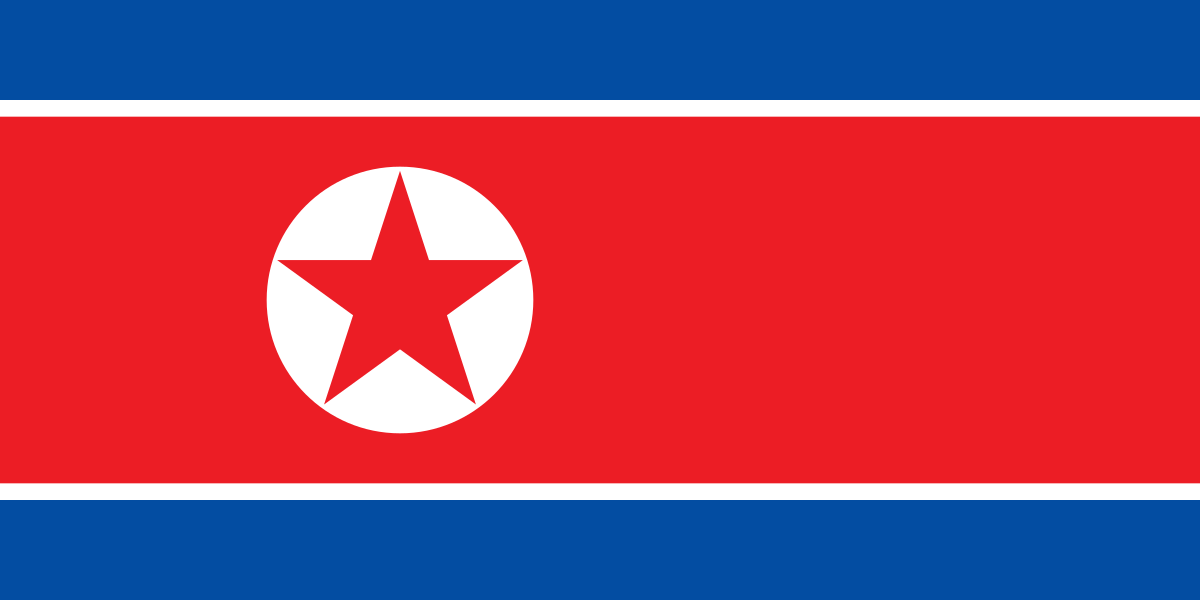
Foreign visitors are banned from flying and tourists cannot obtain authorisation.

Rules are aligned with EASA: operator registration from 250 g and for any drone with a camera, plus the online test. National regulators word this differently — check the local authority before you travel.

Private imports of drones are banned — they are seized at customs and often not returned on departure.
Government approval is required and rarely granted; without it the drone is seized.
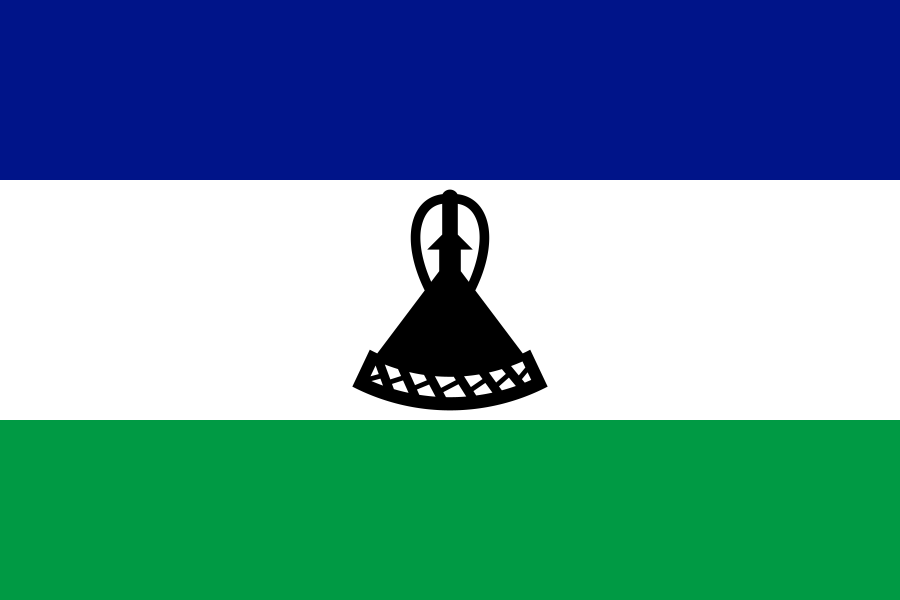
Foreign visitors are not permitted to fly.

Common EASA rules apply: operator registration is required for drones from 250 g, and for any drone with a camera — which covers virtually every consumer model. You also need the free A1/A3 online test, and the operator ID must be stuck on the drone. One registration is valid across the whole EU.

Foreign visitors are not permitted to fly — the rules were never adopted.

Foreign visitors are not permitted to fly.
Common EASA rules apply: operator registration is required for drones from 250 g, and for any drone with a camera — which covers virtually every consumer model. You also need the free A1/A3 online test, and the operator ID must be stuck on the drone. One registration is valid across the whole EU.

Common EASA rules apply: operator registration is required for drones from 250 g, and for any drone with a camera — which covers virtually every consumer model. You also need the free A1/A3 online test, and the operator ID must be stuck on the drone. One registration is valid across the whole EU.

Permits are issued through the Lebanese Army, and some popular DJI models are refused. Customs may hold the drone until departure.

Common EASA rules apply: operator registration is required for drones from 250 g, and for any drone with a camera — which covers virtually every consumer model. You also need the free A1/A3 online test, and the operator ID must be stuck on the drone. One registration is valid across the whole EU.

Common EASA rules apply: operator registration is required for drones from 250 g, and for any drone with a camera — which covers virtually every consumer model. You also need the free A1/A3 online test, and the operator ID must be stuck on the drone. One registration is valid across the whole EU.

Tourists are not allowed to fly; recreational operations are prohibited.

A pilot licence and drone registration with the civil aviation department are required.
Flights require regulator approval; filming over resorts without the hotel's consent is not allowed.
Drones from 250 g are registered with CAAM. Kuala Lumpur and airport surroundings are closed.

Foreign visitors are not permitted to fly and there is no registration.

Common EASA rules apply: operator registration is required for drones from 250 g, and for any drone with a camera — which covers virtually every consumer model. You also need the free A1/A3 online test, and the operator ID must be stuck on the drone. One registration is valid across the whole EU.
Foreign visitors are not permitted to fly.
You need to register the drone with the DCA and hold a foreign pilot licence.

Drones from 250 g must be registered with AFAC. Filming over INAH archaeological sites (Chichen Itza, Teotihuacan and others) is prohibited without a permit.

Importing and flying drones without Ministry of Defence approval is prohibited, and customs will confiscate them. Aerial filming of the pyramids requires an official permit.

Foreign visitors need registration and a pilot licence. Drones over 15 kg require CAAM inspection, with a 25 kg ceiling.
Rules are aligned with EASA: operator registration from 250 g and for any drone with a camera, plus the online test. National regulators word this differently — check the local authority before you travel.

Flights require authorisation; the principality is small and densely built up, with almost no free zones.
Foreign visitors are not permitted to fly.
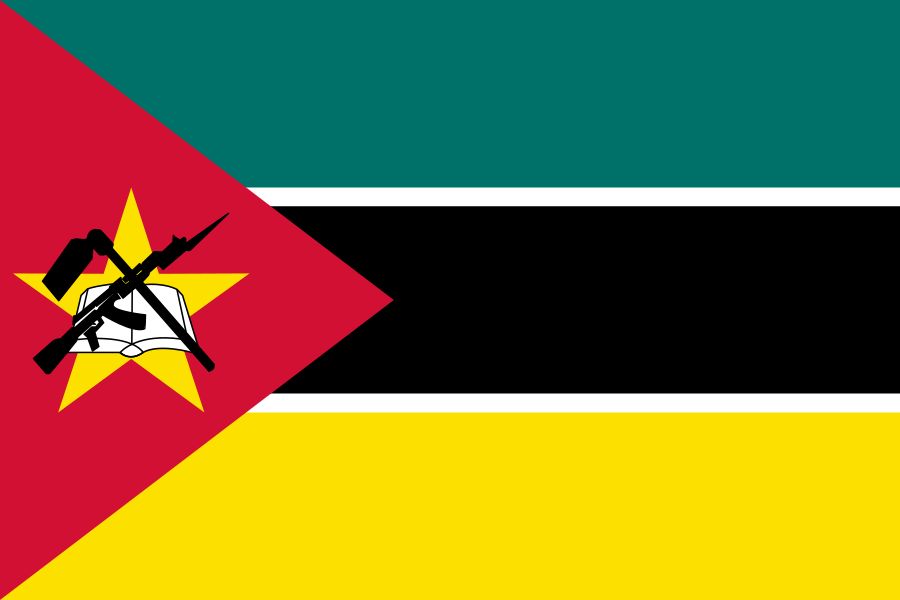
Written IACM approval is required before flying, and the drone must be imported legally.
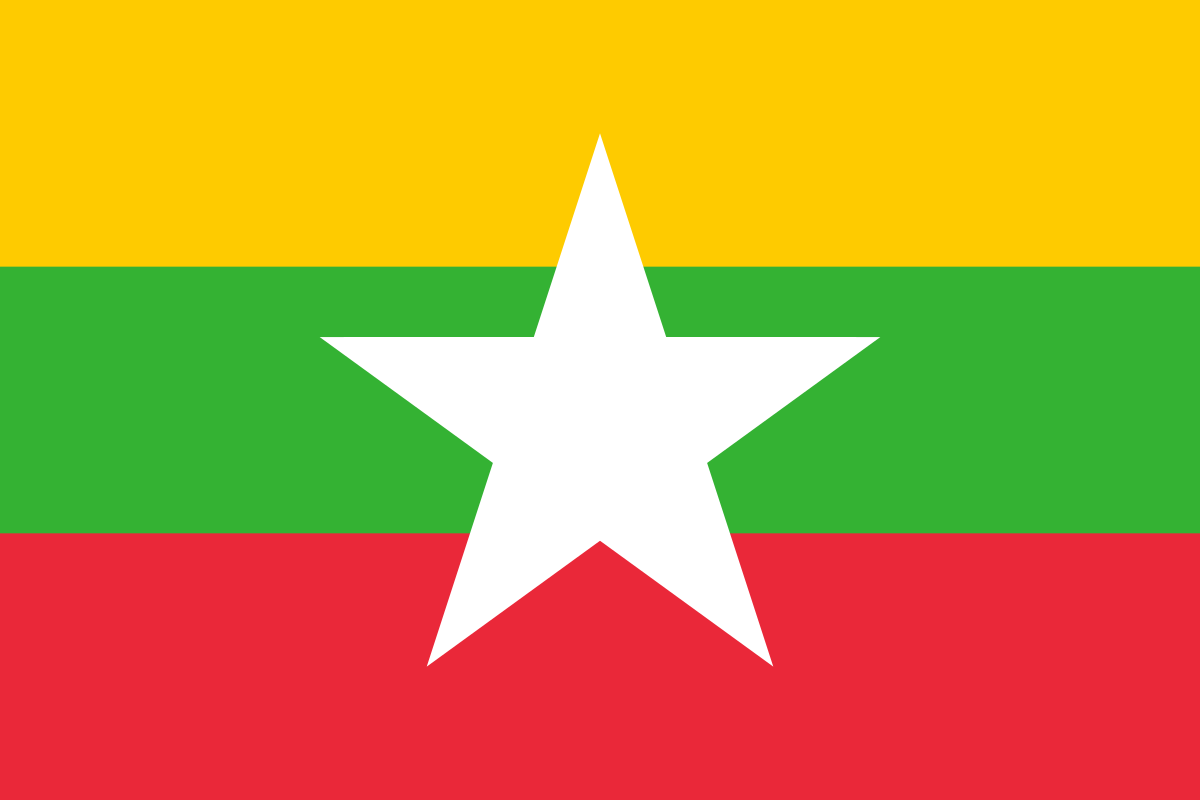
Importing drones is banned and they are seized at the border; flying can bring criminal charges.
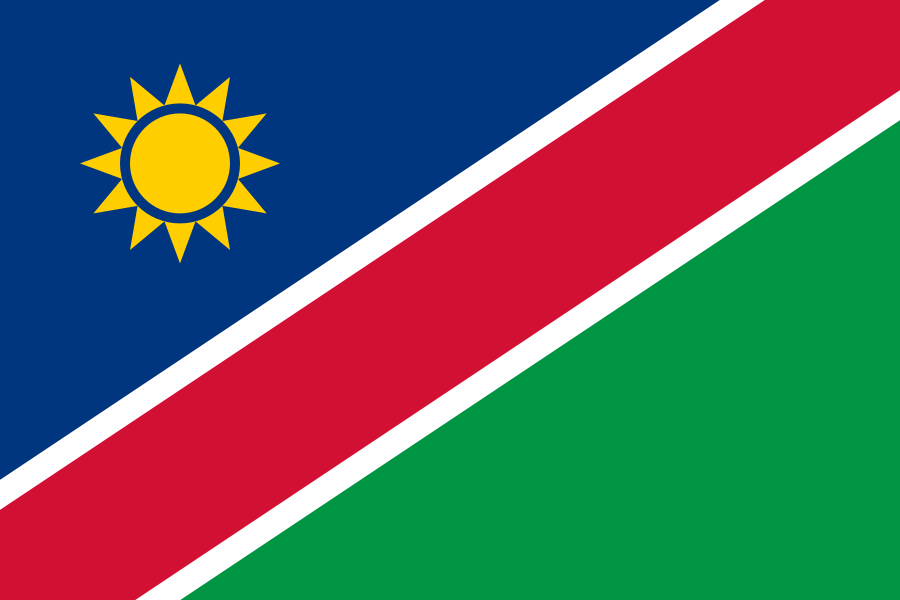
NCAA approval must be requested at least 60 days ahead; there is no weight exemption and the drone is declared on arrival.
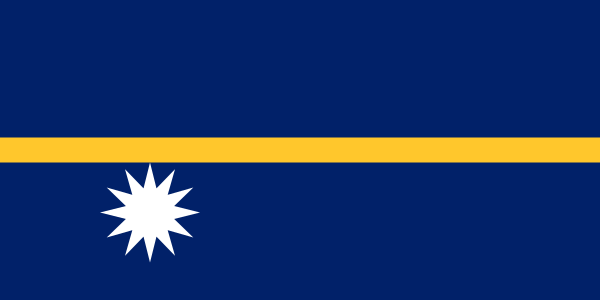
Foreign visitors are not permitted to fly.

Flights require CAAN approval; the Himalayas and airport areas have extra limits, and trekking zones are often closed.
Registration or authorisation is mandatory for foreign visitors.

An NCAA permit is mandatory and expensive; flying without one is illegal.

Flying is effectively not permitted, and importing requires a permit — without it the drone is seized.

Common EASA rules apply: operator registration is required for drones from 250 g, and for any drone with a camera — which covers virtually every consumer model. You also need the free A1/A3 online test, and the operator ID must be stuck on the drone. One registration is valid across the whole EU.
Foreign visitors are not permitted to fly.
Importing, selling and using drones has been banned since 2015, with criminal liability under article 244-4. Since 2024 a first offence brings a fine rather than prison, but the drone is seized at customs on arrival. Permits go only to state bodies and film crews.
The PCAA framework is still being developed: formally no licence or registration is required, but imports are controlled and rules keep changing — check with the PCAA before you fly out.

Registration is mandatory for foreign visitors.
You need drone registration and a foreign pilot permit, with no weight threshold.

Registration and authorisation are mandatory for foreign visitors, with no weight threshold.
A pilot licence and DINAC drone registration are required.

The drone must be registered with the DGAC, and flying over archaeological sites (including Machu Picchu) is banned without Ministry of Culture approval.

Common EASA rules apply: operator registration is required for drones from 250 g, and for any drone with a camera — which covers virtually every consumer model. You also need the free A1/A3 online test, and the operator ID must be stuck on the drone. One registration is valid across the whole EU.

Common EASA rules apply: operator registration is required for drones from 250 g, and for any drone with a camera — which covers virtually every consumer model. You also need the free A1/A3 online test, and the operator ID must be stuck on the drone. One registration is valid across the whole EU.

Common EASA rules apply: operator registration is required for drones from 250 g, and for any drone with a camera — which covers virtually every consumer model. You also need the free A1/A3 online test, and the operator ID must be stuck on the drone. One registration is valid across the whole EU.

Flights require RCAA approval, requested in advance.
Because of the war most regions have UAV flight bans in force and launching a drone leads to detention. The peacetime rules — Rosaviatsia registration above 150 g and local permission to fly over a city — are of little practical use right now.
Tourists need no registration; the general flight rules apply.

Registration is mandatory for tourists.
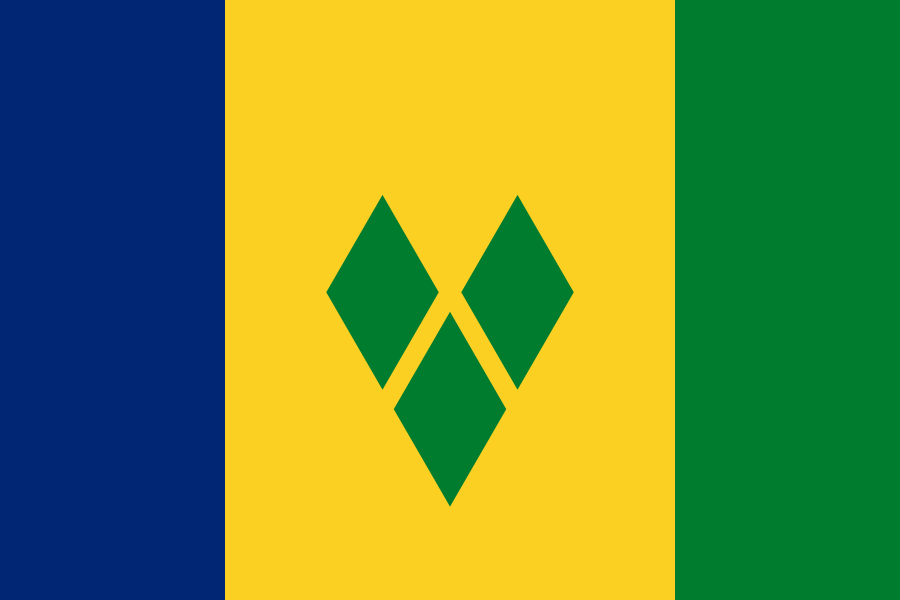
No registration is required, but the general altitude and distance limits apply.

Foreign visitors are not permitted to fly and there is no tourist registration.

Foreign visitors are not permitted to fly and there is no framework — CAMA handles requests.

Foreign visitors are not permitted to fly.
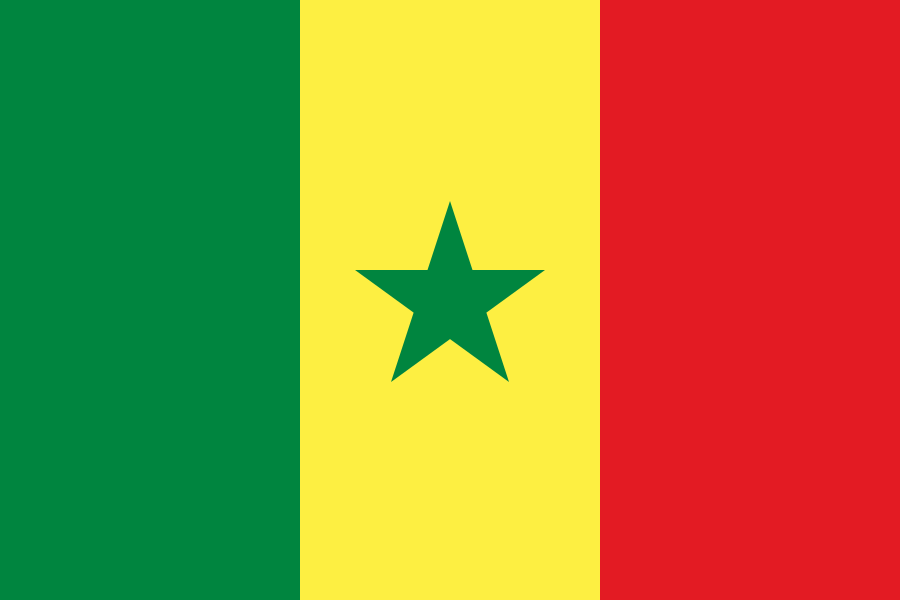
You need an ANACIM import licence and written flight approval before arrival — without them the drone will not be let through.
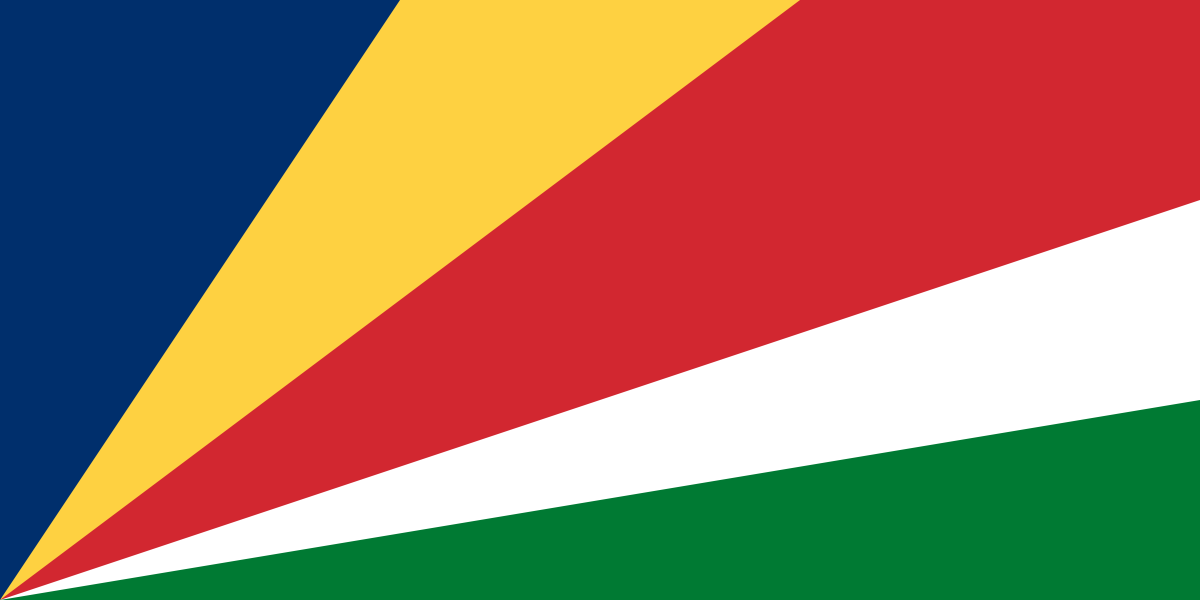
Registration is mandatory from 200 g — lower than the usual 250 g. Insurance is not required but recommended.
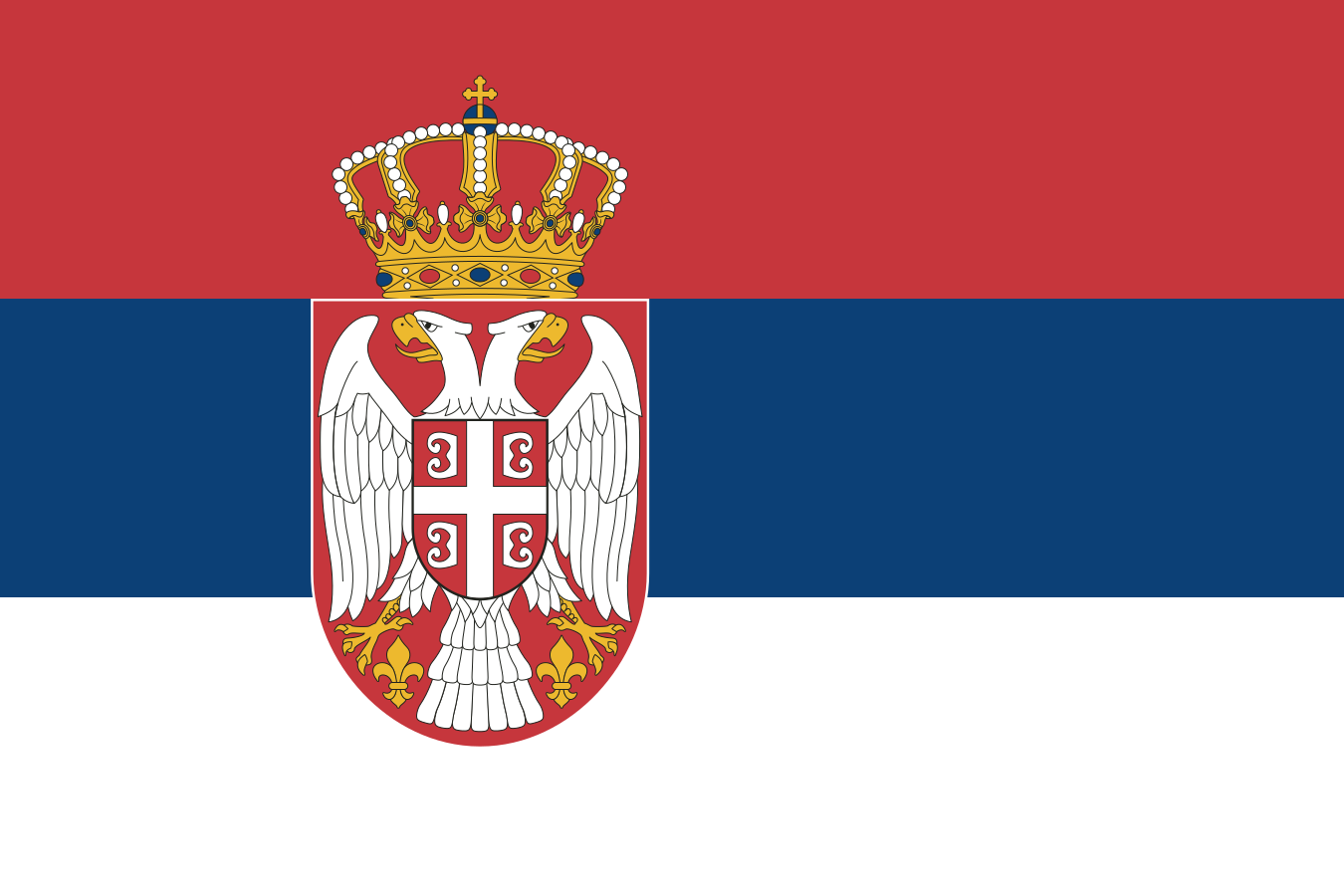
Rules are aligned with EASA: operator registration from 250 g and for any drone with a camera, plus the online test. National regulators word this differently — check the local authority before you travel.

Registration or authorisation is required before the first flight.
CAAS registration applies to drones over 1.5 kg. But the city-state is almost entirely covered by restricted zones: without a permit you may fly only at a handful of sites, with a 60 m altitude cap.
Common EASA rules apply: operator registration is required for drones from 250 g, and for any drone with a camera — which covers virtually every consumer model. You also need the free A1/A3 online test, and the operator ID must be stuck on the drone. One registration is valid across the whole EU.
Common EASA rules apply: operator registration is required for drones from 250 g, and for any drone with a camera — which covers virtually every consumer model. You also need the free A1/A3 online test, and the operator ID must be stuck on the drone. One registration is valid across the whole EU.
Registration or authorisation is required before flying.
Foreign visitors are not permitted to fly.
CAASL registration and a permit for each flight are mandatory, and processing takes time.

Foreign visitors are not permitted to fly and there is no registration procedure.
Registration or authorisation must be obtained before flying.
Foreign visitors are banned from flying and there is no formal import procedure.

GACA registration is mandatory for any drone, and each flight needs a permit. Filming people and sensitive sites is prohibited, and violations are punished harshly.

Drones over 750 g are registered with the DGAC; flying over people or built-up areas needs separate permits.
Foreign tourists are not permitted to fly; the Ministry of Transport handles requests case by case.
You need TCAA registration and an import permit; filming in national parks costs extra and is expensive.
Any drone with a camera must be registered regardless of weight — with two agencies, NBTC and CAAT. Liability insurance of at least 1 million baht is mandatory. Flying unregistered risks a fine up to 100,000 baht or imprisonment. Processing takes weeks, so start before your trip.

Foreign visitors are not permitted to fly and there is no framework.

ANAC authorisation and drone registration are required.

The drone and operator must be registered before arrival, and customs inspects the gear.

Foreign operators must meet the TTCAA in person before the first flight, and the drone is registered on import.
Importing drones is banned without Ministry of Defence approval, and they are seized at the airport.

Foreign visitors are not permitted to fly.
Drones over 500 g must be registered with the SHGM, which requires a Turkish ID number — awkward for tourists. Drones under 500 g need no registration. Local bans are common over historical sites and beaches.
Foreign visitors are not permitted to fly, and there is no registration or import procedure.

You need UCAA approval and import clearance, otherwise the drone is seized at the border.

Civilian flights are banned under martial law — launching a drone leads to detention. The peacetime rules (registration from 250 g) do not apply right now.

You need civil aviation authority approval both to bring the drone in and for each flight, arranged in advance.

Registration only applies to heavy drones from 25 kg, so tourist gear is exempt. The general flight rules still apply.

Bringing a drone in without government approval is banned — customs will seize it. Flights require civil aviation clearance.
Registration with the civil aviation authority must be completed before arrival.
Vatican airspace is closed — it is a permanent no-fly zone inside Rome.

A pilot licence and drone registration are required.
Every flight requires Ministry of Defence approval, which tourists essentially never get. You can bring a drone in, but flying it legally is close to impossible — violations bring fines and confiscation.

Foreign visitors are not permitted to fly.
No registration required. But you need the landowner's consent — which means no flying in DOC national parks and many famous spots without a permit. Maximum 120 m, visual line of sight only.

Common EASA rules apply: operator registration is required for drones from 250 g, and for any drone with a camera — which covers virtually every consumer model. You also need the free A1/A3 online test, and the operator ID must be stuck on the drone. One registration is valid across the whole EU.
You need a remote pilot licence, drone registration and ZCAA approval for temporary import with customs clearance.

The CAAZ application must be filed at least 30 days before arrival, plus a temporary import permit from the revenue authority.
Sıralamadaki ülkeler: 197
Ağırlık sınıfları: herkes neden 250 gramdan bahsediyor
Neredeyse her ülkede gereklilikler modele değil, kalkış ağırlığına bağlı. Eşikler değişir ama mantık aynı: drone ne kadar hafifse o kadar az evrak.
Drone’u nerede uçurabilirsin, nerede gümrükte el konur
Yolculukta drone güzel görüntüler demek ama ekipmanı kaybetme riski de. Kurallar kökten değişiyor: Avustralya ve Yeni Zelanda’da hobi amaçlı uçuş için kayıt hiç gerekmez, Japonya 100 g’dan itibaren kayıt ister, Fas ya da Mısır’da ise drone havalimanında alınır ve her zaman geri verilmez.
Uçuştan önce netleştirilmesi gerekenler: drone’u ülkeye sokabiliyor musun, kayıt gerekli mi ve hangi ağırlıktan, pilot sınavı ve sorumluluk sigortası isteniyor mu. Bazı ülkelerde kayıt haftalar sürer ve yerel telefon ya da vergi numarası ister — erken başla.
Yerel yasakları ayrıca kontrol et: milli parklar, tarihî alanlar, tapınaklar, sahil tesisleri ve şehir merkezleri, uçuşun genel olarak serbest olduğu yerlerde bile drone’a kapalı olabilir.
Veriler açık kaynaklardan ve sivil havacılık otoritelerinin kurallarından derlendi. Gereklilikler sık değişiyor — yola çıkmadan ülkenin havacılık otoritesinin sitesinden doğrula.