
Mexico
A country of ancient pyramids, turquoise cenotes and the best tacos on the planet. From chaotic, magnificent Mexico City to the Caribbean beaches, from Maya ruins to colonial towns, Mexico astonishes with its scale, its colour and its flavour.
どこへ行く
#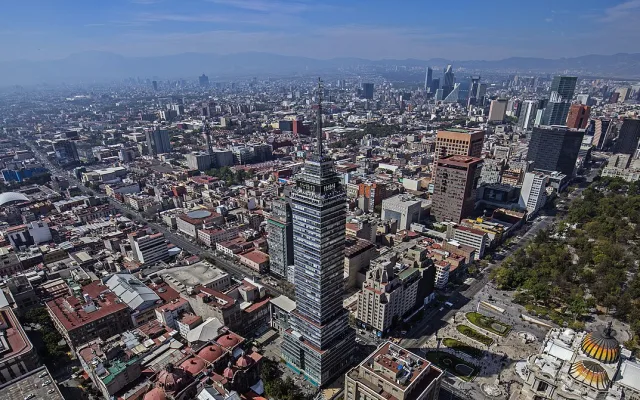
Mexico City
The pyramids of Teotihuacan, bohemian Roma, lucha libre and the best tacos in the world.
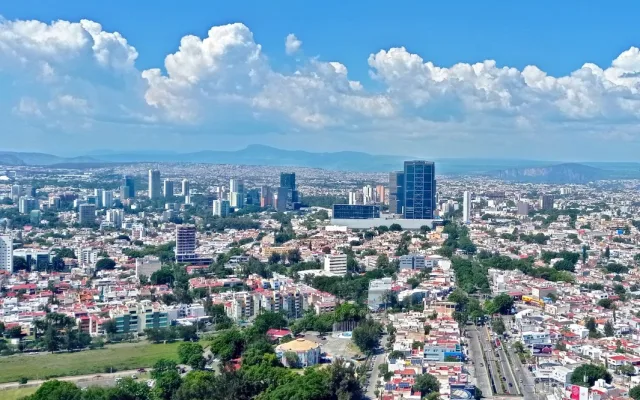
Guadalajara
Birthplace of tequila and mariachi — Mexico's second-largest city, with baroque cathedrals, the Tlaquepaque craft district, and Lake Chapala nearby.
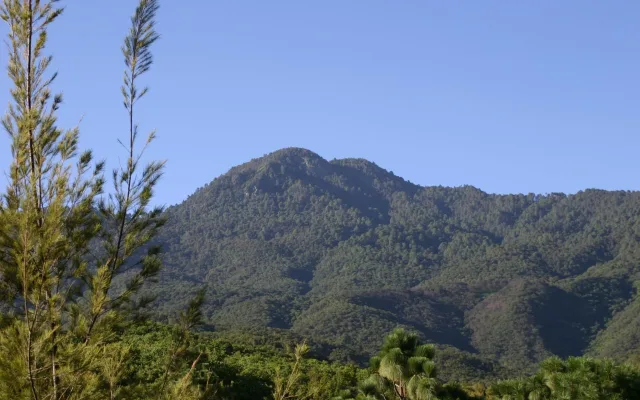
Oaxaca
Culinary and cultural capital of Mexico: seven types of mole, Zapotec black pottery, Monte Albán, and the best mezcal on the planet.
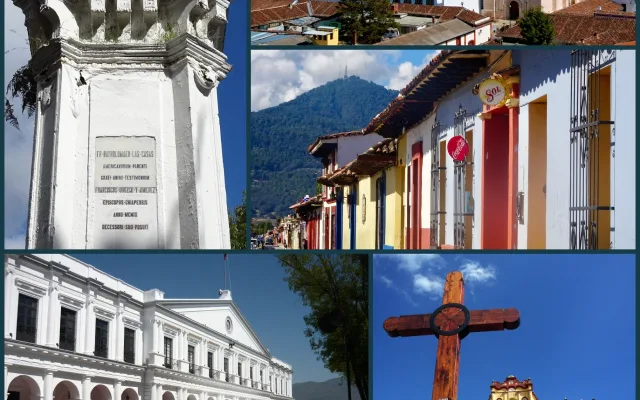
San Cristóbal de las Casas
A colonial mountain city in the state of Chiapas with living Maya communities, misty forests, and the Agua Azul waterfalls nearby.
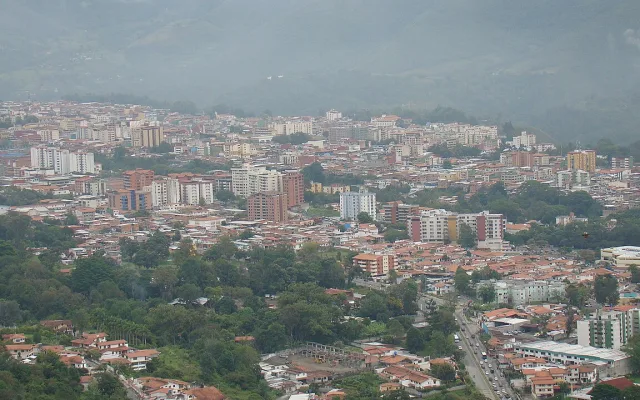
Mérida
The White City of the Yucatán — the peninsula's cultural capital, with cenotes in the surrounding region, the Lucas de Gálvez market, and the Maya ruins of Uxmal.
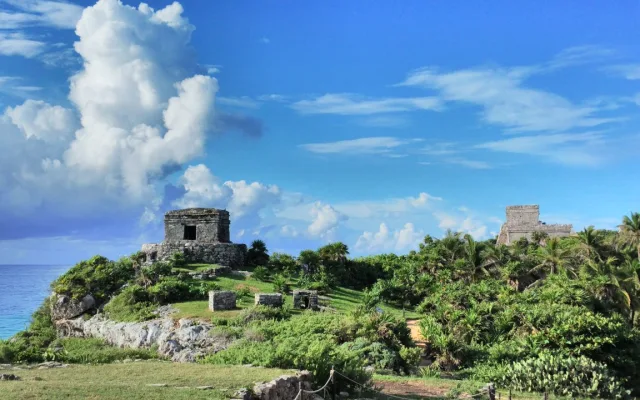
Tulum
Bohemian Caribbean resort with Maya ruins above the sea, crystal-clear cenotes, and a world-class restaurant scene.
見どころ
#Ancient city: The pyramids of Teotihuacan outside Mexico City are the one unmissable site in central Mexico. Arrive at opening time and you can walk both the Pyramid of the Sun and the Pyramid of the Moon before the crowds land. It is an easy half-day trip from the capital.
Wonder of the world: Chichen Itza is worth a trip for the Kukulcan pyramid alone. It is extremely popular, so be at the gate by eight in the morning, before the coaches arrive from the resorts. By eleven the site is unrecognisable.
Maya in the jungle: The ruins of Palenque in Chiapas look like a film set, with pyramids half swallowed by forest. The atmosphere here is far stronger than at the manicured Yucatan sites. Go early, when mist is still sitting in the trees and howler monkeys are audible.
Natural wells: Cenotes are scattered across the whole peninsula and swimming in one is non-negotiable. Pick the lesser-known ones away from Tulum, where entry is cheaper and the water is clearer. Bring biodegradable sunscreen or you will be asked to rinse it off.
Museums: The National Museum of Anthropology in Mexico City holds the Aztec calendar stone and one of the great archaeological collections anywhere. Set aside half a day for it, not an hour. It makes everything you see afterwards at the ruins make sense.
Copper Canyon: The canyon system in the north is bigger and deeper than most people expect. The railway that runs through it is one of the most scenic train journeys on the planet, and it is entirely doable independently.
物価
#Currency: Everything is priced in Mexican pesos, written with a dollar sign. Do not confuse it with the US dollar when reading a restaurant menu, or you will badly misjudge what you are ordering.
Cash: You need cash for taco stands, markets and shared minibuses. Outside hotels and supermarkets, card terminals are less common than you would expect and some places simply refuse plastic.
Cards and ATMs: Visa and Mastercard are widely accepted in cities and resorts, American Express much less so. Withdraw from machines inside bank branches such as BBVA or Banorte rather than freestanding street ATMs, which carry both skimming risk and inflated fees. Always decline the machine's own currency conversion. Wise and Revolut work well here.
Tipping: Ten to fifteen per cent, the propina, is standard in cafes and restaurants. Read the bill first, because the amount is sometimes already included on a line marked propina.
Budget: Costs vary enormously by region. Inland cities such as Oaxaca and Merida are a fraction of the price of Tulum or the Cancun hotel zone for exactly the same standard.
| Item | Price (USD) |
|---|---|
| Street taco | 1.20 |
| Comida corrida set lunch | 5.50 |
| Restaurant dinner | 18.00 |
| Beer from a shop | 1.50 |
| Bottled water 1.5l | 0.90 |
| Metro ride | 0.30 |
| Uber, 5 km | 4.00 |
| ADO bus, 6 hours | 35.00 |
| Chichen Itza entry | 38.00 |
| Cenote entry | 10.00 |
| SIM card | 12.00 |
| Coffee in a cafe | 2.50 |
| Bottle of mezcal | 25.00 |
| Hostel bed per night | 15.00 |
| Domestic flight | 60.00 |
移動手段
#Intercity buses: For long distances use ADO or OCC first-class buses. They are comfortable, air-conditioned and actually run to timetable, which is not a given in the region. Book online in advance for the best fares.
Flights: Volaris and VivaAerobus cover the country cheaply and quickly. Booked ahead, a flight often costs about the same as the equivalent bus, so compare before committing to twelve hours on the road.
Colectivos: These shared minivans are the cheap way to move between beaches and villages. They fill up with passengers and stop anywhere you raise a hand, which makes them slow but extremely convenient.
Taxis and apps: In Mexico City and the larger centres, use Uber or DiDi rather than flagging a car down. It is cheaper than a street taxi and safer, since the driver's details are recorded in the app.
Trains: The new Maya Train links the main sites of the Yucatan peninsula. It is a comfortable way to get from Cancun airport across to Palenque without a long bus day.
Car hire: A car pays for itself on the Yucatan. Roads come in toll and free versions; the toll roads are in far better condition, and the booths often take cash pesos only, so keep notes in the car.
宿泊
#Posadas: The Mexican posada is a small guesthouse, often in a historic building around a courtyard. You can get a clean room with real colonial character in the centre of town for sensible money.
Booking: Use the standard booking platforms but read recent reviews rather than the description. For Cancun and Tulum, check the actual distance to the sea, because "near the beach" frequently means a long, hot walk.
Neighbourhoods: In the capital, pick Roma or Condesa; they are safe, green and full of places to eat. In Oaxaca and Merida, stay in the historic centre so everything is within walking distance.
Apartments: Airbnb is popular and gives you a kitchen along with a more authentic interior. Shopping at the local market and cooking is a serious saving over eating out three times a day.
What to check: In the coastal states air conditioning is a necessity, not a luxury. Confirm mosquito screens on the windows too, because tropical insects will otherwise decide how much you sleep.
Saving money: On a tight budget, look for rooms in the inland pueblos rather than on the coast. The price difference against a beachfront hotel can easily be fivefold for a similar room.
食事
#Taco culture: Start with tacos al pastor, pork carved off a vertical spit straight into a tortilla. It is the cheapest and most reliable street food in the country and it is on almost every corner. Follow the queue of locals rather than the sign.
Set lunches: Look for comida corrida on a handwritten board outside a family cafe. For very little money you get soup, a main, a basket of tortillas and a jug of cold fresh fruit water.
Heat: The food here is genuinely fiery. The bottled salsas left on the table can be nuclear, so try a drop on the edge of a spoon before you pour it over anything.
Drinks: Tequila and mezcal are not drunk as shots here. They are sipped slowly, sometimes alongside orange slices and sal de gusano, a salt ground with dried agave worms.
Breakfast: Order chilaquiles, tortilla chips simmered in chilli sauce with cheese and chicken. It is the standard local cure for a long night and it will keep you going until mid-afternoon.
Water: Never drink from the tap. Buy bottled water from an OXXO; they are open around the clock and there is one in practically every block of every town in the country.
治安
#The golden rule: Avoid travelling between cities after dark. During the day the tourist states are calm, but the risk of robbery on the highways rises sharply at night.
Transport: Use official taxi services or order through Uber. Do not get into an unmarked car that offers you a lift, however friendly the driver appears.
Valuables: Keep expensive cameras and phones out of sight in busy places. On markets and on the Mexico City metro, wear your backpack on your front, because pickpockets there are skilled and quick.
Regions to avoid: Skip the northern border states. Stick to the well-travelled routes through the centre, the Yucatan and the southern states, and read your own government's travel advisory for the specific states on your route.
Police: Tourist areas have dedicated police units whose officers speak English. They are approachable and are the right people to ask for help or directions.
Documents: Carry a photocopy of your passport and leave the original in the safe. Photograph everything and keep the images in cloud storage in case your phone is lost or stolen.
マナーと文化
#Pace: Manana does not mean tomorrow, it means at some point. Mexicans are in no rush, so slow service in a cafe or a late bus is not worth losing your temper over.
Day of the Dead: In early November this is a joyful commemoration of ancestors rather than a period of mourning, complete with parades and marigolds. Oaxaca is the best place to experience it, and accommodation there needs booking months ahead.
Greetings: A light kiss on the cheek is normal when being introduced, even to someone you have just met. Men more often shake hands or embrace, and physical warmth is simply how people communicate here.
Music: Mariachi in enormous sombreros is part of family celebrations. At Plaza Garibaldi in Mexico City you can commission a song from a street band on the spot, which is as fun as it sounds.
Bargaining: Haggling is appropriate and expected in markets, but do it with a smile and without aggression. In ordinary shops prices are fixed and trying to negotiate will just look odd.
Faith: Religion matters enormously, so keep quiet inside churches. In the indigenous communities of Chiapas, photographing people inside places of worship is forbidden and can cause a serious confrontation.
通信・インターネット
#eSIM: The easiest option is to buy an eSIM before you fly, from Airalo or a similar provider, and activate it the moment you land. It removes the need to find a shop with your luggage still on your back.
Local operators: For a physical SIM, Telcel has by far the widest coverage. You can buy one in any OXXO convenience store, and you may be asked for a passport to activate it.
WhatsApp: Practically all business and personal communication in Mexico runs through WhatsApp. Hotels, guides, drivers and restaurants all expect to be contacted that way, so install it before arrival.
Coverage: In cities and resorts 4G is fast and reliable. In the mountains and deep in the jungle the signal drops out entirely, so download offline maps for anywhere off the main highways.
Internet freedom: Everything works normally with no filtering, and free Wi-Fi is standard in hotels and modern cafes. Speeds in cities are perfectly adequate for video calls.
Reliability: In rural areas the connection can go down during heavy thunderstorms, and card terminals go down with it. Keep enough cash on you that a dead terminal is an inconvenience rather than a problem.
会話集
#| English | Spanish | Pronunciation |
|---|---|---|
| Hi | Hola | OH-la |
| Thank you | Gracias | GRA-syas |
| Please | Por favor | por fa-VOR |
| Yes / No | Si / No | see / no |
| How much is it? | Cuanto cuesta? | KWAN-to KWES-ta |
| The bill, please | La cuenta, por favor | la KWEN-ta por fa-VOR |
| Where is the toilet? | Donde esta el bano? | DON-de es-TA el BA-nyo |
| Not spicy | Sin picante | seen pee-KAN-te |
| Help! | Ayuda! | a-YOO-da |
| It's delicious | Esta muy rico | es-TA mwee REE-ko |
| Awesome! (slang) | Que padre! | ke PA-dre |
| Mate / dude (slang) | Guey | way |
| Cool! (slang) | Chido! | CHEE-do |
| No way! (slang) | No manches! | no MAN-ches |
| Tomorrow / later | Manana | ma-NYA-na |
| Beer | Cerveza | ser-VE-sa |
| Beautiful | Bonito | bo-NEE-to |
| Goodbye | Adios | a-DYOS |
| Excuse me | Disculpe | dees-KOOL-pe |
| Water | Agua | AH-gwa |
| Cheers! | Salud! | sa-LOOD |
| Right now (slang) | Ahorita | ao-REE-ta |
役立つ情報
#Drinking water: Only drink water labelled agua purificada. Ice at cheap street stalls is sometimes made from tap water, so ask or skip it in places that look improvised.
Power: Mexico uses American flat two-pin sockets at 110 volts. Travellers from Europe, the UK or Australia need an adapter, and older appliances may need a converter as well.
Visitax: Arriving in Quintana Roo, the state that includes Cancun and Tulum, you are asked to pay Visitax, a state tourist levy. Pay it online and save the QR code to show at the checkpoint. It is a small amount, but the queues at the airport desk are not small.
Apps: Google Maps and Rappi for food delivery are the two you will use most. The ADO app is worth having for bus tickets, since booking early online often brings a real discount.
Sun: Tropical sun is brutal even under cloud. Use high-factor sunscreen and carry more water than you think you need when walking around exposed ruins at midday.
Insurance: Insurance is not formally required to enter, but medical care for foreigners is expensive. Take a policy that covers adventure activities if you plan to dive, surf or climb.
よくある質問
#Most Western passports, including UK, EU, US, Canadian and Australian, receive a tourist entry on arrival for up to 180 days without a visa. Holders of a valid multiple-entry Schengen, US, Canadian, Japanese or UK visa also benefit from simplified entry. Check your own passport's rules before booking, as requirements do change.
Airlines routinely ask for a full package before boarding: a confirmed return ticket rather than a reservation, accommodation bookings covering your stay, and whatever entry permission your passport requires. This is checked at your departure airport, not on arrival. Have printouts as well as phone copies.
The central states, the Yucatan and the south are calm by day and heavily travelled by visitors. The main rules are simple: do not drive between cities after dark, use Uber or official taxis rather than street cars, and avoid the northern border states entirely. Petty theft on markets and the Mexico City metro is the most common actual problem.
First-class buses run by ADO and OCC are the backbone of independent travel: comfortable, punctual and safe. For long distances the low-cost airlines Volaris and VivaAerobus are often no more expensive if booked in advance. Within cities, use Uber or DiDi.
A budget traveller should plan on fifty to sixty dollars a day for food, a hostel bed and transport. Staying in hotels and taking paid tours pushes that to one hundred to one hundred and fifty. Cancun and Tulum are dramatically more expensive than inland cities for the same standard.
Visa and Mastercard work in supermarkets, hotels and city restaurants, though Amex is patchy. Cash is essential for street food, markets and colectivos, so always carry pesos. Withdraw from ATMs inside bank branches and refuse the machine's own exchange rate.
A car is an excellent idea for exploring the Yucatan peninsula or the state of Oaxaca, where it opens up remote cenotes and ruins without joining a tour. Take full-coverage insurance, which local agencies will insist on anyway, and use the toll roads. Do not drive at night.
November to April is the sweet spot, with dry, comfortable weather across most of the country. May to October is the rainy season with high humidity, and September carries the highest hurricane risk on the coasts. Prices for flights and accommodation in the low season can be roughly half.
Yes, but with restrictions. Registration is mandatory for drones from 250 g — lighter models can fly without it. Drones from 250 g must be registered with AFAC. Filming over INAH archaeological sites (Chichen Itza, Teotihuacan and others) is prohibited without a permit. Rules for other countries are in the drone ranking by country.
No — your national licence is accepted for a car. Car rental starts at 21. National licences are accepted and an IDP is not mandatory. Rules for other countries are in the driving and rental table.
You can rent a bike and your national licence is enough. Crucially, your licence must include category A. Category B is not enough — this is what catches most riders out. A helmet is compulsory. Bike rental usually starts at 18. Rules for other countries are in the driving and rental table.
Middling: tourist areas are calm, but some districts are best avoided. Intentional homicides: 25.638 per 100,000 a year (UNODC, 2024 data). On the Transparency International corruption index the country ranks 141 of 180 — expect shakedowns from police and officials. The main threat here is not violence but pickpockets: stations, metro and queues at the sights. After dark people do not walk — they take taxis. Do not drink tap water — stick to bottled. The general emergency number is 911. Ratings for other countries are in the safety table.
更新日
The data on this page goes out of date. Visa rules and permitted stays, border requirements, prices and budgets, transport and local conditions all change fast, and we do not re-check every page every day. We show the date of our last check where we have one, but before you travel, verify with official sources: the country’s consulate, its immigration service, its e-visa portal and your carrier.