Description
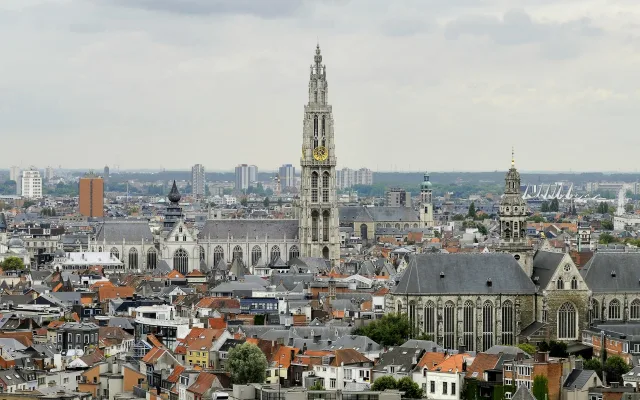
Antwerp is a city in Belgium known as the diamond capital of the world. Visit the Rubenshuis, the Gothic Cathedral of Our Lady, and explore the fashion and design legacy of the Antwerp Six.
Wiki
Antwerp is one of those cases where a country's second city outshines its capital: a compact historic centre, rivers of diamonds, avant-garde fashion, and one of the most spectacular railway stations in the world. Two days is enough to cover all the highlights on foot, at a relaxed pace.
What's genuinely worth seeing
- Cathedral of Our Lady — don't walk past it just to tick a box: inside hang four major Rubens canvases, including The Descent from the Cross. It is effectively a gallery-quality museum collection; there is an admission charge, but a modest one. Allow an hour.
- Rubenshuis — the artist's studio and home, complete with an Italian portico and garden. Note that the building is periodically closed for restoration; check its status before you visit. If it's shut, Rubens' work is still on show in the cathedral and at the Royal Museum of Fine Arts (KMSKA).
- Antwerp Central Station — step inside even if you're not catching a train. The glass dome, marble, and tracks stacked on three levels are best photographed looking down from the upper levels.
- MAS — the permanent exhibition is a matter of taste, but the escalators to the panoramic rooftop are free and open late. It's the best viewpoint over the port and the old town.
- Grote Markt and Steen Castle — the guild-house-lined town hall square and the squat riverside fortress. This is the heart of the centre and a natural starting point.
A word of honesty about diamonds. The Diamond Quarter near the station is a district of wholesale traders, not a tourist attraction: few shop windows, everything behind closed doors. The only real reason to go is the DIVA museum, which explains cutting and trading clearly and engagingly. Buying stones on a whim, without expert advice, is a bad idea.
Fashion: how to experience the Antwerp Six
The city's international fame in fashion came from graduates of the Royal Academy of Fine Arts — Dries Van Noten, Ann Demeulemeester and others. For visitors:
- MoMu (Fashion Museum) — themed exhibitions, open year-round.
- Nationalestraat and Kammenstraat — concept stores, vintage shops and young designers. Even without buying anything, these streets are the best open-air museum of contemporary style in the city.
How many days and how to plan your route
Two days is plenty.
- Day 1 — old centre: Grote Markt, the cathedral, Rubenshuis, the riverside and Steen Castle, then a bar in the neighbourhood in the evening.
- Day 2 — Central Station and DIVA/the Diamond Quarter, then the fashion streets and MAS with its rooftop at sunset.
Everything fits into walking distance — the centre is genuinely small, and you'll barely need public transport within the old town.
Where to stay
- Old centre (around Grote Markt) — everything on your doorstep, but noisy and pricier.
- Het Zuid (the South) — a neighbourhood of museums, galleries and cafés, quieter and with a local feel; 15–20 minutes on foot from the centre.
- Near Central Station — convenient if you're arriving by train and moving around a lot, though the surrounding blocks are mixed in character.
Hostels and budget options exist, but Antwerp is not a cheap city overall — book ahead, especially for weekends and during fashion events.
Getting there
The city's own airport (ANR) is tiny. The practical approach is to fly into Brussels (BRU) or Amsterdam (AMS) and take the train — Antwerp sits on the direct Brussels–Amsterdam rail line, with frequent services. From Brussels the journey takes under an hour.
Within the city, trams and metro lines run under the De Lijn network, but visitors mainly need them for longer hops. An excellent alternative is the city bike-share scheme Velo: flat terrain and good cycle lanes make it faster than walking. Avoid driving into the centre — there is a Low Emission Zone (LEZ) and paid parking throughout.
Food and money
Try the local specialities: mussels with frites, waterzooi, the city's own dried beef, filet d'Anvers, waffles, and, of course, beer. Look out for De Koninck, the local brewery, which offers tastings on site.
A rough guide to spending: lunch at a brasserie costs noticeably less than dinner at a restaurant — roughly half the price. Ways to keep costs down:
- lunch menus and street food (frites, waffles) instead of sit-down dinners;
- supermarkets for breakfast and tap water, which is safe to drink;
- free highlights — the MAS rooftop and the riverside.
Prices are as of 2026.
When to go and what to watch out for
The best time to visit is May to September: warm weather and long days. December is pleasant for Christmas markets, though colder and damp. Rain is common in winter — carry a waterproof jacket in any season.
The city is safe, but around the station and in the Diamond Quarter keep the usual eye on your pockets in crowds. And keep the main trap in mind: don't let the "diamond capital" label tempt you into impulse purchases — people come to Antwerp for the architecture, Rubens and fashion, not for stones.