Description

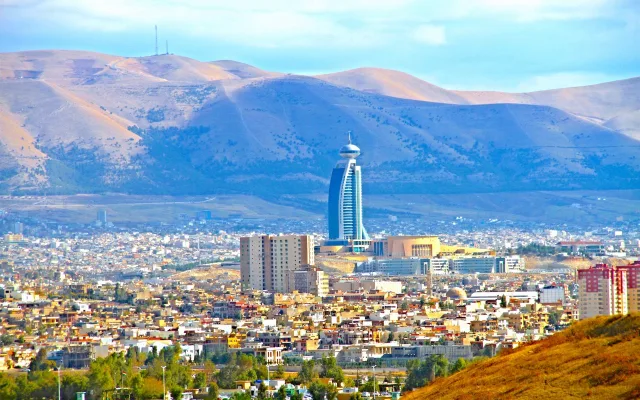
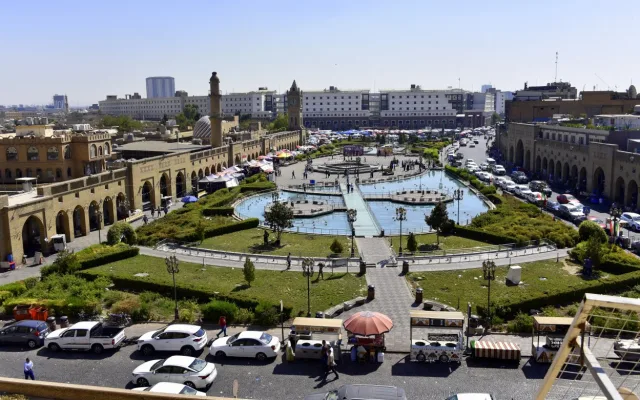
Baghdad is the capital of Iraq, on the river Tigris. Among its sights are Al-Mutanabbi Street, the Al-Kadhimiya mosque and the National Museum.
Wiki
Baghdad is the capital of Iraq and the country's largest city, spread across both banks of the Tigris. Founded in the 8th century by the caliph al-Mansur as the Round City, it was the centre of the Abbasid Caliphate and one of the great seats of science, philosophy and literature in the medieval East; today it is a busy city of millions in which deep antiquity is interwoven with the marks of modern life.
History and character
At its height in the 9th and 10th centuries, Baghdad was reckoned among the richest and most populous cities in the world. It was home to the legendary House of Wisdom (Bayt al-Hikma), a centre for translating and studying Greek, Persian and Indian treatises, where mathematicians, astronomers and physicians worked. It is with the Baghdad school that the spread of algebra and of the decimal system is associated. The sack of the city by the Mongols in 1258 cut short that golden age, but its memory remains in the place names, the architecture and the self-understanding of its people. In the 20th century the capital of an independent Iraq grew rapidly, gaining new quarters, embankments and avenues.
What to see
Al-Mutanabbi Street — the historic street of booksellers, named after the 10th-century master of Arabic poetry. On Fridays a book market unfolds here, alongside old coffee houses and antique shops; the street is traditionally held to be the heart of the city's intellectual and literary life, a symbol of its appetite for the written word.
The Al-Kadhimiya Mosque in the northern district of Kadhimiya is one of the principal Shia shrines, with golden domes and minarets. Two revered imams are buried here, and the sanctuary remains a major centre of pilgrimage, drawing the faithful from across the Islamic world.
The National Museum of Iraq holds one of the richest collections of Mesopotamian antiquities — artefacts of the Sumerian, Babylonian, Akkadian and Assyrian civilisations, including finds from Ur, Nimrud and other legendary cities. Cuneiform tablets, reliefs, jewellery and seals help explain how writing, law and city planning were born between the Tigris and the Euphrates.
Beyond these, look out for Tahrir Square with Jawad Salim's monumental Freedom Monument, the Mustansiriya mosque and madrasa — one of the oldest surviving Islamic universities — and the Tigris embankments, where fish restaurants come alive in the evening.
Food
Iraqi cooking draws on the traditions of Mesopotamia and the neighbouring Arab countries. Baghdad's calling card is masgouf, river fish split open and baked over an open fire, served on the bank of the Tigris. Kebabs are everywhere, along with dolma in vine leaves, stews of lamb and pulses, and fresh samoon flatbread. Meals end with strong tea and eastern sweets; dates are popular, and Iraq has long been famous for them.
Getting there and getting around
The main air gateway is Baghdad International Airport, west of the centre and linked to the city by road. Taxis are the most practical way to move around town. One thing to plan for separately: the security situation in Iraq remains difficult and changes. Check current travel advice, visa and permit requirements before you go, and discuss any routes outside the capital with local contacts. When planning your routes, allow for heavy traffic and bear in mind the access arrangements in certain districts — checkpoints and searches operate in places.
When to go
Baghdad has a hot desert climate. Summer, from June to August, brings punishing heat: temperatures regularly exceed 40°C and rain is all but absent. The best time to visit is October to April, when the weather is mild and comfortable for walking. In winter the days are warm and the nights cool, which suits sightseeing.
How long to allow
Three days is enough for a first acquaintance. The first sensibly goes to the historic centre and Al-Mutanabbi Street, the second to the National Museum and the Mesopotamian collections, the third to the Kadhimiya district with its shrine and to walks along the Tigris. That pace lets you take in, without rushing, a city that joins the legacy of a great civilisation to the energy of a modern Middle Eastern capital.