
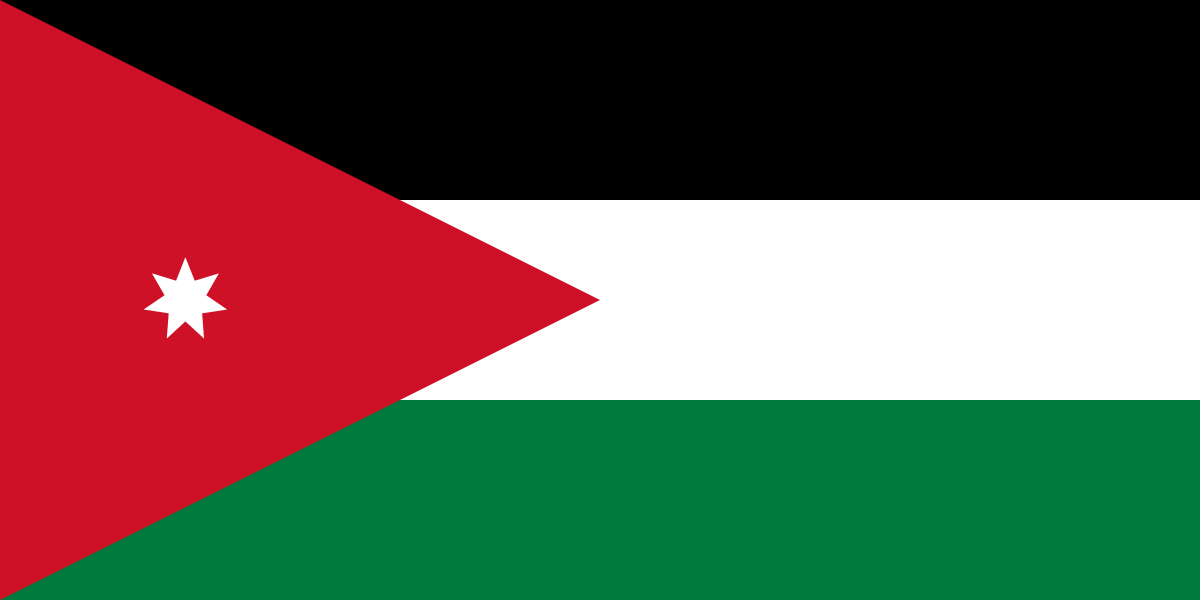
Jordan
A country where Petra is carved into rose-red rock, the Dead Sea holds you up and the Wadi Rum desert looks like Mars. Jordan is one of the safest and most welcoming corners of the Middle East, with a history running from the Nabataeans to the Crusaders. The Jordan Pass is an inspired idea: one purchase covers the visa and entry to more than 40 sites, Petra included. The country is small enough to see the highlights in a week.
Where to go
#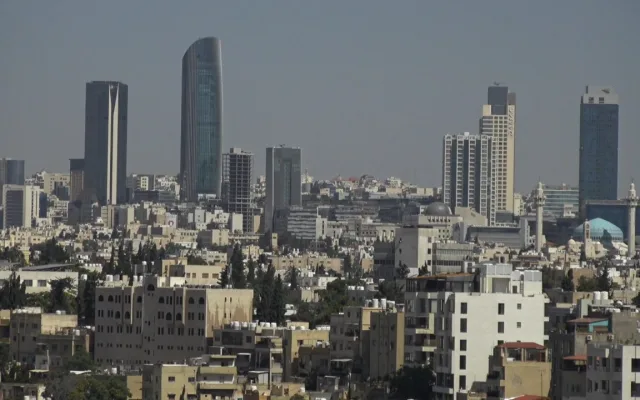
Amman
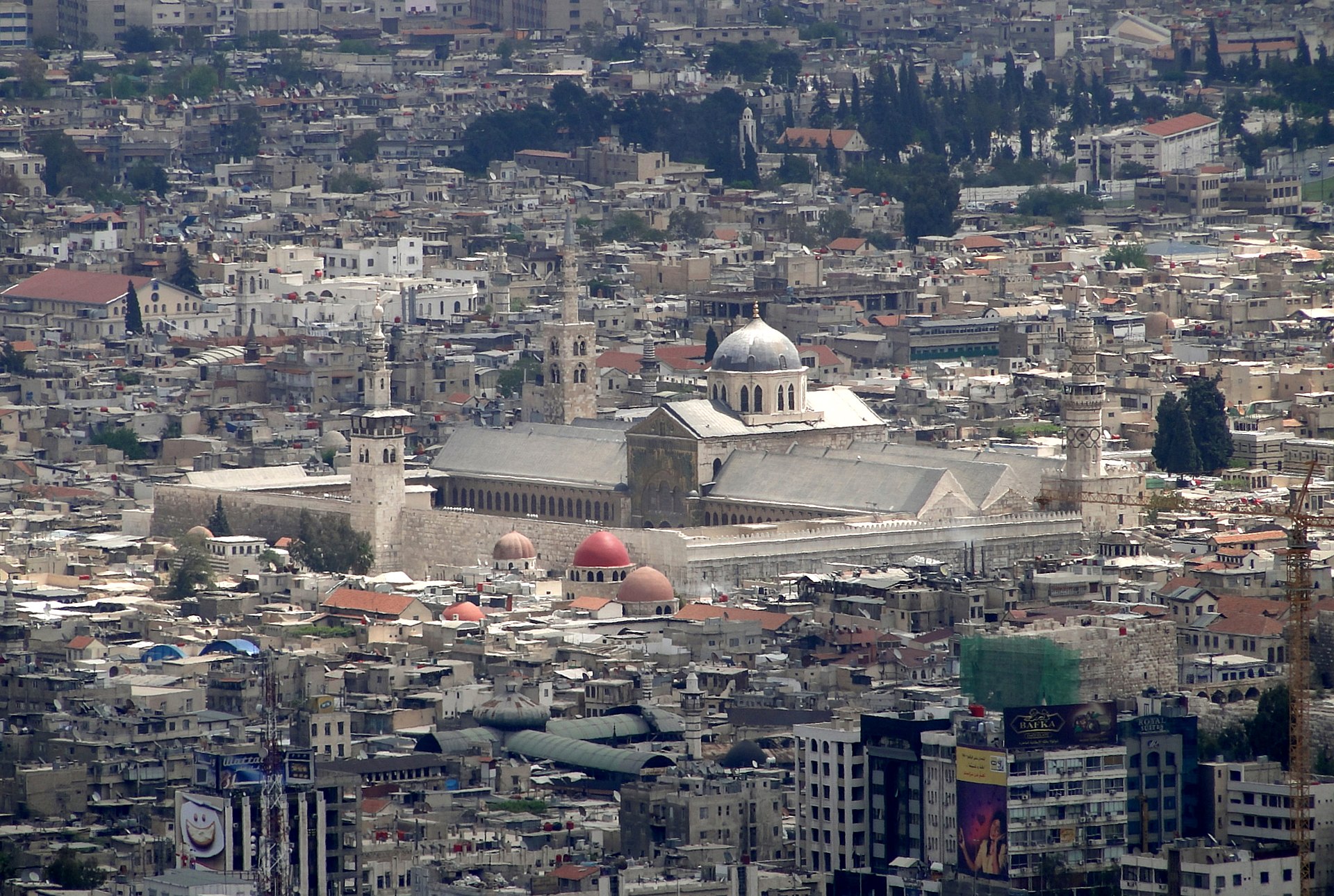
Jordan's hilly capital — the Citadel, the Roman theatre, downtown street food and the cafés of Rainbow Street.
Petra
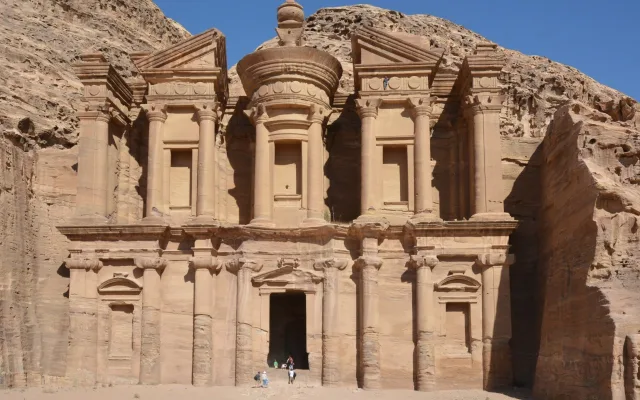
The Nabataean capital carved into rose sandstone — the Siq, the Treasury and the Monastery, a UNESCO World Heritage Site in southern Jordan.
Aqaba
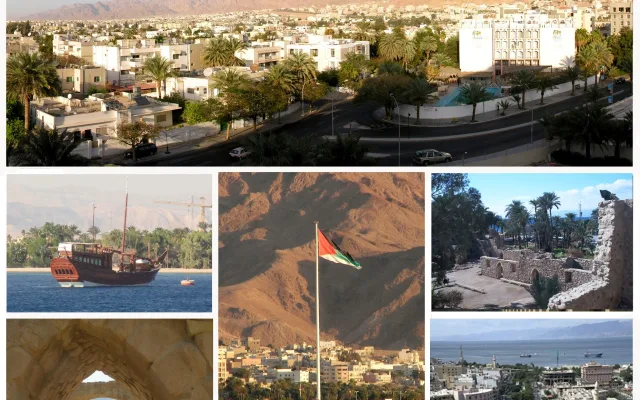
Jordan's only seaport — Red Sea diving, a Mamluk fort, and the launch point for Wadi Rum and Petra.
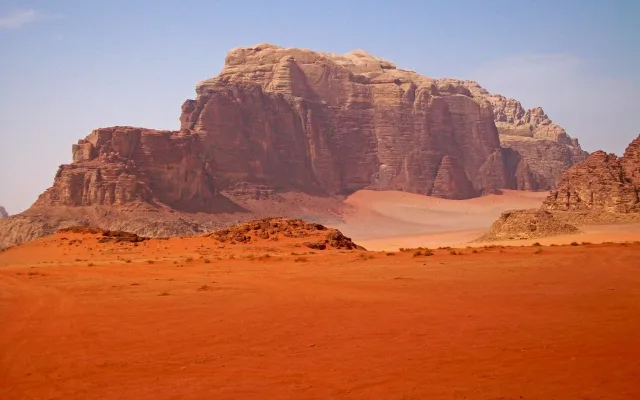
Wadi Rum
The Valley of the Moon — red sand, Bedouin camps, jeep tours, Khazali Canyon and the Burdah rock bridge.
What to see
#Petra: The ancient Nabataean city is far bigger than the photographs suggest, and two days is the right allocation rather than one. Beyond the Treasury, make the climb up to the Monastery, Ad Deir, which most day-trippers never reach.
Wadi Rum: Worth the trip for Martian landscape and for a night under a sky with no light pollution anywhere near it. A four to six hour jeep tour is the standard way in, arranged through the camp you are staying at.
The Dead Sea: Where to go to do absolutely nothing. Float in the salt lake, coat yourself in the mud and rinse off. The public beaches are perfectly good if you do not want to pay for a resort day pass.
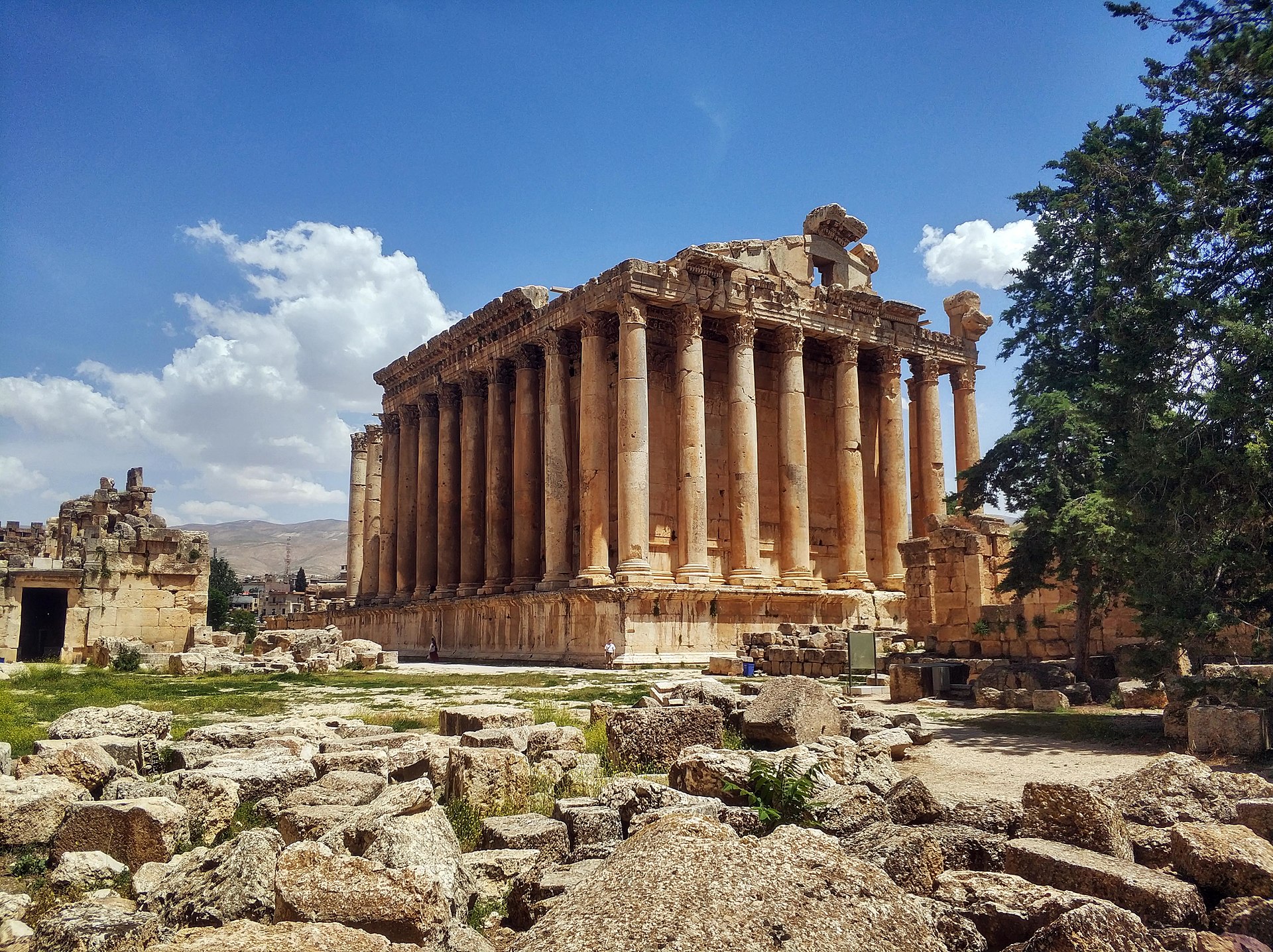
Jerash: The Roman ruins here are considered the best preserved in the world outside Italy. You can see the temples, the hippodrome and the oval forum comfortably in a day trip from Amman.
Petra by Night: The candlelit show costs 30 dinars and is genuinely overrated. Think twice about whether you want the crowds for the sake of a couple of photographs.
Shobak Castle: If Karak feels too busy, this isolated fortress in the hills is the alternative. It looks wilder and more authentic, and you will often have it largely to yourself.
Prices
#Currency: The Jordanian dinar is a strong currency, worth roughly 1.4 US dollars, which makes everything feel pricier than you expected. It is pegged to the dollar, so the rate does not move much.
Cards: Visa and Mastercard work in supermarkets, hotels and Aqaba shops, but petrol stations sometimes add a one-dinar fee for card payment. Carry cash for small purchases, taxis and anything outside the cities.
Exchange: The airport rate is punitive, so change just enough there for the bus and do the rest at exchange offices in town. US dollars and euros both convert cleanly.
Tipping: Restaurants often add 10 percent to the bill, but waiting staff still expect a couple of dinars in hand. Round up for taxi drivers and tip your Wadi Rum guide properly.
ATMs: Bank machines are everywhere in Amman and Aqaba and take foreign cards without drama. Wise and Revolut cards work fine; just decline the terminal's offer to charge you in your home currency.
| Item | Price (USD) |
|---|---|
| Lunch at a local place | 6 |
| Shawarma | 3 |
| Coffee | 2 |
| Knafeh | 4 |
| 1.5l bottled water | 1 |
| Jordan Pass | 100 |
| Petra entry | 70 |
| Petra by Night | 42 |
| JETT intercity bus | 15 |
| Taxi across town | 4 |
| Litre of petrol | 1.3 |
| SIM card | 25 |
| Hostel dorm bed | 14 |
| Night in a desert camp | 45 |
| Jeep tour | 50 |
Getting around
#Coaches: JETT runs comfortable intercity shuttles and you should book online rather than turning up. They are reliable and stick to a published timetable, which is not true of everything else here.
Service taxis: These are the local shared minibuses, which leave only when every seat is filled. They are the cheap way to get from Amman to Madaba, at the cost of an unpredictable departure time.
Taxis: In the capital, insist on the meter or the fare triples. For longer runs between towns, always agree a fixed sum before you get in the car.
Car hire: A car buys you real freedom, and the roads are decent and toll-free. Book in advance to get transparent terms and a clear picture of the deposit.
Driving conditions: Traffic in Amman is chaotic and rush hour will eat an hour of your day. Outside the cities petrol stations are sparse, so top up whenever you pass one.
Apps: Careem covers the main cities and saves you haggling with drivers. Uber shows up less often and can be slow to allocate a car.
City transit: In Amman, the Bus Rapid Transit system is modern, cheap and links the main residential districts to the centre.
Getting in: Queen Alia airport near Amman handles most arrivals, with good links from European capitals and connections through Gulf hubs from further afield. Flying into Aqaba instead makes sense if you are starting in the south.
Where to stay
#Guesthouses: Amman and Wadi Musa are full of family-run guesthouses serving home-cooked breakfast. It is the best way to experience the hospitality everyone talks about, and the hosts will sort out your onward transport.
Desert camps: In Wadi Rum, pick a Bedouin camp well away from the road for the silence. Options run from plain tents to the transparent bubble domes designed for stargazing at a considerable premium.
Apartments: Booking sites list plenty of flats in Amman districts like Abdali. Useful if you want a kitchen, and generally better value than a hotel for a stay of several nights.
The Dead Sea: Accommodation on the shore is expensive but comes with direct beach access. On a tight budget, come here as a day trip from Amman or Madaba instead of sleeping over.
Aqaba: Stay in the centre so the beaches and markets are within walking distance. Many of the buildings are older, so read reviews specifically about whether the air conditioning works.
Booking ahead: Use established sites and message hosts directly to confirm. In season, the good places in Petra are gone a couple of months out, and prices at the remaining ones climb sharply.
What to eat
#Mansaf: The national dish, lamb cooked in fermented dried yoghurt and served over rice, traditionally eaten with the right hand. It is heavy, aromatic and usually shared from one enormous platter.
Street food: Falafel and hummus are your daily allies. Any hole-in-the-wall will build you an excellent sandwich for a couple of dinars, and the hummus is better than anything you have had at home.
Sweets: Knafeh, hot cheese under crisp pastry drenched in syrup, is addictive. For the best version in the country, go to Habibah in downtown Amman and eat it standing up like everyone else.
Drinks: Mint tea is served extremely sweet and offered everywhere. Coffee comes with cardamom, brewed strong and poured into very small cups.
Alcohol: Beer is sold only in dedicated shops and bars. Ordinary cafes do not serve it and will not let you bring your own, so plan accordingly outside Aqaba and the hotel districts.
Hospitality rules: If someone invites you for tea, do not refuse straight away; the invitation is a mark of respect. A meal here is a long, unhurried social process rather than a refuelling stop.
Safety
#The general picture: Jordan remains stable despite the neighbourhood, and it is one of the easier countries in the region for independent travel. Walking around lit areas in the evening is entirely normal.
Desert conditions: Weather in the desert and the mountains is treacherous, with 40 degrees by day and near-freezing nights. Always carry more water than you think you need and pack warm layers for Wadi Rum.
Getting help: For any problem, look for the tourist police or dial 911. Locals will generally go out of their way to help a foreigner who looks lost.
The Dead Sea: Never dive in or splash, because the salt attacks your eyes viciously. Any cut or shaving nick will sting hard, so go in slowly and rinse off in fresh water afterwards.
Scams: In Petra, be wary of the "free" donkey ride that turns into a demand for money at the top. A firm, repeated no to unofficial guides is the right approach.
Solo women: Solo travel is safe, though it is worth avoiding empty side streets at night. Dressing modestly cuts unwanted attention substantially, and hosts will often keep an eye out for you.
Advisories: Regional events occasionally affect specific border areas, so check your own government's travel advisory before finalising an itinerary near the frontiers.
Etiquette and culture
#Hospitality: "Welcome to Jordan" will be the soundtrack of your trip. Jordanians are genuinely pleased to see visitors and will invite you home for tea on the strength of a two-minute conversation.
Dress: In the cities, cover shoulders and knees. Swimwear belongs on hotel beaches and in Aqaba, not on the street, and modest clothing gets you a warmer reception everywhere.
Etiquette: Pass food and money with the right hand only, since the left is considered unclean. Take your shoes off at the entrance to a mosque or a private home.
Ramadan: During the fasting month many cafes stay shut until sunset and eating in the street is not acceptable. After iftar the cities come alive and the atmosphere turns festive.
Haggling: Bargaining in markets and over taxi fares is part of the culture rather than a confrontation. Open at about half the asking price, keep smiling, and treat it as conversation.
Friday: This is the day off, and many businesses stay closed until the afternoon. Public transport runs less often, so plan any travel day around it.
Connectivity
#SIM cards: Pick up a package from Zain or Orange at the airport on arrival. A tourist SIM with 30 to 40GB costs around 20 to 25 dollars and activation takes minutes with your passport.
eSIM: If you would rather not deal with a counter, Airalo and similar providers cover Jordan and work from the moment you land. Local SIMs are still better value for a longer trip.
Coverage: Data is fast in the cities, but signal disappears in the canyons at Petra and deep in Wadi Rum. Download offline maps before you head out to either.
Language: English is widely spoken in tourist areas, though a few Arabic words go a long way in villages. Jordanians appreciate the attempt more than most.
Messaging: Everything works normally and video calls go through without trouble. WhatsApp is the standard channel for reaching guides, drivers and camp owners.
Plugs: You will meet both British three-pin sockets and European two-pin ones, sometimes in the same building. Bring a universal adapter and avoid the problem entirely.
Apps: Careem and Google Maps do most of the heavy lifting. Locals book tours over WhatsApp, so expect that to be how you confirm a jeep or a guide.
Phrasebook
#| English | Arabic | Pronunciation |
|---|---|---|
| Hello (peace be upon you) | السلام عليكم | as-sa-LAAM a-LAY-kum |
| Thank you | شكراً | SHOOK-ran |
| Please | من فضلك | min FAD-lak |
| Yes / no | أيوة / لا | AY-wa / laa |
| How much is it? | قديش؟ | ad-DAYSH |
| Too expensive! | !غالي | GHAA-li |
| Cheaper | أرخص | AR-khas |
| Delicious | زاكي | ZAA-ki |
| Water | مي | may |
| Tea | شاي | shay |
| Coffee | قهوة | GAH-weh |
| Where is...? | وين؟ | wayn |
| My friend | صاحبي | SAAH-bi |
| Help me | ساعدني | SAA-id-ni |
| Sorry / excuse me | عفواً | AF-wan |
| God willing | إن شاء الله | in-SHAA-lla |
| All good | تمام | ta-MAAM |
| Straight ahead | دغري | DUGH-ri |
| Good morning | صباح الخير | sa-BAAH al-KHAYR |
| No, thank you | لا شكراً | laa SHOOK-ran |
Good to know
#Jordan Pass: This is the single most useful thing a visitor buys, and only from the official site. It bundles entry to Petra, Jerash, Wadi Rum and dozens of other sites, and for most nationalities it also waives the entry visa fee provided you stay at least three nights.
Bus booking: The JETT site handles intercity coach reservations, and you should book a couple of days ahead because seats do sell out on the Petra route.
Navigation: Maps.me with the country downloaded is what saves you in the desert. Google Maps builds better routes inside the cities and knows the traffic.
Water: Never drink from the tap, and buy bottled everywhere. In the heat you should be drinking three litres a day, more if you are walking Petra.
Clothing: Pack in layers. Thermal kit for a desert night, light cotton for walking under a sun that does not let up, and proper shoes for the rock steps at Petra and Shobak.
Documents: Keep a photo of your passport and your insurance policy on your phone and in your email, and carry the paper Jordan Pass QR code in case there is no signal at the gate.
Frequently asked questions
#Most Western nationalities can get a visa on arrival at Queen Alia airport, and buying the Jordan Pass online before you fly waives that fee entirely if you stay at least three nights. You will need a passport valid for six more months and travel insurance, and the rules vary by nationality, so check yours before booking.
A one-day ticket costs 50 dinars and a two-day pass is 55, which makes the second day almost free. If you are not staying overnight in Wadi Musa the price is considerably higher, which is the reason almost everybody sleeps there.
Yes, for anyone visiting Petra plus one or two other sites. The pass starts at around 70 dinars and includes Petra entry along with Jerash, Wadi Rum and dozens of museums and castles, so it pays for itself almost immediately.
The most reliable option is the JETT coach, which leaves in the morning and reaches the Petra visitor centre in about three and a half hours. You can also drive the Desert Highway in a hire car, or take a local service minibus to Wadi Musa for a fraction of the price and twice the uncertainty.
Jordan remains one of the most stable countries in the region and is comfortable for independent travel. The tourist routes and resort areas operate normally and the tourist police are visible at the main sites. Check your own government's advisory for any guidance on border regions.
Cash US dollars are the most convenient to bring, since the dinar is pegged to the dollar and converts predictably. Change money at official exchange offices in town centres rather than at the airport or in hotels, where the rate is markedly worse.
Wadi Musa, the village at the entrance to the archaeological park, is the obvious base and everything is within walking distance of the gate. It holds all the budget guesthouses, mid-range hotels and restaurants, and staying at least two nights also lowers your ticket price.
Compact cars start at 30 to 40 dollars a day if you take one for three days or more. Basic insurance is normally included, but expect a card deposit of anywhere between 500 and 1,000 dollars to be blocked for the duration.
Effectively no — flying is banned or out of reach for tourists. Bringing a drone in without government approval is banned — customs will seize it. Flights require civil aviation clearance. Rules for other countries are in the drone ranking by country.
Yes — renting a car requires an international driving permit alongside your national licence. Car rental starts at 21. Rental firms ask for a deposit and a passport copy; arrange insurance separately. Rules for other countries are in the driving and rental table.
You can rent a bike, but you need an international driving permit. Crucially, your licence must include category A. Category B is not enough — this is what catches most riders out. A helmet is compulsory. Bike rental usually starts at 18. Rules for other countries are in the driving and rental table.
Calm by world standards: serious incidents involving tourists are rare. Intentional homicides: 0.84 per 100,000 a year (UNODC, 2024 data). Do not drink tap water — stick to bottled. The general emergency number is 911. Ratings for other countries are in the safety table.
Updated
The data on this page goes out of date. Visa rules and permitted stays, border requirements, prices and budgets, transport and local conditions all change fast, and we do not re-check every page every day. We show the date of our last check where we have one, but before you travel, verify with official sources: the country’s consulate, its immigration service, its e-visa portal and your carrier.