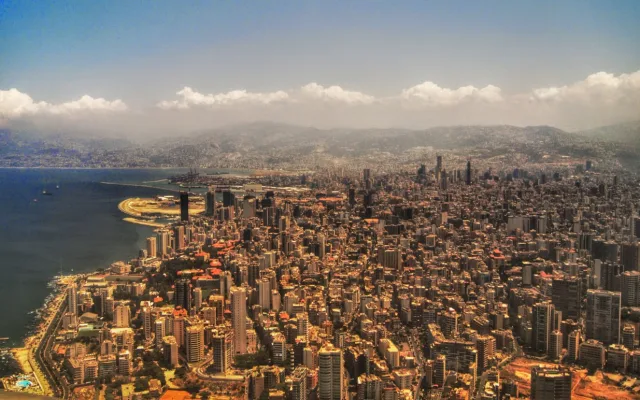
Description
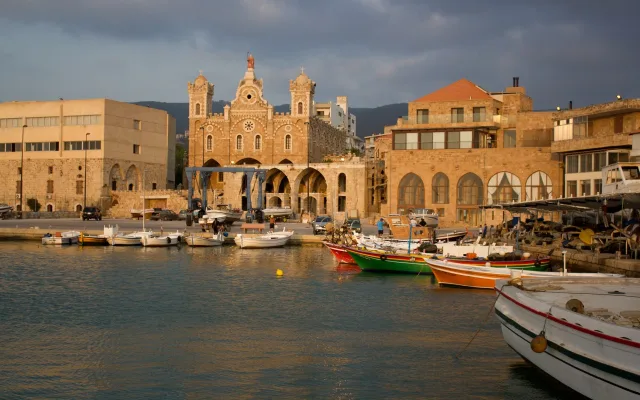
A compact Lebanese coastal town with a Phoenician sea wall, a honey-stone souk and the country's liveliest beach clubs.
Wiki
Batroun is one of those spots on the Lebanese coast you visit not for museums but for the mix of old stone, sea and partying: in one full day you can walk the Phoenician harbour, poke around the old souk and stay for sunset at a beach club. The town is compact, geared to visitors by local standards, and makes a convenient break on the way from Beirut to Tripoli or up to the cedars.
Is it worth going, and for how long
One day is enough for Batroun if what you want is the historic quarter and a beach. The old town takes a couple of hours at a slow walk; the rest of the day goes on the sea and on eating. Add a second night only if you plan to visit the wineries in the hills, or if you are using Batroun as a base for day trips around northern Lebanon — then two days works without rushing.
A realistic day: the old souk and the cathedral in the morning, before it gets hot and while the shops are opening; the Phoenician wall and lunch with a sea view in the middle of the day; the afternoon and evening at a beach club. Build the logistics around walking — you do not need a car inside the town.
What there actually is to see
- The Phoenician sea wall. The local curiosity is not a fortress in the usual sense but a long natural rock barrier along the shore, which the ancients reinforced into a breakwater for the harbour. Go for the sight of the water behind the stone; it will not take long, but it is the most distinctively Batrouni thing here.
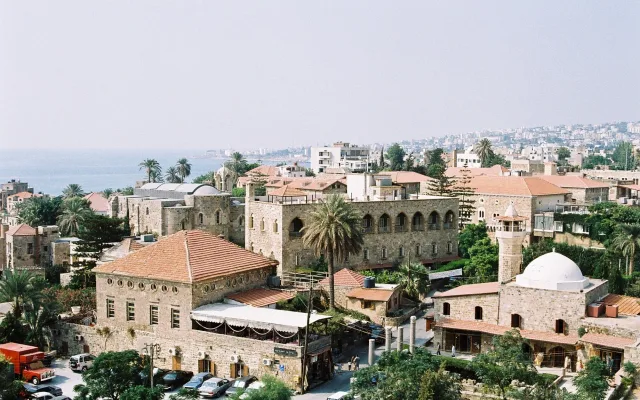
- The old souk. Restored lanes of honey-yellow sandstone — less an eastern market than a compact quarter of cafés, galleries and souvenir shops. Good for a stroll and a coffee; there is not much to haggle over.
- St Stephen's Cathedral and the neighbouring Maronite churches set the tone of a visibly Christian town. Batroun feels different from mostly Muslim Tripoli and Sidon, and you notice it in the atmosphere and in the fact that alcohol is everywhere.
Do not expect a long list of "sights": the value of Batroun is in the combination of a coastal old town and beach life, not in the ticking off of monuments.
Beaches and beach clubs
The beach clubs are what made Batroun's name. Pierre & Friends, White Beach, Lazy B — expect an entry fee or a minimum spend, loungers, pools, bars and music in the evening. The crowd is young, Lebanese, and largely up from Beirut.
In practice:
- In July and August, and at weekends especially, places go early — book a table or a lounger online, or turn up at the start of the day.
- A minimum deposit is common, redeemable against food and drink, so budget for it: "just lying down" does not come cheap.
- The town's own pebble-and-rock shore is free, but showers, shade and toilets are what you are paying the clubs for.
Wineries
Ixsir and Aurora, in the hills of the Batroun district, are an option for anyone with a second day, or willing to trade the beach for it. You cannot reach them independently: you need a car and driver for a few hours. Arrange it with a taxi driver in advance, and check whether a tasting is included and whether the wineries are open that day — booking ahead is often required.
Getting there and getting around
- From Beirut. The airport (BEY) is about an hour away. The cheapest route is a service taxi (a shared car): find one heading north towards Tripoli and ask to be dropped in Batroun. A private taxi is faster and more comfortable but noticeably dearer — agree the fare before getting in, as there are no meters.
- In town. Everything is walkable: the old town, the wall, the seafront. A car is no use inside Batroun and only earns its keep on a winery day.
Food, money, mistakes
The cooking is standard Lebanese and very good: mezze (hummus, moutabbal, tabbouleh), fattoush, shish taouk, kibbeh, and fish and seafood by the sea. The local speciality is Hilmi lemonade, made right here — try it instead of the bottled stuff. Seafood is the most expensive thing on any menu; ordinary mezze with chicken comes to considerably less.
On money: Lebanon is going through currency turbulence, US dollars in cash are valued, and prices can jump. Keep dollars in small notes and confirm the rate and the final sum in advance — in taxis, cafés and clubs alike. Cards are not accepted everywhere.
Common mistakes:
- Coming in winter expecting a beach: many clubs are shut, the sea is cold and it rains.
- Turning up at a weekend without a booking at a popular club.
- Trying to squeeze the wineries and Tripoli into the same day — it turns into a gallop.
When to go, and safety
The optimum is May–June and September–October: warm, the sea comfortable, fewer crowds than at the height of summer. July and August are peak season with packed clubs. Do check the current situation in the country and any regional advice before you travel — things in Lebanon change, and this is a case where plans are worth reviewing against the news immediately before you set off.