

Oman
A sultanate in the south-east of the Arabian peninsula, where turquoise wadis, copper-coloured canyons and open desert sit alongside an ultra-modern capital. Oman is one of the safest countries in the world, with remarkable hospitality and a great range of landscape. In a single day you can be in the mountains, in the desert and on a beach with clear water. It is developing tourism fast while remaining authentic and untouristy.
Where to go
#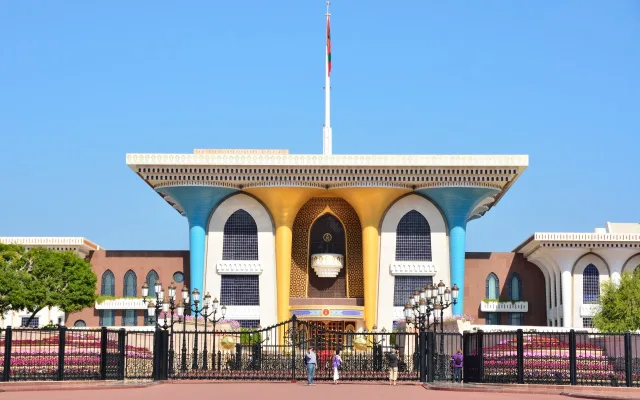
Muscat
The capital of Oman — the Sultan Qaboos Grand Mosque, Al Alam Palace and the Mutrah souq.
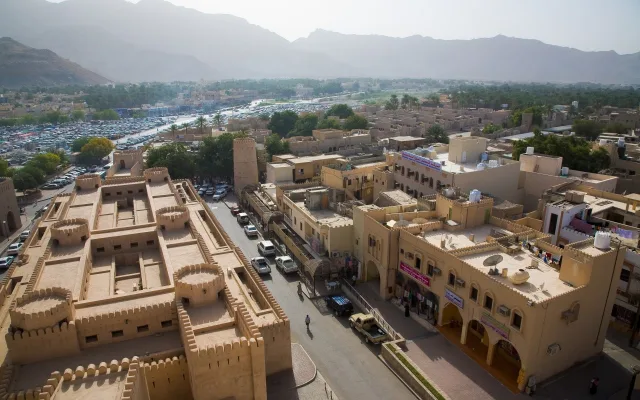
Nizwa
The historic capital of Oman's interior — the round tower of Nizwa Fort and the Friday livestock market.
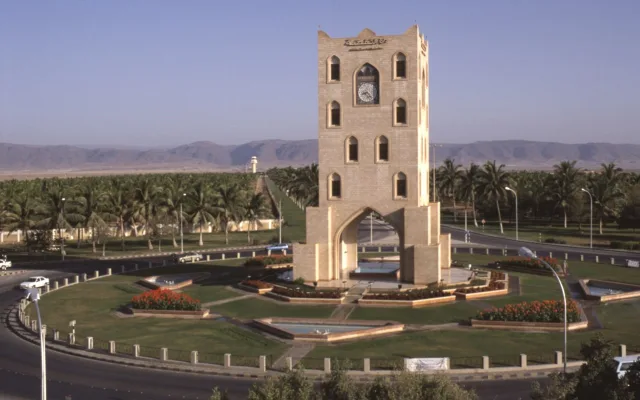
Salalah
The green south of Oman — the khareef monsoon turns dry mountains into tropical meadows above the beaches of Al Mughsail.
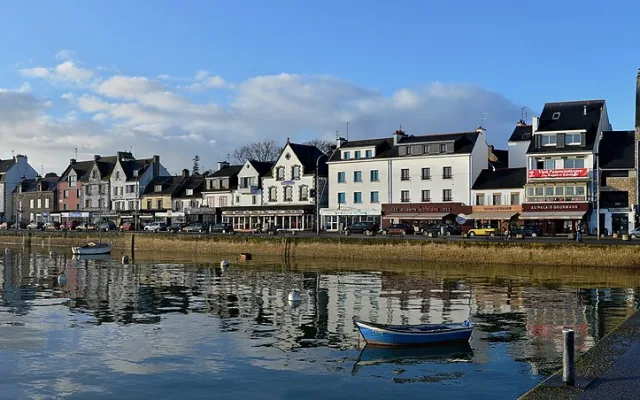
Sur
Oman's dhow-building port — working shipyards, the Al Ayjah lighthouse and the green turtles of Ras Al Jinz.
What to see
#Sultan Qaboos Grand Mosque: The scale and the handwoven carpet are extraordinary, but plan your visit strictly before eleven in the morning, since that is when non-Muslim visitors are admitted.
Jebel Shams: The country's grand canyon is best seen from above on the balcony walk, which is the only way to grasp how far down the drop goes.
Wadi Shab: This gorge gives you a walk through water and a swim in the emerald pools of a hidden cave after a short trek in.
Wahiba Sands: The desert with its hundred-metre orange dunes sits only a couple of hours from the coast and is accessible even to complete beginners.
Jebel Akhdar: The frankincense plantations and terraced fields are best explored with a 4x4, stopping at the viewpoints along the mountain road.
Nizwa Fort: The huge round tower gives the finest overview of the date oases and the old town from above, and it is the single best history stop in the country.
Prices
#Currency: The Omani rial is among the most valuable currencies in the world, pegged firmly to the US dollar and divided into a thousand baisa.
Cash: Bring US dollars or euros issued after 2013, since older notes may be refused outright at banks. Small denominations are useful for markets and rural fuel stops.
Cards: Visa and Mastercard work in hotels, malls, chain restaurants and car hire, and ATMs are plentiful in the towns. Amex is much less useful, and a Wise or Revolut card is the cheapest way to draw rials without your bank's markup.
Carry rials: Always keep physical rials on you for guesthouses, souqs and the small filling stations out in the desert, where cards simply are not accepted.
Tipping: Restaurants expect about ten percent if a service charge has not already been added to the bill.
| Item | Price (USD) |
|---|---|
| Street shawarma | 2.5 |
| Lunch in a cafe | 7.0 |
| Cappuccino | 4.5 |
| 1.5l of water | 0.4 |
| Hostel night | 15.0 |
| Guesthouse in Nizwa | 45.0 |
| Litre of petrol | 0.6 |
| Car hire, per day | 35.0 |
| Fort entry | 13.0 |
| Bus ride | 1.0 |
| Taxi across town | 6.0 |
| SIM card with 5GB | 13.0 |
| Grand Mosque entry | 21.0 |
| Dinner in a restaurant | 30.0 |
Getting around
#Getting here: Muscat airport is well connected, with direct flights from London, Frankfurt, Zurich and a dense web of one-stop routings through Dubai, Doha and Istanbul from anywhere in Europe or North America. Fares are lowest outside the November to March high season.
Coaches: Comfortable Mwasalat buses run between the main cities and you buy tickets on the operator's website.
City buses: Muscat has scheduled routes, but they follow only the main arteries and leave most residential districts a long walk away.
Car hire: This is the best way to see the canyons and wadis, the roads are superb and driving here is genuinely enjoyable.
Mountain roads: For the climb up Jebel Akhdar the police will only let a 4x4 through, and ordinary cars are turned back at the checkpoint.
Taxis and flights: Use the OTaxi app for fixed fares, because drivers hailed in the street will always quote a visitor high. Domestic airlines link the capital with Salalah in a little over ninety minutes, which saves a full day of driving.
Where to stay
#Budget options: Muscat now has modern hostels with shared rooms, which make an excellent base for independent travellers.
Guesthouses: In historic towns like Nizwa, book one of the old houses in the centre that have been converted into clean, characterful small hotels.
Booking: The usual platforms work reliably, but in the mountains and smaller places owners often prefer payment in cash rials.
Camping: Wild camping is permitted almost everywhere in Oman except private land, which saves a great deal of money on accommodation.
Desert camps: A night in the tented camps among the Wahiba dunes is worth the money for the sky alone, plus a traditional dinner by the fire.
Checking in: Simple town hotels occasionally ask couples for a marriage certificate, though the larger chains take a far more relaxed view.
What to eat
#Shuwa: Try this lamb, slow-cooked in an underground oven for a full day until the meat falls away from the bone by itself.
Everyday food: Mandi, spiced rice with chicken, arrives in portions large enough for two hungry travellers.
Sweets: Omani halwa, made with rose water and saffron, is the dessert to have, and it is traditionally taken with strong coffee and nothing else.
Kahwa: A small cup of cardamom coffee will be offered to you in any house or shop, and declining the first sip is impolite.
Fish: On the coast in Sur or Muscat, order mashuai, whole grilled fish stuffed with local lemon and spices.
Alcohol: Drink is sold legally only in bars attached to the more expensive hotels, and you cannot buy it in ordinary shops or supermarkets.
Safety
#Crime: Oman counts among the safest countries in the world, and you can walk any district at night without concern.
Traffic police: Officers are consistently polite to visitors but fine strictly for any speeding, and even for driving a filthy car.
Flash floods: Never camp in a dry wadi bed, because a sudden downpour in the mountains turns them into torrents within minutes.
Heat: Summer temperatures in the desert and the mountains go off the scale, so always carry five litres of water per person in the boot.
Animals on the road: Be extremely alert on highways at night, since camels and goats step onto the carriageway without warning.
Getting stuck: If you bog down in sand, locals will often pull you out for nothing, but carry your own tow rope and a shovel, and check your own government's travel advisory before you travel.
Etiquette and culture
#Dress: Oman remains a conservative country, so shoulders and knees stay covered even in the fiercest heat.
Mosques: Visits are permitted in the morning hours only, and women need to cover their head, arms and legs completely.
Photography: Do not photograph local people, especially women and children, without asking permission first from them or the head of the family.
Ramadan: During the fasting month, eating, drinking and smoking in public during daylight are forbidden, so plan your meals accordingly.
The left hand: It is considered unclean in local etiquette, so hand over money, gifts or food with your right hand only.
Personal space: Men should not offer a hand to an Omani woman first; a polite nod is the correct greeting.
Respect: Public criticism of the ruler or of Islam is a serious offence and is prosecuted, so keep those conversations to yourself.
Connectivity
#On arrival: The local operators have desks at Muscat airport, though queues there can run to thirty or forty minutes.
eSIM: The simplest approach is buying an eSIM through a provider like Airalo before you fly, so data and navigation work the moment you land.
Coverage: 4G is excellent along every highway and in the towns, but it can disappear completely deep in the desert.
Calling apps: Voice and video calls over WhatsApp and similar apps are usually blocked, so install a reliable VPN before you arrive if you need to call home.
A local number: Worth having if you plan to use food delivery apps or to stay in regular contact with guides and camp operators.
Language and Wi-Fi: English is very widely spoken in Muscat, in hotels and by younger Omanis, and road signs and menus are bilingual, so an independent traveller manages easily. Wi-Fi in city cafes and hotels is stable enough for downloading offline maps and planning a route.
Phrasebook
#| English | Arabic | Pronunciation |
|---|---|---|
| Hello | السلام عليكم | as-sa-LAAM a-LAY-koom |
| How are you? | كيف حالك؟ | Kayf HAA-lak? |
| All good (slang) | زين | Zayn |
| Thank you | شكراً | SHOOK-ran |
| Please | من فضلك | Min FAD-lak |
| Yes / No | نعم / لا | NA-am / Laa |
| How much is it? | كم السعر؟ | Kam as-SIR? |
| Very expensive! | غالي جداً | GHAA-li JID-dan! |
| Where is the toilet? | أين الحمام؟ | AY-na al-ham-MAAM? |
| I don't understand | ما أفهم | Maa AF-ham |
| Water | ماء | Maa |
| Friend | صديق | sa-DEEQ |
| Wait a moment (slang) | لحظة | LAH-za |
| God willing | إن شاء الله | in-shaa-ALLAH |
| Thank God | الحمد لله | al-ham-du-LIL-lah |
| Goodbye | مع السلامة | Maa as-sa-LAA-ma |
| Enough, that'll do (slang) | خلاص | kha-LAAS |
| No problem | ما في مشكلة | Maa fee MUSH-ki-la |
| Okay, fine | طيب | TAY-yib |
| Beautiful | حلو | HIL-w |
| Do you speak English? | تتكلم انجليزي؟ | Tit-KAL-lam in-gi-LEE-zi? |
| Coffee | قهوة | QAH-wa |
Good to know
#When to go: Plan your trip between October and March, when the heat drops and you can spend long stretches outdoors without risk.
Power: Oman uses British type G sockets with three flat pins, so buy an adapter before you leave unless you are coming from the UK.
Navigation: Waze is more accurate here than the usual mapping apps, especially for picking the right exit on complicated city interchanges.
Mountain clothing: At night in the desert and on the summits the temperature falls to around ten degrees, so warm layers are not optional.
Fuel: Deep in the Wahiba there is only one filling station, and it takes cash rials only.
Insurance: Choose a policy with extended adventure cover if you plan canyon trekking or snorkelling around the islands.
Camping gear: Gas canisters and burners for independent camping are sold in the large hypermarkets across the country.
Frequently asked questions
#Many Western passports now enter Oman visa-free for tourist stays of up to fourteen or thirty days, and others use the quick online e-visa. You need a passport valid for at least six months and a confirmed return ticket, and you should check your own passport's current rules before you book.
Hiring a car is the obvious answer, since public transport connects only the major cities. For the mountains and the deep sand of the desert, book a 4x4 rather than a saloon.
Bring US dollars or euros issued after 2013 to change into rials. Visa and Mastercard work in hotels, malls and car hire, but souqs, guesthouses and desert fuel stops are cash only, so always keep rials on you.
The ideal season runs from November to March, when daytime temperatures settle around a comfortable twenty-five degrees. Summer is too hot for walking anywhere except the southern Salalah region.
It is a genuinely unusual experience, when a desert region turns into green jungle under monsoon rain and thick fog. It is not the season for a conventional beach holiday, though, because the ocean is rough and visibility poor.
Wild camping is officially permitted and entirely safe across almost the whole country, apart from private land. The rules that matter are never pitching in a wadi bed because of flash floods, and taking all your rubbish out with you.
In public, both men and women should cover shoulders and knees out of respect for local tradition. At mosques, clothing must be as covering as possible and women need a headscarf.
You can buy a SIM at the airport on arrival or set up an eSIM in advance through an international provider. Remember that calling over messaging apps generally requires a VPN installed before you travel.
Yes, but with restrictions. Registration is mandatory for a drone of any weight. You need civil aviation authority approval both to bring the drone in and for each flight, arranged in advance. Rules for other countries are in the drone ranking by country.
Yes — renting a car requires an international driving permit alongside your national licence. Car rental starts at 21. An IDP is required. Roads are excellent, but desert stretches between petrol stations are long. Rules for other countries are in the driving and rental table.
You can rent a bike, but you need an international driving permit. Crucially, your licence must include category A. Category B is not enough — this is what catches most riders out. A helmet is compulsory. Bike rental usually starts at 18. Rules for other countries are in the driving and rental table.
Updated
The data on this page goes out of date. Visa rules and permitted stays, border requirements, prices and budgets, transport and local conditions all change fast, and we do not re-check every page every day. We show the date of our last check where we have one, but before you travel, verify with official sources: the country’s consulate, its immigration service, its e-visa portal and your carrier.