Description
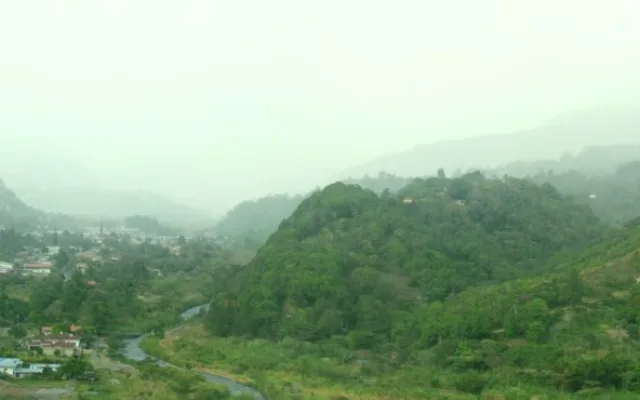
A mountain village in Chiriquí province — coffee plantations, trekking, and a comfortable climate year-round.
Wiki
Boquete is a small town in western Panama, set in a highland valley along the Caldera River at the foot of Barú volcano. Thanks to its cool air, lush greenery, and abundance of flowers, it is often called the "valley of eternal spring" — visitors come for the coffee, hiking trails, and relaxed pace far from the Caribbean and Pacific heat.
Geography and climate
The town sits in Chiriquí Province at around 1,200 metres above sea level, 35–40 km north of the provincial capital David. The surrounding landscape is a rolling highland of steep slopes, coffee terraces, and patches of cloud forest. Above the valley rises Barú Volcano (Volcán Barú) — the highest point in Panama at roughly 3,475 metres; on a clear day, both the Pacific and Caribbean are theoretically visible from the summit.
The climate is mild and steady throughout the year: daytime temperatures typically reach 20–25 °C, with noticeably cooler nights. Two seasons are well defined — a relatively dry period (roughly December to April) and a rainy season. A distinctive local phenomenon is the bajareque, an ultra-fine mist carried by winds from the Caribbean coast that frequently produces rainbows over the valley.
History
The valley was long inhabited by indigenous peoples, principally the Ngäbe (Ngöbe-Buglé), many of whom still work the coffee harvest today. As an organised settlement, Boquete took shape around the turn of the 20th century, when European immigrants — from Germany, Switzerland, Scandinavia, and elsewhere — began arriving. The cool climate and fertile volcanic soils proved ideal for farming, shaping the character of the area for decades to come. In recent years the town has become a notable destination for foreign retirees and remote workers.
Coffee and agriculture
Boquete is one of Central America's premier coffee destinations. Local farms have become famous for the Geisha (Gesha) variety — a rare, intensely aromatic arabica that regularly fetches top prices at international auctions. Many farms offer tours covering the full cycle: from plantation and cherry-picking to roasting and cupping. Beyond coffee, the valley is known for citrus, vegetables, strawberries, and floriculture — roses, hydrangeas, and orchids.
Nature and outdoor activities
The main draw is trekking and the natural surroundings.
- Barú Volcano. Summiting is popular but demands preparation: the ascent is long and is often done overnight to catch sunrise at the top.
- Sendero Los Quetzales (Quetzal Trail). A scenic route through cloud forest between Boquete and the village of Cerro Punta, named after the resplendent quetzal — a rare bird that can be spotted along the way.
- Caldera Hot Springs. Natural thermal pools in the surrounding area, well suited to recovery after a day on the trails.
- Whitewater rafting on the Chiriquí and Chiriquí Viejo rivers, as well as canyoning near waterfalls.
- Birdwatching. The region ranks among the country's best for birding, given the exceptional diversity of species.
A suspended cable car and parks with hanging bridges over the forest canopy are also popular, offering a bird's-eye view of the cloud forest.
What to see in town
The centre of Boquete is compact: a main square, a small parish church, and a market selling local produce and crafts. Private gardens are scattered across the surrounding hills; one of the best-known is a themed park with flower beds, fountains, and ornamental structures. During the dry season the town hosts a major flowers-and-coffee festival that draws visitors from across Panama.
Food and drink
The local cuisine blends Panamanian tradition with the influence of immigrant communities. Worth trying are the fresh-brewed local coffee and classic national dishes: sancocho (a hearty chicken soup with yam), corn tortillas, fried patacones (plantain fritters), and rice with chicken. The cool climate makes for excellent fresh vegetables and berries, and the cafés and bakeries carry a clear European touch — pastries and dairy products are a local staple.
Practical information
- Getting there. The nearest airport is in David, served by domestic flights from Panama City; from there it is about an hour by car or minibus to Boquete. Long-distance buses from the capital also run to David (the journey takes most of a day).
- Getting around. The town itself is easily walkable; taxis or a hire car are the most convenient way to reach outlying farms, trails, and hot springs.
- When to go. The dry season (December–April) is more comfortable for hiking and ascents; in the rainy season the landscape is especially green, though trails can be slippery.
- What to pack. The temperature swing between day and night makes a warm layer and a rain jacket advisable; waterproof walking shoes are essential for the trails.
How long to allow
Three days in Boquete is a good allocation: the first for the town itself and a coffee farm tour, the second for trekking or the ascent of Barú, and the third for waterfalls, hot springs, or rafting. This pace lets you absorb the unhurried atmosphere of the mountain valley without rushing, combining active pursuits with culinary discoveries.