Description
A colonial gem on the Caribbean coast, with colourful pastel palaces, the Castillo San Felipe de Barajas and the sunny beaches of the Rosario Islands.
Wiki
The jewel of Colombia's Caribbean coast, Cartagena de Indias combines colonial architecture, tropical ease and vibrant Caribbean culture. Pastel façades, fortress walls and proximity to turquoise islands make it one of the most recognisable cities on the continent.
Overview
Cartagena sits on Colombia's northern coast on the Caribbean Sea and is the capital of the Bolívar department. The greater urban area is home to around one million people. Founded by the Spanish in 1533, the city quickly became a key port through which gold and silver from the New World were exported and enslaved people were imported. Its wealth made it an irresistible target: the harbour was stormed by privateers and naval expeditions, including Francis Drake's raid in 1586. In response, the Spanish built one of the most powerful fortification systems in the Americas, now recognised as a UNESCO World Heritage Site. Literary fame came through Gabriel García Márquez: the atmosphere of the Caribbean coast permeates his fiction, and the city has become inseparable from the aesthetic of magical realism.
What to See
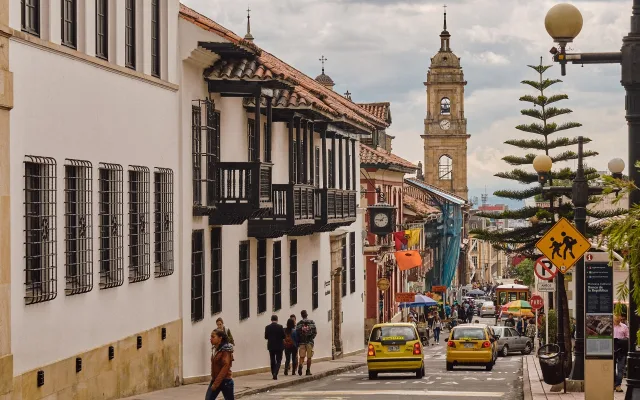
- Old Town (Ciudad Amurallada) — the heart of Cartagena within its encircling walls: 16th–18th-century mansions in pastel shades, wooden balconies draped in bougainvillea, narrow cobbled streets and shady plazas.
- Castillo San Felipe de Barajas — the largest Spanish fortress in the Western Hemisphere, raised on San Lázaro hill. A network of defensive tunnels survives inside, and the bastions offer sweeping views over the entire city.
- Getsemaní — once a working-class neighbourhood, now the hub of street art and nightlife. Layers of murals, cafés and the Plaza de la Trinidad, where locals and travellers gather in the evenings.
- Plazas Santo Domingo and San Diego — lively gathering points lined with open-air restaurants; the former features a voluptuous bronze sculpture by Fernando Botero.
- Las Bóvedas — arched casemates set into the thickness of the city wall, once used as storehouses and a prison, today occupied by craft and souvenir shops.
- La Popa Monastery — a convent perched on a 150-metre hill, with views across the bay, the islands and the full sweep of the city.
- Clock Tower (Torre del Reloj) — the ceremonial gateway into the walled city and its defining architectural landmark.
Sea and Islands
The main beach draw is the Rosario Islands (Islas del Rosario), a national marine park with coral reefs reached by day-trip boat excursions. On the nearby island of Barú lies Playa Blanca — a long stretch of white sand and clear water, one of the most beautiful beaches in the region. Those looking for something unusual head to the El Totumo mud volcano, about an hour from the city, to bathe in warm mineral mud. The urban beaches of Bocagrande are more built-up and convenient for those who prefer to stay close to the centre.
Food and Drink
Cartagena's gastronomy is the Caribbean take on Colombian cuisine, generous with seafood and coconut. Dishes worth trying include arepas de huevo (corn cakes stuffed with egg), ceviche, posta negra (beef braised in a slightly sweet sauce), the fish soup sancocho de pescado and coconut rice arroz con coco. Street vendors sell fresh fruit, coconut water and cocktails; cafés and restaurants in the historic centre serve both local classics and more creative dishes. A strong Colombian rum is a natural end to the evening.
Practical Information
- When to go. The climate is hot and humid year-round, with average temperatures around 28–32 °C (82–90 °F). The rainy season falls roughly towards the end of the year; the drier and more comfortable months run from December to April.
- Getting there. Rafael Núñez International Airport is within the city limits, a few kilometres from the historic centre, with flights from Bogotá, Medellín and several international cities.
- Getting around. The compact old town is easily explored on foot. For the beaches and islands, travellers use taxis, boats and organised tours.
- Safety. Tourist areas are patrolled, but standard precautions apply: avoid displaying valuables and use reputable transport.
How Long to Allow
Three days is the ideal minimum. Spend the first exploring the walled city and Getsemaní, the second at the Castillo San Felipe, La Popa hill and the lively evening plazas, and keep the third for a boat trip to the Rosario Islands or Playa Blanca. This pace lets you take in both the history and the Caribbean ease of Cartagena without feeling rushed.