 Города и дороги
Description
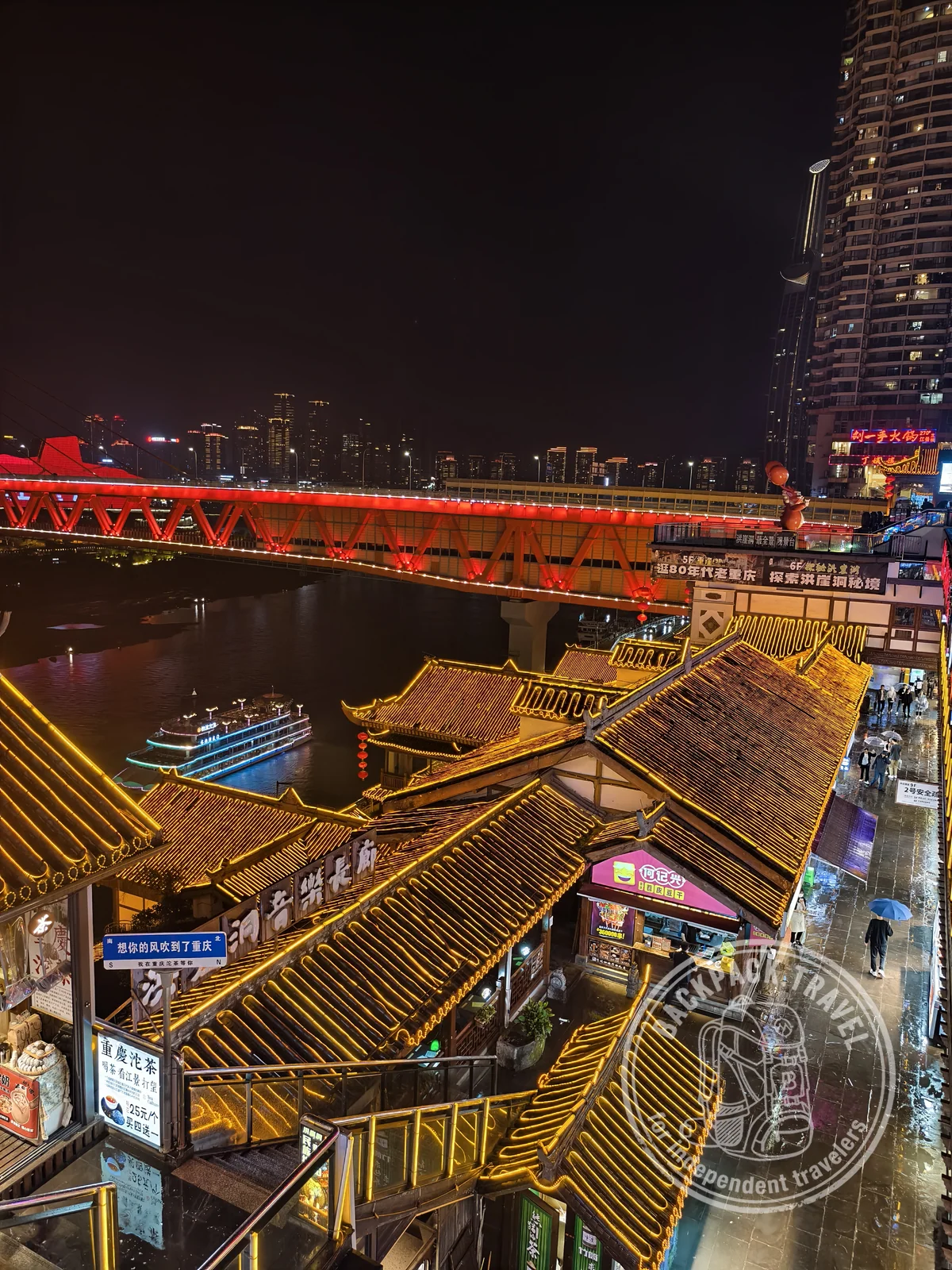
A megacity at the confluence of the Yangtze and the Jialing, built on hills: the entrances of one building open onto different levels, the metro runs through a residential tower, and at night the whole of that relief glows with neon.
Wiki
Chongqing sits on a rocky headland between the Yangtze and the Jialing, and the terrain here determines everything: streets run on several levels, one building can have three "ground" floors on different sides, and the metro passes straight through an apartment block. The city is enormous and not touristy in the usual sense — people come here not for antiquities but for the way the space itself is arranged.
What to see
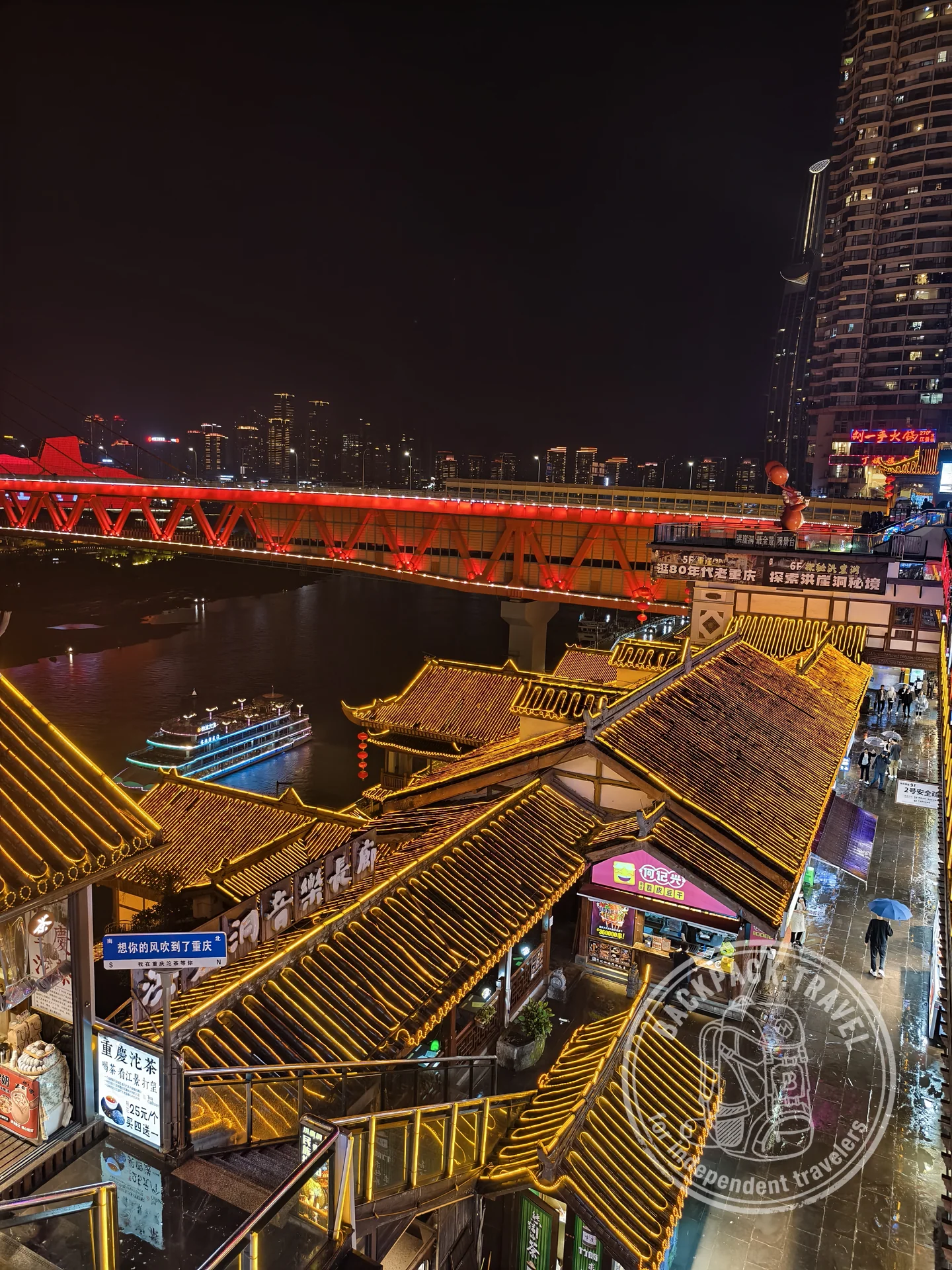
- Hongyadong is a complex in the spirit of diaojiaolou stilt houses, clinging to the cliff above the Jialing. It has eleven levels linked by lifts and staircases, with shopping rows and eateries inside. You need to look at it from the outside and in the dark, when the lighting comes on. Inside it is an ordinary multi-level shopping centre with a crowd.
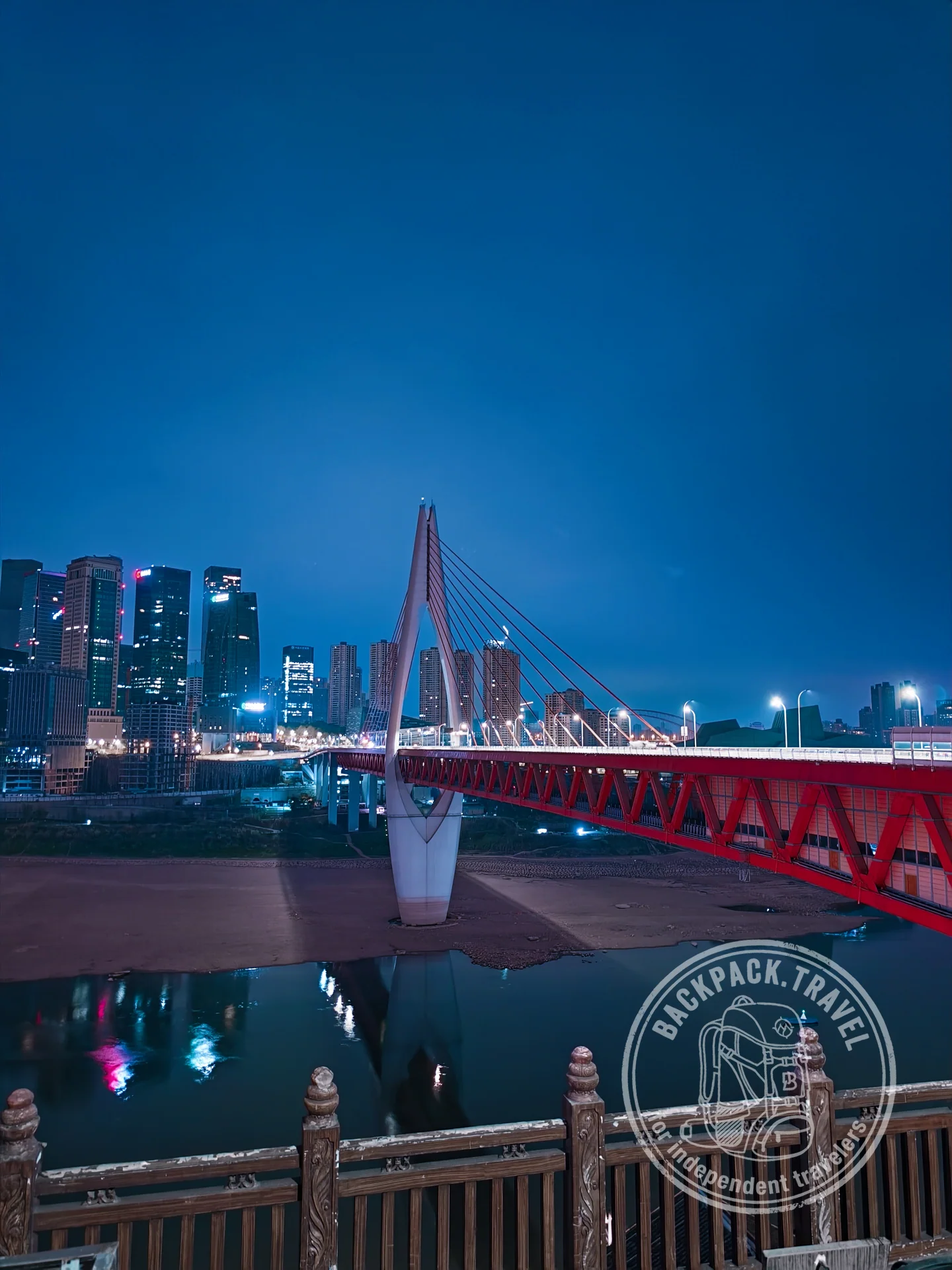
- Qiansimen Bridge is a cable-stayed bridge across the Jialing, opened in 2015. It has two decks: the metro line and cars above, a pedestrian deck below. It is from there that people take the famous shot of Hongyadong glowing on the opposite bank, and access is free.
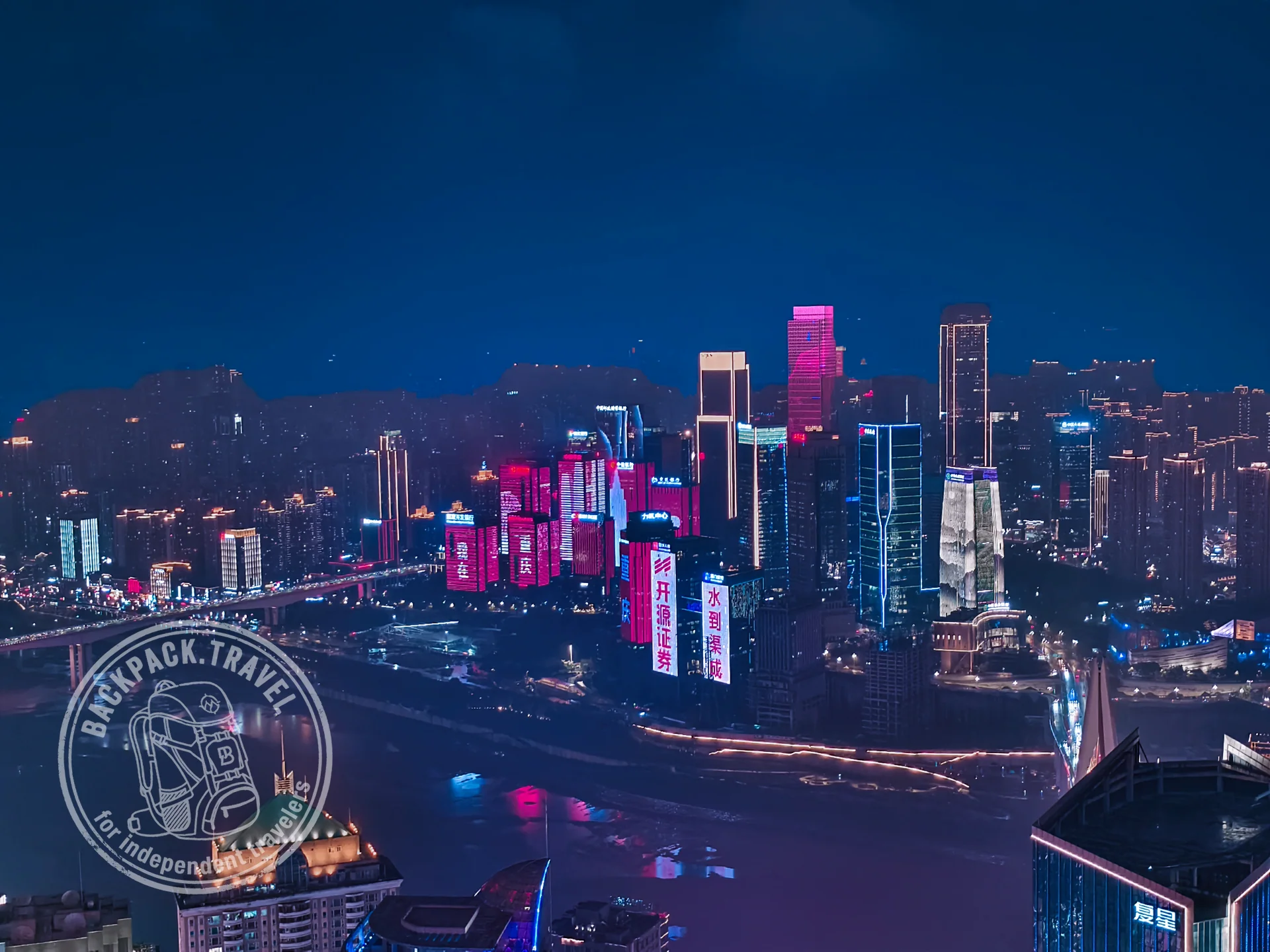
- The "Cloud Eye" observation deck occupies the upper floors of a tower in the Yuzhong district (entry from the 67th floor, with an open platform and a helipad above it). It stands at around 520 metres above sea level, and in clear weather both river confluences are visible. The ticket is paid and it stays open late.
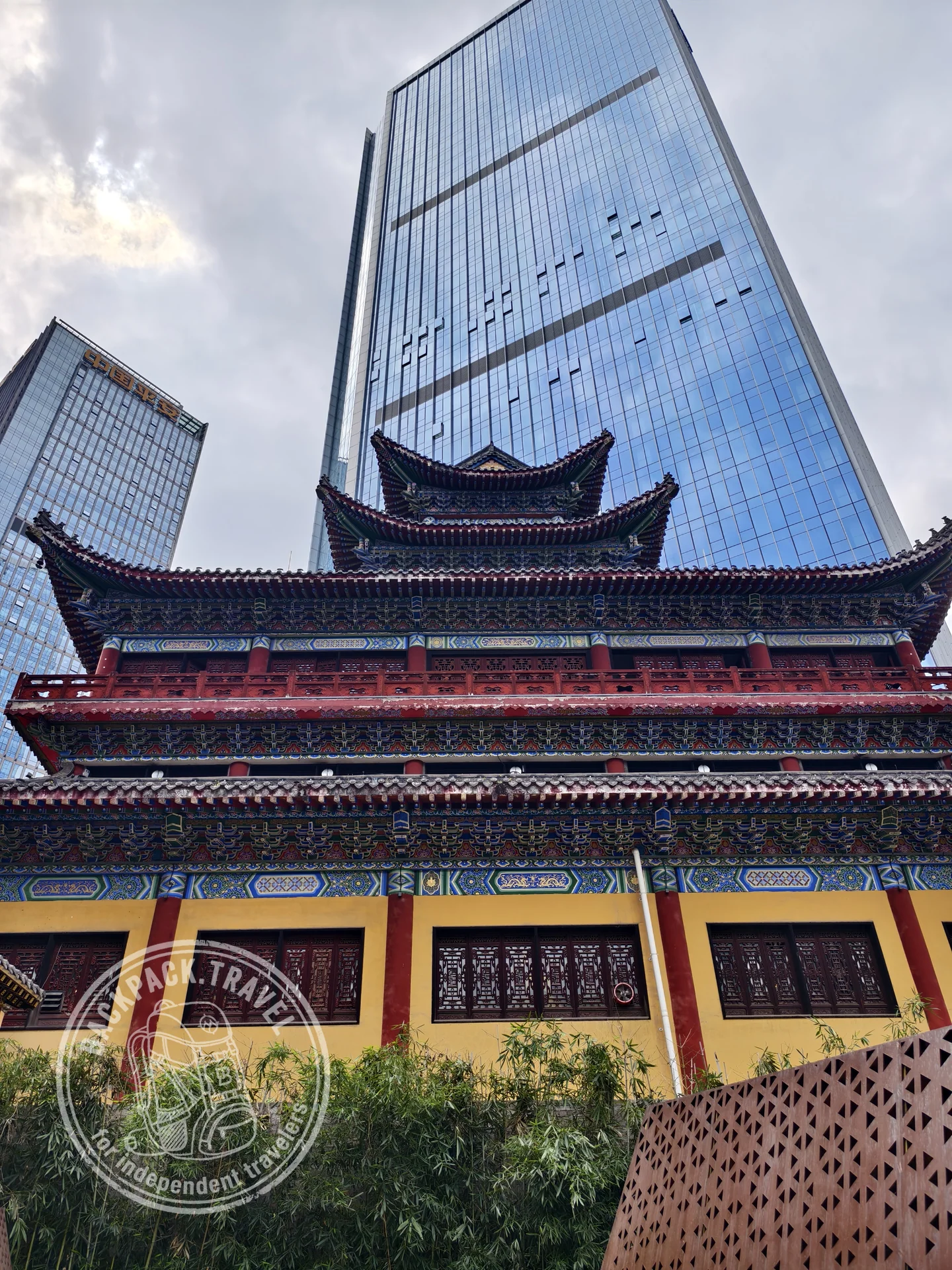
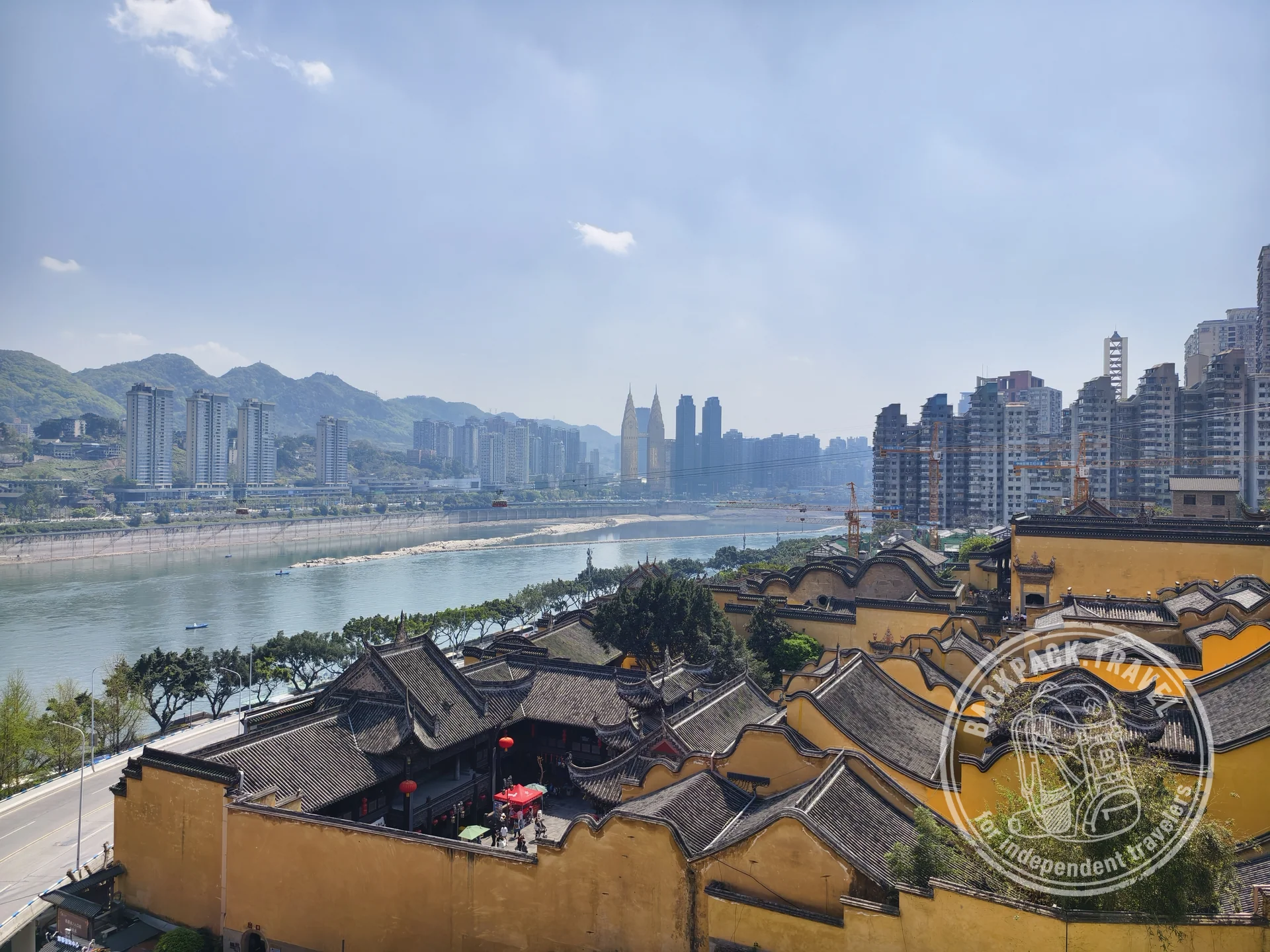
- Luohan Temple is a working Buddhist temple a couple of steps from the skyscrapers of Jiefangbei. It was founded in the 11th century and took its present name in the 1880s, when the hall of five hundred arhats was assembled here. The contrast between the enclosed courtyards and the glass towers around them is stronger than the temple itself.
- Liziba station is where the line 2 monorail runs straight into the sixth floor of a residential building and comes out the other side. It is better seen in the morning: by day there is a queue of photographers below.
- Ciqikou is an old quarter by the Jialing with wooden buildings and teahouses. It has been restored for tourists very thoroughly, but an hour's walk there justifies itself.
Getting around
The metro is the only sensible way. Some stations come out halfway up a slope, and moving between levels takes longer than the ride itself. Navigation apps here regularly lie about elevation: a point "200 metres away" can turn out to be forty metres below you, with no direct staircase. Two cable-car crossings over the Yangtze survive, old transport that has become an attraction.
How much time to allow
The minimum is two days. The first goes on Yuzhong: Jiefangbei, Luohan Temple and the observation deck, and in the evening the bridge and Hongyadong, which do not work without darkness. The second goes on Liziba with the monorail through the building, and the old quarter of Ciqikou. Three or four days give you slack for walks on the non-touristy slopes, the embankments and side trips out of town. Less than a day makes sense only in transit, for the sake of the night view from the bridge.
What to combine it with
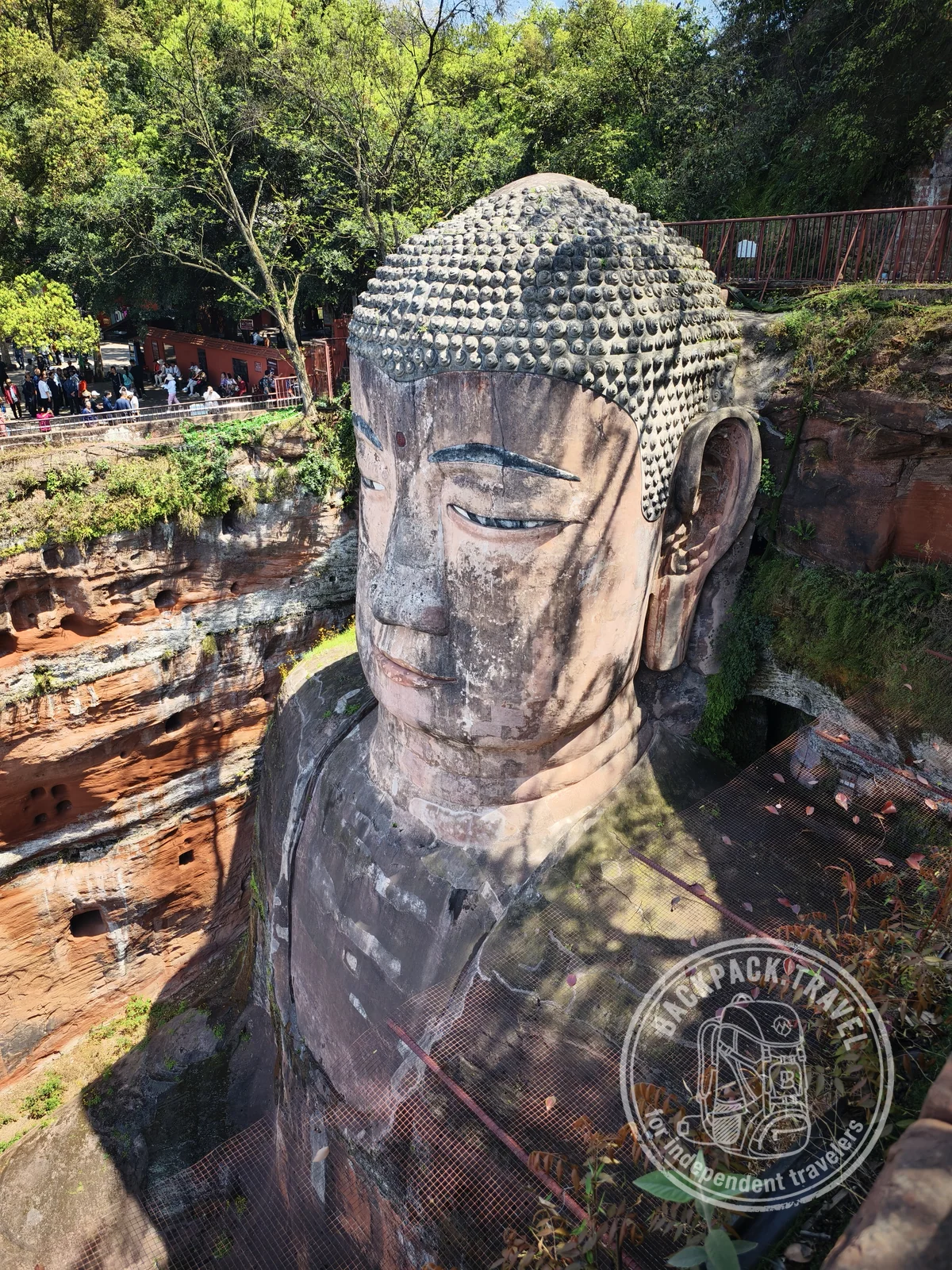
The Dazu Rock Carvings (a UNESCO site, Buddhist and Daoist sculpture of the 7th to 13th centuries) are about 170 km away, reached by train plus a taxi from the station, and realistic in a single day. The Wulong karst park with its stone bridges and sinkholes is another side trip, and since 2025 a high-speed branch has run there. Chongqing is the standard starting point for cruises down the Yangtze through the Three Gorges; Chengdu is an hour and a half away by high-speed train.
Food and weather
Chongqing huoguo — a fiery pot on beef fat with Sichuan pepper — is basic city food here rather than an attraction. The heat is real; places often have a pot with a divider, where half the broth is mild. Beyond that there is xiaomian noodles for breakfast and street grills in the side lanes.
It is best to come in October and November, and after that in April. Summer is hard going: the city is reckoned one of the "furnaces" on the Yangtze, approaching forty degrees at high humidity. Winter is mild but damp and almost always hazy, and the distant views from the observation decks disappear.
Who won't enjoy it
If you are coming to China for antiquities, temples and gardens, Chongqing will disappoint: practically nothing of the old city is left, and what is presented as old was built recently. The city is noisy, grey by day and poorly suited to an unhurried walk, with endless staircases, flyovers and changes of level that wear you out physically, and there is almost no English. The postcard image of Chongqing is a night shot taken from one or two points; by day what surrounds you is an ordinary industrial megacity. It is worth coming here for the phenomenon of the vertical city itself, rather than for a list of sights.