Description
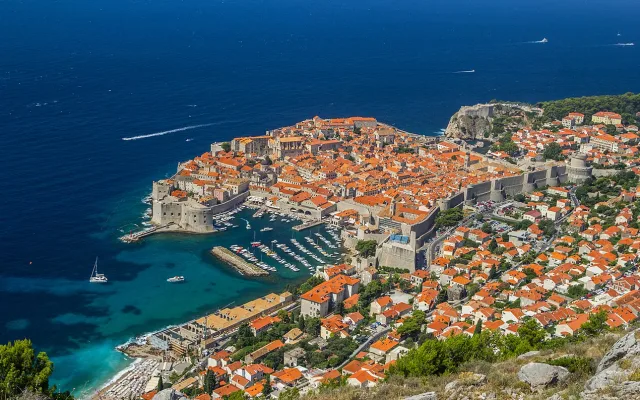
The pearl of the Adriatic — the city walls, the Old Town and the Game of Thrones filming locations.
Wiki
Dubrovnik is a coastal city at the very south of Croatia, in the historic region of Dalmatia, spread along the rocky shore of the Adriatic. It is often called the "pearl of the Adriatic": the look of the city, with its russet tiled roofs, white stone walls and azure water, has become one of the calling cards of the Mediterranean, and the Old Town has been on the UNESCO World Heritage list since 1979.
History and status of the city
From the 14th to the 19th century Dubrovnik — then Ragusa — existed as an independent maritime republic, competing with Venice for influence in the Adriatic. The republic grew rich on trade, was famous for its diplomacy and for an early abolition of slavery, and its motto "Libertas" ("Freedom") can still be seen on the flags above the fortress gates. The devastating earthquake of 1667 destroyed a large part of the Gothic building, so the present architectural ensemble is largely baroque in style. In the 1990s, during the Croatian war of independence, the historic centre was seriously damaged by shelling, but it has been carefully restored.
The city gained worldwide popularity with a new generation of travellers thanks to the series "Game of Thrones": the streets and squares of Dubrovnik served as the setting for King's Landing. Not everything credited to the city was actually shot here, though: parts of King's Landing were filmed in Split, Šibenik and Girona in Spain, and the Red Keep on screen is a digital extension built over Fort Lovrijenac.
Main sights
- The city walls — an unbroken ring of fortifications about 1,940 metres long and up to 25 metres high, with towers and bastions. Walking the walls opens the best panoramas of the roofs, the harbour and the open sea; it is sensible to come early in the morning, before the crowds and the heat.
- Stradun (Placa) — the main pedestrian artery, paved with limestone polished by the centuries. Along its edges stand Onofrio's Fountain, Roland's Column, the church of St Blaise, the city's patron, and the Sponza Palace.
- Fort Lovrijenac — a free-standing fortress on a 37-metre rock at the entrance to the old harbour; the series shot its Red Keep scenes here, including the Battle of the Blackwater.
- The Rector's Palace — an example of the republic's civic architecture, now the museum of the city's history.
- The cable car — this carries you up Mount Srd (412 m), from which the whole Old Town and the chain of the Elaphiti Islands are visible; at the top, Fort Imperial survives and a museum of the Homeland War is open.
- Lokrum island — a green nature reserve a few minutes by ferry from the harbour: a botanical garden, the ruins of a Benedictine monastery, the salt lake known as the "Dead Sea", and peacocks wandering freely among the pines.
Districts and surroundings
The core of the city is the walled Old Town (Grad), and modern quarters have grown up around it. The Lapad peninsula and the Babin Kuk district are valued for their beaches, promenades and calmer atmosphere. Banje beach lies directly beneath the eastern walls, while the pebbly Copacabana on Lapad suits families. From Dubrovnik it is easy to arrange trips to medieval Ston with its fortress walls and oyster farms, to the valley of the Neretva, or into neighbouring Montenegro to the Bay of Kotor.
Food
The local cooking belongs to the Dalmatian tradition with a strong Mediterranean accent: fresh fish and seafood, oysters and mussels from the Bay of Mali Ston, octopus, and risotto with cuttlefish ink (risotto al nero). Among meat dishes, pasticada is famous — beef braised in wine with dried fruit, served with home-made pasta. Meals are rounded out with olive oil, cheeses from the island of Pag and the wines of the Peljesac peninsula, Plavac Mali and Dingac. At the height of the season, prices in the restaurants of the historic centre are noticeably higher than in the outlying quarters.
Practicalities
- When to go. The peak falls in July and August, when it is hot (up to 35 °C) and crowded. It is more comfortable to come in May–June or September: warm, the sea already warmed through, and fewer crowds.
- Transport. Scheduled and city buses run from Cilipi airport into the centre; around the city itself, walking and buses are the easier options, since cars are banned from the Old Town. Ferries and catamarans leave the port of Gruz for Hvar, Korcula, Mljet and the Elaphiti Islands.
- How long to allow. Three days is the optimum: the first for the walls and the Old Town, the second for Srd, Lovrijenac and the museums, the third for Lokrum, the beaches or a trip to Ston.
- Useful to know. Themed "Game of Thrones" tours are popular, but most of the locations can be seen independently; at the peak of the day the walls and the main street are packed with cruise groups, so the early and evening hours are the best for walking and photographs.
Photos