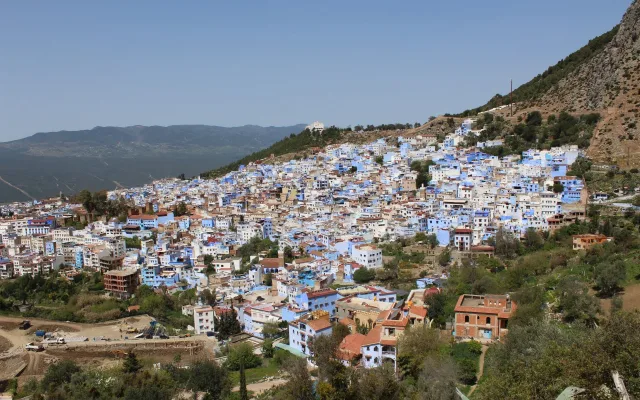
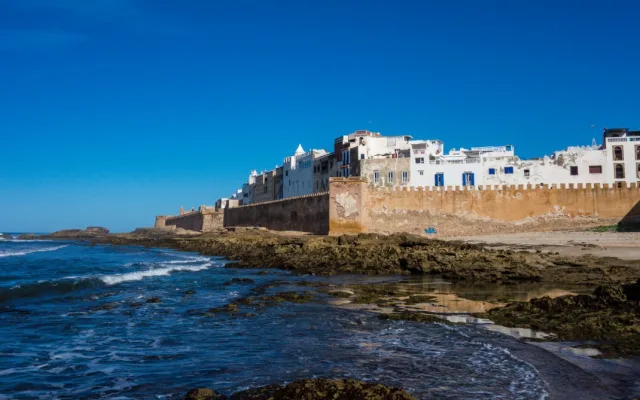
Description
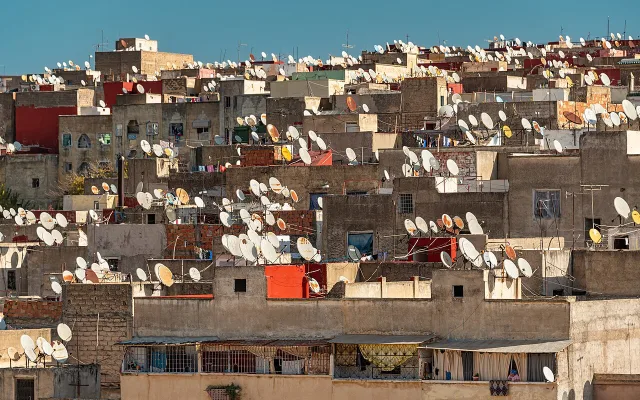
The UNESCO-listed medina of Fez — a labyrinth of lanes, the Chouara tanneries and Al Qarawiyyin, the oldest university in the world.
Wiki
Fez is the spiritual and cultural capital of Morocco: about 1.2 million people in the fertile Saïss basin at the foot of the Middle Atlas. Of the country's four imperial capitals — Fez, Marrakech, Meknes and Rabat — it is the oldest, founded at the end of the 8th century, and the most intact: the old city has barely been rebuilt since the Middle Ages. There are noticeably fewer tourists here than in Marrakech, and a far stronger sense of a living city rather than a museum.
A little history
The first settlement on the banks of the Fez river was laid out by Idris I in 789, and his son Idris II made it his capital, taking in waves of newcomers from Kairouan and Muslim Spain — their quarters are still called Qarawiyyin and Andalus. In 859 Fatima al-Fihri founded the mosque and college of Al Qarawiyyin, which Guinness World Records lists as the oldest continuously operating university in the world. The golden age came in the 13th and 14th centuries under the Marinid dynasty, which built the new town of Fes el Jdid with its royal palace, along with most of the famous madrasas. The capital later moved to Marrakech and then Rabat, but Fez kept its standing as the country's religious and artisanal centre.
What to see
- The Fes el Bali medina — a UNESCO World Heritage Site and one of the largest car-free urban areas on earth, with some 9,500 lanes that no vehicle can enter. The street plan took shape between the 9th and 14th centuries and has hardly changed since. Getting lost is inevitable, and it is part of the experience.
- The Chouara tanneries — the most recognisable sight in Fez: hundreds of stone vats of lime and natural dye where hides are still worked by medieval methods. The easiest vantage points are the terraces of the leather shops around them; you are handed a sprig of mint at the door, because the smell really is heavy.
- The Bou Inania Madrasa — the medina's principal college, built between 1351 and 1356. Carved cedar, plaster work and zellij mosaic; one of the few religious buildings in Fez that non-Muslims may enter.
- The Attarine Madrasa — 1323-1325, a masterpiece of Marinid architecture, smaller and finer than Bou Inania.
- The Al Qarawiyyin mosque and university — open to Muslims only, though you can glimpse the courtyard through the open gates, and the library next door has been partly opened to visitors since its restoration.
- Bab Bou Jeloud — the "blue gate" of 1913 and the medina's ceremonial entrance: blue tilework on the outside, green on the inside.
- Dar Batha — a late 19th-century palace, now the museum of Moroccan art and crafts, with an Andalusian garden.
- The Mellah — the Jewish quarter of Fes el Jdid, laid out by the Marinids in 1438 and the first of its kind in Morocco. The 17th-century Ibn Danan Synagogue and the old cemetery with its white tombs survive here.
- Borj Nord and the Marinid Tombs — two viewpoints on the hills above the medina; at sunset you can watch the city sink into smoke and ochre.
Two easy day trips: Volubilis, the ruins of a Roman town about 80 km away with 2nd- and 3rd-century mosaics, also UNESCO-listed, and Meknes (about 60 km), the fourth imperial capital.
Food and prices
Fassi cooking is reckoned the most refined in Morocco. The local speciality above all is pastilla, a flaky pie of pigeon or chicken with almonds, cinnamon and icing sugar — a sweet-savoury combination that takes getting used to. After that come tagine in its clay cone, couscous (traditionally on Fridays), the thick soup harira, mint tea and honeyed chebakia pastries.
Lunch in a medina café runs 65-140 dirhams ($7-15), dinner in a restaurant with a view 170-370 dirhams ($18-40). A glass of freshly squeezed orange juice is 10-20 dirhams ($1-2). A short hop by petit taxi costs 20-45 dirhams ($2-5), a grand taxi between towns 45-140 dirhams ($5-15). A half-day guide through the medina is 140-230 dirhams ($15-25) and pays for itself on the first day. Prices are as of 2026.
Getting there
Fes-Saïss International Airport (FEZ), 15 km from town, is served by Royal Air Maroc, Ryanair and several European carriers; a taxi to the medina is around 110-140 dirhams ($12-15). Trains take about four hours from Casablanca and about seven from Marrakech. Inside the medina there is no transport at all: donkeys and handcarts move the goods, and everything else is done on foot. Many nationalities enter Morocco visa-free for 90 days, but check the current rules for your own passport before you travel.
When to go
March to May and September to November are the best months: 15-25°C, dry and not stifling. In summer (June to August) afternoons hit 30-38°C and the closed lanes of the medina turn into an oven. Winter is mild at 5-15°C but wet, with occasional snow in the surrounding mountains. During Ramadan half the medina shuts during daylight hours, though the city comes alive after sunset more than ever.
Common mistakes
- Trying to navigate the medina by phone map: the signal drifts in the narrow lanes, and the signage is written for locals.
- Accepting a "free" tour from a stranger — it ends in a carpet shop over several hours of tea.
- Visiting the tanneries in the middle of the day, when the light is flat, the smell is at its worst and the terraces are packed.
- Assuming two days will cover it. Two nights is the minimum, three is better.