Geneva
SwitzerlandDescription
Lake Geneva, the Jet d'Eau fountain, the UN's European headquarters and expensive chocolate.
Wiki
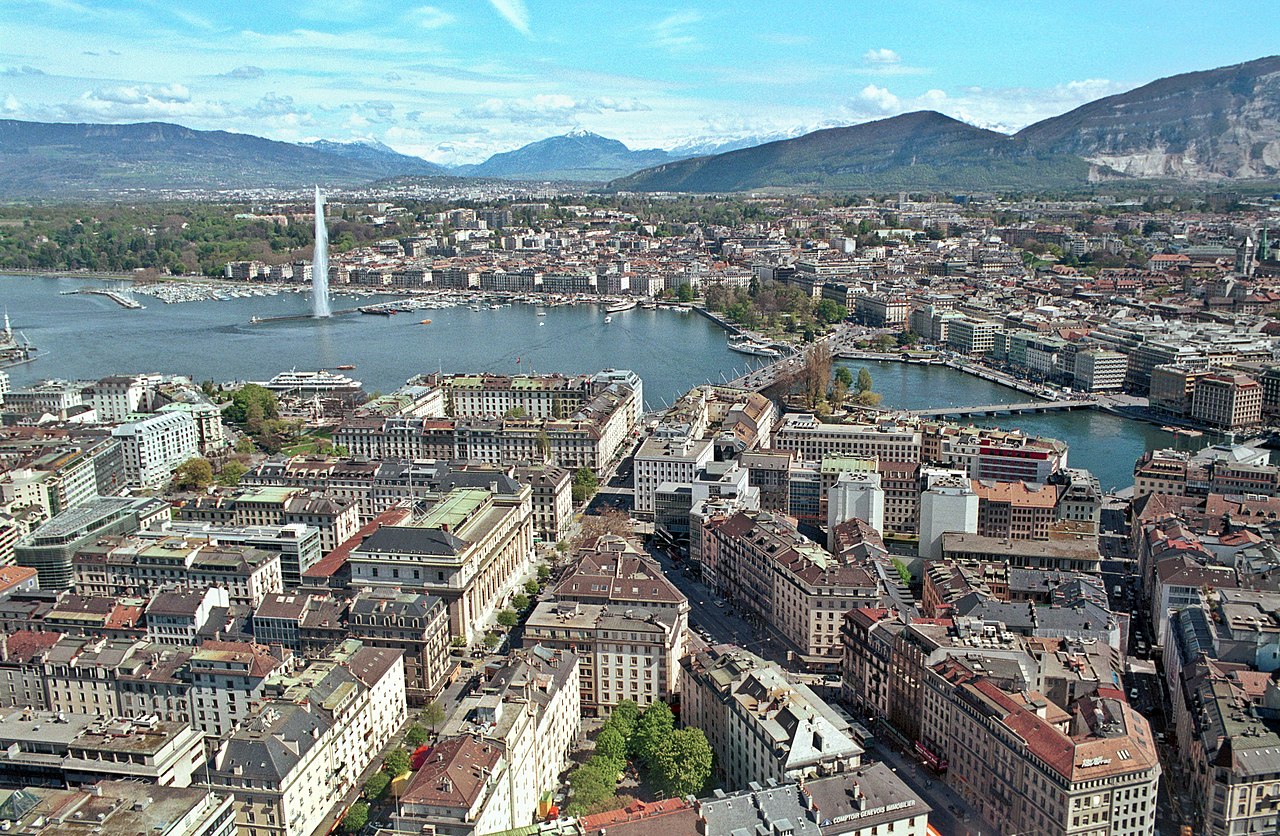
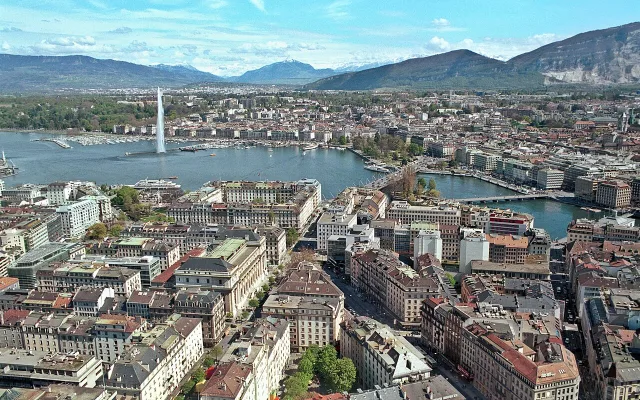
Geneva is the most international city in Switzerland: the UN, the WHO and the Red Cross all sit here, and on the waterfront a fountain plays that is visible from anywhere in the centre. The city is small, expensive and built more around the work of diplomats than around tourism — but two days are enough to see the main things and get out to the lake or the mountains.
How long to allow
Two days is enough. The first day for the Old Town, the waterfront, the fountain and the lake; the second for the Palais des Nations, the Red Cross Museum or CERN. The historic centre itself can be walked in a couple of hours: it is compact and everything is within reach. If you want an excursion into the Alps or into neighbouring France (Chamonix and Annecy are close), add a third day.
Getting there and getting around
Cointrin airport is only a few kilometres from the centre, and the train to Cornavin station takes about 6–8 minutes. The key tip: there is a free public transport ticket at the airport — a machine issues a pass valid for 80 minutes, which is enough to reach your hotel. And on checking in to any hotel or hostel you are given a Geneva Transport Card — free travel on trams, buses and the city water taxis (mouettes) for the whole of your stay. There is no need to buy a separate day ticket.
Inside the city a car is unnecessary and a hindrance — parking is expensive and the centre is pedestrian. The yellow "seagull" boats across the lake are not a novelty ride but full public transport on the same card: a convenient way to cross from one bank to the other.
What is genuinely worth seeing
- The Jet d'Eau — the symbol of the city, a jet reaching up to 140 metres. Free, and the best view is from the jetty, which you can walk out along; in a wind the spray reaches the pavement, so keep your camera in a bag.
- The Old Town (Vieille Ville) — the hill with cobbled streets, antique shops and the Place du Bourg-de-Four. St Pierre Cathedral is free, but a nominal charge is made for climbing the tower — from which comes the best panorama over the lake and, on a clear day, of Mont Blanc.
- The Palais des Nations — you can only get inside on a guided tour, and you need your passport with you (the check is like an airport). Opposite stands the giant Broken Chair, a free and powerful anti-war sculpture.
- The Red Cross Museum — the strongest museum in the city, not about naive heroics but about humanitarian catastrophe; allow at least a couple of hours.
- CERN — free, but the tours are taken weeks ahead, so book online in advance. Even without a booking, the free Science Gateway visitor centre is open.
If time is short, choose between the Red Cross Museum and CERN; both in one day is a stretch.
Where to stay
- The centre / Cornavin station — convenient for transport and for trips out, though the station area is not the most welcoming in the evening.
- Paquis — next to the lake and the UN, with plenty of budget hotels and street food, a lively and multilingual quarter.
- Carouge — "Geneva's Italy" on the left bank: low buildings, cafes, a bohemian atmosphere, quieter and pleasanter for walking.
A tip for those watching the budget: accommodation prices in Geneva bite, so many people sleep on the French side of the border (Annemasse), 15–20 minutes from the centre by public transport and noticeably cheaper.
Food and money
Geneva is consistently on the list of the most expensive cities in the world, and that is felt in the restaurants. Practical moves:
- Picnic by the water. Buy bread, cheese and local perch or sausage at a supermarket (Migros, Coop) — lunch on the waterfront works out many times cheaper than a cafe.
- The set lunch (plat du jour). On weekdays at midday, places offer set meals cheaper than the evening menu — the better meal is at lunchtime.
- Fondue and raclette — obligatory winter classics; in summer they are served less often.
- Water is free. Drinking fountains with clean water stand around the city — do not buy it bottled.
Coffee, transport and any snack here cost more than you are used to; build in a margin and do not constantly convert prices in your head, or you will spoil your own trip.
What to watch out for
- The geometry of the border. France is literally a couple of steps away — many sights and cheap rooms are across the border. Keep your passport with you if you plan a trip out.
- The currency is francs, not euros. Euros are accepted in places, but at a poor rate and with change given in francs. Pay by card.
- Safety. The city is calm, but the Paquis district and the area around the station in the evening see some petty street activity; watch your pockets.
- Weather. Mont Blanc and the panoramas are visible only on clear days — do not build the whole itinerary around them, as cloud is frequent.
- Sunday. Shops are mostly closed — buy what you need in advance.
The best time is May to September, when the lake transport is running, the terraces are open and there is a chance of mountain views. In winter people come for the fondue and as a base for the ski resorts nearby.
Photos