 Города и дороги
Description
The largest city in southern China and the old Canton, the port through which the country traded with the world for centuries. Skyscrapers along the banks of the Pearl River, Canton Tower and food that people come for in its own right.
Wiki
Guangzhou is the largest city in southern China and the very Canton through which the country traded with the outside world for centuries. This is not a museum city: people work, trade and eat here, and the sights are scattered across an enormous conurbation between skyscrapers and wholesale markets. People come on business, in transit to Hong Kong or for the sake of Cantonese food — and almost always underestimate how much history the city has kept.
What to see
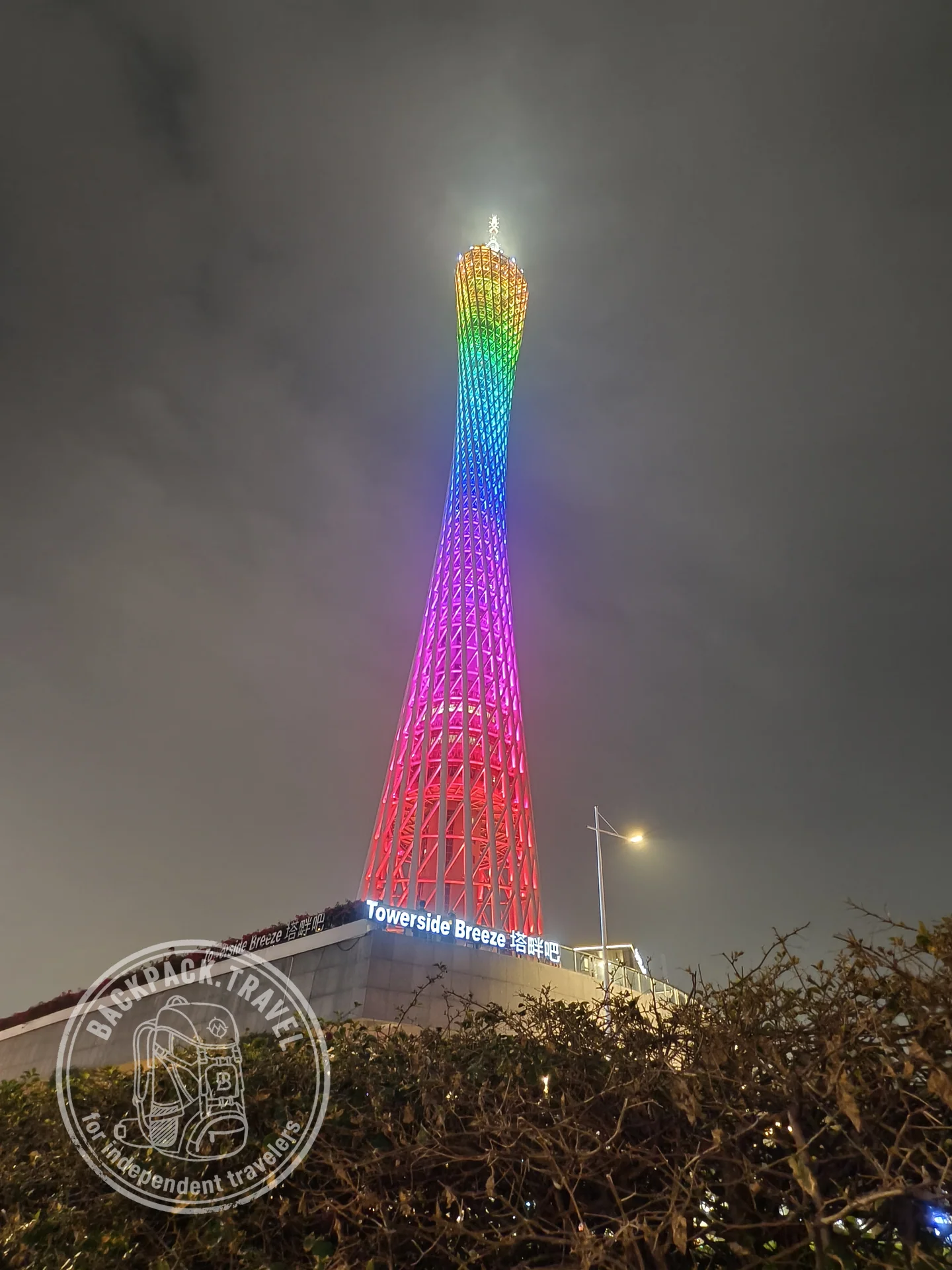
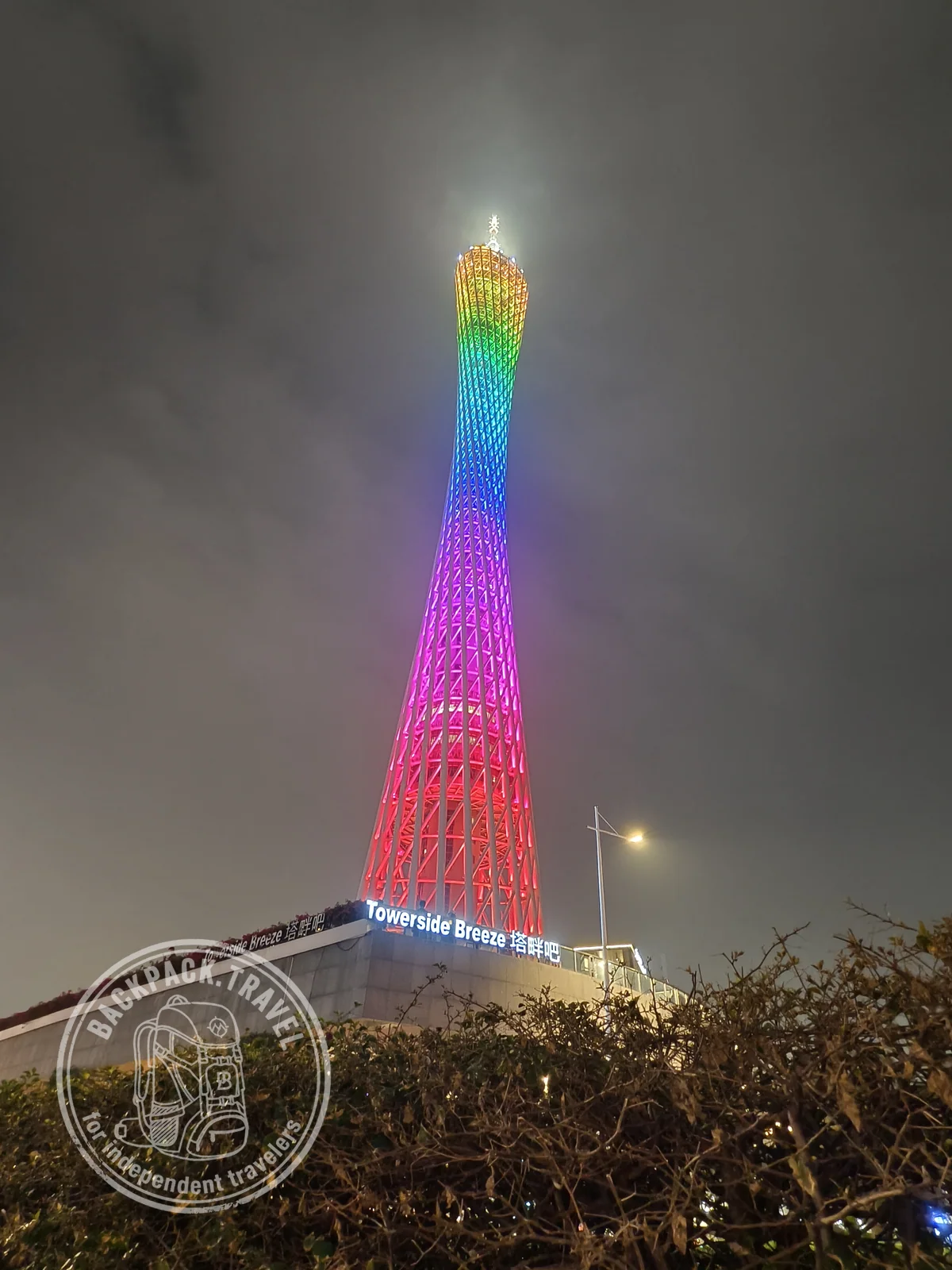
- Canton Tower stands 600 metres tall, was built for the 2010 Asian Games and remains the tallest TV tower in the world. There are several viewing levels: enclosed ones in the region of 430-450 metres and an open platform on the mast above 480. A "bubble" wheel capsule runs around the upper ring. It stays open late; it is better to go up towards sunset, so as to catch both the daylight and the illumination.
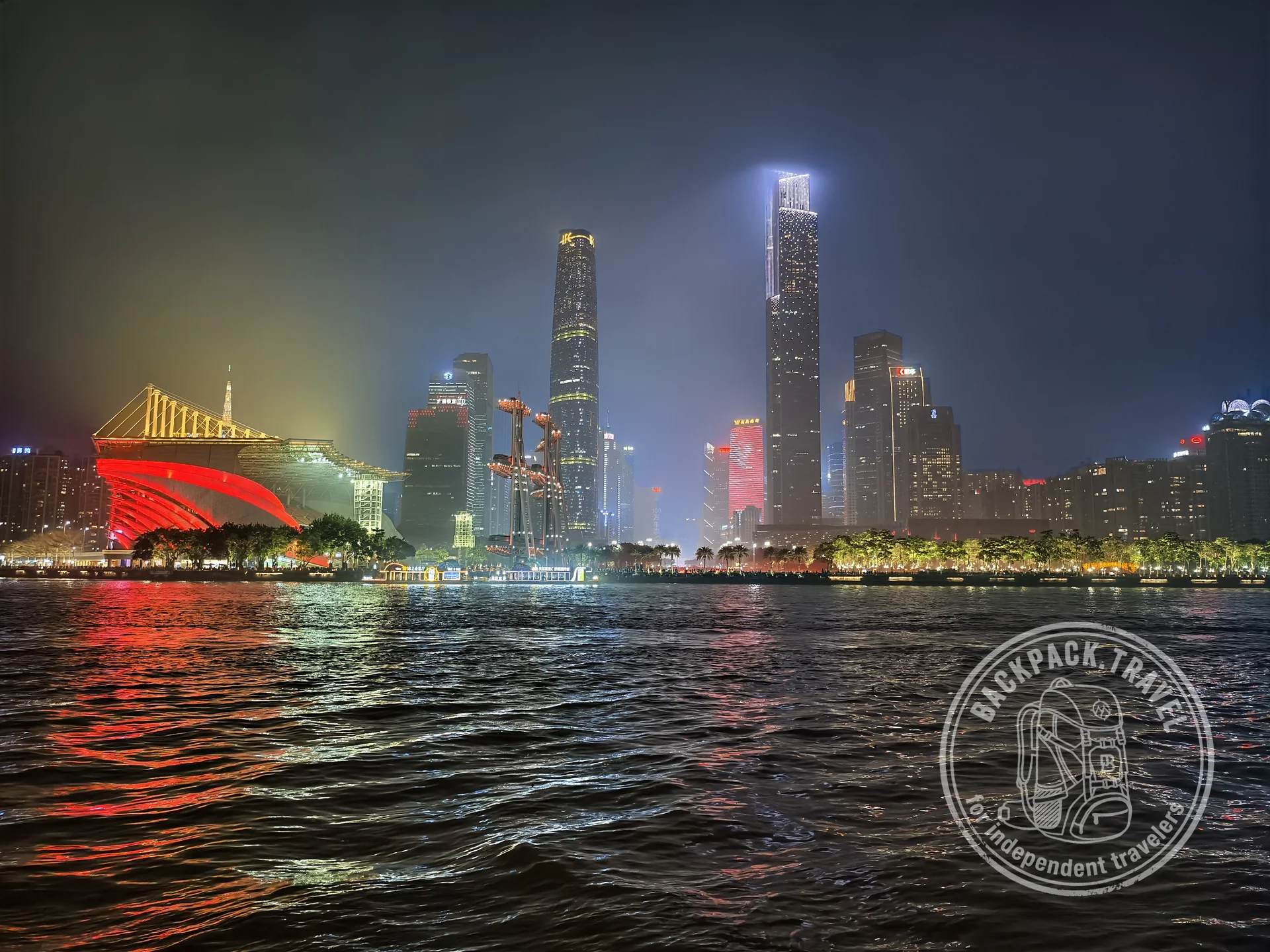
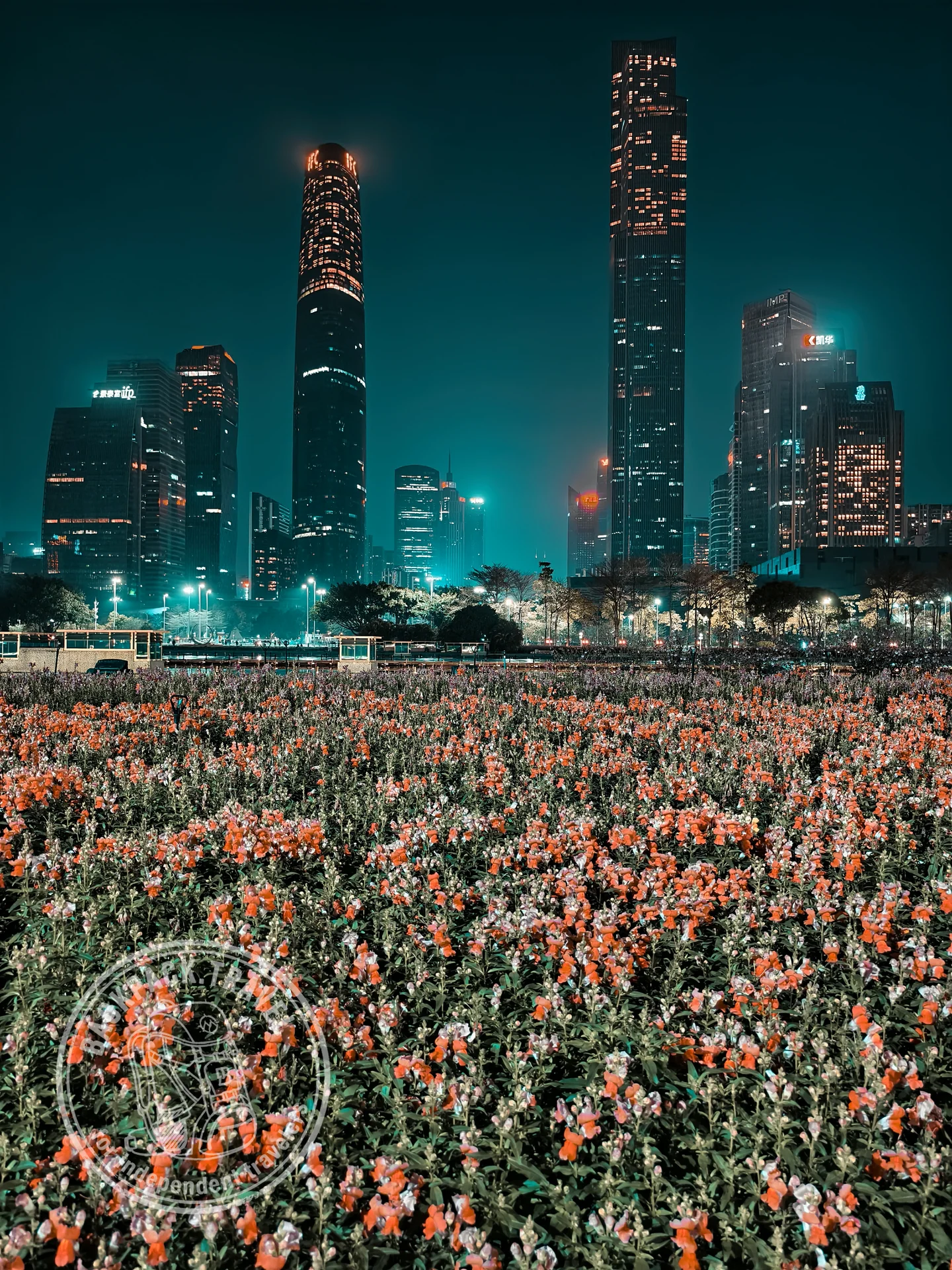
- The Pearl River waterfront is the main evening walk. The new bank with the tower and the skyscrapers is best seen from the water, and boats run along the river. The older stretch has kept its pre-war buildings with arcades.
- Shamian Island is a former British and French concession, a sandbank separated off by a channel. There are 19th-century mansions, plane trees, an embankment and almost no traffic at all. It is the place least like the rest of Guangzhou, and an hour covers it.
- The Chen Clan Ancestral Hall (Chen Jia Ci) dates from the end of the 19th century, the largest clan temple in the city and the finest example of Lingnan architecture: sculpted friezes along the roof ridges, carving in wood and stone, and ceramics. Inside is the Guangdong Folk Art Museum.
- The Museum of the Nanyue King's Tomb holds an underground burial of the 2nd century BC, excavated in the 1980s, with a suit made of jade plates. It is one of the strongest archaeological museums in China.
- The Temple of the Six Banyan Trees (Liurong Si) with its Flower Pagoda and Guangxiao Temple are the oldest Buddhist complexes.
- Yuexiu Park is a hill in the centre with the statue of the five rams, the symbol of the city, the Zhenhai Tower housing the city museum, and fragments of the Ming wall.
Food
Guangzhou is the birthplace of Cantonese cooking, and it is the one item that makes the trip worthwhile even without a list of sights. The key practice is morning tea: from early morning until noon the teahouses serve dim sum, and it is a ritual rather than a breakfast eaten on the run. The classics are prawn har gow, siu mai and cheung fun rice rolls. There is almost nothing spicy: Cantonese cooking is built on the freshness of the produce rather than on seasoning.
Transport and how much time to allow
The metro is extensive and convenient, but the sights are spread far apart and a great deal of time goes on the journeys between them. High-speed trains link the city with the whole country: Shenzhen is about half an hour away, Hong Kong roughly an hour, to West Kowloon station.
The transit minimum is one day for the tower, the waterfront and Shamian Island. Two days add the Chen Clan Ancestral Hall, the Nanyue tomb, the temples and a proper morning tea, which is itself the thing worth coming for. Three days or more are worth allowing if you have arrived on business or want to get seriously to grips with the food and the markets.
What to combine it with
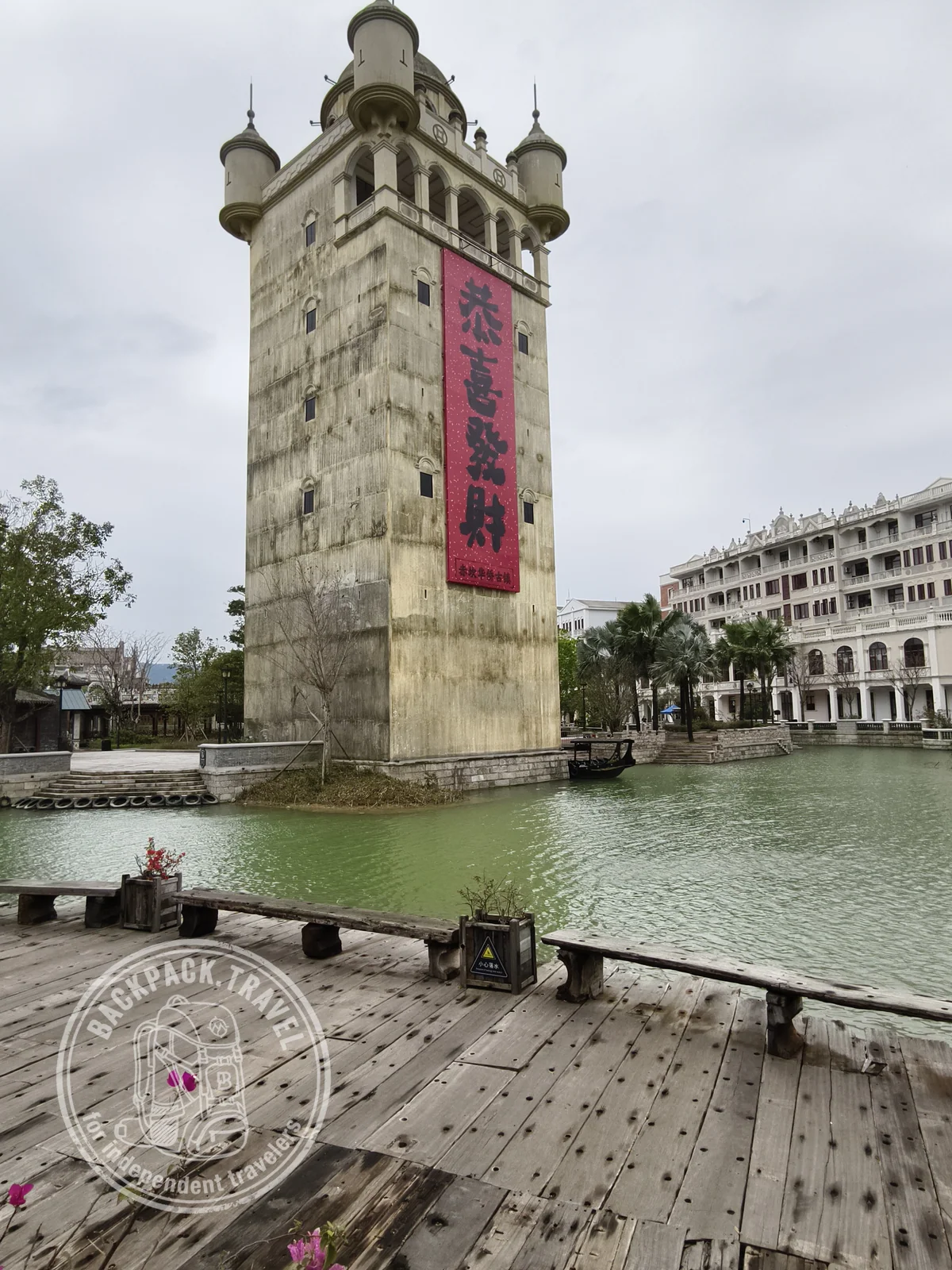
The logical pairings are Hong Kong and Shenzhen, both less than an hour away; Foshan can be reached by metro. The distant but worthwhile side trip is the diaolou of Kaiping, fortified tower houses of the early 20th century on the UNESCO list, about two hours to the west.
When to go and what to know in advance
The climate is subtropical and humid. The best time is from November to February: warm, dry and comfortable. From May to September it is hot and stuffy with heavy downpours, and July to September is typhoon season. Take separate account of the dates of the Canton Fair: it runs in two sessions, in spring (mid-April to early May) and in autumn (mid-October to early November). In those weeks accommodation prices soar and there may be no free rooms at all.
Who won't enjoy it
Guangzhou is a working megacity with no coherent historic core. The old is embedded in the new piece by piece, the sights are forty minutes apart by metro, and no sense of walking through a city ever develops: the only places you can really stroll are Shamian and the riverside. The humidity in summer is heavy, the crowds are dense and there is little English. If you are coming to China for antiquities, Xi'an, Beijing and Nanjing will give you more. Guangzhou is justified by two things, the food and its role as a convenient base in the south; everything else comes as a bonus.