 Города и дороги
Description
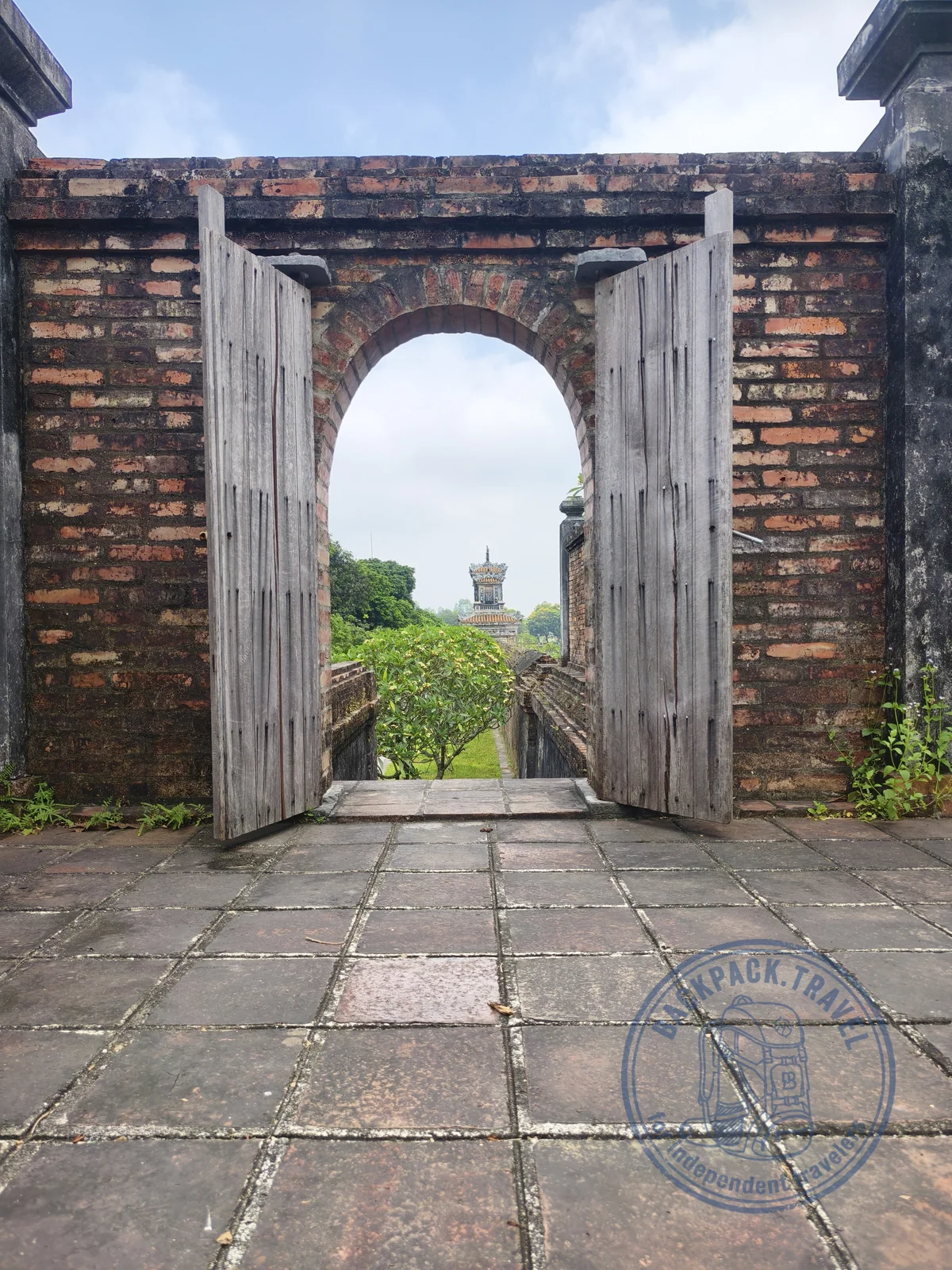
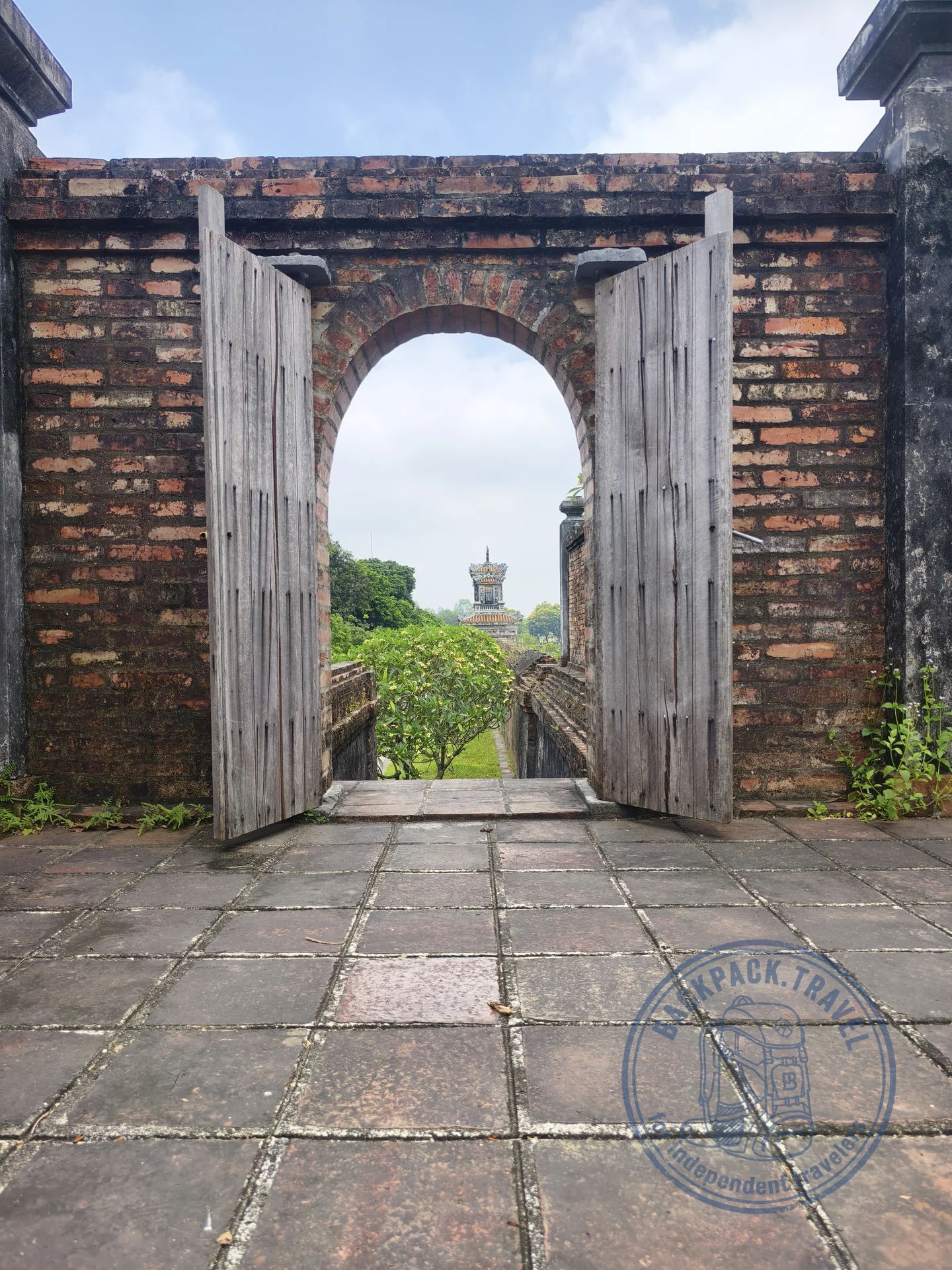
The capital of the Nguyen empire on the Perfume River: a walled Imperial City with palaces and gates, imperial tombs in the surrounding countryside, and food that Vietnam considers its most refined.
Wiki
Hue was the capital of Vietnam under the Nguyen dynasty, from 1802 until the last emperor abdicated in 1945. What remains from that period is a walled citadel on the north bank of the Perfume River, the palaces inside it and the imperial tombs scattered across the surrounding hills; the ensemble was added to the UNESCO list in 1993. The second reason to come is the food: cooking here is considered the most refined in Vietnam.
The Imperial City
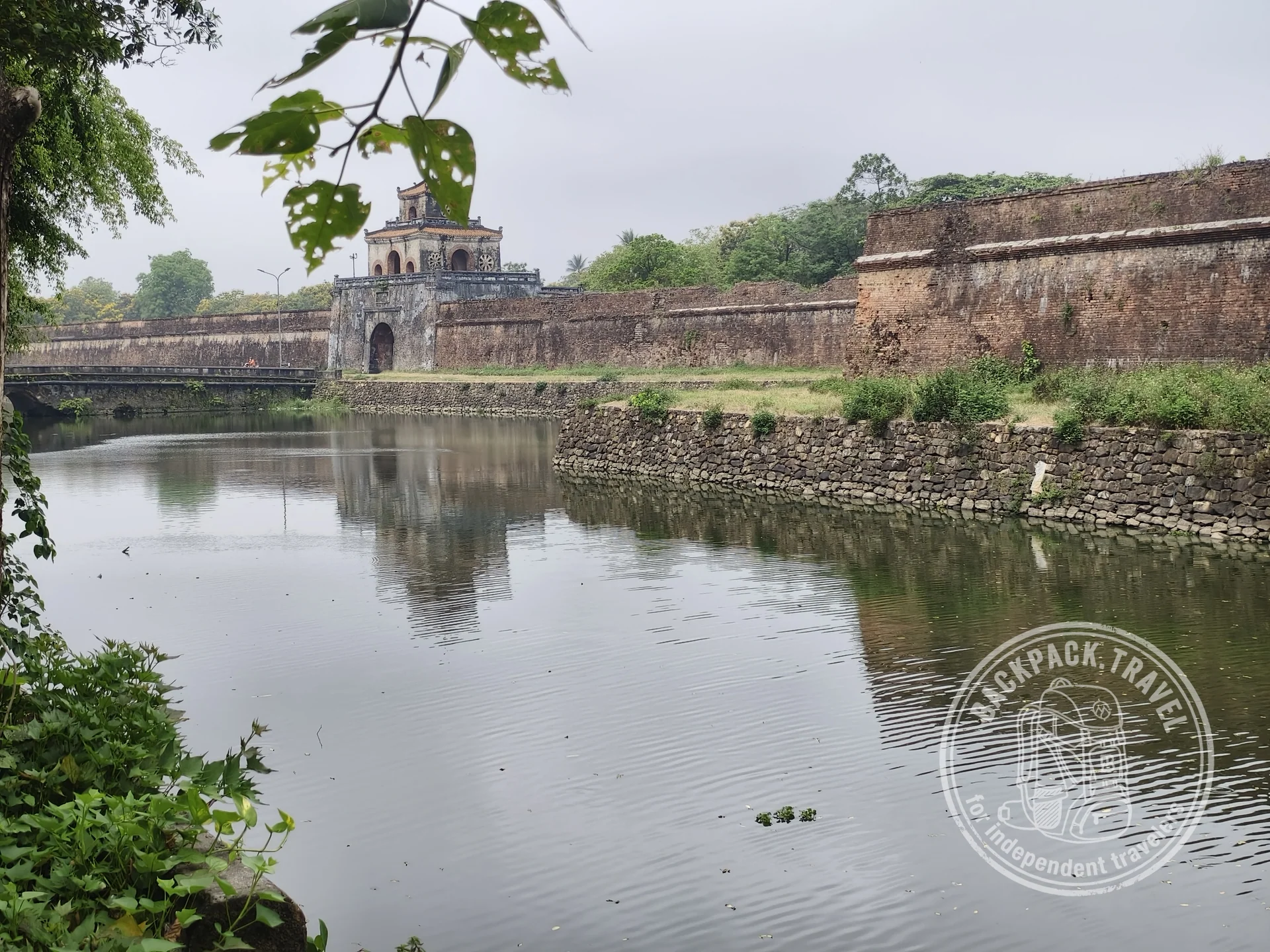
The layout has three layers: the outer citadel of Kinh Thanh with its bastions and moats, the Imperial City inside it, and at its heart the Forbidden Purple City for the emperor's family.
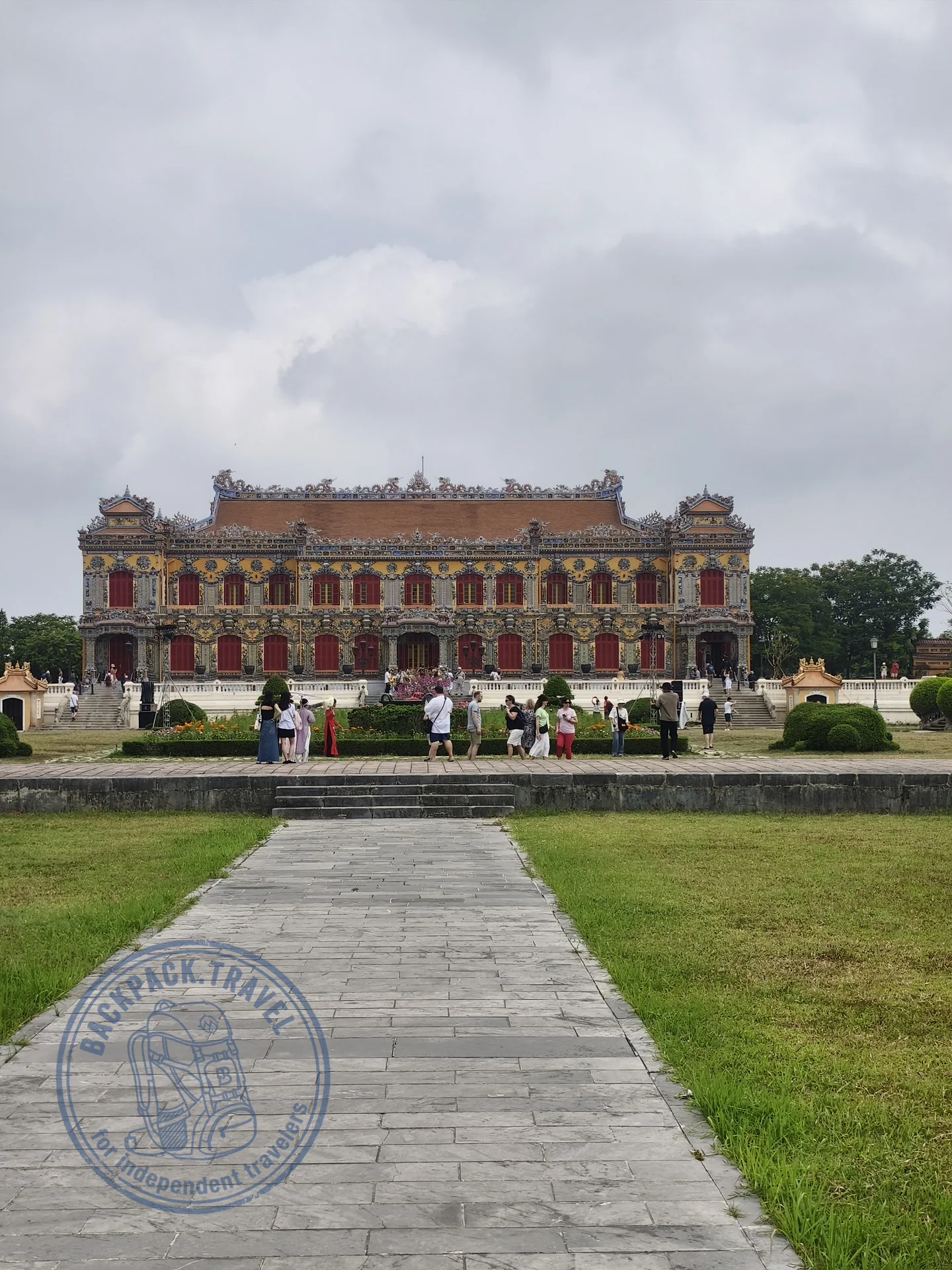
Construction was begun by Gia Long in 1804 and finished by Minh Mang in the 1830s. What followed was a history of losses: the complex suffered badly in the wars of the twentieth century, above all during the battle for Hue in 1968. Of some hundred and fifty buildings only a minority survived, and restoration is still going on.
- The Ngo Mon Gate is the ceremonial entrance with a pavilion on top, and it is the signature shot of Hue.
- The Thai Hoa Palace (of Supreme Harmony) is the throne hall with red lacquered columns and a ceremonial courtyard.
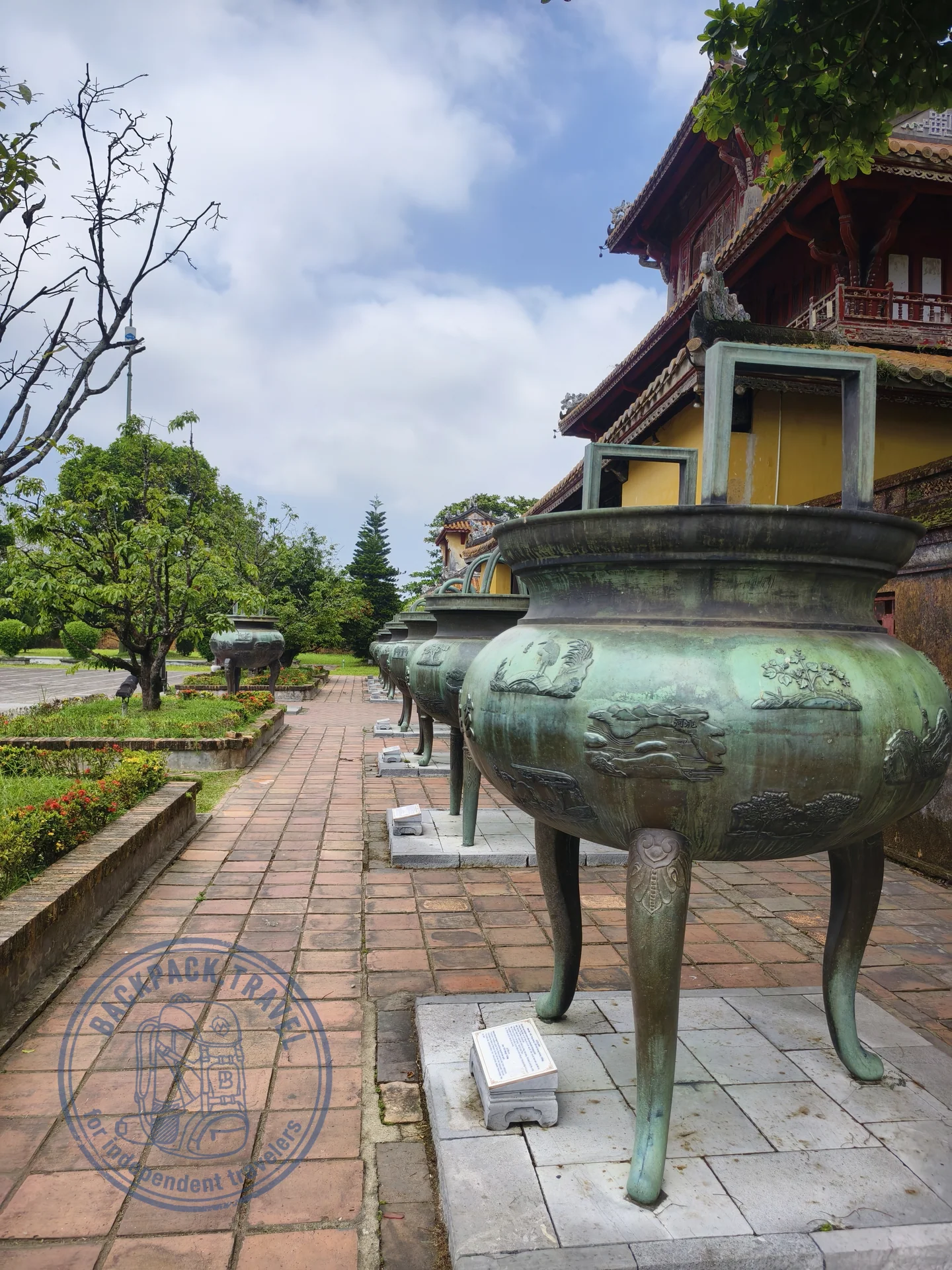
- The Nine Dynastic Urns are bronze vessels of the 1830s with reliefs of Vietnamese rivers, mountains, animals and plants. In 2024 the reliefs were inscribed in the UNESCO Memory of the World register, and they are the most rewarding thing in the complex.
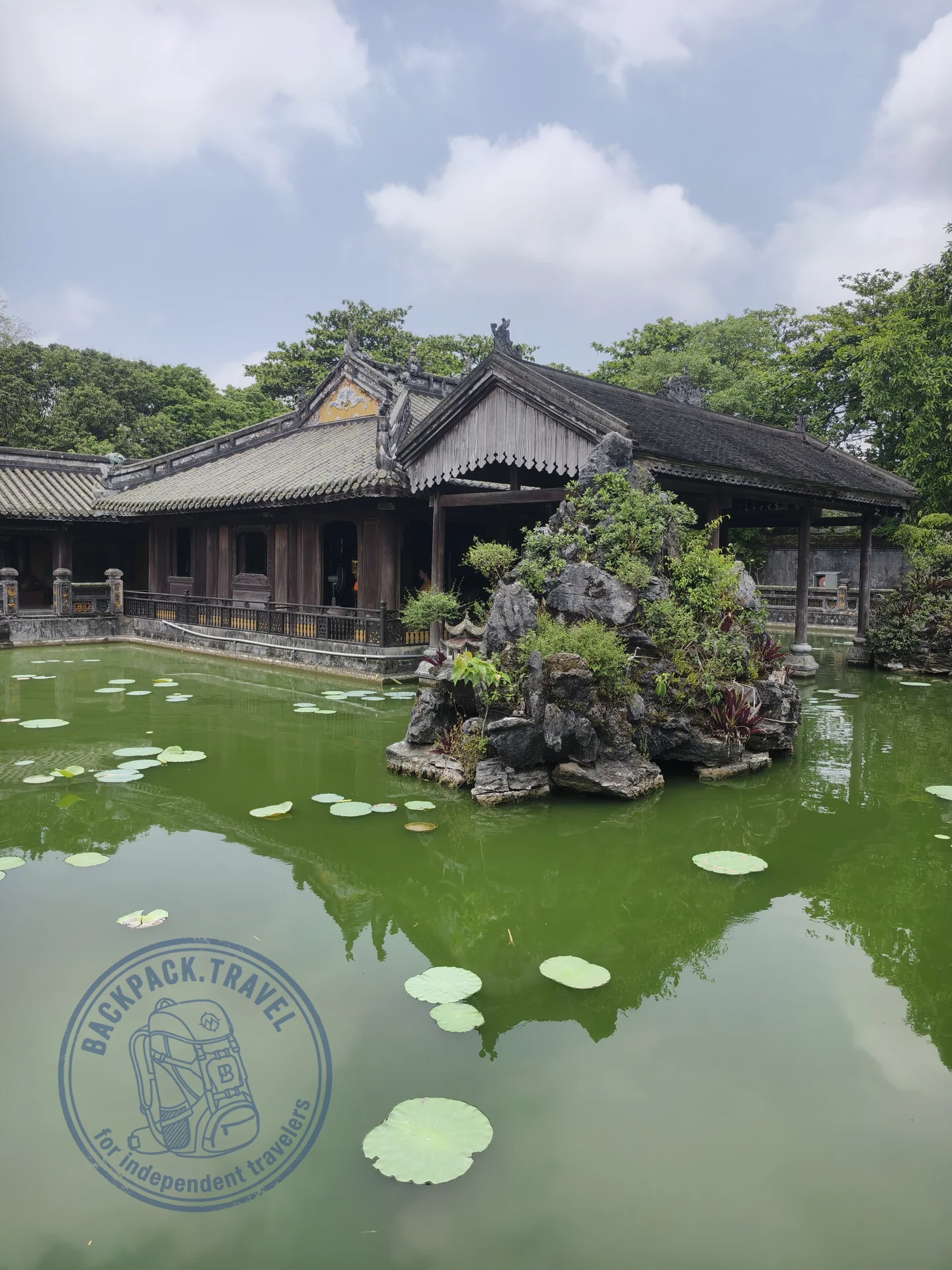
- The Dien Tho Residence was the home of the dowager empresses, about two dozen buildings behind a wall of their own. It is one of the few parts where the domestic scale has survived rather than ceremonial architecture.
The grounds are large and there is little shade, so allow at least three hours.
The imperial tombs
They stand along the Perfume River south of the city, the nearest 5 to 8 kilometres away and the furthest about 15. There is no need to see them all, and the usual choice is this:
- Minh Mang's tomb is the most harmonious: a strict axial composition with lakes, bridges and pavilions.
- Tu Duc's is the most picturesque: not a burial vault but a park with ponds, where the emperor lived during his lifetime.
- Khai Dinh's is the strangest: darkened concrete, baroque mouldings and an interior entirely laid out in mosaic made of broken glass and porcelain.
There are combined tickets for the Imperial City and the tombs valid for two days, and they are noticeably cheaper than buying them separately.
What else there is
- The Thien Mu Pagoda on the river bank is the symbol of the city. It was founded at the beginning of the seventeenth century; the seven-tiered Phuoc Duyen tower, about 21 metres high, was put up in the middle of the nineteenth. The car in which the monk Thich Quang Duc travelled to Saigon to burn himself in 1963 is kept here.
- The Dong Ba market is the largest in the city and the best place to eat.
- The Thanh Toan bridge is a small covered tile-roofed bridge of the eighteenth century in a village just outside the city.
The food is a reason of its own to stay longer: bun bo Hue (a spicy beef soup), banh beo and banh khoai, nem lui and com hen, rice with river clams.
Getting there and when to go
Phu Bai airport is 15 kilometres from the city. From Da Nang and Hoi An it is easier to travel by train or by car over the Hai Van Pass: the stretch of railway along the coast is considered one of the most beautiful in Asia, and it takes about two and a half to three hours. Hue sits on the main north-south line and fits into a route between Hanoi and Da Nang.
Hue is one of the rainiest cities in Vietnam. The rainy season runs roughly from September to December, peaking in October and November, and floods do happen. From May to August it is dry, but the heat with the wind out of Laos is hard to bear. February to April is the most comfortable time.
How much time to allow
The minimum at which the trip makes sense is one day for the Imperial City and a single tomb. Two days is the ideal, adding two more tombs, the Thien Mu Pagoda and the Dong Ba market. A third day is needed for the surroundings and the Tam Giang lagoon.
Who will not enjoy it
Hue is a city for those interested in history; everything else here is modest. In places the Imperial City resembles a vacant lot with signposts: a substantial part of the buildings has been lost, and without knowing what once stood there the walk turns into a tour of lawns. The tombs are scattered, and without transport the day comes out disjointed. There is almost no nightlife or shopping by the standards of Da Nang or Hoi An. And if you have seen the imperial complexes of China, the Vietnamese one will seem small.