Description
A desert town between Tehran and Isfahan, known for its lavish 18th- and 19th-century merchant houses, the UNESCO-listed Fin Garden and the rose villages nearby.
Wiki
A small desert town halfway between Tehran and Isfahan, worth stopping in for three things: the merchant mansions of the 18th and 19th centuries with their extraordinary courtyards, the quiet Persian garden of Fin, and the mud-brick village of Abyaneh within reach. Two days is the right rhythm — one on foot in the town itself, one for a trip out.
Why come, and what is actually worth seeing
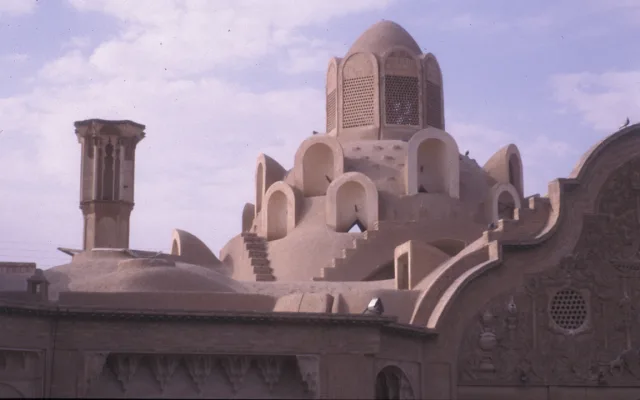
Kashan is about the architecture of wealthy traders rather than headline monuments. The houses were built inwards and downwards: a blank mud wall on the street, and behind it multi-level courtyards, pools and wind catchers (badgirs) that pushed cool air through the rooms when the temperature outside passed 40°C.
- The Borujerdi House and the Tabatabaei House stand almost next to each other — take both, they complement one another. Borujerdi is more compact and more spectacular in its decoration; Tabatabaei is larger, with several courtyards. Go in the first half of the day, while the light is soft and the crowds are thin.
- The Abbasi House is more of a labyrinth and much less publicised, which is exactly its appeal: there is hardly anyone in it.
- The Sultan Amir Ahmad bathhouse — do not just go inside, climb onto the roof as well. The rolling domes studded with round glass bosses are the most recognisable shot in Kashan. There is usually a café terrace nearby with the same view.
- Fin Garden (Bagh-e Fin) — a UNESCO-listed site on the edge of town, a classic chahar bagh with turquoise water channels and cypresses. Beautiful, but out of the way: fold it into your arrival or departure, or take a taxi.
- The bazaar runs right through the old town; look for the Timcheh-ye Amin od-Dowleh, a domed hall with a stunning vault. This is not an attraction but a working market — copper, spices, rose water.
Do not try to see everything. The houses are similar inside, and after three or four of them you are saturated. Fewer, slowly, is better.
Getting there and getting around
Kashan sits on the main Tehran–Isfahan axis, so it is easy to reach from either end.
- The train is the most comfortable option in both directions; the station is out of the centre, so take a taxi to your hotel.
- Buses and savaris (shared taxis) run frequently from a terminal on the edge of town.
- From Tehran's IKA airport it makes sense to head straight for Kashan and skip the capital altogether — it takes about as long as getting into central Tehran.
Inside the historic quarter everything is compact and walkable: the houses, the bazaar and the bathhouse are within half an hour of each other on foot, along narrow, partly pedestrianised lanes. For Fin, Sialk and above all Abyaneh you need a taxi, ideally hired for half a day or a full day — there is essentially no public transport out there.
Where to stay
Stay in a restored traditional house in the old town. In Kashan this is not a luxury but the norm, and it is the whole point of spending the night: sleeping around a courtyard with a pool under a wind catcher. These guesthouses are within walking distance of every mansion. Book ahead during the rose season and around Iranian holidays — there are not many rooms and they go quickly.
Day trips
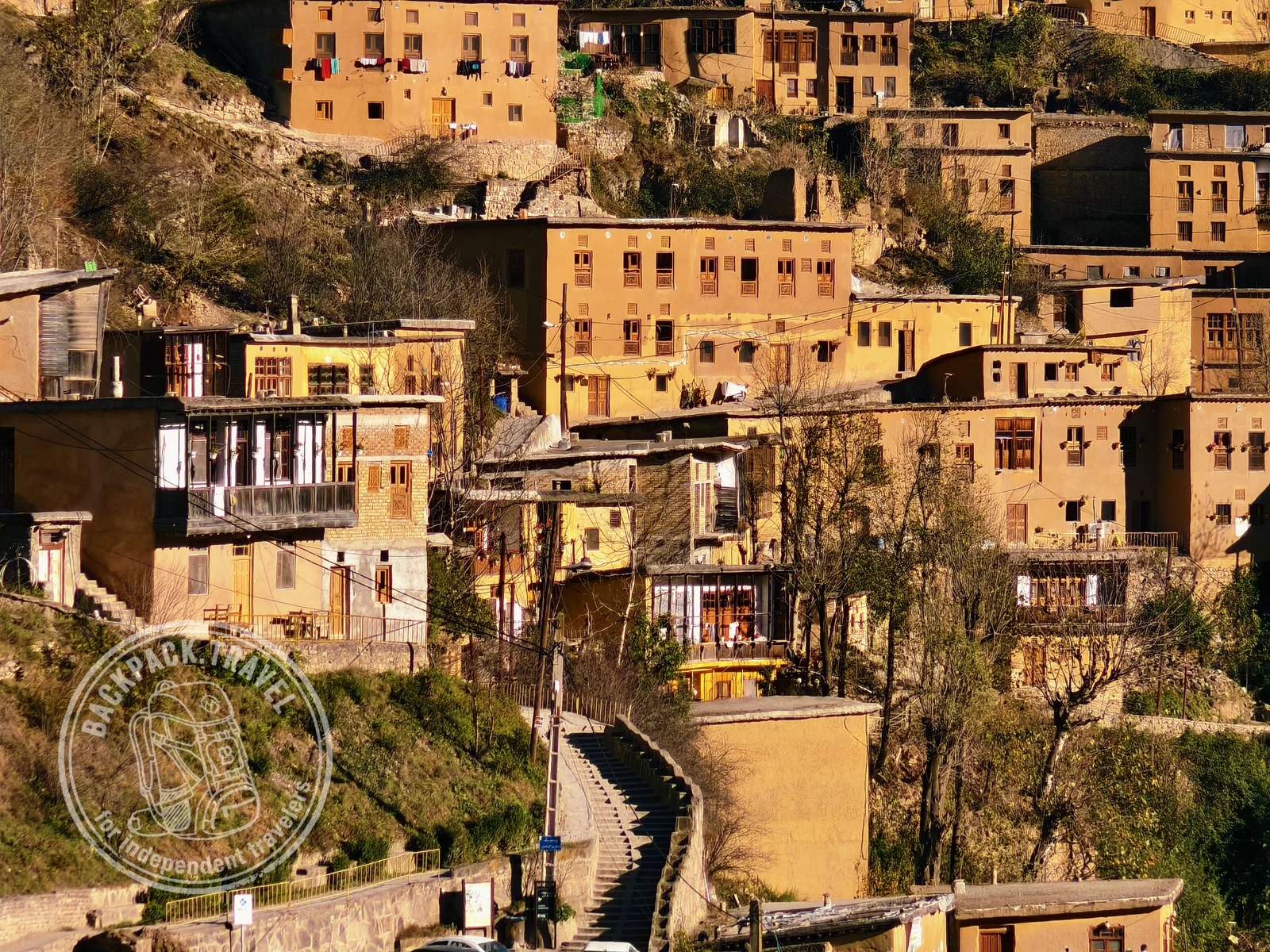
- Abyaneh (around 80 km away, up in the mountains) is a red-earth village where the women still wear bright floral headscarves. Go as a separate taxi trip and take in the desert views on the way; allow the best part of half a day for the round journey.
- Qamsar and the neighbouring villages are the centre of rose water production. They make most sense during golab-giri, the rose harvest and distillation, in late spring — usually May. Outside the season there is little reason to go.
When to go
Spring (April–May) and autumn (October–November) are the sweet spots: warm but bearable. May also brings the rose festival. Summer is genuine desert heat and walking in the middle of the day is punishing; winter nights are cold. If you land in the heat, build the day around a siesta — sightseeing early and late, midday in the shade of a courtyard.
Food and money
The cooking is simple and domestic: khoresh (thick stews served with rice), local soups (ash), and for something sweet gaz, the pistachio and saffron nougat, and of course rose water, which goes into desserts and drinks. Skip the tourist cafés and look for the canteens attached to the bazaar — cheaper and more honest.
Kashan feels inexpensive: rooms, food and taxis all cost noticeably less than their European equivalents. The difficulty is not the price but paying it.
What to know
- Cash. Foreign Visa and Mastercard cards do not work in Iran — bring hard currency and change it locally. Work out your budget in advance, because you will not be able to draw on your own card. Prices are written in rials but quoted in tomans, which are simply rials divided by ten; when a figure sounds exactly ten times too low, that is why.
- Dress code. Women need a headscarf and covered clothing, visitors included.
- Opening hours. Many sites close early and take a long midday break, and religious holidays scramble the timetable — check on the spot.
- Haggling at the bazaar is fine for souvenirs, but keep it gentle.
- The classic mistake is stopping in Kashan "for a couple of hours" between Tehran and Isfahan. The town needs a night: evening and morning light on those courtyards and rooftops is half the experience.