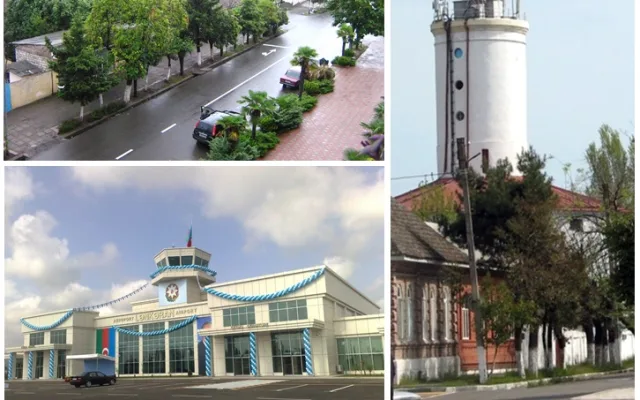
Lankaran
AzerbaijanDescription
Azerbaijan's subtropical south on the Caspian: the Hyrcanian relict forest, tea plantations and distinctive Talysh cooking.
Wiki
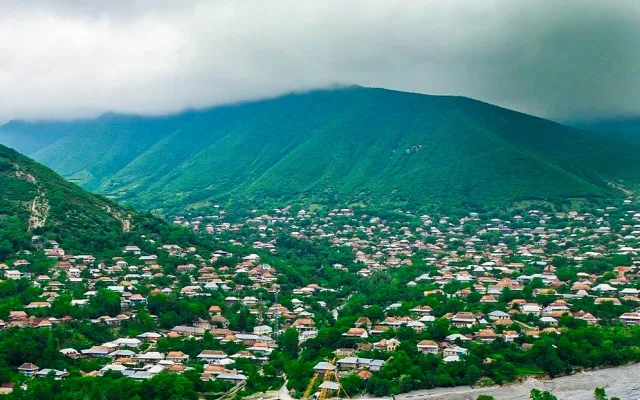
Azerbaijan's subtropics begin here: humid air, tea bushes and a relict forest with no equivalent anywhere else in the Caucasus. Lankaran is a compact southern town on the Caspian, and people come not for architecture but for the landscape and the particular Talysh cooking. Two days covers both.
Why come, and what is worth seeing
The main reason to make the trip is Hirkan National Park, a relict forest of Tertiary origin and part of a UNESCO World Heritage Site. It is the only subtropical forest in the Caucasus, with Persian ironwood (Parrotia persica) and dozens of endemic species. The sense of genuine jungle half an hour from the Caspian shore is what justifies setting a whole day aside.
The rest of the town is quickly covered, and mostly in passing:
- The lighthouse — a round brick tower that began life in the eighteenth century as part of the old Lankaran fortress and has served as a lighthouse since the early twentieth. It is the town's recognisable emblem, standing near the shore.
- Xan Evi (the Khan's House) — an ethnographic museum in a nineteenth-century mansion; small, but it gives you the context of Talysh history.
- The Lankaran fortress (1726–1727) — largely gone. What survives is the round "zindan" tower and the second tower that became the lighthouse; more of a stop on a walk than a sight in its own right.
- The tea plantations in the surrounding districts, towards Masalli and the neighbouring villages, where you can see how Azerbaijan's main tea crop grows and is processed.
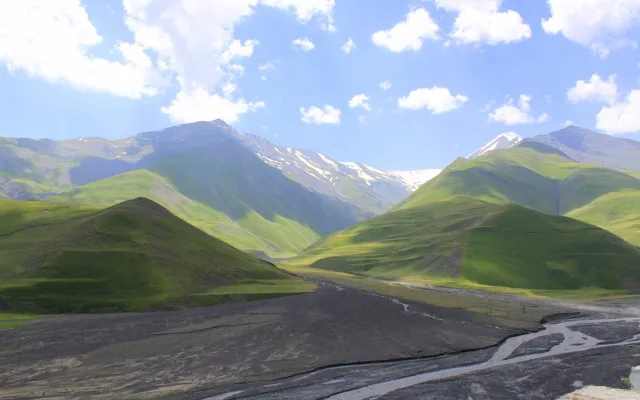
With a third day, or a car, there are the Talysh mountains on the Iranian border, with trekking, waterfalls and mineral springs; a mountain reservoir some 25 km out; and the border town of Astara, a few dozen kilometres south.
Getting there and getting around
Lankaran is about 270 km from Baku along the Caspian coast.
- Train is the most comfortable option: services run from Baku's station by day and overnight, the journey takes several hours, and tickets are cheap.
- Minibuses and coaches leave from Baku's bus stations; faster than the train, less comfortable.
- A taxi or private transfer is expensive but saves time if you are travelling as a group.
The town itself is small: the centre is walkable, and minibuses and local taxis link the districts. Getting to Hirkan National Park and into the mountains without a car is another matter — arrange a local driver for the day or find a tour on the spot. This is the key planning point: the park is not a place you reach on public transport.
Where to stay and how long
Stay in the centre or nearer the seafront, which makes both eating and setting off easier. The choice is modest: a couple of hotels, some guesthouses, and thermal and coastal resorts outside town (good for a quiet stay by the sea, but awkward without transport).
Two days is enough: one for the town (lighthouse, museum, market, seafront) and one for the countryside (Hirkan, with the tea plantations on the way). Add a third if you want the mountains and Astara.
When to go
The climate is subtropical and humid. Late spring and early autumn are the most comfortable — warm, green and not draining. Summer is hot and muggy, but it is the season for the sea. Winter is mild with frequent rain: the forest looks wonderful, but the trails turn to mud.
Food and prices
Talysh cooking is worth the journey on its own. You must try lavangi — fish or chicken stuffed with walnut and a sour filling, a local speciality and at its best here in the south. Round it out with barberry plov, sabzi plov with herbs, and the obligatory tea in a pear-shaped armudu glass.
Prices are noticeably below Baku's:
- lunch in a chaikhana, about 8.5–15 manat ($5–9);
- dinner in a restaurant with fish, 20–42 manat ($12–25);
- the market is an excellent place to stock up on local pomegranates, walnuts, herbs and the tea from those plantations.
Prices are as of 2026.
Practicalities and common mistakes
- Do not assume you can reach the national park by improvising — this is the classic logistical error. Arrange transport in advance.
- Cash is useful: outside town and at the markets, cards are not always accepted.
- Border zone — Iran is next door; keep your passport with you and do not stray into restricted areas near the mountains and the frontier.
- Language — Talysh is spoken at home, but Azerbaijani serves everywhere and Russian is widely understood; a translation app covers the rest.
- Do not expect a packed city programme. Lankaran works through its landscape, its food and its unhurried southern rhythm, not its museums. Come with that in mind and the trip will land.