Description
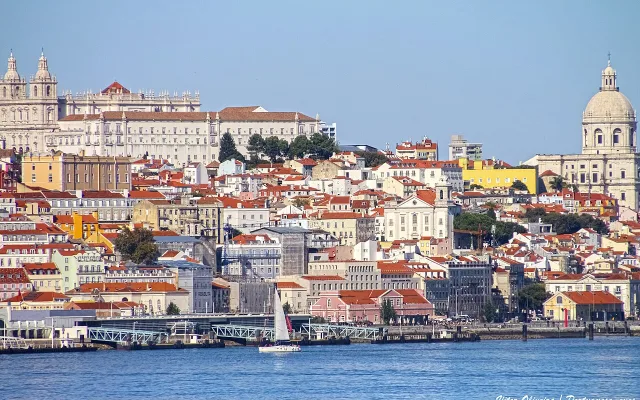
A city on seven hills — tram 28, Belem, fado and pasteis de nata.
Wiki
Lisbon is the capital of Portugal and the westernmost capital of continental Europe, spread along the right bank of the Tagus estuary right by the Atlantic. The city stands on seven hills, so its streets now climb steeply, now dive back down to the water, and from its countless viewpoints panoramas open over tiled roofs bathed in soft golden light. Around 2.9 million people live in the metropolitan area, and that southern, unhurried, faintly melancholy character can be felt in every quarter.
A little history
Lisbon is one of the oldest cities in Europe, older than Rome and London. A Phoenician settlement, the Roman Olisipo, the Moorish period that left the street plan of the Alfama — all of these are layers of a single history. In the 15th and 16th centuries, in the age of discovery, the city became a gateway to the world: the caravels of Vasco da Gama sailed from here, and the wealth of India, Brazil and Africa flowed back. The catastrophic earthquake of 1755 all but wiped the centre from the map; the Marquis of Pombal rebuilt the Baixa district on a strict grid of streets, producing one of the first examples of earthquake-resistant urban building.
Districts and sights
- Alfama — the oldest quarter, Moorish in spirit, which survived the earthquake. Its labyrinth of stairways and lanes hung with washing is crowned by the Castelo de Sao Jorge, with a view over the whole city. There are also many miradouros here, and fado bars in the evening.
- Baixa and Chiado — the formal lower town, with the Praca do Comercio, a triumphal arch, the elegant Santa Justa lift and the refined coffee houses of the Chiado.
- Bairro Alto — the district of nightlife and bohemia, quiet by day and noisy after dark.
- Belem — the riverside west, monumental and full of museums. Besides the Jeronimos Monastery and the Belem Tower, the Monument to the Discoveries stands here, and the Coach Museum is open to visitors.
- Graca — a hill with some of the best viewing terraces (the Miradouro da Senhora do Monte).
- LX Factory — a former industrial zone under the 25 de Abril bridge, turned into a creative cluster with the Ler Devagar bookshop, cafes and a Sunday market.
Symbols of the city
The emblem of Lisbon is its yellow vintage trams, and the most famous route, the 28, winds over the hills through Alfama, Graca and Lapa past the main sights. No less recognisable is the Lisbon azulejo, the painted ceramic tile that faces houses, churches and metro stations; a separate National Azulejo Museum is devoted to its history. The 25 de Abril bridge across the Tagus resembles the Golden Gate Bridge, and on the far bank rises the statue of Christ the King.
Food
Lisbon's gastronomy is above all the gift of the ocean. Bacalhau, salt cod, is prepared, as the local saying goes, in 365 ways; grilled sardines are popular (especially in June, during the Santo Antonio street festivities), along with octopus and seafood. The city's emblem is the pastel de nata, warm, with a crisp flaky shell and a custard filling, dusted with cinnamon; its canonical recipe is guarded in Belem. Among drinks it is worth trying the cherry liqueur ginjinha and, of course, port from the Douro valley. Coffee traditions are strong: the small strong espresso is called a bica here.
Fado
Fado — the melancholy urban song shot through with the feeling of saudade, a bright kind of longing — was born in the Lisbon quarters of Alfama and Mouraria and is on the UNESCO list of intangible heritage. In the evening it makes sense simply to walk the narrow streets and follow a singer's voice, accompanied by the Portuguese guitar. Reliable addresses are Casa de Linhares and Clube de Fado; dinner with a live performance costs noticeably more than usual, but the atmosphere is worth it.
Trips out of the city
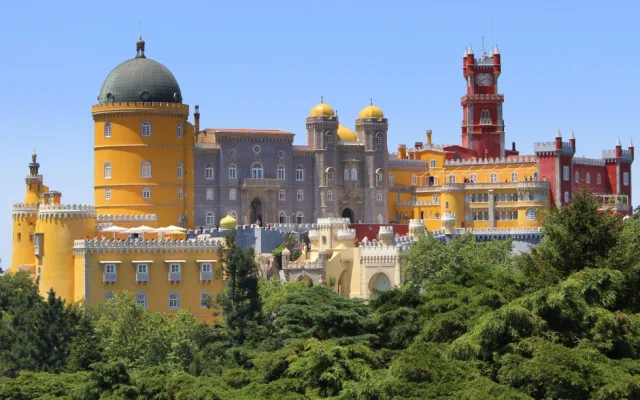
- Sintra (about 40 minutes by train) — a fairy-tale hill town with the vividly coloured Pena palace, the mysterious Quinta da Regaleira estate with its initiation well, a Moorish castle, and Cabo da Roca, the westernmost point of continental Europe.
- Cascais — a seaside resort with beaches and a promenade.
- Belem is technically part of the city, but feels like a separate half-day outing.
Practicalities
- When to go. Spring and early autumn are the most comfortable; summer is hot and crowded.
- Transport. The metro, trams and funiculars are convenient; the Viva Viagem card is good value for travel. Comfortable shoes help on the hilly streets.
- How long. Four days is about right: two for Lisbon itself with Belem, one for Sintra, and one more for unhurried walks, the miradouros and an evening of fado.
- Currency — the euro; cash is useful in cafes and at markets, although cards are accepted almost everywhere.
Lisbon stays in the memory for its combination of ocean space, warm light and the quiet sadness in its music — a city you want to come back to slowly.