Description
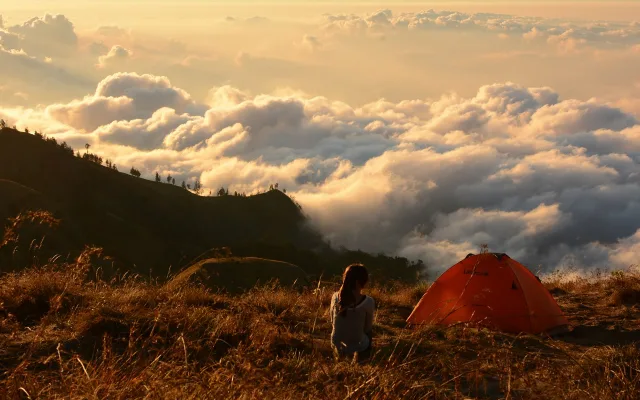
Bali's quieter neighbour — Mount Rinjani, the Gili islands, the surf beaches of the south and Sasak villages.
Wiki
Lombok is one of the Lesser Sunda Islands, part of the province of West Nusa Tenggara, separated from Bali by the narrow Lombok Strait. Less hyped than its famous neighbour, it draws travellers with wild beaches, an active volcano and the living culture of the Sasak people.
Geography and overview
The island is almost circular, about 80 km across, with a population of some 3.7 million. The administrative centre is Mataram on the west coast, near the port of Lembar, while Lombok International Airport (LOP) lies in the south. The landscape is one of contrasts: the north is taken up by the volcanic massif of Rinjani with its wet montane forest, the centre by rice terraces and villages, and the dry south is known for its indented coastline, bays and headlands. The Wallace Line, the biogeographical boundary between Asian and Australian fauna, runs through the Lombok Strait, which is why the island's wildlife differs noticeably from Bali's.
History and culture
The indigenous Sasak make up most of the population. They have their own language, script and customs, and religious life is Muslim; traces also survive of the earlier Wetu Telu belief, which combined Muslim and animist elements. The island was once ruled by Balinese princes from Karangasem, and that left a visible mark: western Lombok has Hindu temples, the best known being Pura Meru in Mataram and Pura Lingsar, where Muslim and Hindu shrines share a single enclosure. The earthquakes of 2018 did serious damage in the north and on the Gilis, but the infrastructure has largely been rebuilt.
What to see and do
Beyond Rinjani, the Gili chain and the southern beaches, which deserve sections of their own, there is plenty on the island:
- Climbing Rinjani — routes start from the villages of Sembalun and Senaru; the trek to the caldera with Segara Anak lake and its hot springs demands real fitness and usually takes two to three days with a night in a tent. Trekking is regulated through the national park, and the ascent is only possible in the dry season.
- The Sasak villages of Sade and Ende — living settlements with thatched houses, rice barns on stilts and weavers working songket cloth on hand looms.
- The northern waterfalls — Sendang Gile and Tiu Kelep near Senaru, hidden in the rainforest at the foot of Rinjani.
- The southern beaches — Selong Belanak with its gentle shelving, good for beginner surfers; scenic Tanjung Aan with two bays and "peppercorn" sand; and hard-to-reach Mawi.
- Surf spots — Kuta Lombok is the southern gateway for wave hunters, while Desert Point on the western tip is regarded as one of the most difficult and best-known waves anywhere.
The Gili islands
Three coral islets lie off the north-west shore. Gili Trawangan is the largest and liveliest, with bars and dive centres; Gili Meno is quiet and secluded, the choice for a calm stay; Gili Air falls between the two. There are no cars or motorbikes; people walk, cycle or take cidomo pony carts. Clear water, coral gardens and sea turtles make snorkelling and diving the main occupation.
Food
Sasak cooking is hotter and more distinctive than Balinese. The signature dish is ayam taliwang, grilled chicken in a paste of chilli, garlic and shrimp sauce. It usually comes with plecing, vegetables — normally kangkung water spinach — in a hot tomato and chilli sauce. Various kinds of satay and meat and fish soups are popular, and by local etymology the island's name is linked to the word lombok, meaning chilli pepper.
Practicalities
- Getting there. Lombok International Airport takes flights from Jakarta, Surabaya, Kuala Lumpur and Singapore. Fast boats run from Bali to the Gilis and to Bangsal port, and there is a car ferry from Padang Bai to Lembar.
- Getting around. A rented scooter or a car with a driver is the most convenient option; bemo minibuses run between towns.
- When to go. The dry season runs roughly from May to October, the best time for trekking and beaches, and the window when the Rinjani climb is open.
- How long to allow. Five days is enough to combine the Gilis, the south coast and day trips into the hills and the Sasak villages; add another two or three for a full ascent of the volcano.
- What to bear in mind. Islam shapes daily life: covered clothing is appropriate in villages and away from the beach areas, and café opening hours change during Ramadan.