 Города и дороги
Description
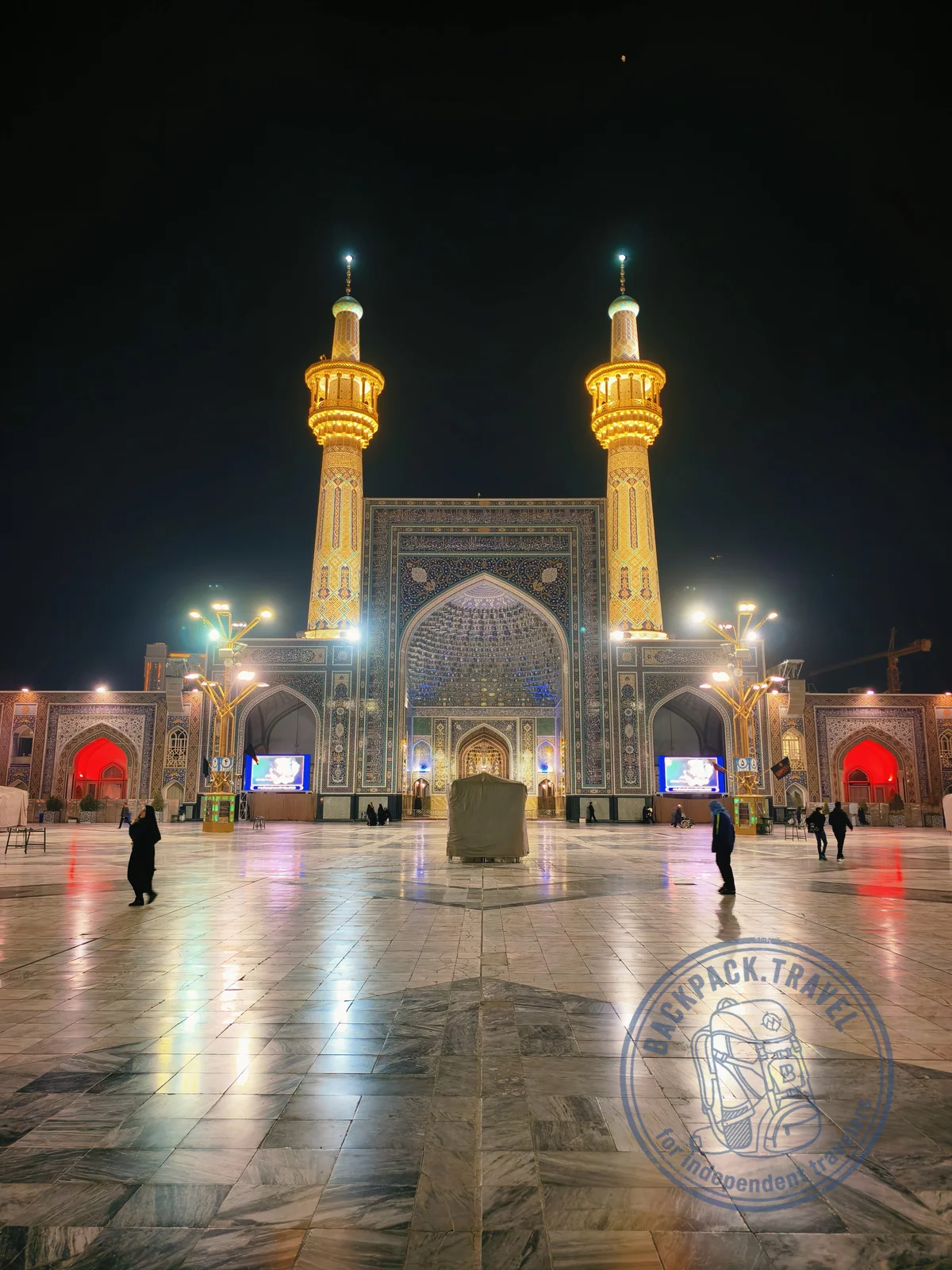
Iran's second-largest city and the country's main Shia center, where everything revolves around the shrine of Imam Reza: a vast walled precinct with a golden dome, courtyards and bazaars around it.
Wiki
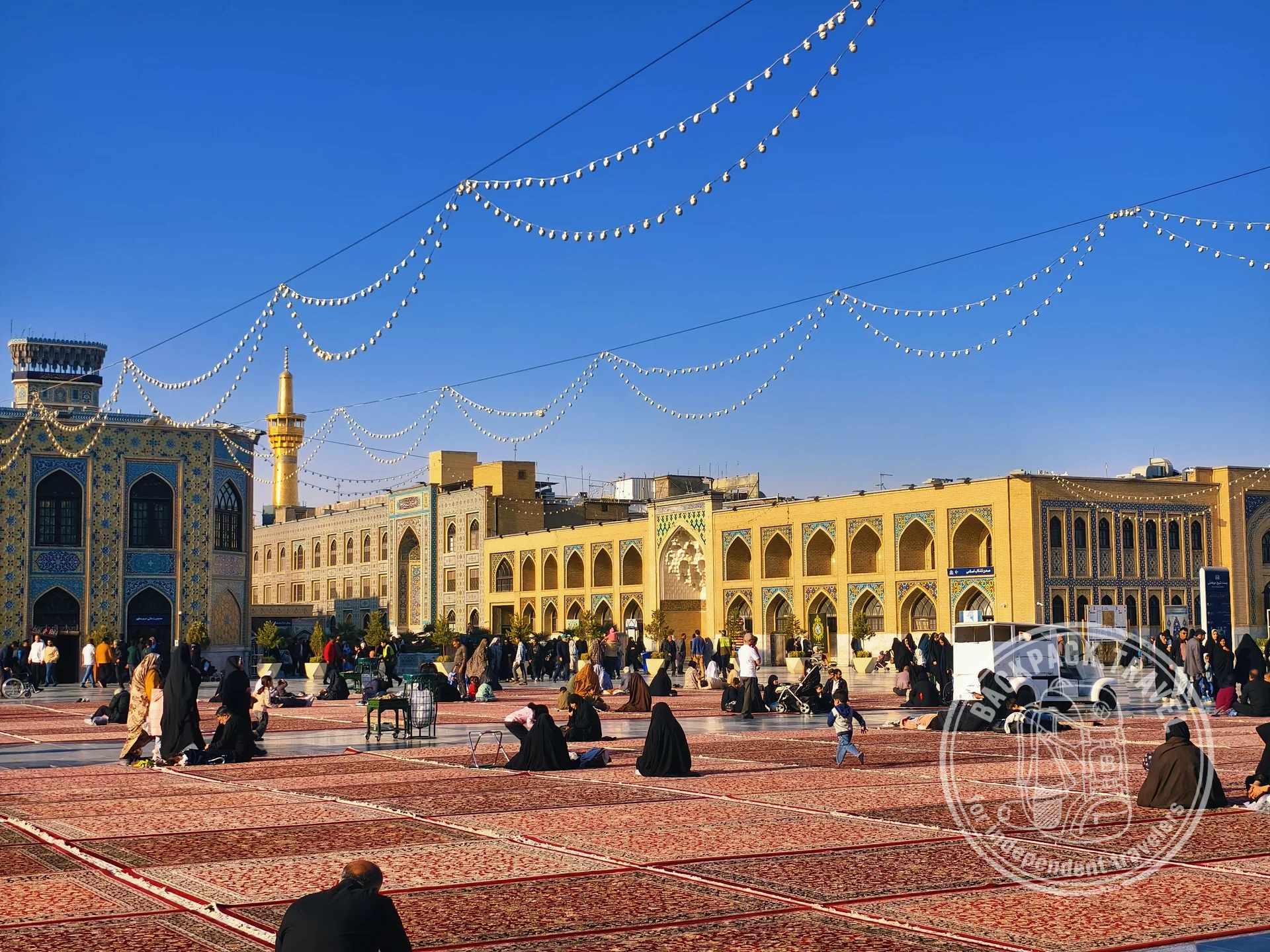
Mashhad is Iran's second-largest city and the country's main Shia center. People come here not for the architecture and not for the views, but for the tomb of the eighth imam: the city's name translates as "place of martyrdom", and its entire logic is built around that single point, from the ring of hotels by the shrine to the bazaars at its gates.
Imam Reza and his shrine
Ali ibn Musa al-Rida (c. 766–818), the eighth imam of Twelver Shia Islam, was declared heir to Caliph al-Ma'mun in 817 and died a year later in the village of Sanabad near Tus. Shia tradition holds that he was poisoned. The imam was buried beside the grave of Caliph Harun al-Rashid, and the city grew up around that grave.
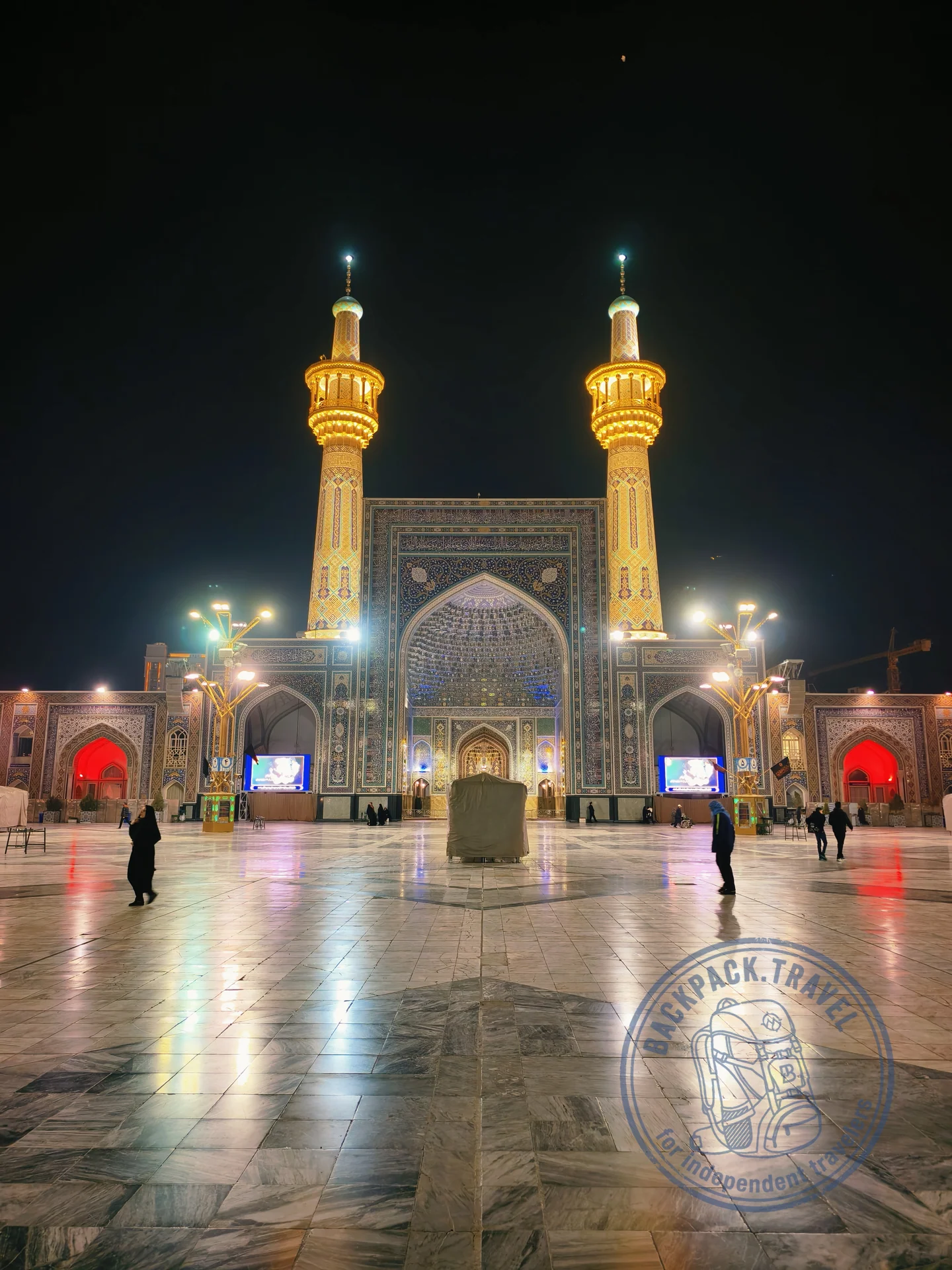
Today this is Astan Quds Razavi: not a mosque in the usual sense, but a walled precinct of several dozen hectares. Inside are seven main courtyards, or sahns, the golden dome over the tomb, minarets, prayer halls, museums, a library of handwritten Qurans, a university and a free kitchen for pilgrims. Over the twentieth century the complex grew several times over: the old buildings around the shrine were demolished to clear space for the courtyards and a ring road. Estimates of pilgrim numbers differ by an order of magnitude, but you feel the scale without the figures, because on religious dates the crowd here is solid.
It is best to go in twice, by day and after dark, when the floodlighting and the evening prayer change the picture completely.
Access and rules
- Entry is free, and you can go in as many times as you like.
- Non-Muslims are not allowed into the tomb chamber itself, so you will be looking at it from the courtyard. The rules for individual halls vary in practice and keep changing, so check with the guards at the gate.
- Foreigners are often asked to go with an escort from the office for international visitors, and the permit is issued at the entrance. Allow time for that.
- Women need a chador, which is handed out free at the gate. Men need long trousers and covered shoulders, with no shorts and no tank tops.
- Bags and backpacks are not taken inside, and there are lockers for them. Professional camera gear will not get through, while phone photos are usually fine.
- This is a working shrine rather than a museum: don't push a camera at people praying, and don't mix up the men's and women's sections.
What else to see
- Goharshad Mosque — the main monument of the complex. It was begun around 1418 for Goharshad Begum, wife of the Timurid ruler Shahrukh, to a design by the architect Qavam al-Din Shirazi. Four iwans around a courtyard and Timurid mosaic work are what brings architecture lovers to Mashhad.
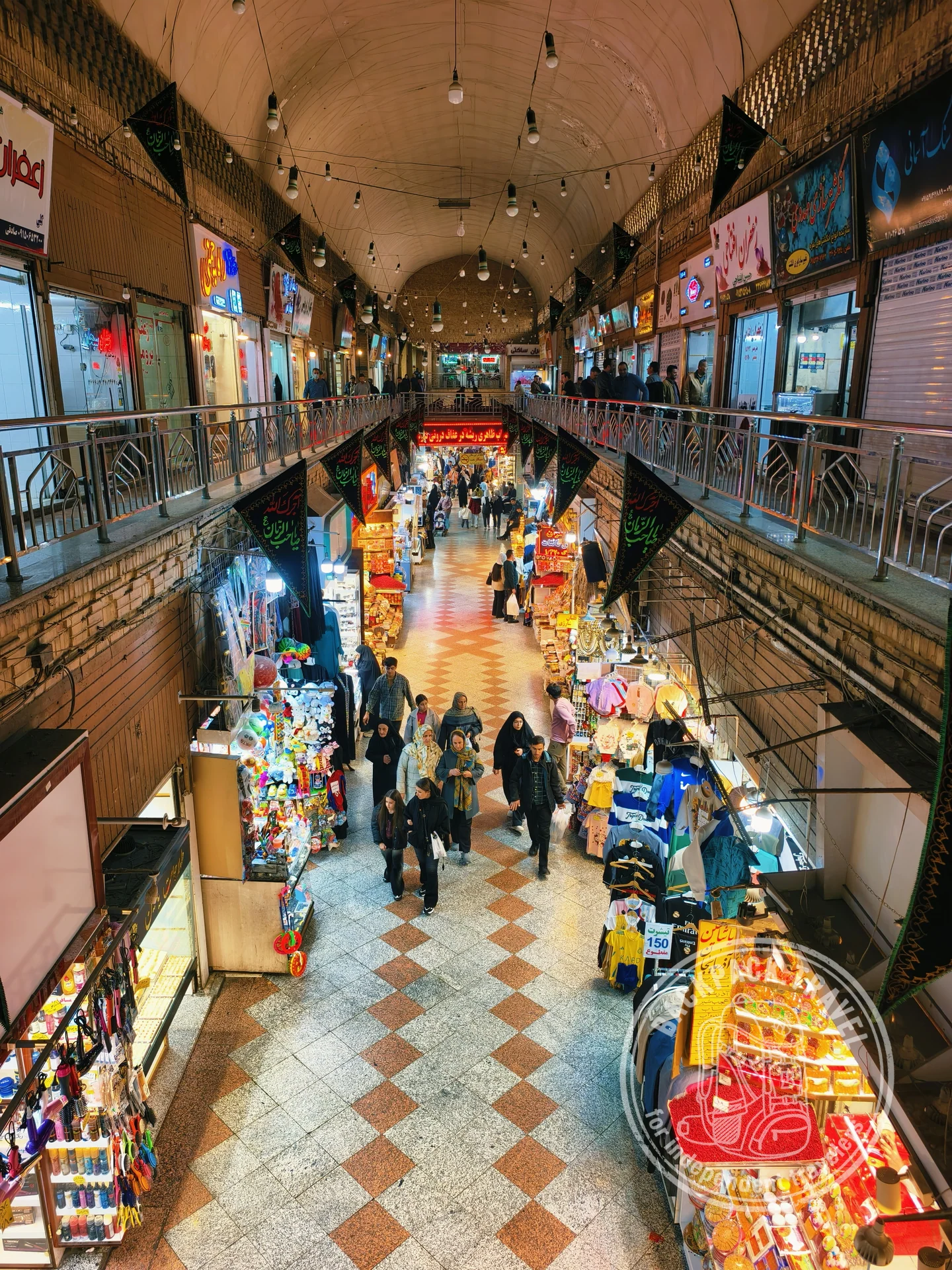
- Reza Bazaar — a two-story covered bazaar more than a kilometer long, right by the shrine gates. Saffron, barberries, dried fruit, agate prayer beads, turquoise, prayer rugs. Haggling is in order, and prices near the entrances are noticeably more touristy.
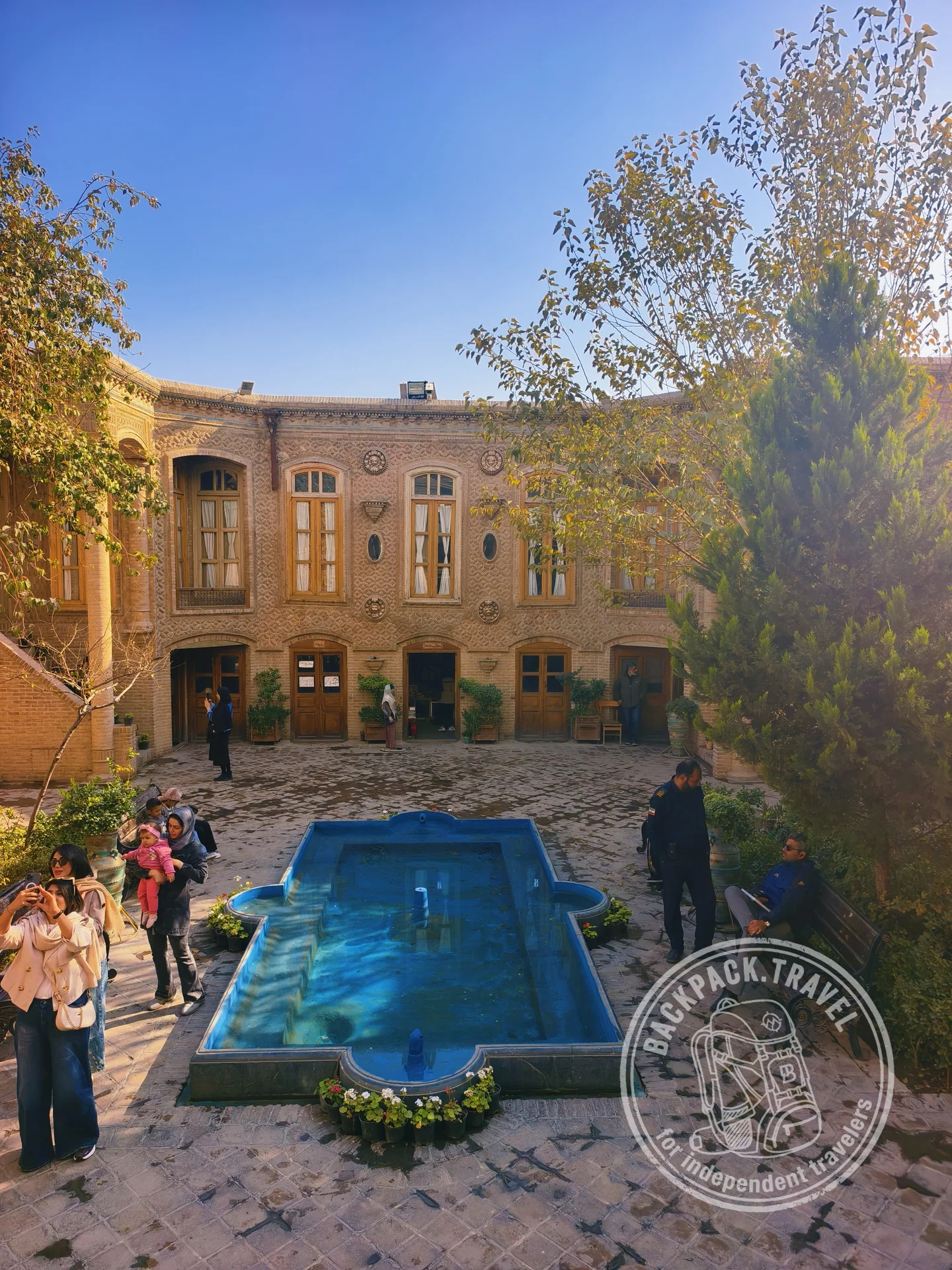
- Darugheh House — a merchant mansion from the late Qajar period, the home of Yusef Khan Herati, the last darugheh (city governor) of Mashhad. The municipality bought the building in 2012 and opened it after restoration in 2015, and the restoration itself won a UNESCO Asia-Pacific award. It is one of the few surviving pieces of old Mashhad.
- Nader Shah's mausoleum — Mashhad was his capital from 1736 to 1747. The present tomb was built in 1963 to a design by Houshang Seyhoun: a sharp modernist piece, completely out of key with the rest of the city.
Tus and the Ferdowsi mausoleum
Twenty-five kilometers to the northwest lies Tus, the city that was the main one here before Mashhad rose. It is worth setting aside half a day for it.
- Ferdowsi's mausoleum — completed in 1934 for the anniversary of the author of the Shahnameh, who died around 1020 in these same parts. Its form echoes the tomb of Cyrus at Pasargadae: a gesture of the Reza Shah era, an appeal to pre-Islamic Persia twenty kilometers from the country's main Shia shrine. That contrast alone justifies the trip.
- The Haruniyeh Dome — a massive brick building usually dated to roughly the 14th century. Its purpose is disputed, and tradition links it to the grave of al-Ghazali.
How much time to allow
In a single day you will see only the shrine and the bazaar, which is realistic but flat. Two days are enough for the shrine in two visits, the bazaar, Darugheh House and Nader Shah's mausoleum. A third day is worth allowing for Tus and an unhurried pace, and beyond that there is not much left to do in Mashhad.
Who won't enjoy it: Mashhad is a pilgrimage city, and you feel that in everything. It is more conservative than Tehran and Isfahan, there is little secular life, and in the evening people head for the shrine rather than a café. Of ancient Persia in the familiar form — old quarters, bridges, gardens — almost nothing is left here, because the city has been rebuilt many times over and the shrine is ringed by blocks of identikit hotels. If you are coming to Iran for the architecture of Isfahan and Yazd, Mashhad will disappoint. It makes sense if you are drawn to the phenomenon of mass pilgrimage itself and to the Timurid mosaic of Goharshad.