Description
Latin America's city of eternal spring: a transformed metropolis with cable cars into hilltop communes, the Botero sculpture plaza, and some of the continent's best nightlife.
Wiki
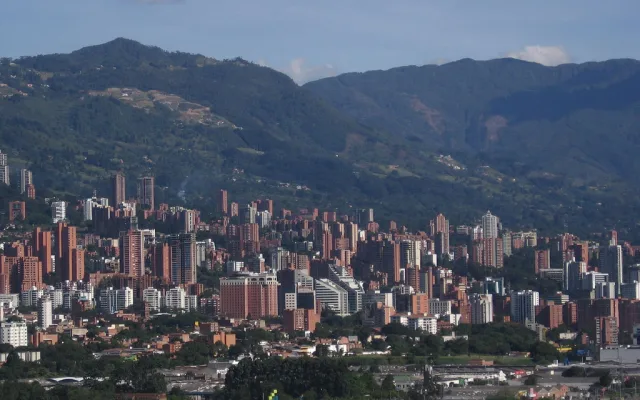
Colombia's second-largest city and the "City of Eternal Spring" — around 2.5 million people at 1,500 m elevation in the Aburrá Valley. In the 1990s it was the world's murder capital (home to Pablo Escobar's cartel); today it is a model of urban reinvention: Wall Street Journal's Innovation City of the Year 2013, with cable cars reaching former shantytowns, library parks in the sky, and green spaces on reclaimed land. It is now Latin America's leading technology hub.
Top sights
- Metrocable — gondola lines integrated into the metro system, connecting previously isolated hillside neighbourhoods. Lines K, J, L, P, and M.
- Comuna 13 — once considered one of the most dangerous neighbourhoods in the world, now a major visitor draw: outdoor escalators climbing the hillside, striking street art, and graffiti tours led by local residents.
- Plaza Botero — the central square displaying 23 of Fernando Botero's signature rotund sculptures (Botero was born in Medellín and donated them to the city).
- Museum of Antioquia — the city's main art museum, housing an extensive Botero collection.
- Parque Arví — an ecological park in the mountains, reached via Metrocable Line L (about 60 minutes from the city centre).
- Pablo Escobar tours — controversial but widely taken: sites include Escobar's former home, La Catedral (his private prison), and his grave at Cementerio Jardines Montesacro.
- El Poblado — the main tourist district, packed with restaurants, bars, and hotels.
- Pueblito Paisa — a small-scale replica of a traditional Antioquian village on Cerro Nutibara, with panoramic views over the city.
- Guatapé — a village about two hours away, famous for its colourfully painted houses and the rock El Peñón de Guatapé (740 steps to the top).
- Jardín — a coffee-country village four hours from Medellín, one of the finest stops on the Eje Cafetero (Coffee Region).
Food and prices
The local cuisine is Antioquian and paisa: bandeja paisa (a heaped plate of beans, rice, meat, avocado, plantain, and egg), arepa paisa, sancocho de gallina, and mute. A meal at a local lunch spot runs $5–10, dinner at a restaurant $15–35. Local coffee costs $1–3. A litre of petrol is around $0.80, metro and Metrocable rides $1 (transfers included), and taxis or Uber $3–12. Prices are as of 2026.
Getting there and around
José María Córdova International Airport (MDE) is 35 km from the city and served by Avianca, LATAM, and Copa, with direct flights from Miami and New York. A taxi to El Poblado costs $25–30; the bus costs $5–7. Within the city, Medellín operates Colombia's only metro (two lines), five Metrocable lines, the Tranvía tram, and regular buses. El Poblado is the main base for visitors.
When to go
December to March is the dry season, with temperatures between 17 °C and 28 °C. From April to November weather is variable, though mornings are usually clear. March is generally the best single month to visit. Key festivals: Feria de las Flores (Flower Festival, August) and the Festival Internacional de Tango (June). At 1,500 m elevation the climate is mild year-round — hence "eternal spring."