Description
The pyramids of Teotihuacan, bohemian Roma, lucha libre and the best tacos in the world.
Wiki
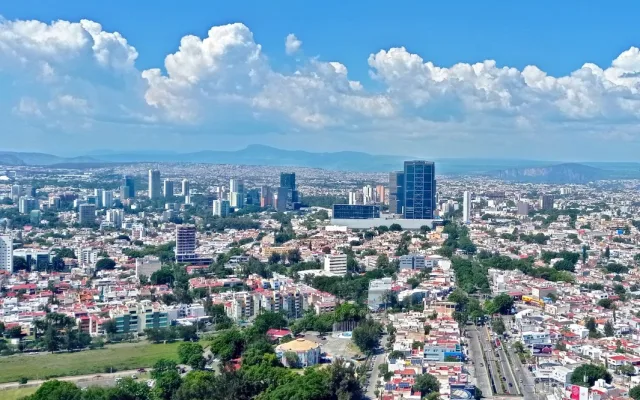
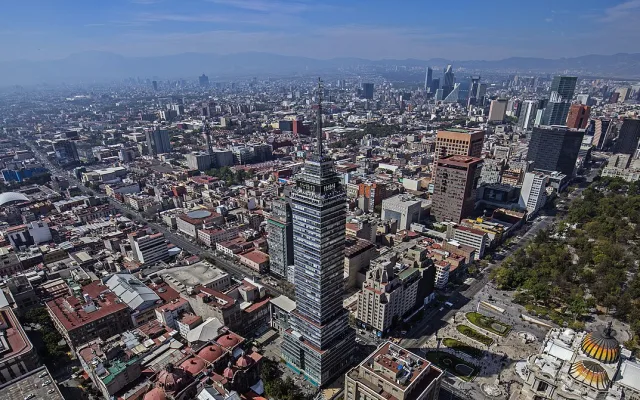
Mexico City is the capital of Mexico and its political, economic and cultural heart, spread across a high valley at about 2,240 metres above sea level. This enormous metropolis grew on the ruins of the Aztec capital Tenochtitlan and today brings together a pre-Columbian inheritance, colonial architecture and the energy of a modern Latin American city.
History and appearance of the city
Founded by the Aztecs in 1325 on an island in the middle of Lake Texcoco, Tenochtitlan was one of the largest cities in the world of its time. In 1521 the conquistadors under Hernan Cortes seized and destroyed it, and the lake was gradually drained. It is on those sedimentary soils that today's Mexico City stands — which is why many historic buildings lean noticeably and are "sinking". The Spanish rebuilt the city in baroque style; the result is an extensive colonial centre recognised as a UNESCO World Heritage site. Over the centuries the Aztec, Spanish and republican eras have layered up here, which makes a walk through the capital a journey across the ages.
Main sights
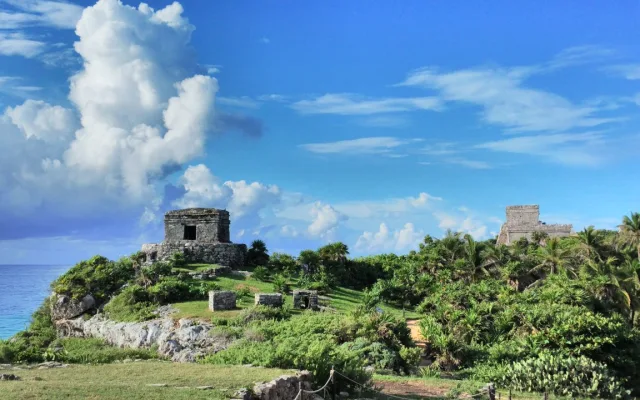
- Teotihuacan — the vast pre-Columbian metropolis about 50 km to the north-east. Its flowering came in the age before the Aztecs, and it was the Aztecs themselves who later gave it the name "the place where the gods were born". The axis of the complex is the Avenue of the Dead, along which rise the Pyramid of the Sun (about 65 m) and the Pyramid of the Moon. It is sensible to travel out for opening time, before the heat and the tour buses arrive.
- The National Museum of Anthropology in Chapultepec park — the largest collection of Mesoamerican artefacts anywhere. It holds the Aztec Sun Stone, the colossal Olmec heads, the treasures from the tomb of the ruler Pakal, and halls devoted to the Maya, the Zapotecs and other peoples.
- The Zocalo (Plaza de la Constitucion) — the ceremonial core of the country and one of the largest city squares in the world. It is framed by the Metropolitan Cathedral, the National Palace with its monumental frescoes by Diego Rivera, and the excavations of the Templo Mayor, the main Aztec temple.
- Chapultepec — the huge forest park that serves as the capital's lungs, with a castle on the hill from which the emperor Maximilian ruled, lakes and a whole constellation of museums.
- Xochimilco — a network of canals and chinampas (floating gardens) from the Aztec era, another UNESCO site. Brightly painted trajinera boats glide over the water to the sound of mariachi and marimba.
- Coyoacan — a quiet colonial quarter of cobbled lanes, where the Blue House of Frida Kahlo (Casa Azul) stands, now a museum to the artist.
Districts and culture
The bohemian quarters of Roma and Condesa, with their greenery, art deco houses, coffee shops and small galleries, have become the centre of fashionable city life. Luxurious Polanco is known for boutiques and fine dining, and the historic centre holds old palaces and the Palacio de Bellas Artes with frescoes by the Mexican muralists.
A chapter of its own is the luchadores. Lucha libre matches, in which wrestlers in brightly coloured masks act out theatrical bouts, are held in arenas such as the Arena Mexico and turn into a noisy family occasion. The city also gave the world the tradition of the Day of the Dead, with its altars, sugar skulls and marigolds.
Gastronomy
Mexican cooking is on the UNESCO list of intangible heritage, and Mexico City is its showcase. Street tacos (al pastor with pineapple, de canasta, carnitas), tamales, quesadillas and esquites are often better than restaurant dishes. It is worth trying the complex mole sauce, tlacoyos, chiles en nogada in season, and the drinks — from fresh aguas frescas to mezcal and pulque. Markets such as the Mercado de San Juan, and the street stalls, give the most honest picture of the local food.
Transport and practicalities
The metro is one of the most extensive and cheapest in the region, backed up by metrobus services and ride-hailing apps, which are usually better value than street taxis. Benito Juarez International Airport (AICM) is close to the centre.
It is more comfortable to travel in the dry season, roughly November to April. Because of the altitude, mild breathlessness is possible in the first few days, and the weather changes sharply through the day — cool in the morning, warm by afternoon. Stick to busy, visitor-frequented quarters, watch your belongings on public transport and drink bottled water. Four days are enough to see the centre, Teotihuacan, the museums and at least one bohemian district without rushing.
Photos