Description
South America's safest and happiest capital: a coastal rambla, Art Deco in Ciudad Vieja, mate, and sizzling asado.
Wiki
Montevideo is the capital of Uruguay and the country's largest city, spread along the northern shore of the Río de la Plata estuary. Around 1.4 million people live here — nearly half the population of the entire republic — and the unhurried pace, wide waterfronts and reputation as one of the calmest major cities on the continent make it a place people come to not for the rush, but for the quality of life.
Overview and atmosphere
Montevideo is the southernmost capital in the Americas (excluding Antarctic stations) and one of the few major cities in the region that consistently tops quality-of-life rankings in Latin America. Buenos Aires lies about 200 km away across the estuary, and although the Argentine capital is considerably larger, Montevideo stands apart: quieter, safer and noticeably cheaper for everyday living. The city grew up around a fort on a peninsula, and its name is traditionally linked to a description of Cerro hill, which dominates the bay. The city is the natural home of a distinctly South American everyday triad — tango and candombe, a thermos of mate tucked under the arm, and Sunday asado over charcoal.
The historic centre: Ciudad Vieja
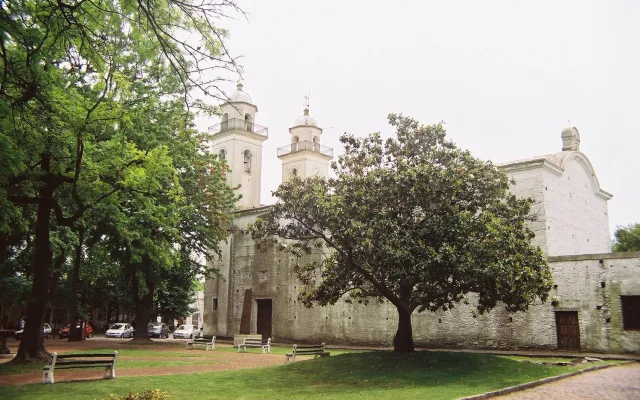
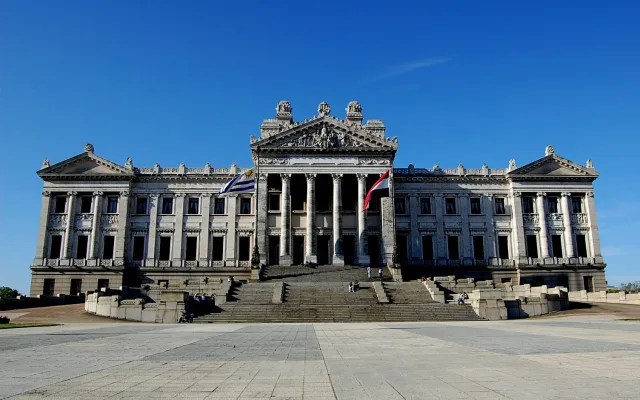
The Old City (Ciudad Vieja) occupies the western tip of the peninsula and remains the heart of Montevideo. Colonial buildings stand alongside elegant Art Deco and Art Nouveau façades, narrow streets lead to Baroque churches, and walls are regularly adorned with murals and graffiti. The neighbourhood is packed with galleries, antique shops and long-established cafés. The boundary between the historic core and the "new" city is Plaza Independencia — the country's main square, featuring an equestrian monument and the mausoleum of José Artigas, the national hero and symbol of independence. Overlooking the square stands Palacio Salvo — one of Montevideo's most recognisable buildings, whose ornate silhouette is often compared to fantastical Jules Verne-inspired architecture. Nearby is the Casa de Gobierno (the historic government residence).
What to see
- Mercado del Puerto — a covered market from 1868 near the port, now a gastronomic hub: beneath its cast-iron vaults, dozens of parrillas serve meat grilled over open coals.
- La Rambla — a coastal boulevard stretching more than twenty kilometres around the city's waterfront. In the evenings locals gather here to jog, cycle and watch the sunset over the Río de la Plata.
- Museo Torres García — a collection of works by Joaquín Torres García, Uruguay's greatest 20th-century artist and the creator of "Constructive Universalism."
- Estadio Centenario — the stadium that hosted the first FIFA World Cup in 1930, with a football hall of fame museum.
- Teatro Solís — the country's main stage and a fine example of 19th-century neoclassical architecture; the modern Sodre concert hall is given over to opera and ballet.
- Cementerio Central — a 19th-century memorial necropolis with sculptural tombstones.
- Cerro hill with its lighthouse and fort, offering panoramic views over the bay.
Food and mate
Uruguayan gastronomy revolves around meat. Asado is not merely a dish but a ritual: beef, chorizo sausages and blood sausage (morcilla) are slow-cooked on a parrilla grill. Also popular are the chivito sandwich — beef, egg, ham and vegetables — breaded milanesa cutlets and baked empanadas. Dulce de leche is everywhere as a sweet staple. The national drink is mate, a herbal infusion drunk from a calabash gourd through a metal straw called a bombilla, typically carried around with a thermos of hot water. Uruguay is also known for wines made from the tannat grape.
Planning your visit
Three days are enough to cover the highlights: one for a leisurely walk through Ciudad Vieja and Plaza Independencia, a second for museums, the stadium and an evening on the Rambla, and a third for a day trip out of the city. The main transport hub is Tres Cruces bus terminal, combined with a shopping centre, from which buses depart across the country and to neighbouring countries. Some 130 km to the east lies Punta del Este — Uruguay's most famous resort, known for the sculpture La Mano ("The Hand") emerging from the sand. To the west, about 180 km away, is Colonia del Sacramento — a UNESCO-listed town of cobblestone streets from the Portuguese colonial era. Both make convenient day trips. The best time to visit is the Uruguayan summer, December through March, when the waterfront and beaches come alive, though the mild climate makes the city pleasant year-round.