Description
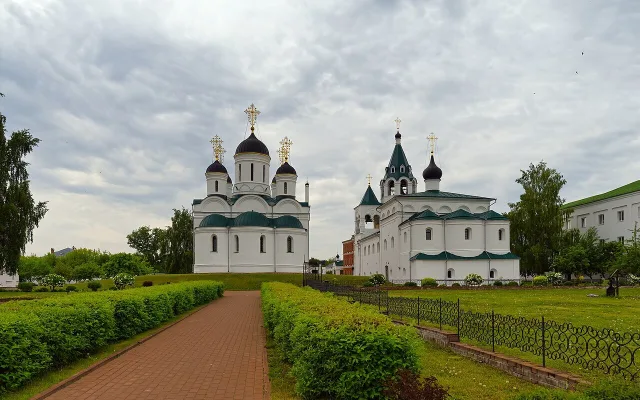
One of the oldest towns in Russia and the home of the legendary folk hero Ilya Muromets. Monasteries on the high bank of the Oka, carved wooden houses and the atmosphere of the true Russian provinces.
Wiki
Murom is a quiet town on the left bank of the Oka River in the Vladimir Region, some 300 km east of Moscow, where people come for its early Russian monasteries, the river views and the sense that time runs more slowly. You can see the essentials in a day, but two is calmer — that leaves time for the embankment, the museum and an unhurried walk through the district of private houses with their carved window surrounds.
Getting there
The most convenient way to reach Murom is by train: the town is on the Moscow–Kazan railway line, and trains from Moscow's Kazansky station take around 4–5 hours, with both fast and ordinary overnight services. Murom's station is a sight in itself — a building in the neo-Russian style designed by the architect Alexey Shchusev, so take a look as you come out.
Buses from Moscow (from the Central Bus Station, the former Shchyolkovsky terminal) and from Vladimir run regularly; the journey is longer but sometimes cheaper. Coming from Vladimir or Nizhny Novgorod, Murom fits logically into a route around the Golden Ring — the classic tourist circuit of medieval towns north-east of Moscow — or into a pairing with Gorokhovets.
By car it is the M-7 highway with a turning off it; a cable-stayed bridge crosses the Oka and is considered one of the most beautiful in the country. If you are coming from the Nizhny Novgorod side, slow down deliberately on the approach — the view of the town from the bridge is the best there is.
Getting around the town
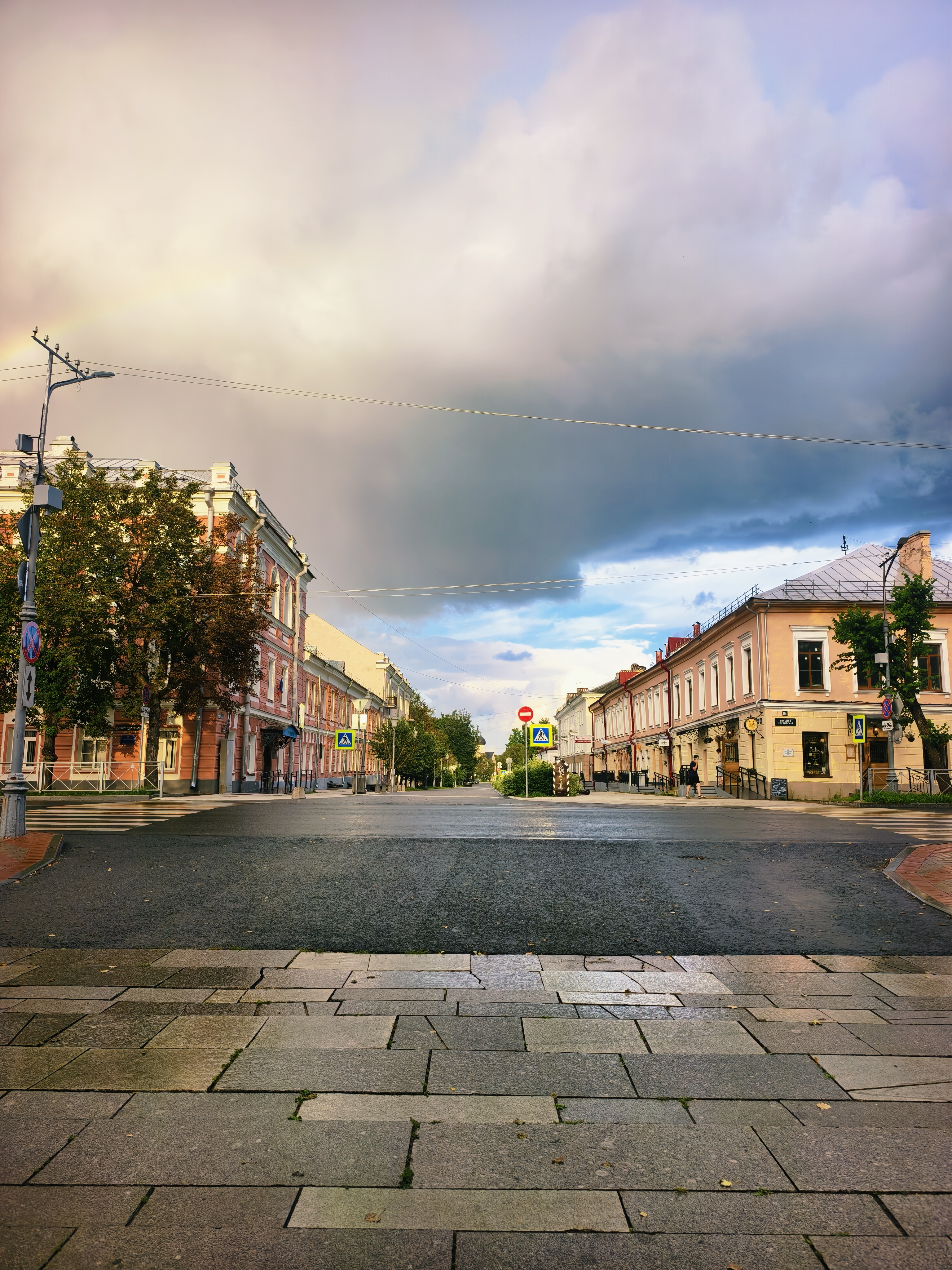
The historic centre is compact: it is a perfectly feasible 20–30 minute walk from the station to the main monasteries and the embankment, and the distances between the monasteries themselves are short. City buses and shared minibuses run, and taxi apps work — ordering a car is cheap and quick, which helps if you arrive on a night train or are heading out of town.
Allow for the terrain: the bank of the Oka is high, and the descent to the embankment and the climb back are noticeable. Wear comfortable shoes, especially in spring and autumn when some of the unpaved streets turn to mud.
What to see
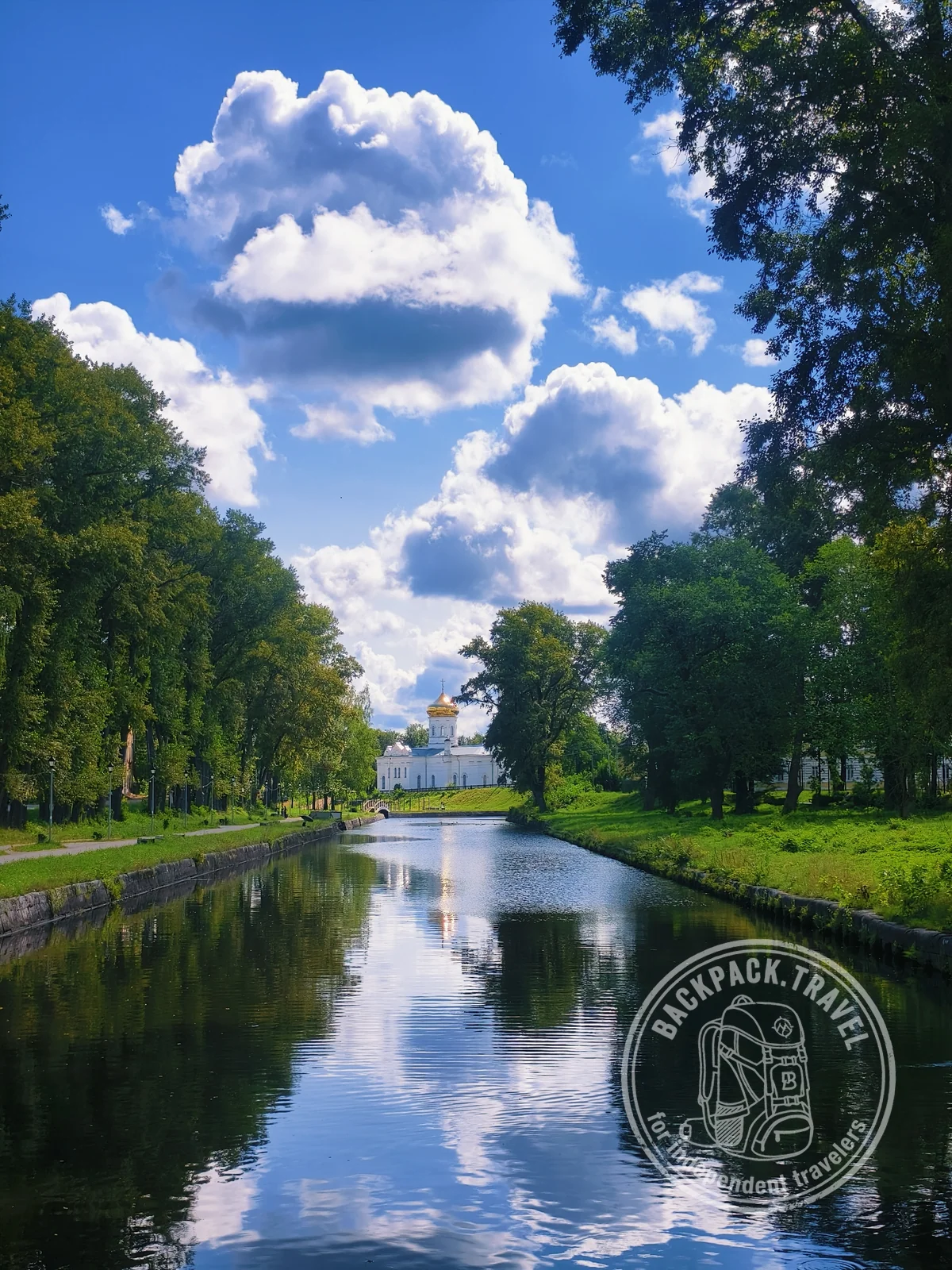
- The Saviour Transfiguration Monastery — the town's oldest religious house and one of the oldest monasteries in Russia. Well-kept grounds, a garden, a pond with waterfowl, and a monastery bakery where people buy the famous kalachi (a ring-shaped white bread) and other baking. Worth visiting even if monasteries are not usually your thing: the place feels more like a park.
- The Trinity Monastery — here rest the relics of Saints Peter and Fevronia, the patrons of marriage and family. This is the origin of the national Day of Family, Love and Fidelity, celebrated on 8 July and marked in Murom on a grand scale.
- The Annunciation Monastery — immediately next to the Trinity Monastery, so seen at the same time.
- The Church of St Nicholas on the Embankment ("St Nicholas the Wet") — down by the water, with a spring beside it. A fine angle on the Oka.
- Oka Park and the embankment — the town's main viewpoint. A monument to Ilya Muromets, the strongman hero of Russian folk epics who is traditionally said to have come from here, stands with sword and cross looking out over the river. The views of the meadows across the water and of the bridge are much of what people come for.
- The Museum of History and Art — a respectable collection for a town of this size, with objects from the country estates of the local gentry, and paintings.
- The 19th-century water tower in the centre — you can still draw water from it.
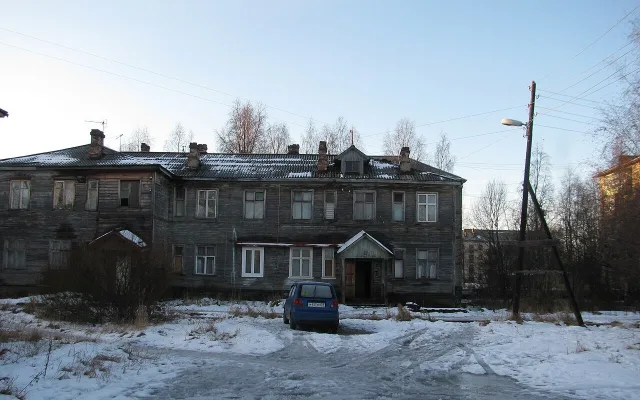
A separate theme is the wooden architecture. Turn off the main streets into the side lanes: carved window surrounds, merchant houses, courtyards. It is free and often more interesting than the museums.
Where to stay
It makes sense to stay in the centre — around Lenin Square, Moskovskaya Street or nearer Oka Park. Everything is within walking distance from there and there is somewhere to go in the evening. The choice of accommodation is small: a few mid-range hotels, guesthouses and short-let flats. Prices are noticeably lower than in Moscow and St Petersburg — for the price of a hostel bed in the capital you get a room here.
Book ahead if you are coming for 8 July or a long holiday weekend: the town is small, the stock of rooms is limited, and everything goes over the holidays.
How many days, and when to go
One full day is the minimum to walk round the monasteries and the embankment. Two days let you add the museum, the outlying streets with their wooden architecture and, if you wish, a trip to Karacharovo — the village traditionally regarded as Ilya Muromets's birthplace, now effectively part of the town.
The best time is May to September, when everything is green and the Oka is full. Early July brings the feast of Peter and Fevronia: atmospheric, but crowded. Golden autumn gives the best shots from the high bank. Winter is beautiful and uncrowded, but the daylight is short and the embankment is windy — plan walks for the middle of the day.
Food and money
The gastronomic emblem is the Murom kalach, which appears on the town's coat of arms. Buy it at the monastery bakery or in local bakeries rather than in a supermarket. Otherwise the catering is simple: Soviet-style canteens, cafés serving Russian food, and a couple of better places in the centre. Lunch costs a fraction of what it would in a big city.
Ways to save: canteens rather than cafés; entry to the monasteries is free, and the embankment and the views cost nothing — there is not much to pay for in Murom beyond the museum and your accommodation. It is better to have cash on you: cards are accepted almost everywhere, but small shops and private traders vary.
Safety and common mistakes
The town is calm with no particular crime issues, and walking in the centre in the evening is safe. Things to note:
- Dress in the monasteries. These are working religious houses; women need a headscarf and a skirt (often handed out at the entrance), and photography inside the churches is usually forbidden or requires permission.
- Do not come for a few hours. A common mistake is to dash in between trains. Murom is good for its unhurriedness, and at a gallop the whole point is lost.
- Do not limit yourself to the monasteries. Three religious houses in a row become monotonous; alternate them with the embankment, the museum and a walk through the residential streets.
- Check the return train timetable in advance. There are not many convenient evening options back to Moscow, and it is easy to be stuck for an extra night.
- Swimming in the Oka — only at supervised spots: the current is stronger than it looks from the bank.