Description
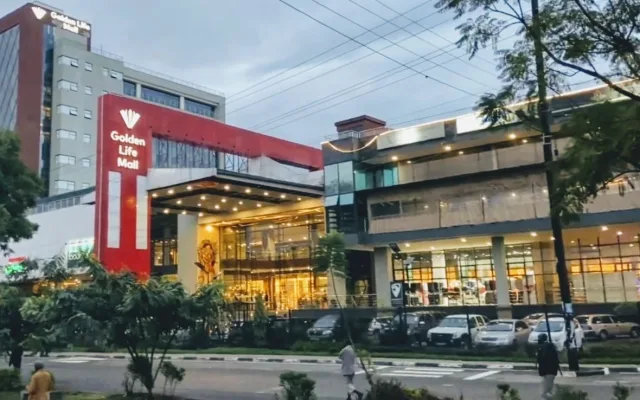
Nakuru is a lakeside town known for its flamingo colonies and the rhinos of its national park, set among the scenery of the Rift Valley.
Wiki
Nakuru is a practical base for anyone coming to see flamingos and rhinos without an expensive tour: the town is small, it stands at the gates of the national park, and within an hour or two in every direction lies a cluster of Rift Valley lakes and volcanoes. Two days is enough to see the essentials and move on along the safari route.
Is it worth coming, and for how long
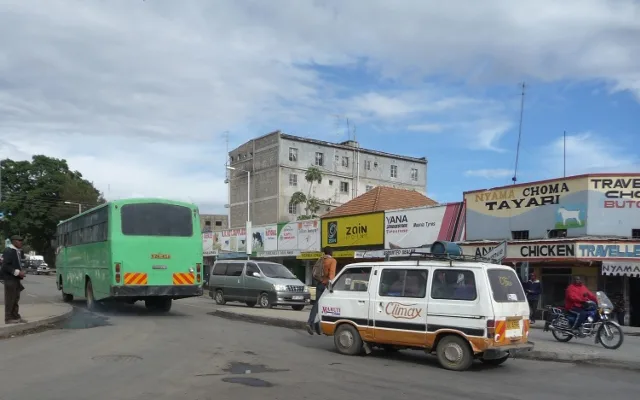
Nakuru is not about the town but about what lies around it. The centre is an ordinary noisy Kenyan town with no particular sights, a transit point. The value is the park by the lake and the neighbouring Rift Valley locations.
- One day is the minimum: half a day or a day at Lake Nakuru National Park.
- Two days is the optimum: a day for the park, a second for Lake Bogoria with its geysers, or Naivasha and Elementaita, plus the Menengai crater in the morning.
- More than two nights makes little sense unless you are using Nakuru as a base for an unhurried tour of all the lakes.
An important note on flamingos: their concentration is not constant. When the water is high, as in recent seasons, the birds move to the more saline Bogoria and Elementaita. Do not promise yourself a million flamingos — check recent reports in advance or ask guides on the spot where the flocks are now.
Getting there and getting around
- From Nairobi — the main route. It is around 160 km on the A104 through the Rift Valley, a scenic drive with viewpoints over the valley. Buses and matatu minibuses run regularly from Nairobi, taking two to three hours depending on traffic leaving the capital.
- Around town — matatus and boda-bodas for short hops. Public transport does not serve the park and the lakes.
- The park and safaris — you cannot easily enter Lake Nakuru without your own or a hired vehicle: you need transport with a guide or driver. Either book a day jeep safari from Nakuru or arrive in your own car. Walking in the park is not allowed (rhinos, buffalo, lions).
What is actually worth seeing
- Lake Nakuru National Park — the core of the trip. Beyond the flamingos, this is one of Kenya's best areas for white and black rhino, and seeing them is close to guaranteed. There are Rothschild's giraffe, buffalo, zebra, and sometimes leopard and lion. The park is compact — half a day covers the essentials.
- Baboon Cliff — the viewpoint inside the park: a panorama of the lake with its pink fringe of birds. The best spot for the classic shot.
- Menengai Crater — an enormous volcanic crater right by the town. You can drive up to the rim, entry is cheap and the views are free. A good option for a morning without paying to enter the national park.
- Lake Bogoria (an hour to an hour and a half) — an alkaline lake with hot geysers and, often, the very flamingos that have left Nakuru. If the birds are scarce at Nakuru, come here.
- Lake Elementaita and Lake Naivasha — on the way to and from Nairobi, easy to combine. At Naivasha there is a boat trip to the hippos and Crescent Island.
- Hyrax Hill — an archaeological site by the lake, cheap and quick, for those who are interested.
Money and where to save
The main expense is the national park entry fee: for foreigners this is a substantial sum in dollars, on top of hiring a jeep with a driver. It is the most expensive part of the trip, so budget for it in advance.
Ways to save:
- Stay in the town of Nakuru rather than in lodges inside or beside the park — accommodation is several times cheaper and the gate is close.
- Get a group together for the jeep safari, and the price divides.
- Menengai and the valley views are free or nearly so, and can offset an expensive day in the park.
- Check whether the park ticket runs for a full 24 hours, and plan your entry to get the most from it.
Food
The cooking is simple and filling: nyama choma (grilled meat), ugali, pilau, sukuma wiki and samosas. Local cafés, known here as "hotels", are cheap and genuine. Lunch at a town café is inexpensive; the tourist lodges cost noticeably more. Drink bottled water.
Safety and practicalities
- The centre is generally fine by day, but watch your belongings at markets and bus stands; after dark do not walk, take a taxi or a boda.
- In the park, do not leave the vehicle outside permitted areas.
- The best time is the dry seasons, roughly June to October and January to February: the roads are more passable and animals easier to find at the water.
- Cash in shillings and M-Pesa are the basic means of payment; cards are not accepted everywhere.
- A typical mistake is coming "for the flamingos" blind: find out where they are first, and build the route around that.