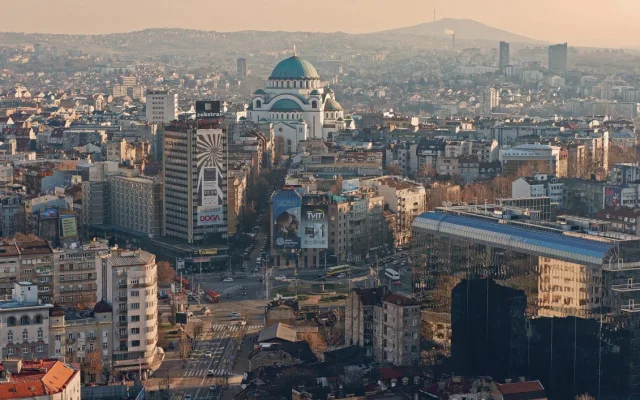
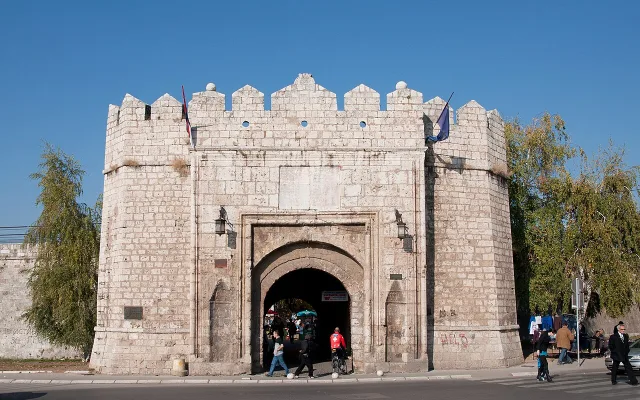
Description
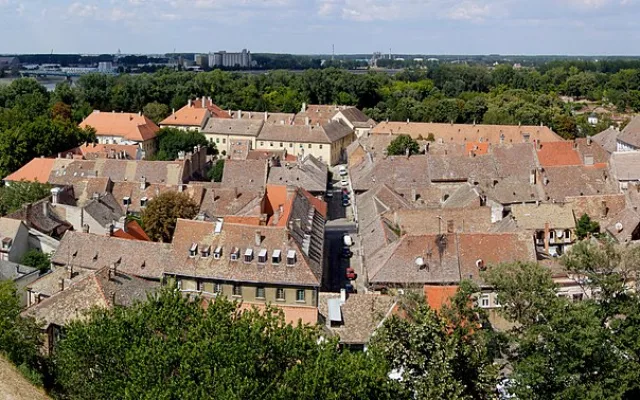
Capital of Vojvodina and cultural hub — the Petrovaradin Fortress and the EXIT festival.
Wiki
Novi Sad is Serbia's second-largest city and the unofficial capital of the flat Vojvodina region. People come for its unhurried pace, the atmospheric fortress overlooking the Danube, and — in July — one of Europe's biggest music festivals.
Why go and how long to stay
Two days are enough to cover everything without rushing. The city is compact, the tourist centre is small, and there are few must-see museums of real scale — Novi Sad wins you over with its relaxed rhythm and good food rather than sheer sights. It pairs naturally with Belgrade: the two cities are less than a hundred kilometres apart.
The main draw for many visitors is the EXIT festival, held at Petrovaradin Fortress, usually in July. The city transforms during those days, but accommodation prices shoot up and vacancies all but disappear — book well in advance. If the festival is not your goal, July is best avoided.
Getting there
Novi Sad has no major airport of its own. Most visitors fly into Belgrade Airport (Nikola Tesla) and travel onward by bus or train.
- Train. A modern high-speed line connects Belgrade and Novi Sad in roughly half an hour — the fastest and most convenient option.
- Bus. Regular services run from Belgrade's main bus station; the journey takes longer than the train, but departures are frequent.
- From Belgrade Airport, take a shuttle or bus into the city, then transfer to a train or bus to Novi Sad.
The train and bus stations in Novi Sad stand next to each other, away from the centre. The old town is a 20–30-minute walk from there, or a short ride by city bus or taxi.
Getting around
Everything in the centre is walkable. The pedestrian street Zmaj Jovina and the square in front of the town hall, the riverside promenade, and the fortress on the opposite bank of the Danube are all close together. To reach Petrovaradin Fortress you walk across the bridge — a pleasant 15–20-minute stroll from the centre. City buses are useful mainly for the ride from the station or for reaching the outskirts.
What to see
- Petrovaradin Fortress. The main attraction. A massive fortification on a cliff above the Danube, topped by a famous clock tower with a local quirk: the large hand shows the hours and the small hand shows the minutes. At the top there are river and city views, cafés, and artists' studios. Below the fortress runs a network of underground galleries, accessible by guided tour. EXIT takes place here.
- Freedom Square (Trg slobode) with its neo-Gothic Catholic Church of the Name of Mary and the city hall — the heart of the centre.
- Dunavska Street and Dunavski Park — ideal for a leisurely stroll.
- Museum of Vojvodina — for anyone who wants to understand the region's history.
- Sremski Karlovci — a small town 10–15 km away, the centre of Serbian winemaking, with Baroque architecture. A great half-day trip: people go for tastings of local wines and bermet (a local spiced wine).
Where to stay
The best base is the centre, around Freedom Square and the pedestrian streets: everything is within walking distance, and evenings are lively and safe. Those coming for EXIT should look for accommodation close to the fortress or the centre and book months ahead. The area near the station is cheaper but less atmospheric and requires a walk to the centre.
Food and prices
Novi Sad feels noticeably cheaper than Western European cities and a touch calmer than Belgrade. The cuisine is hearty and meat-heavy — Vojvodinian cooking with a strong Hungarian influence.
- What to try: grilled meats (ćevapi, pljeskavica), paprikaš and goulash, freshwater fish from the Danube, and home-baked pastries. For breakfast or a quick snack, burek filled with meat or cheese is cheap and filling.
- Cafés and bars are clustered in the centre and around the pedestrian streets — coffee prices are very reasonable.
- Simple ways to save: eat where the locals eat, go for set lunches and street pastries, and buy wine directly in Sremski Karlovci.
Cash is handy, though cards are widely accepted. The currency is the Serbian dinar (RSD); exchange rates are better at city-centre exchange offices than at the airport.
Safety and practicalities
The city is calm with low levels of street crime; the centre is comfortable to walk around in the evening. Standard crowd awareness applies at the station and especially during the festival — keep an eye on your belongings and phone.
Common mistakes
- Arriving in July without a booking — you will hit peak prices and an acute shortage of rooms because of EXIT.
- Budgeting too many days — the city is fairly well covered in a couple of days; extra time is better spent in Belgrade or Sremski Karlovci.
- Skipping the fortress in the evening — the views over the Danube are at their best around sunset.
- Not having cash — small cafés and market stalls do not always accept cards.
When to go
The most comfortable seasons are late spring and early autumn (May–June, September): warm but without the intense heat of the Vojvodinian plain in summer. July is worthwhile only for the festival, and only if you accept that it will be more expensive and more crowded. Winter is quiet and cheap, but much of the outdoor life goes quiet with it.