 Города и дороги
Description
A small town on the Estonian border built around the Pskov-Caves Monastery — the one Russian monastery that never closed. The restored center, with its water tower and merchant houses, takes an hour to walk.
Wiki
Pechory is a small town right up against the Estonian border, and it lives around a single big sight. The Pskov-Caves Monastery (Svyato-Uspensky Pskovo-Pechersky) is a rare case in Russia — a monastery that never once closed — with 16th-century fortress walls and an underground necropolis inside a sandy hill. Everything else here is an appendix to the monastery, and it is worth knowing that in advance.
The monastery: what to see
The founding date is taken to be 1473, when St. Jonah consecrated the Dormition church dug into the hill above the Kamenets stream. Tradition has it that the entrance to the caves was revealed by chance, by a falling tree, and above it an inscription was found: "The God-built Caves".
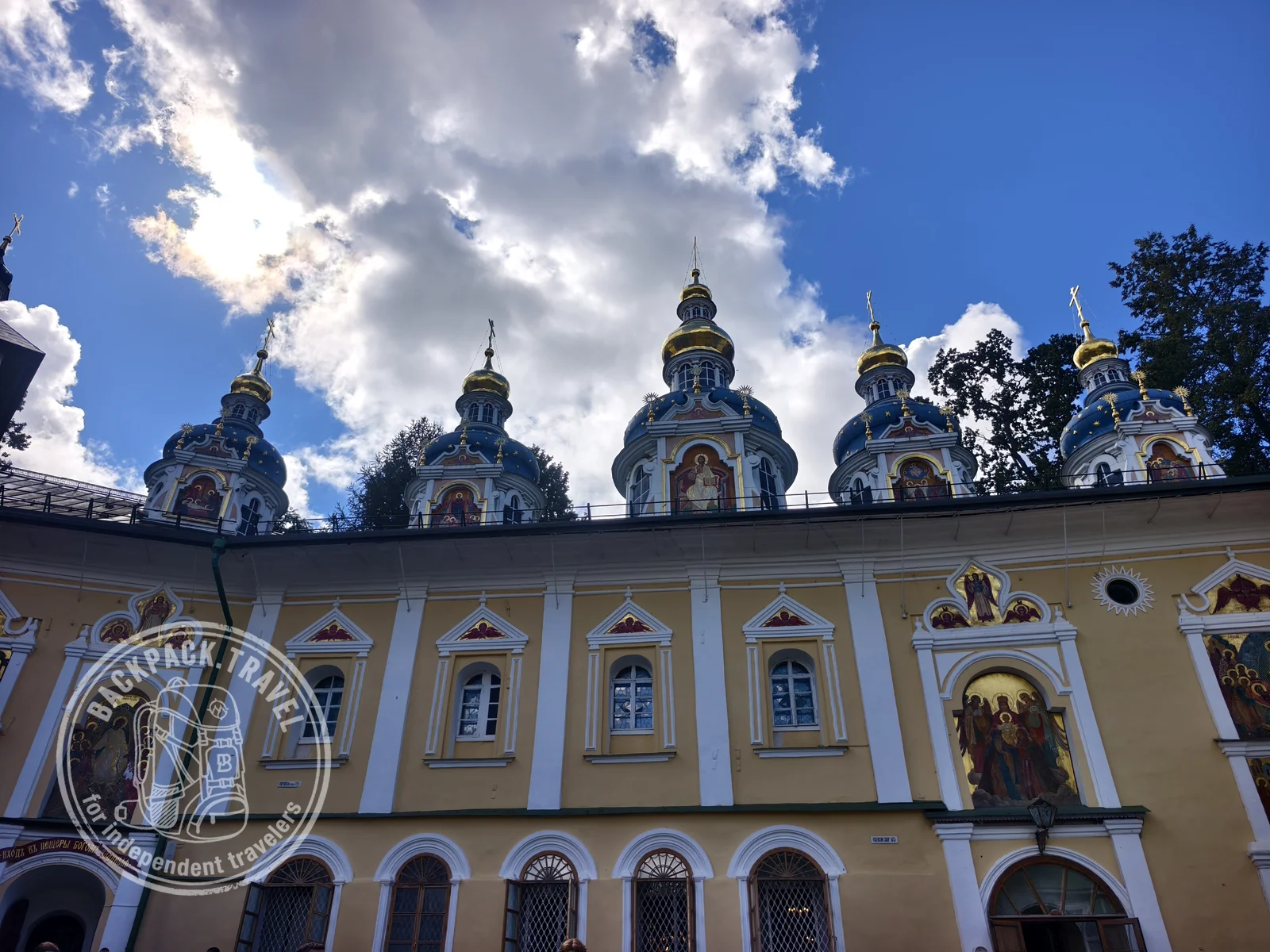
- The Dormition Cave Church is the heart of the monastery. The main cathedral literally runs into the hill: a facade with baroque cupolas on the outside, underground vaults behind it. The Church of the Intercession is built on top of it, which gives the two-tier view.
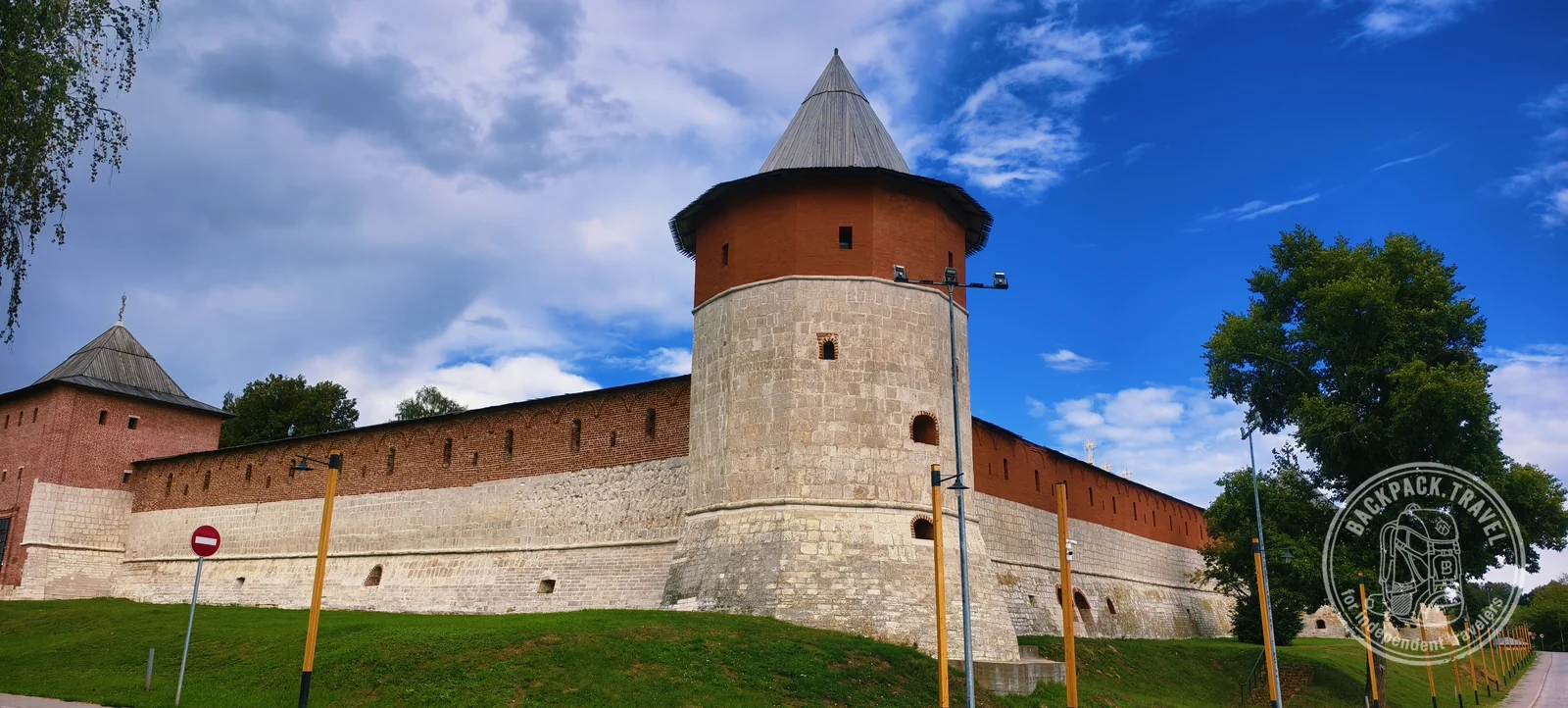
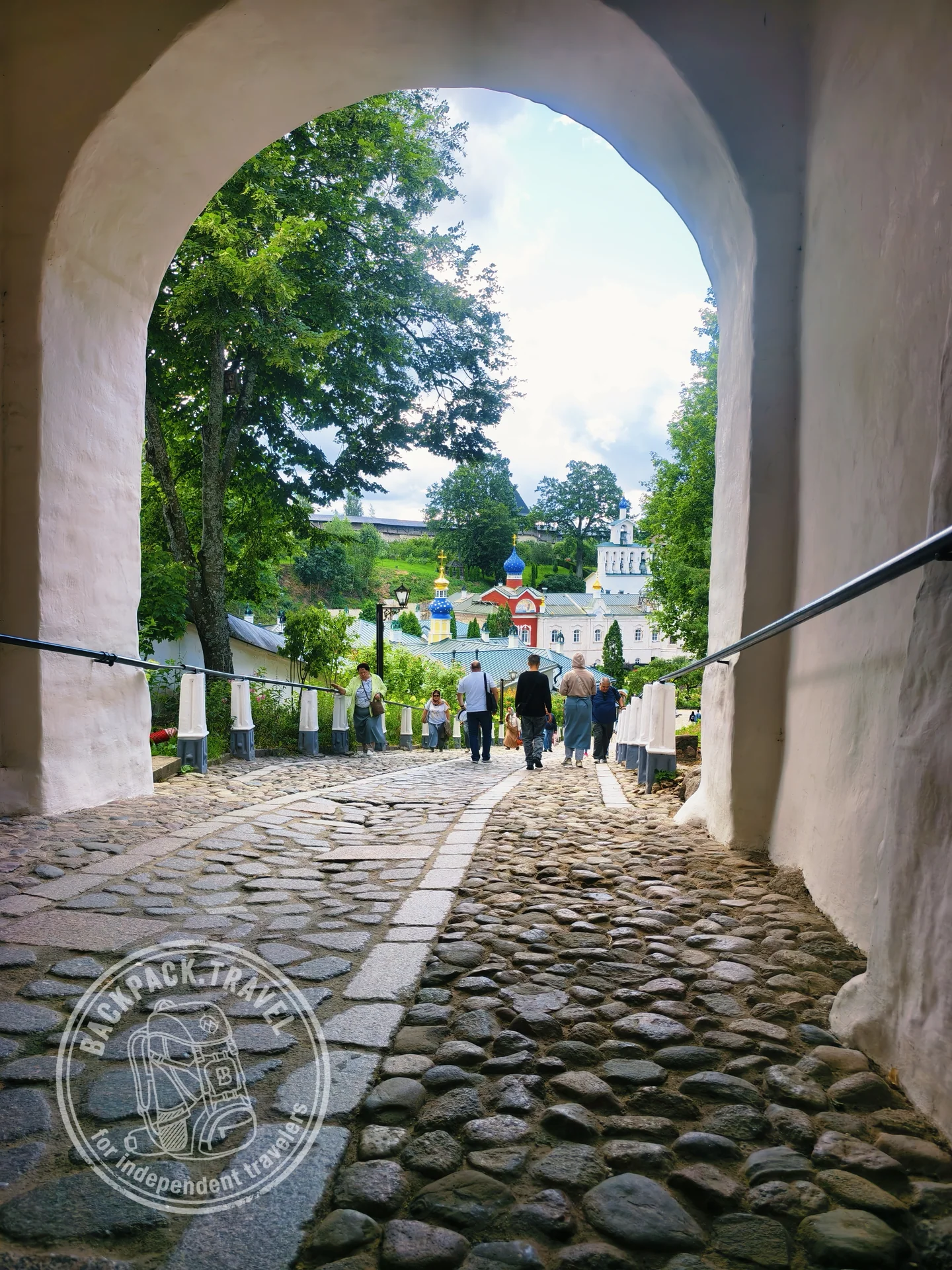
- The fortress walls and nine towers — the monastery was fortified in the mid-16th century under Father Superior Kornily (Cornelius), at the height of the Livonian War. The walls run down the slopes of a ravine; the view from the Petrovskaya (St. Peter's) Tower, and from above on the outer side, is the most recognizable shot of Pechory.
- The Bloody Path — the descent from the St. Nicholas Gate Church down to Dormition Square. The name comes from the legend of Kornily's death in 1570: Ivan the Terrible is said to have killed the abbot at the gates and carried the body down himself. Historians dispute both the place and the circumstances, but the road is still called that.
- St. Michael's Cathedral — a Neoclassical church of 1815–1827 designed by Luigi Rusca, built in memory of Pskov's deliverance from Napoleon's troops. It stands out sharply from the rest of the ensemble.
There is a separate story behind why the monastery has come down to us still working. In 1920, under the Treaty of Tartu, Pechory went to Estonia and was called Petseri, so the Soviet campaigns to close monasteries in the 1920s and 1930s simply passed it by. The town returned to the RSFSR only after the war, and the monastery's life was never once interrupted.
The God-built Caves and getting into them
The caves come in two parts. The Near Caves are short; the first Pechory ascetics rest there, and they are open to everyone during the day, with no booking needed. The Far Caves are a branching underground necropolis: seven galleries, known here as "streets", and something like ten thousand burials over more than five centuries. The walls are faced with keramidy, ceramic tombstone slabs.
Entry to the Far Caves is by guided group only, with a monastery escort and by advance booking through the excursion office. Group sizes are capped, there are days when the caves are closed, and access is sometimes shut off because of the microclimate. Book ahead and be prepared not to get in: this is a working cemetery, not an attraction.
The caves stay at about +5 °C year-round — bring something warm in summer. It is dark inside and you walk with candles; photography in the caves and churches is not welcome. The dress code is the usual monastic one: a skirt and headscarf for women, no shorts or sleeveless shirts for men, and it is safer to have your own headscarf and skirt with you. The monastery grounds are open freely and free of charge during the day; you only pay for guided tours.
The town itself
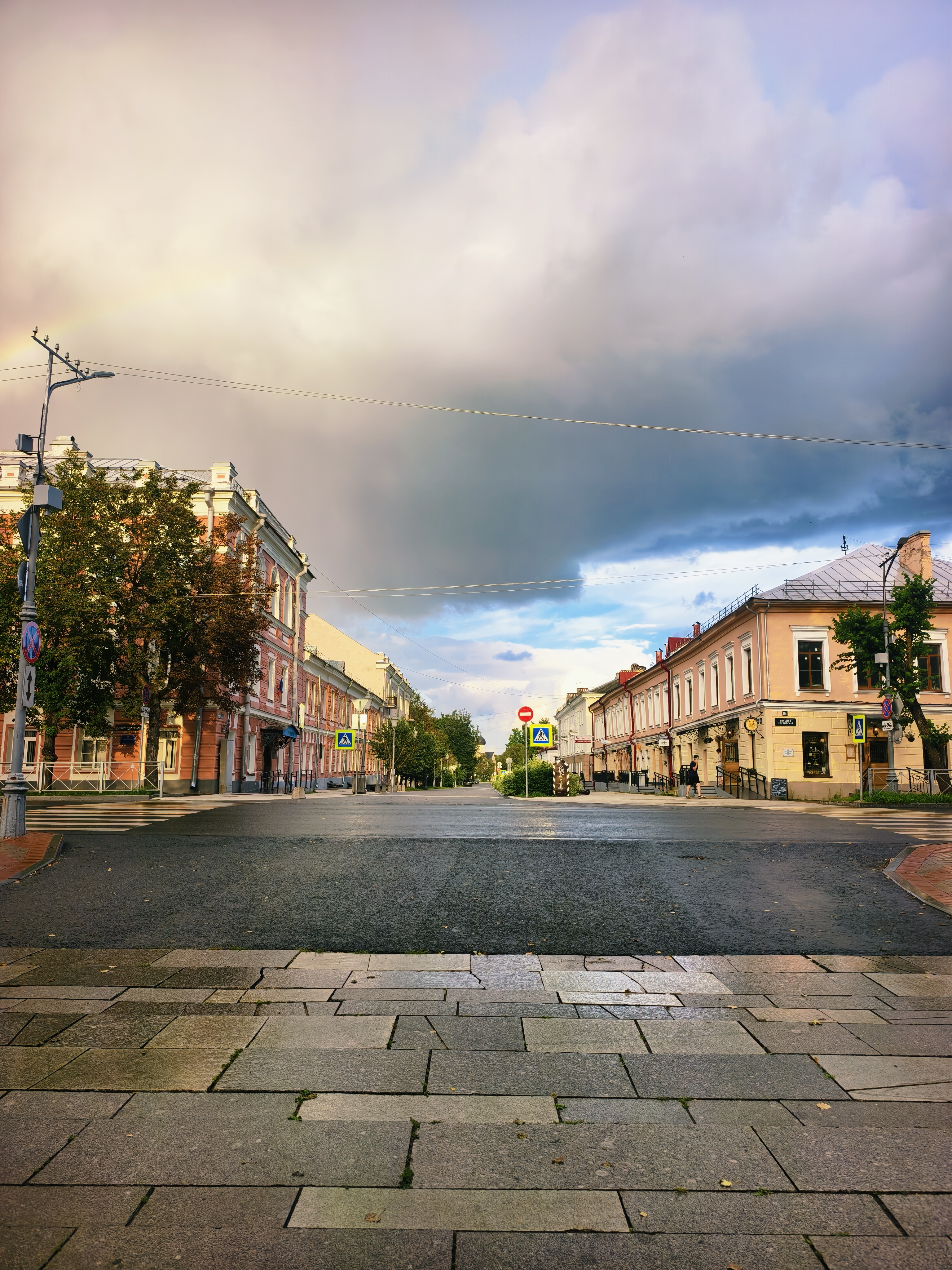
Pechory was granted town status in 1782, and today it has fewer than ten thousand residents. The historic center was put in order for the monastery's 550th anniversary in 2023, and the town looks tidier than you would expect from a district capital.
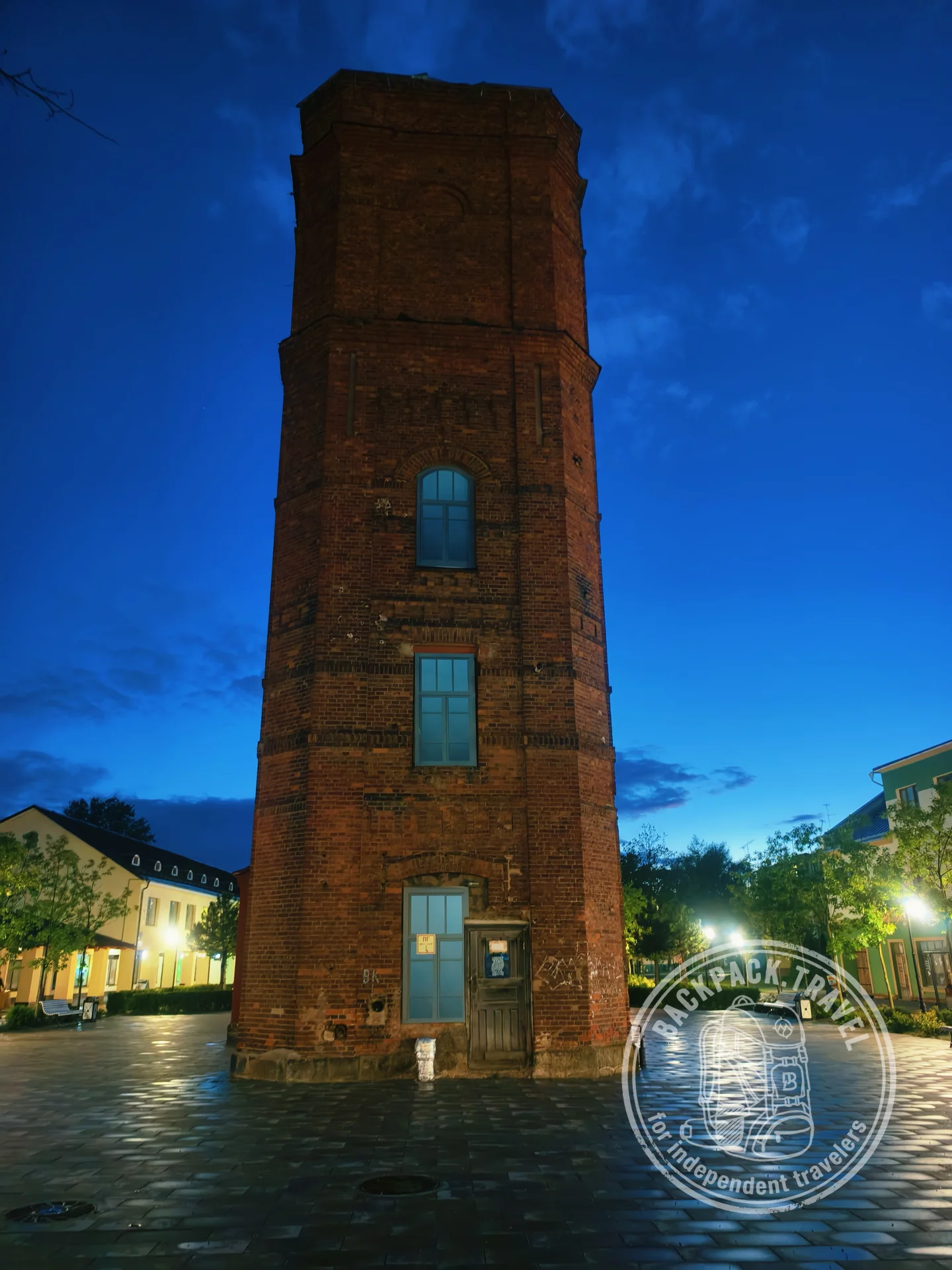
- The red-brick water tower on Oktyabrskaya Square is the main secular landmark: construction began in 1913, and it stands noticeably higher than the buildings around it.
- The Estonian trace — over twenty interwar years the town filled out with low-rise architecture in the Estonian style of the day. The most coherent monument of the period is St. Peter's Lutheran Church of 1923–1926: after the war it remained for a quarter of a century the only working Lutheran church in the European part of the RSFSR.
- Border country — the border is a couple of kilometers away, and there is a crossing point next to Pechory-Pskovskiye station. The surroundings fall within the border zone and its rules: keep your documents on you and do not walk along the border itself.
How much time, and how to get there
It is about 50 km from Pskov, with scheduled buses running regularly from the bus station and taking roughly an hour to an hour and a half. Izborsk sits on the same road, some twenty kilometers from Pechory, so it makes sense to combine the two into one trip — though the day will be a packed one.
- 2–3 hours — the grounds, the churches, the Near Caves. The minimum.
- Half a day — plus the Far Caves and a walk around the center.
- With an overnight — if you want to catch an early service or see the monastery empty: once the tour buses have left, the quiet here is of a completely different kind.
Who won't take to it: Pechory is about the monastery. If religious architecture and underground necropolises do nothing for you, the town is finished in a couple of hours and there is nowhere else to put yourself — no waterfront, no museum quarter, no restaurant scene. Anyone traveling for fortresses and views is better off basing themselves in Pskov and taking in Pechory and Izborsk on a single day trip out and back.
Service and tour schedules run on the church calendar and change, so leave slack in any plans for the Far Caves and check the details in advance.