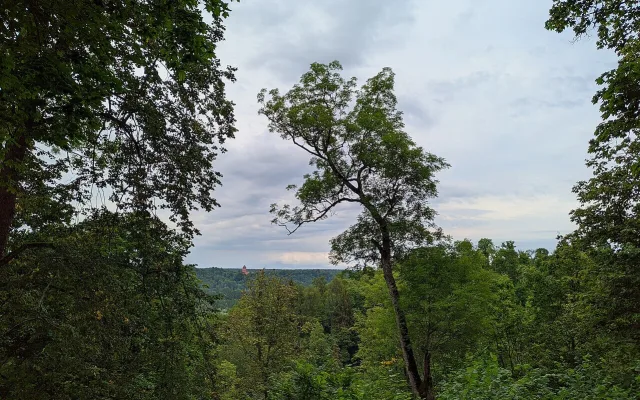
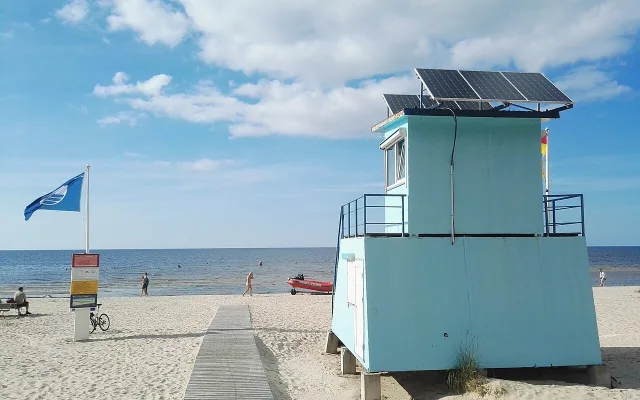
Description
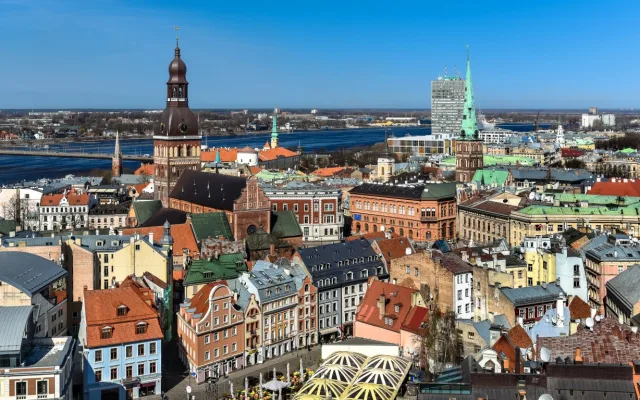
Art Nouveau capital of the Baltics with the world's largest collection of Jugendstil buildings, a UNESCO Old Town, and a bustling central market.
Wiki
The capital of Latvia and the largest city in the Baltics — around 615,000 people on the banks of the Daugava near the Gulf of Riga. The Old Town (Vecrīga) is a UNESCO World Heritage Site. A former Hanseatic city (from the 13th century), Riga was dubbed the "Paris of the North" during the Russian Empire's 19th-century boom. Today it is the Baltics' foremost architectural showcase: the highest concentration of Jugendstil (Art Nouveau) in Europe (around 800 buildings), alongside a modern digital economy and a thriving IT scene.
Main sights
- Old Town (Vecrīga) — UNESCO World Heritage Site; medieval and Hanseatic heritage from the 13th–17th centuries.
- House of the Blackheads (Melngalvju nams) — Riga's landmark, the guildhall of the brotherhood of unmarried merchants, first recorded in 1334; burnt out in 1941, demolished in 1948 and rebuilt by 1999.
- Freedom Monument (Brīvības piemineklis) — a 42-metre monument erected in 1935, symbol of Latvian independence.
- Riga Castle (Rīgas pils) — residence of the president of Latvia; the Order's castle was begun in 1330 and the present building dates from 1497–1515.
- Riga Cathedral (Rīgas Doms) — the main Lutheran cathedral, begun in 1211; 19th-century organ.
- House of the Great Guild and House of the Small Guild — the two principal guild buildings of the Old Town.
- Art Nouveau district (Centra rajons) — Alberta iela (Alberta Street), Elizabetes iela, Strēlnieku iela — the world's greatest concentration of Jugendstil architecture.
- Riga Art Nouveau Museum (Rīgas Jūgendstila centrs) — Alberta iela 12, inside a restored 1903 apartment.
- Riga Central Market (Centrāltirgus) — one of Europe's largest, its five pavilions built from the frames of German First World War Zeppelin hangars; the market opened in 1930.
- Latvian Ethnographic Open-Air Museum — 118 rural buildings from the 17th–20th centuries.
- Jūrmala — Latvia's main seaside resort, 25 km from Riga; 33 km of beach and 19th-century wooden summer houses.
- Rainis Cemetery — burial place of Latvia's foremost poet.
Food and prices
Latvian cuisine: grey peas with bacon, rasols (potato salad), smoked sprats, lamprey, rye bread soup, and Riga Black Balsam (a herbal liqueur made from 24 ingredients, 45% ABV). Lunch at a café runs 12–20 EUR (about $15–25); dinner at a restaurant 25–50 EUR ($31–62). A glass of Latvian beer (Užavas, Lāčplēša) costs 3–5 EUR ($4–6). A litre of petrol is around 1.70 EUR ($2.10), public transport 1.50 EUR ($1.85) for 40 minutes, and a Bolt taxi 5–15 EUR ($6–19). Prices are as of 2026.
Getting there and around
Riga International Airport (RIX) is served by airBaltic (the national carrier), Lufthansa, KLM, Wizz Air, and Ryanair. Bus 22 runs to the city centre for 2 EUR ($2.50); a taxi or Bolt costs 12–18 EUR ($15–22). From Tallinn: Ecolines or Lux Express coaches take about 4 hours (15–25 EUR / $19–31). From Vilnius: roughly 4 hours by coach. Within the city, trams, buses, and trolleybuses cover most areas.
When to go
May–September brings temperatures of 12–22 °C with near-white nights in June. December brings one of the region's best Christmas markets; Riga also disputes with Tallinn the claim to the world's first public Christmas tree, said to have stood here in 1510. Winter (December–March) is cold, typically −5 to −15 °C. The Riga Jūrmala Music Festival takes place in summer.