Description
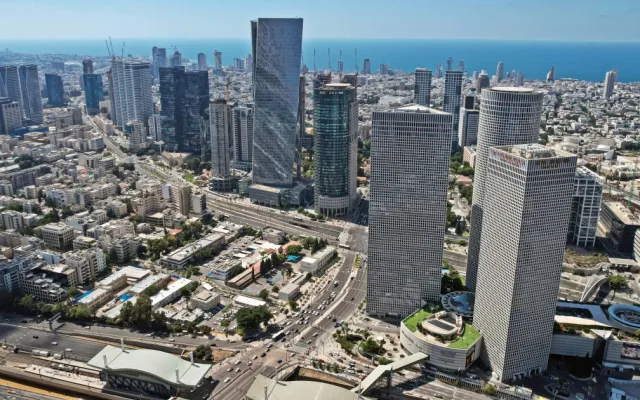
Tel Aviv is a Mediterranean metropolis known for its beaches, Bauhaus architecture and nightlife, with old Jaffa and the Carmel Market at its edges.
Wiki
Tel Aviv is a fast-moving Mediterranean metropolis, the business and cultural heart of Israel, where the severe lines of Bauhaus architecture sit beside wide sandy beaches, noisy markets and a nightlife that barely pauses. Founded in 1909 as a Jewish suburb of the ancient port of Jaffa, within a century it became one of the most recognisable cities of the eastern Mediterranean.
Background
About 460,000 people live within the municipal boundaries of Tel Aviv-Yafo, while the whole Gush Dan conurbation numbers some four million — close to half the country's population. The city lies on a flat coastal strip, stretched out along the sea; the climate is Mediterranean, with hot dry summers and mild rainy winters. Tel Aviv is the most secular and liberal centre in Israel, and it sets the tone in fashion, technology (the tech district is known as Silicon Wadi) and the arts.
The White City and Bauhaus architecture
Tel Aviv's greatest source of pride is the White City, inscribed on the UNESCO World Heritage list in 2003. It is the largest concentration of International Style buildings anywhere: some four thousand structures from the 1930s to the 1950s, put up by architects who had fled Europe, many of them trained at the Bauhaus. The signature features are smooth pale façades, ribbon windows, rounded balconies, flat roofs and buildings raised on columns. The main ensembles are strung along Dizengoff Street, Ben Gurion Boulevard and Rothschild Boulevard.
Rothschild Boulevard is the central green artery, with a walking and cycling avenue down the middle, coffee kiosks and the best examples of the period. It was here, at number 16, that David Ben-Gurion read out Israel's Declaration of Independence on 14 May 1948; the building is now Independence Hall.
Jaffa and the old quarters
South of the centre lies Jaffa (Yafo), one of the oldest ports in the world, roughly four thousand years old. Its maze of paved lanes, stone houses, churches and minarets carries layers of Phoenician, Roman, Arab and Ottoman history. Art galleries and workshops fill the alleys, and the famous flea market (Shuk HaPishpeshim) trades in antiques, vintage clothing and household oddments.
Neve Tzedek was the first Jewish quarter outside Jaffa, founded in 1887, before Tel Aviv itself existed. Its pastel low-rise houses, narrow streets and the Suzanne Dellal Centre for Dance and Theatre make it one of the most atmospheric districts. Sarona is a nineteenth-century colony of German Templers, restored and turned into a popular quarter with an indoor food market and restaurants.
Beaches and the promenade
Nearly 14 kilometres of beach run the length of the city, linked by a wide promenade, the tayelet. Each stretch has its own character: Gordon and Frishman are central and busy, Hilton is popular with surfers and the LGBT community, Metzitzim is calm and family-friendly. In the morning people run and cycle along the water, in the afternoon they play matkot (beach paddleball), and in the evening the promenade fills with strollers watching the sun drop into the sea.
Museums and culture
The Tel Aviv Museum of Art is the country's leading art collection, with Impressionists, Israeli masters and a contemporary wing. ANU — Museum of the Jewish People, on the Tel Aviv University campus, tells the story of the diaspora and Jewish culture worldwide. The city has a busy theatre, music and club scene; nightspots run late, and summer is packed with festivals and street concerts.
Food and markets
Tel Aviv's cooking is a showcase of Middle Eastern and Mediterranean food. Hummus, falafel, sabich, shakshuka, fresh seafood and an unusually wide range of vegan dishes — a particular local strength — are all worth trying. Carmel Market (Shuk HaCarmel) is the main bazaar, with mounds of spices, fruit and pastries and the best street food in town. The old hummus houses of Jaffa, Abu Hassan among them, are legendary. Street cafés and bakeries turn up on every corner.
Three days in the city
- Day 1. Walk the White City and Rothschild Boulevard, visit Independence Hall, then relax on the central Gordon and Frishman beaches.
- Day 2. Old Jaffa, the flea market, Neve Tzedek and Carmel Market, followed by an evening in the bars of the centre.
- Day 3. Museums (the Tel Aviv Museum of Art or ANU) and the Sarona quarter; if you have the appetite, a day trip to Jerusalem, about an hour away by fast train.
Practical information
Ben Gurion International Airport is roughly 15–20 kilometres from the city and connected to it by train. Within Tel Aviv, buses, rental bikes and e-scooters all work well, and the historic centre is compact enough to cover on foot. Bear in mind that much of the public transport stops on Saturdays for Shabbat. It is also worth checking the current security situation in the region before you travel.