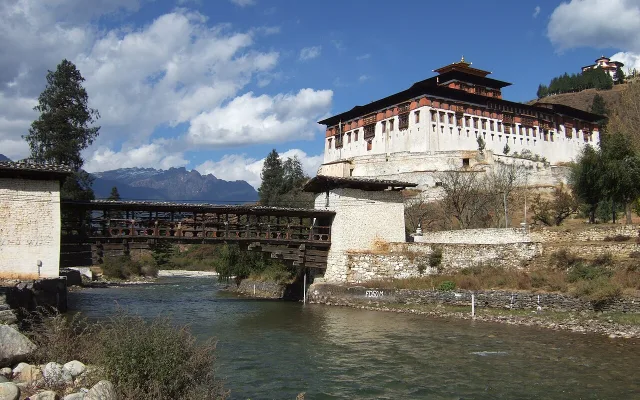
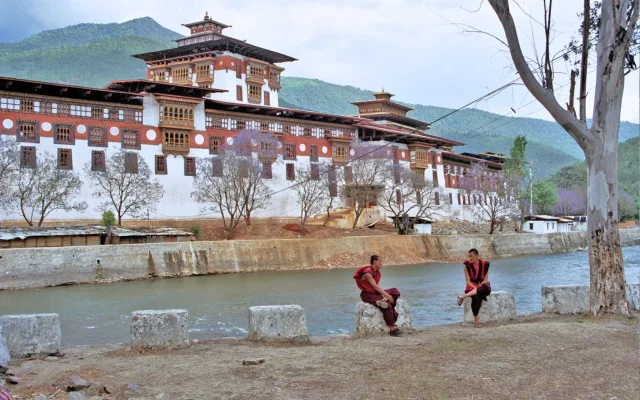
Description
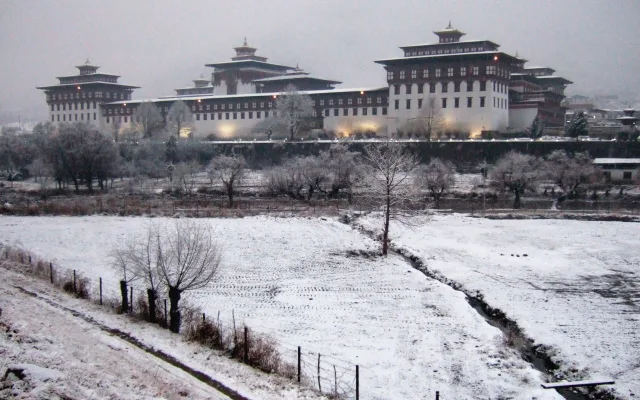
The capital of Bhutan and a city without a single traffic light — Tashichho Dzong, the 54-metre Buddha Dordenma and the memorial chorten.
Wiki
Thimphu is the political, cultural and spiritual centre of the Kingdom of Bhutan, spread through a mountain valley in the west of the country. This compact city surprises visitors with its unhurried rhythm, the absence of ordinary urban bustle and a strict commitment to national tradition in its architecture and way of life.
The city in brief
The capital stands at about 2,320 metres above sea level, in the valley of the Wang Chhu. Its population is around 115,000, which makes Thimphu one of the least populous capitals in Asia. It became the country's principal city only in 1955, when the seat of power moved here from old Punakha — which is why Thimphu is often called the youngest capital in the world.
There is not a single traffic light: at the key junctions the traffic is directed by a policeman standing in an ornamental booth, making smooth, almost choreographed gestures with his hands. Another distinctive rule is the compulsory national style: banks, hotels and offices alike are built with carved wooden facades, pitched roofs and painting in Bhutanese motifs. The official language is Dzongkha, and English is widely spoken.
History and appearance
Until the middle of the 20th century the site of the present centre held scattered estates and monasteries, and the valley was farmed. The settlement turned into a capital gradually, as administrative blocks, roads and residential quarters went up. Throughout, the authorities deliberately kept the link with the past, from Buddhist canon to craft tradition. Today Thimphu combines the character of a quiet mountain town with that of a seat of government, holding the royal institutions, the ministries and the religious administration.
Main sights
- Tashichho Dzong — the imposing fortress monastery on the riverbank, uniting secular and spiritual authority. It houses the king's throne room, government offices and the summer residence of the Je Khenpo, the country's chief abbot.
- Buddha Dordenma — a colossal seated statue about 54 metres high, made of bronze and gilded. Tens of thousands of miniature Buddha figures are kept inside the base, and the terrace gives a panorama of the valley.
- The Memorial Chorten — a white stupa raised in memory of the third king, Jigme Dorji Wangchuck. From early morning local people circle it, turning the prayer wheels.
- Changangkha Lhakhang — one of the oldest temples in the valley, standing on a rise; newborn children are brought here for blessing.
- The Motithang Takin Preserve — an enclosure holding Bhutan's national animal, the rare takin, which looks like a cross between a goat and an ox.
Museums, crafts and culture
Start with the Folk Heritage Museum, which recreates the household of a traditional 19th-century Bhutanese house with its kitchen, granary and utensils. The National Textile Museum covers the art of weaving, the varieties of cloth and ceremonial dress in detail. The School of Traditional Arts (Zorig Chusum) teaches the thirteen crafts, from woodcarving and thangka painting to embroidery and metalwork, and visitors can watch the students at work. Around it all are picturesque monasteries, mantra flags on the slopes and the sound of ritual instruments.
Daily life, food and shopping
The heart of city life is Norzin Lam, the main shopping street, with its small shops, cafés and craft stalls. At weekends a large city market sells vegetables, spices, dried chillies, local red rice and cheese. Bhutanese cooking is hot and filling: the signature dish is ema datshi, chillies stewed in cheese sauce. Dishes based on buckwheat, barley, pork and beef are popular, along with butter-tea drinks. Souvenirs most often mean textiles, woodwork, Buddhist objects and postage stamps, for which the country is well known.
What to see nearby
A scenic road leads to the Dochu La pass (about 3,100 m), crowned with 108 chortens; in clear weather the snow peaks of the eastern Himalaya are visible from here. Beyond it lies the former capital of Punakha, with one of the finest dzongs in the country at the confluence of two rivers. The other popular direction is Paro, with the international airport and the famous Taktsang monastery.
Practical information
The sensible length of a visit is about three days: enough for the main shrines, the museums and a day trip to the pass. The most comfortable seasons are spring and autumn, when the weather is dry and clear.
Entry to Bhutan for most foreign visitors is arranged through accredited tour operators, and on top of the tour price a daily Sustainable Development Fee is charged — $100 per night since 2022, with reductions for children. Travel around the country is with a local guide and driver. Because of the altitude it is worth easing off in the first days and drinking more, to adapt to the thin air.