Description
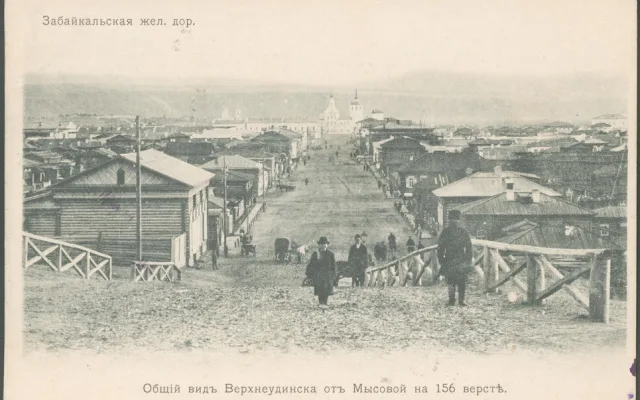
The capital of Buryatia, with a distinctive fusion of Russian Orthodox and Tibetan Buddhist culture. A huge head of Lenin on the main square, and the Ivolginsky Datsan, the leading Buddhist monastery in Russia.
Wiki
Ulan-Ude is the only city in Russia where, half an hour's drive from a giant bronze head of Lenin, prayer wheels are turning in a working Buddhist monastery. It is the capital of Buryatia, a republic in Eastern Siberia, a convenient base for the eastern side of Lake Baikal, and the point where the Trans-Siberian Railway branches towards Mongolia and towards Vladivostok.
Getting there and getting around
The city sits on the Trans-Siberian line, so the easiest way to arrive is by train: the overnight service from Irkutsk takes roughly 7–8 hours, and the journey from Moscow about four days. During the day there are also shared minibuses between Irkutsk and Ulan-Ude — faster than the train, but the road along Baikal winds a great deal.
Baikal Airport (Mukhino) is a few kilometres from the centre, reached by city bus or taxi; taxis are inexpensive by the standards of European Russia. The railway station stands practically in the centre, and you can realistically walk uphill from there to Sovetov Square.
Within the city the main transport is the marshrutka, a shared minibus running a fixed route; there are plenty of them and they cover everything, with payment in cash or by card to the driver. But the historic centre — Sovetov Square, the "Arbat" (Lenin Street) and the Odigitrievsky Cathedral — can be walked in an hour or an hour and a half. Taxis in the city are cheap and are ordered through apps, which is a sensible option for getting back in the evening.
What to see in the city itself
- The head of Lenin on Sovetov Square — the largest bust of Lenin in the world, about 7 metres of bronze. A strange, photogenic and genuinely impressive object; it takes five minutes, but it would be silly to skip.
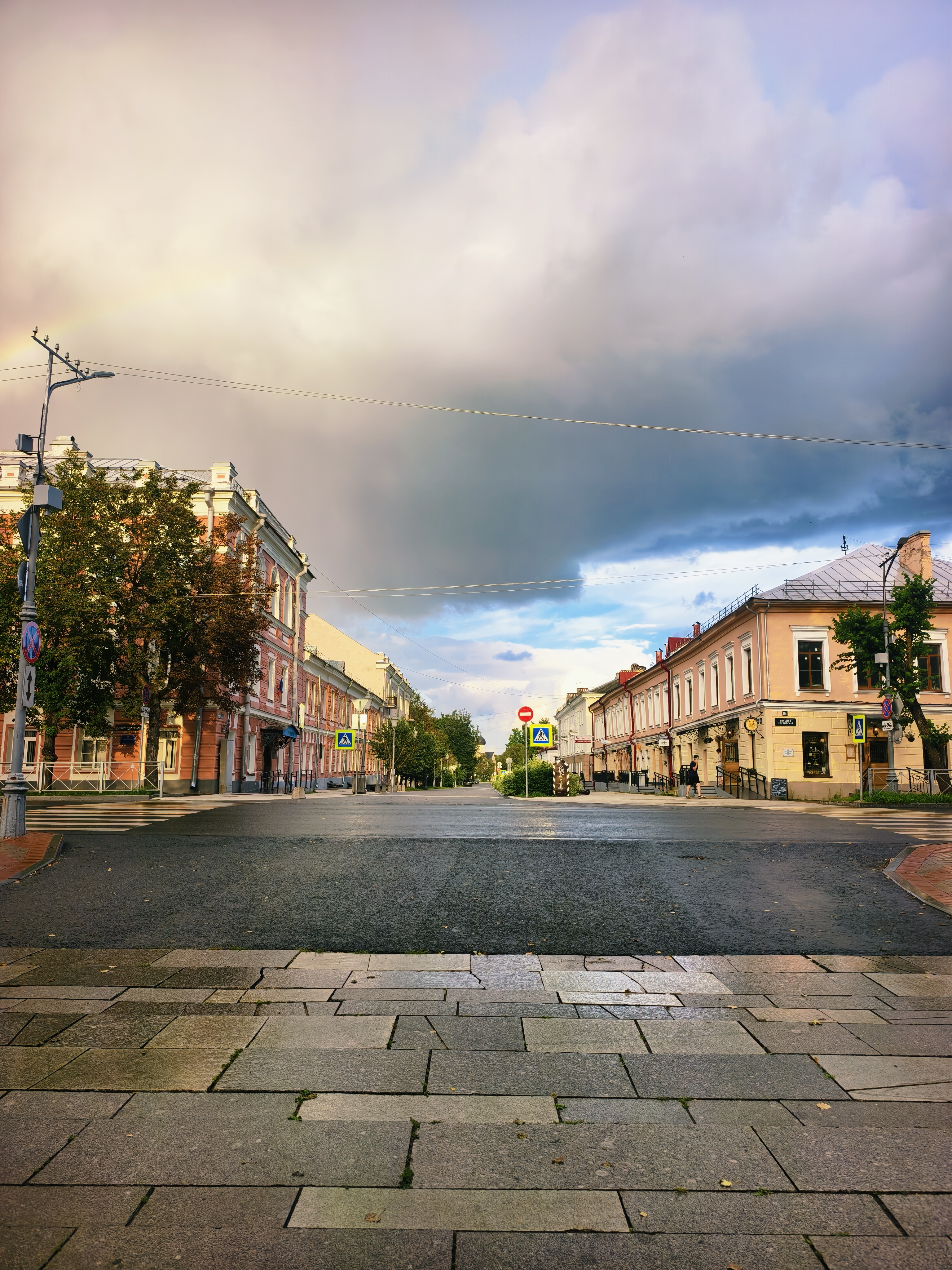
- Lenin Street (the local "Arbat") — pedestrianised, with 19th-century merchant houses, cafés and souvenir shops. A convenient place to eat and shop.
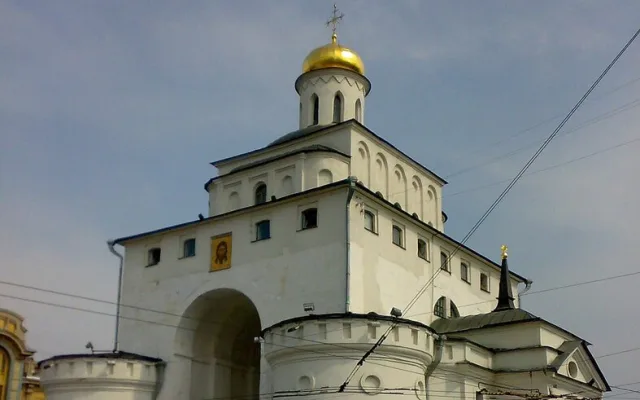
- The Odigitrievsky Cathedral — the oldest stone building in the city, in the Siberian Baroque style.
- The Ethnographic Museum of the Peoples of Transbaikalia — an open-air museum on the edge of town. A genuinely worthwhile place: relocated Buryat yurts, an Evenk conical tent, Old Believer log houses and a stockade tower. Allow 2–3 hours including travel.
- Rinpoche Bagsha — a datsan (Buddhist monastery) on Lysaya Gora hill above the city. People come not only for the temple but for the best panorama of Ulan-Ude and the Selenga River.
The Ivolginsky Datsan
For many people this is the main reason to come to Buryatia. It is the centre of Buddhism in Russia, a monastery complex out on the steppe some 35–40 km from the city, next to the village of Verkhnyaya Ivolga. You get there by scheduled bus from the bus station to Ivolginsk, then by local transport or taxi to the monastery itself; it is simpler, and not much more expensive, to agree a round trip with a taxi driver who waits for you.
The chief relic is the incorrupt body of Lama Itigelov, which is brought out for veneration only a few times a year according to the Buddhist calendar; the rest of the time you can only look round the temples. Practical rules: walk around the complex and the prayer wheels strictly clockwise, keep shoulders and knees covered, remove your hat inside a dugan (prayer hall), and do not photograph inside the temples without permission. Behave quietly — this is a working monastery, not a museum.
How many days, and when to go
Two full days are enough: one for the city and the Ethnographic Museum, a second for the Ivolginsky Datsan. If you are using Ulan-Ude as a base for Baikal, add 2–3 days for Gremyachinsk, Maksimikha or Ust-Barguzin (this is the eastern shore, less touristy and wilder than Listvyanka).
The climate is sharply continental and very sunny. Summer runs from mid-June through August, warm and dry, and this is also the Baikal season. Winter is dry but the frosts are serious, regularly dropping below −30 °C; at the same time there is little snow and the sun shines almost every day. The shoulder months of May and September are windy but empty and cheap. It is also worth timing a visit for Sagaalgan (the Buddhist New Year, at the end of winter) or the summer Surkharban festival — both bring the city to life.
Where to stay
It makes sense to stay in the historic centre, within the radius of Sovetov Square and Lenin Street: everything is walkable from there, with cafés nearby and the bus stops for the datsan. The area around the railway station is convenient if you are only passing through. The hotel stock is modest — a few Soviet-era hotels, some modern hotels and hostels; prices are noticeably lower than in Irkutsk. Booking ahead is only really necessary over public holidays and in July and August.
Food
Buryat cuisine is the main gastronomic argument for coming, simple and filling:
- Buuzy (pozy) — large steamed dumplings with an opening at the top. They are eaten by hand: bite a hole, drink the broth, then eat the rest. They are counted individually, and people usually order 3–5. Cheap.
- Shulen — a meat soup with noodles.
- Khuushuur — flat fried pasties filled with meat.
- Salamat (a rich flour-and-sour-cream porridge) and green tea with milk and salt — an acquired taste, but worth trying.
Look for a poznaya, an unpretentious eatery where local people come to eat. Prices overall are below the Russian average, and you can eat well for very little.
Safety and practicalities
The city is calm, but as in any Siberian city it is better to avoid the outskirts and industrial zones in the evening. Temperatures swing sharply within a single day — even in summer the nights turn cold and you will need a jacket. The sun is deceptively harsh: sunscreen and sunglasses are not superfluous.
Keep cash on you — at the datsan, in the markets and on rural buses, cards are not always accepted. Mobile coverage in the city is good, but it drops out beyond it across Transbaikalia.
Common mistakes
- Arriving for a single day in transit off the train and seeing only the Lenin head — there will be no time left for the datsan.
- Assuming Baikal begins just outside the city: it is over 100 km to the eastern shore, and that is a separate trip.
- Going to the datsan for the body of Itigelov without checking the calendar of when it is displayed.
- Walking round the shrines anticlockwise or pushing a camera into a dugan — local people are sensitive about this.
- Planning Mongolia in a hurry: Ulan-Ude really is the nearest base for the train to Ulaanbaatar, but visas and tickets need arranging in advance.