Description
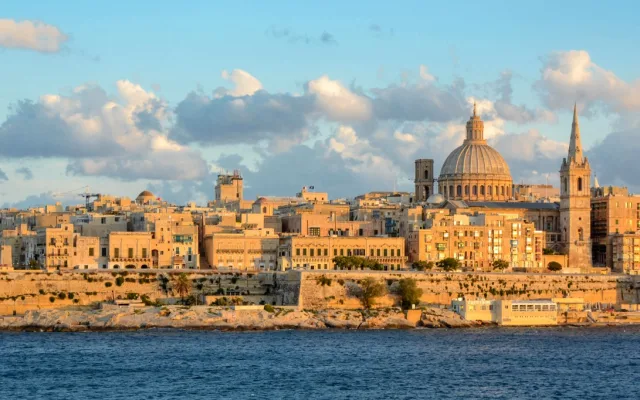
The EU's smallest capital, with an extraordinary concentration of Baroque architecture, Knights' palaces and panoramic views over the Grand Harbour.
Wiki
Valletta is the compact capital of Malta, inscribed in its entirety on the UNESCO World Heritage List as one of the most concentrated historic ensembles in Europe. On a peninsula roughly one kilometre long, a dense grid of streets packs in Baroque churches, palaces of the Knights Hospitaller and postcard-perfect views over two deep-water harbours.
History and character
The city was founded in 1566 by Jean de Valette, Grand Master of the Order of Saint John, shortly after the Knights and the local population repelled the Ottoman siege of 1565 — an episode known as the Great Siege. The new fortress was designed by Italian military engineer Francesco Laparelli, and completed by the Maltese architect Girolamo Cassar, who gave the city its unified Renaissance-Baroque character. The result was "a city built by gentlemen for gentlemen": a strict grid plan, massive bastions, curtain walls and ditches cut into the golden limestone.
Today only about six thousand people live in the historic core, making Valletta the smallest capital city in the European Union by population. The peninsula is flanked on two sides by the Grand Harbour to the south-east and Marsamxett Harbour to the north-west. In 2018 the city held the title of European Capital of Culture, spurring restoration of facades, waterfronts and fortifications.
What to see
- St John's Co-Cathedral — the city's great Baroque showpiece. Behind an austere exterior lies a dazzling interior: gilt-encrusted stone carvings and polychrome marble tombstones of the Knights. The Oratory houses Caravaggio's largest canvas, The Beheading of Saint John the Baptist — the only work he ever signed.
- Upper Barrakka Gardens — a colonnaded terrace with the finest panorama of the Grand Harbour and the Three Cities. Below, on the Saluting Battery, a noon cannon is fired every day.
- Grand Master's Palace — the former seat of the Order's head, now housing the President's state rooms and parliament, as well as an outstanding collection of Knights' armour and weapons.
- Casa Rocca Piccola — a private 16th-century aristocratic townhouse still owned by a Maltese noble family; part of the rooms, cellars and garden are open to visitors.
- Fort St Elmo and the National War Museum tell the story of the island's sieges, including the heavy bombing of the Second World War.
- The Three Cities (Vittoriosa-Birgu, Senglea, Cospicua) — the oldest Knights' settlements on the opposite shore of the harbour, easily reached by traditional dgħajsa water-taxi or ferry.
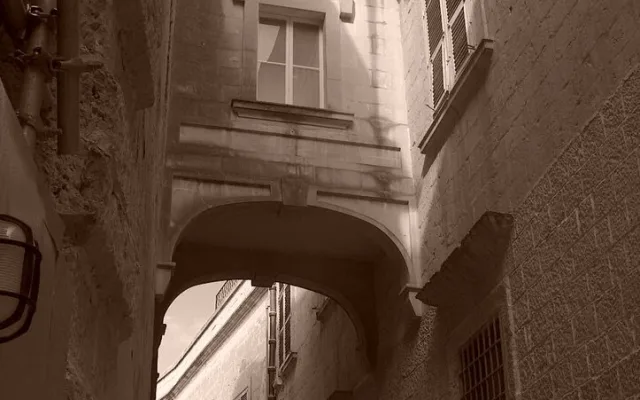
Beyond the capital, a day trip to Mdina — the ancient "Silent City" with its hushed alleyways and views across the island's interior — is well worth combining with nearby Rabat and its catacombs.
Food and drink
Maltese cuisine blends Mediterranean and North African influences. The classic street food is pastizzi — flaky pastry parcels filled with ricotta or mushy peas. Hot dishes include fenek (braised rabbit, effectively the national dish), braġjoli (stuffed beef olives) and the hearty fish soup aljotta. The table typically features crusty village bread (ħobż), sheep's-milk cheese (ġbejniet) and local wines made from indigenous grape varieties including Ġellewża and Girgentina.
Practical information
Malta International Airport (MLA) is about 8 km from the capital, with regular bus and taxi connections into the city. Public transport across the island is run by the Tallinja network — multi-day passes offer good value. Valletta itself is compact and walkable, though be prepared for steep steps and inclines; a public lift runs from the harbour up to the main city gate and bus terminus.
The ideal pace for a first visit is three days: the first for the cathedral, palaces and panoramic gardens; the second for the Three Cities and a walk along the bastions; the third for a trip to Mdina, Rabat and the coast. The best time to visit is spring or autumn, when summer heat and crowds have subsided; winters are mild but can be windy. The currency is the euro; cards are accepted almost everywhere. Prices are as of 2026.