Description
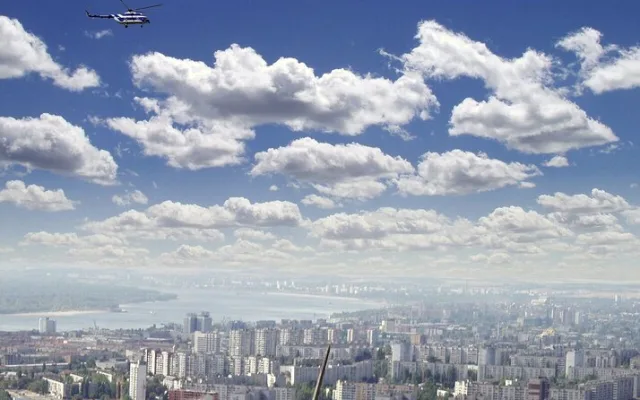
The former Stalingrad — Mamayev Kurgan with The Motherland Calls, the Battle of Stalingrad panorama and the Volga.
Wiki
Volgograd is first of all about the memory of the Battle of Stalingrad (17 July 1942 to 2 February 1943) and about the Volga, which has drawn the city out for more than 60 kilometres along the bank. The city was called Tsaritsyn until 1925 and Stalingrad until 1961, and people come here not for the comfort of an old centre but for specific places where the scale of the war becomes clear — and two days are more than enough for that.
Why come, and what is worth seeing
- Mamayev Kurgan with the monument The Motherland Calls — the principal site, and the one to plan the trip around. You should walk from the bottom upwards, through the whole memorial complex: the avenue, the Square of Sorrow, the Hall of Military Glory with its eternal flame and guard of honour. Allow a couple of hours and do not rush. The sculpture is enormous, and the best view is from the ascent rather than from close up at the base.
- The Battle of Stalingrad panorama museum — the second essential stop. The circular panorama itself is impressive, but the displays and the military equipment around the building are no less interesting. Nearby stand the ruins of the Gerhardt Mill, left as they were after the fighting, and the well-known Pavlov's House opposite.
- The embankment and the Volga — it is worth taking in the river. The Volga is very wide here; a short trip by river boat is a good way to see the city and The Motherland Calls from the water.
- The Alley of Heroes and the centre — a compact ceremonial area of post-war Stalin-era architecture. Easily covered on foot in half a day.
If time remains, you can travel down to the Volga–Don Canal with its locks and monuments, in the south of the city.
Getting there and getting around
From the airport to the centre. The airport is outside the city, to the north. Public transport (buses and shared minibuses) and taxis run into the centre; a taxi is the simplest option with luggage. There is also a railway station right in the centre — the train from Moscow is convenient, taking roughly 18 to 20 hours.
Within the city. Volgograd's distinctive feature is the high-speed tram, the "metrotram": part of the line runs underground like a metro, and it is a genuinely fast way to cross the elongated centre. Use it as your main transport along the city's axis. Otherwise there are buses, trolleybuses and shared minibuses. Allow for the geometry of the city: it is long and narrow, journeys between distant districts take a long time, so group your destinations by location.
Mamayev Kurgan and the panorama museum are connected to the centre by public transport and lie close to the main axis — there is no need to hire a car for two days.
Where to stay
Best are the central districts around the Alley of Heroes, the embankment and the railway station. From there it is walkable to the panorama museum and convenient to reach Mamayev Kurgan by tram. There is no point staying on the far outskirts: you will lose time travelling the length of the city.
How many days, and when to go
Two days are enough. A sensible split:
- Day 1 — Mamayev Kurgan in the morning, then the panorama museum, Pavlov's House and the mill, and the embankment and the Volga in the evening.
- Day 2 — the centre on foot, a river boat trip and, if you wish, the Volga–Don Canal.
Season. The best time is late spring and early autumn. Summer in Volgograd is genuinely hot, with a steppe climate: touring the exposed Mamayev Kurgan in the midday heat is hard going, so bring water and a hat. Winter is cold and windy off the river. Particular dates are 2 February (the anniversary of the end of the Battle of Stalingrad) and 9 May, Victory Day: both are notable occasions, but crowded.
Food and prices
Volgograd feels inexpensive compared with Moscow and St Petersburg: cafés, canteens and lunches cost noticeably less. Do not expect a distinctive local cuisine — this is ordinary southern Russian and general Russian food, plus the Volga fish traditions of the region. Look for places a step away from the ceremonial Alley of Heroes rather than on it, where the prices are fairer.
Where to save, and common mistakes
- Do not hire a car for two days — the metrotram and taxis cover every need.
- Mamayev Kurgan is free to walk through; you mainly pay for the museums. Do not overpay casual "guides" at the entrance.
- Do not underestimate the distances. The main mistake is to plan points scattered along the whole length of the city and spend half your time travelling. Build the route along the axis.
- Dress for the weather on the kurgan: it is open ground, and wind and sun are felt more strongly than in the centre.
- Respect the character of the place. Mamayev Kurgan and the Hall of Military Glory are a memorial and a burial site, not a viewing platform; behave accordingly, particularly near the guard of honour.
Volgograd is not about relaxed tourism — it is about strong, specific impressions. Come for those, subordinate your logistics to the city's elongated geometry, and two days will be enough to take away the essentials.