Description
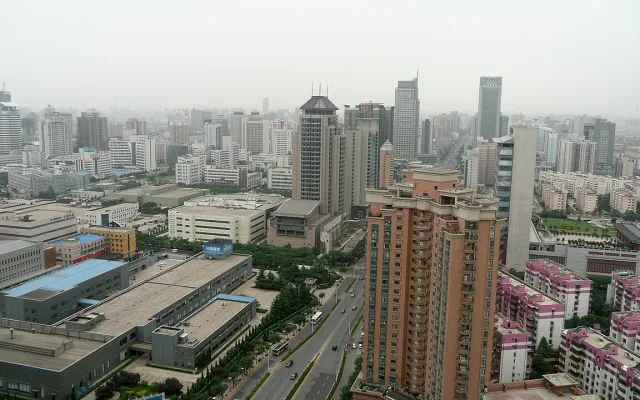
Ancient Chang'an — the Terracotta Army, the Ming city wall and the Muslim quarter of the Hui.
Wiki
Xi'an is the capital of Shaanxi province and one of China's great historic cities: the Silk Road ended here, and the Terracotta Army stands just outside. Thirteen dynasties kept their capital in this place, more than a thousand years in total, and today around 13 million people live in the urban area.
Background and history
The city's old name was Chang'an, "eternal peace". Under the Han and the Tang it was one of the largest capitals in the world: caravans arrived from Central Asia, and Sogdian, Persian and Arab merchants settled here, which is how Xi'an's Hui Muslim community, still living in the centre, came into being. From the Tang era come the pagodas and the grid of the quarters; from the Ming, the city wall and the towers at the centre. The great modern find was made in 1974, when farmers digging a well east of the city struck the underground army of Qin Shi Huang.
The Terracotta Army
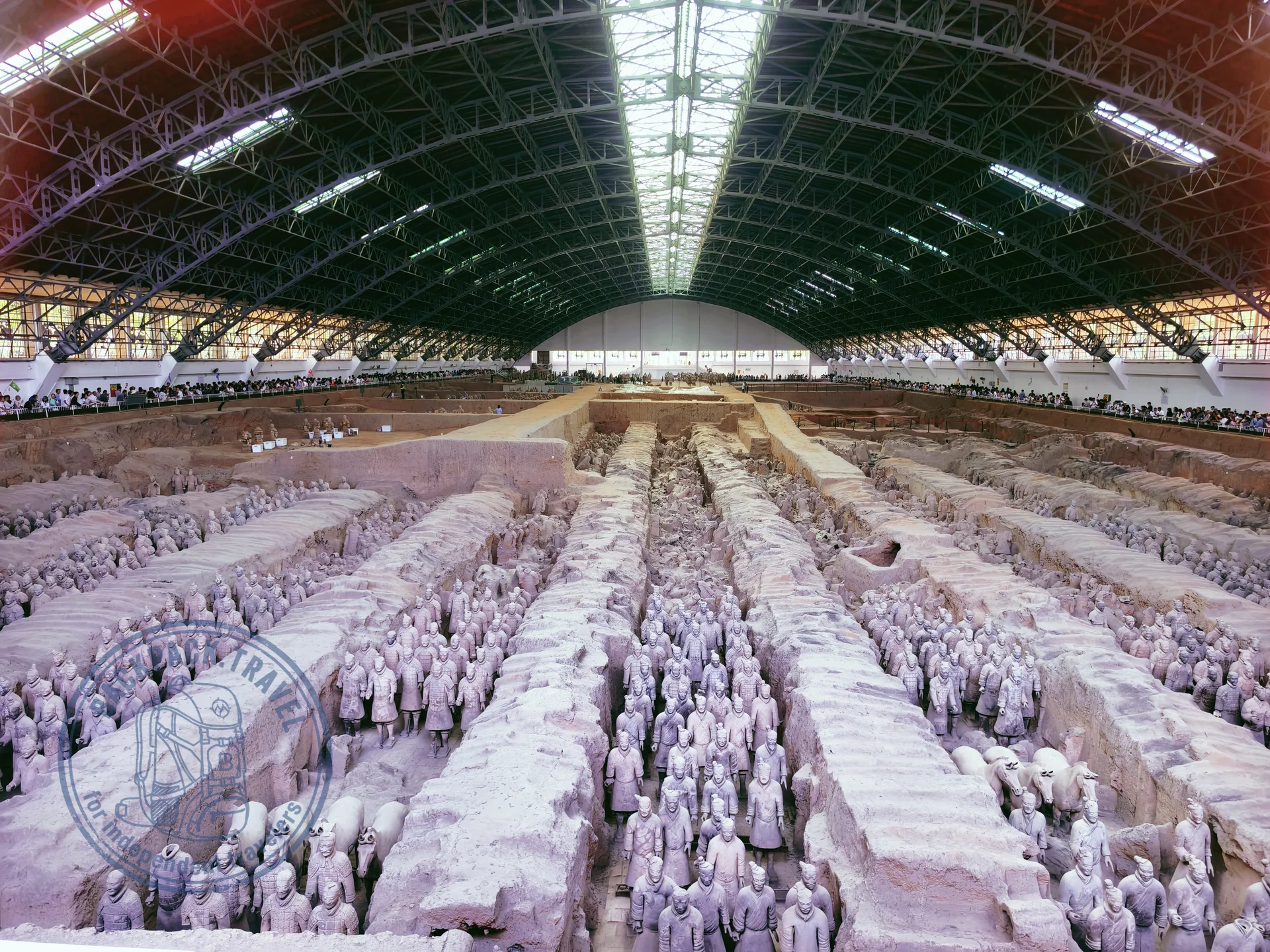
The burial complex of the first emperor of a unified China is a UNESCO World Heritage Site and the main reason people come. In three excavated pits about 35 km east of the centre stand more than eight thousand life-size warriors and horses, modelled in the third century BC; no two faces repeat. Pit one is the largest and most impressive; in pits two and three you can watch restoration under way. Allow half a day including travel, and arrive at opening time — by midday the halls are packed with groups.
What else to see in the city
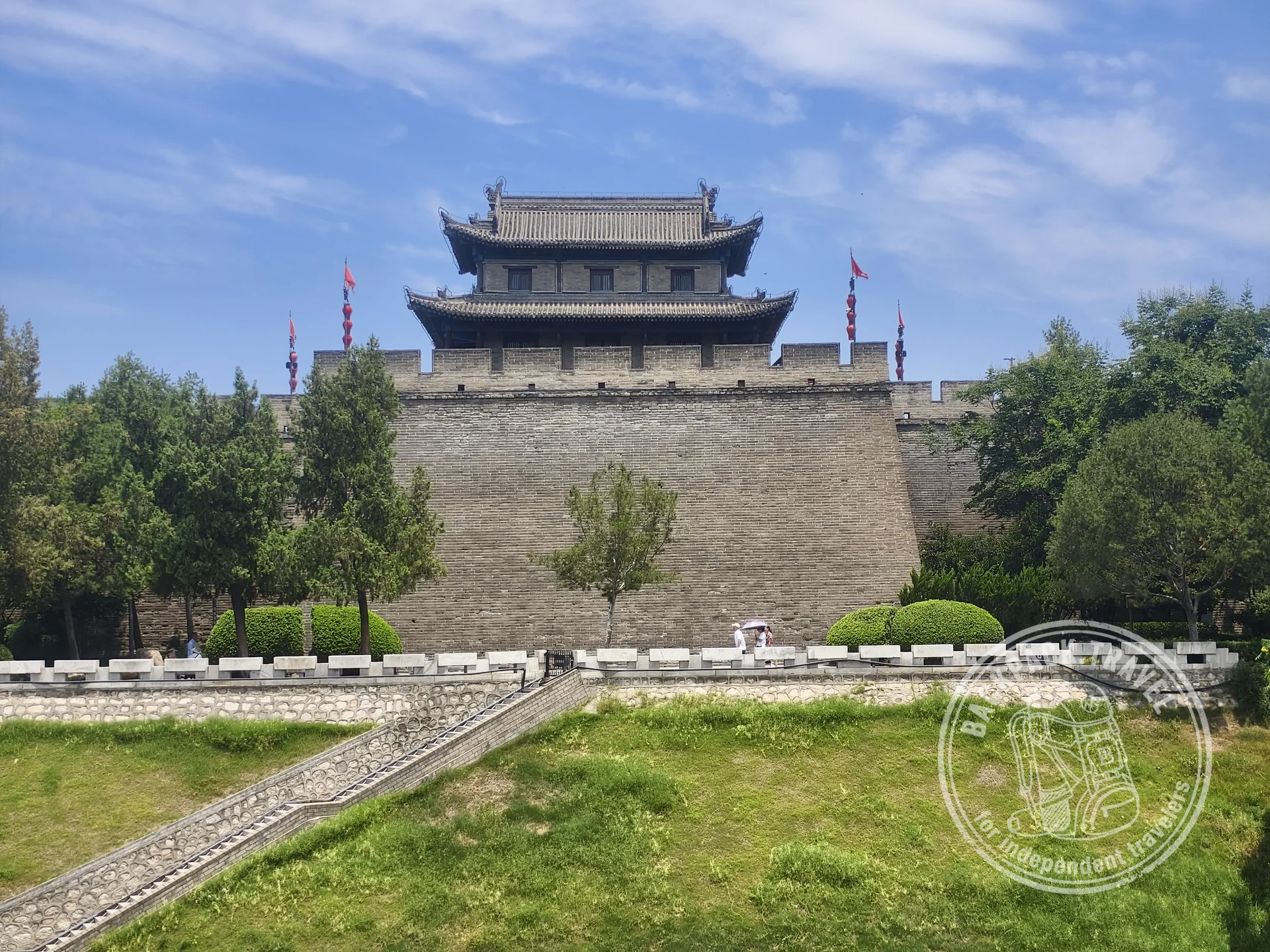
- The city wall — the largest surviving example in the world, around 14 km round, built under the Ming. A path runs along the top and bicycles are hired out; a full circuit takes about an hour and a half.
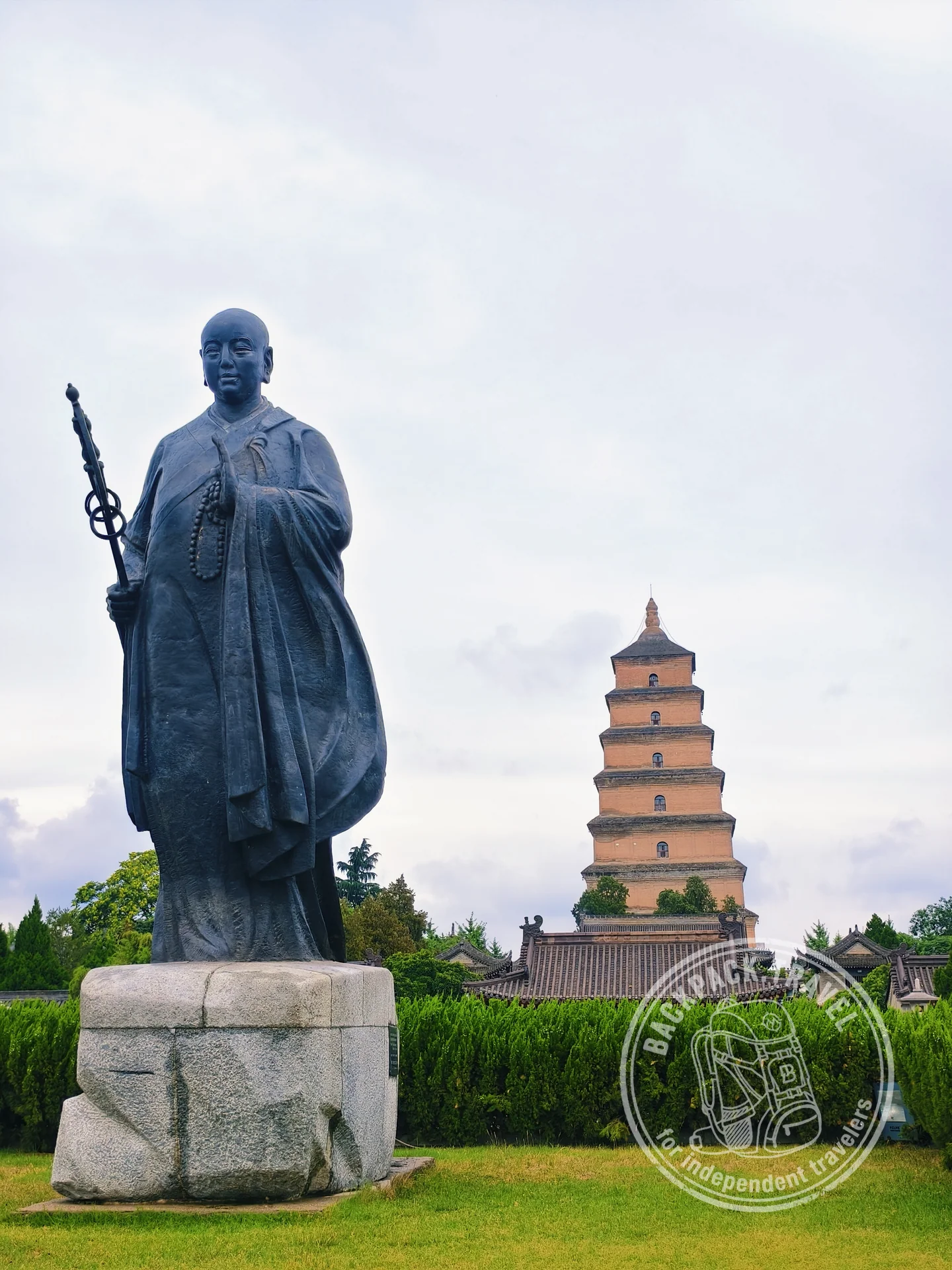
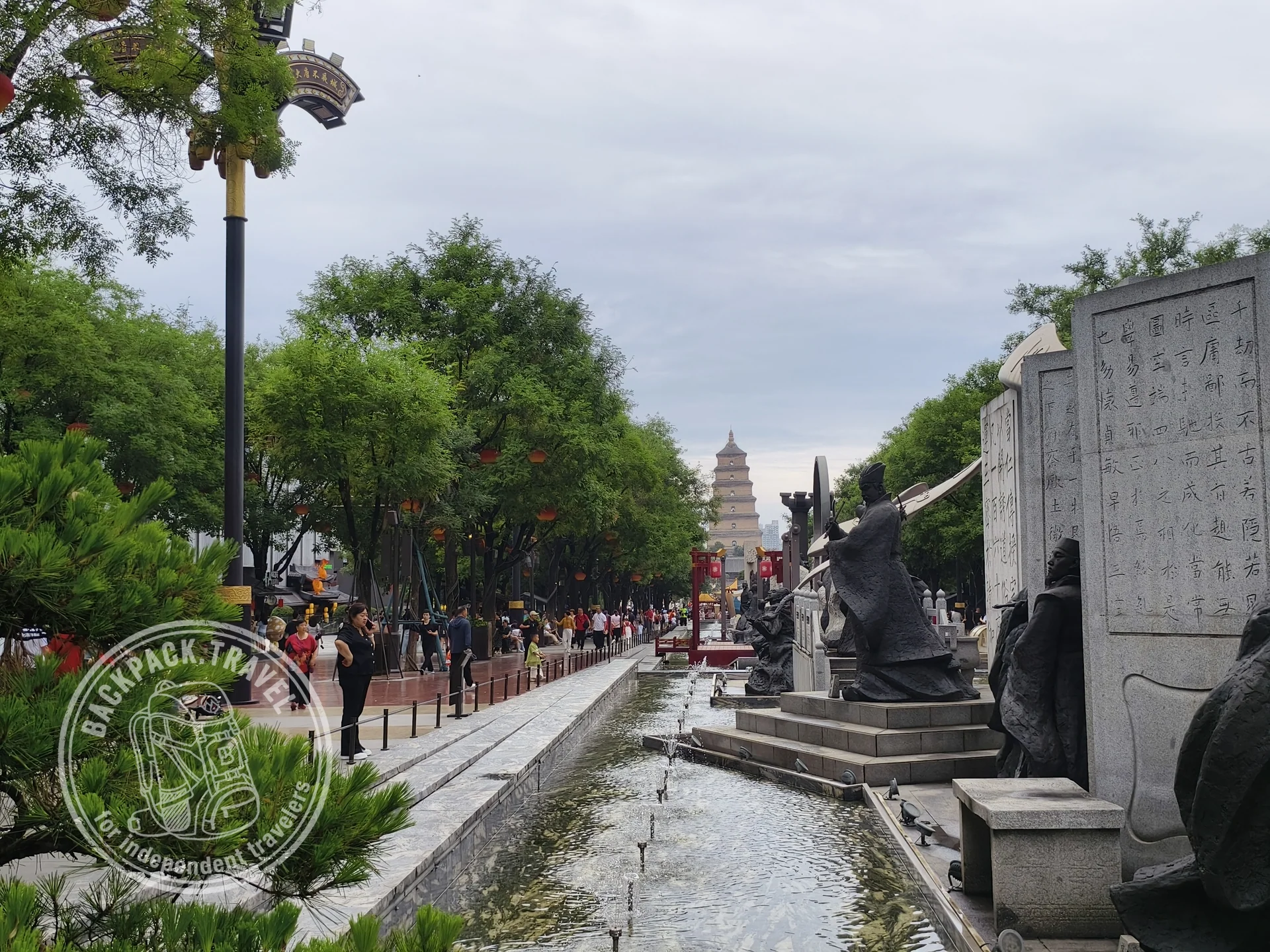
- The Big Wild Goose Pagoda — a Buddhist tower of 652, 64 m tall, raised to hold the sutras the monk Xuanzang brought back from India. It is on the UNESCO list as a Silk Road monument.
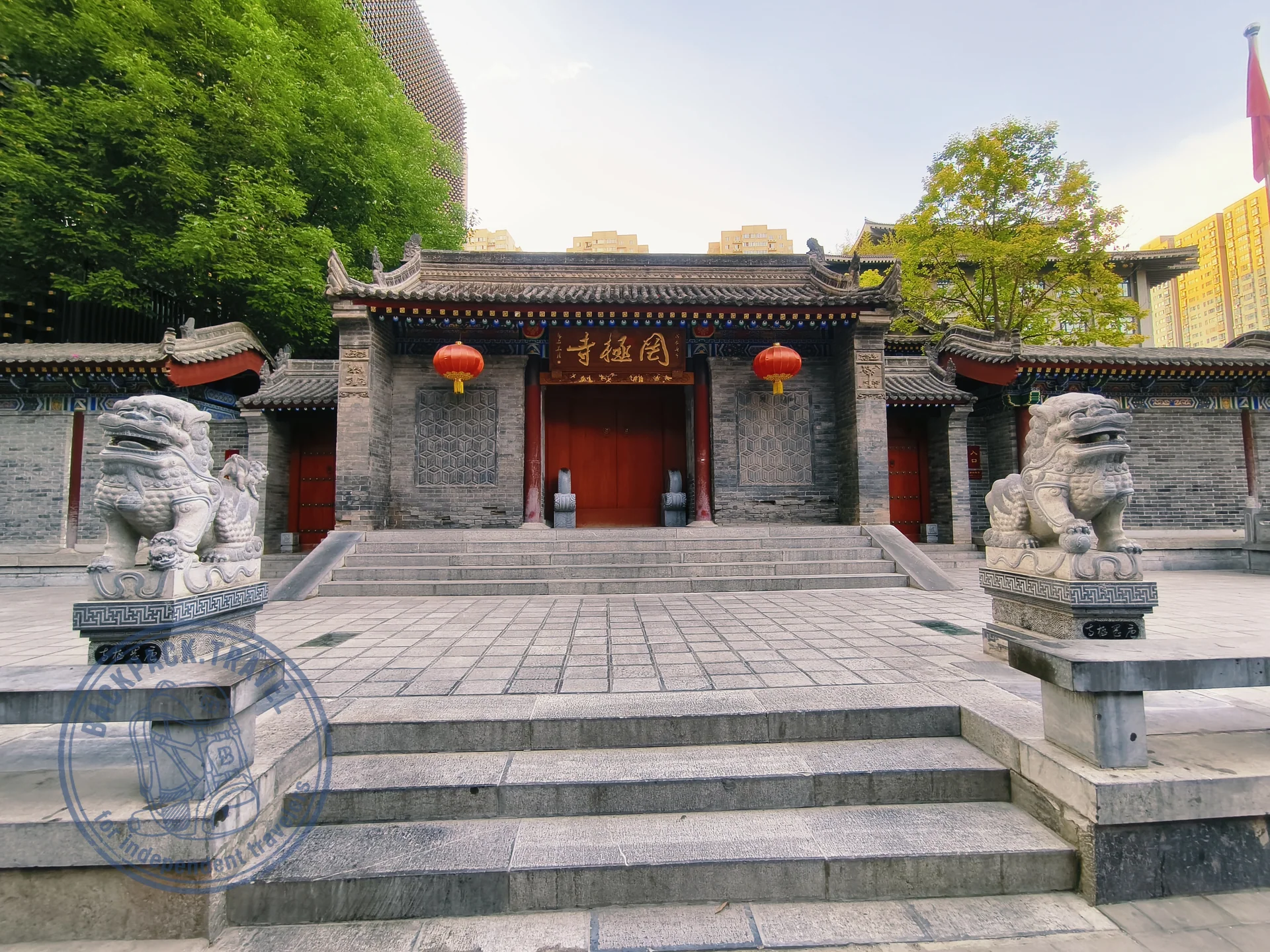
- The Small Wild Goose Pagoda — a more delicate tower of 707–709 at Jianfu monastery, south of the old centre; the Xi'an Museum stands next to it.
- The Muslim quarter — the lanes behind the Drum Tower where the Hui community lives: shops, workshops and solid rows of street food, busiest in the evening.
- The Great Mosque — one of the oldest and largest in the country, founded in the eighth century. It looks like a Chinese temple, with courtyards, pavilions and a garden, but carries Arabic calligraphy instead of images.
- The Bell and Drum Towers — Ming buildings of the 1380s at the very centre, the reference point for any walk.
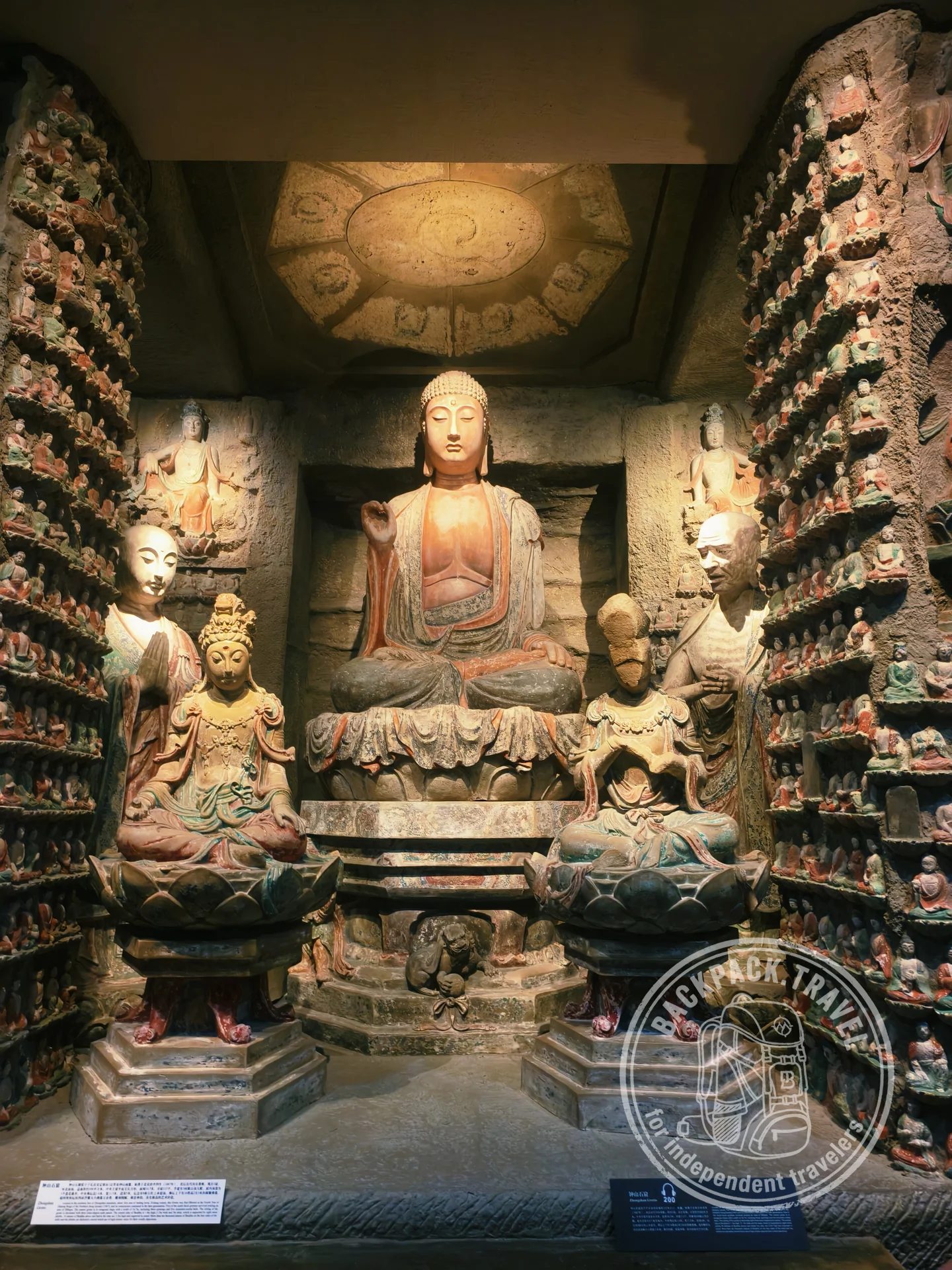
- The Shaanxi History Museum — the best collection in the province, from the Neolithic to the Tang. Entry is free but has to be booked, and the slots go days ahead.
- Tang Paradise (Datang Furong Garden) — a reconstruction of Tang-era gardens with an evening light show.
Trips out of Xi'an
- Huashan (2,154 m) — one of the five sacred mountains of Daoism, about two hours away. It is known for narrow ledges above the drop, including the famous plank path; cable cars run towards the summits.
- Qianling — the mausoleum of the Tang emperor Gaozong and of Wu Zetian, the only woman to rule China as emperor, about 80 km to the north-west. Stone figures of officials and envoys line the approach to the mound.
Food
Shaanxi cooking is wheat-based, filling and quite unlike the food of southern China. Try biangbiang noodles, whose written character is among the most complicated in Chinese; roujiamo, a flatbread filled with slow-cooked spiced pork; cold liangpi noodles; and yangrou paomo, a mutton broth into which you crumble the bread yourself. A meal in a simple place costs about 30–50 yuan ($4–7), dinner in a restaurant 80–170 yuan ($12–25). Prices are as of 2026.
Practicalities
Xianyang International Airport is around 40 km from the centre; airport buses at about 27 yuan ($4) and taxis at 170–200 yuan ($25–30) run into town. From Beijing the high-speed train is the best option, four and a half to six hours. The city has an extensive metro at 3–6 yuan ($0.5–0.8) a ride, plus taxis and ride-hailing apps.
The best months are March to May and September to November, when temperatures hold at 12–25°C. Summer is hot, up to 38°C, and often smoggy; winter is dry and cold, between −5 and +5°C. The city's biggest event is the Lantern Festival at the first full moon of the lunar year, when the city wall is lit up.