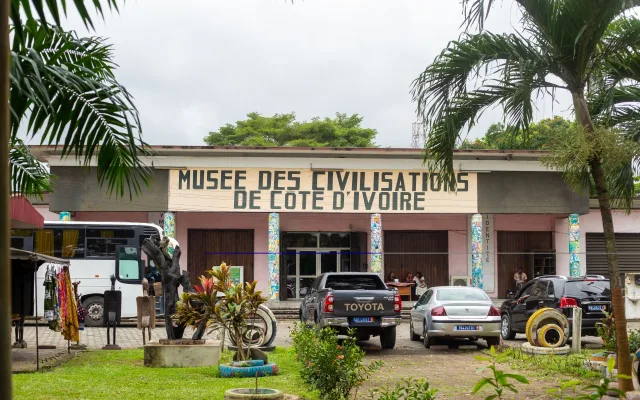
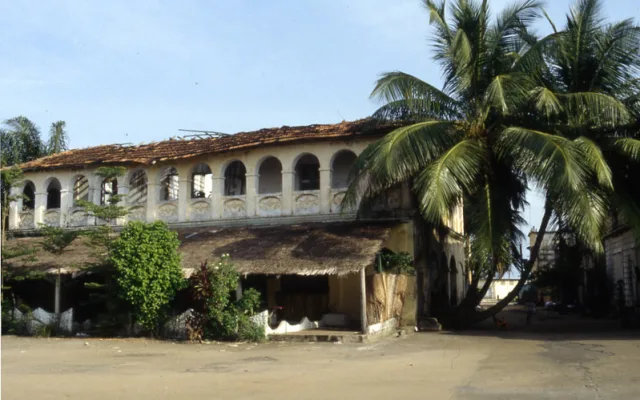
Description
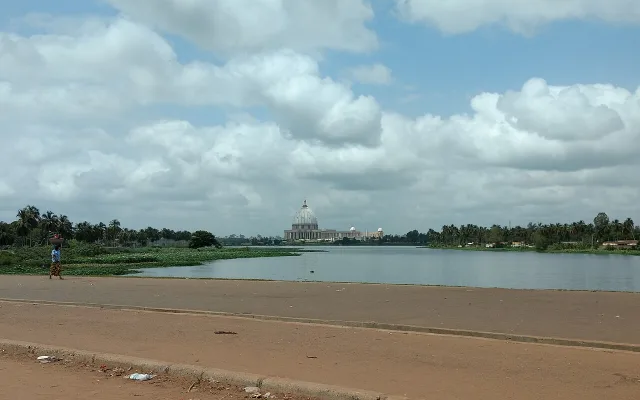
The political capital, home to the Basilica of Our Lady of Peace — a replica of St Peter's and the largest church in the world.
Wiki
Yamoussoukro is the official political and administrative capital of Côte d'Ivoire, situated in the centre of the country roughly 240 km north of Abidjan, the largest city and economic hub. The city has a modest population and is known above all for the monumental Basilica of Our Lady of Peace — the largest Christian church in the world.
Overview
The city sits on a plateau in the Bélier region, amid the savannah and wooded plains of central Côte d'Ivoire. Yamoussoukro is the birthplace of Félix Houphouët-Boigny, the country's first president, who led it from independence in 1960 for more than three decades. At his initiative the village of his birth was declared the new capital in 1983, with the intention of relocating government institutions from Abidjan. In practice the transfer was never completed: many ministries, embassies and the main business activity remained in Abidjan, so Yamoussoukro retains the status of official capital while being considerably quieter and smaller in scale than the coastal metropolis.
History
Before becoming a capital, Yamoussoukro was a modest Baule settlement named after Queen Yamoussou. Once Houphouët-Boigny — a native of the town — came to power, his home village became the focus of large-scale state construction. During the 1970s and 1980s wide boulevards were laid out, administrative buildings, schools and landmark structures were erected, giving the city an unusually spacious, purpose-built character. The crowning achievement of this policy was the basilica, conceived as the spiritual and symbolic centre of the nation.
Basilica of Our Lady of Peace
The city's defining sight is the Catholic Basilica of Our Lady of Peace, built between 1985 and 1989 and consecrated by Pope John Paul II in September 1990. Its dome deliberately mirrors the profile of St Peter's Basilica in the Vatican, and with the cross it stands about 158 metres to St Peter's 136. Its Guinness World Record is for the largest church on earth by area — some 30,000 square metres; St Peter's still holds more people inside.
- The domed structure is surrounded by an impressive colonnade and a vast esplanade.
- The interior is adorned with enormous stained-glass windows covering thousands of square metres; one depicts Houphouët-Boigny himself among kneeling figures.
- There is seating for about 7,000 and standing room for a further 11,000 or so, while the esplanade in front of the basilica is designed for 300,000 people.
The basilica is open to visitors; modest dress is expected, as in any active place of worship. Taking in the interior, the stained glass and the climb to the viewing levels easily fills several hours.
Other Sights
- Presidential Palace — a walled residence; according to local tradition, sacred crocodiles are kept in the adjacent pools, and their feeding has become an informal spectacle for visitors.
- Félix Houphouët-Boigny Foundation — a large complex of conference halls and memorial spaces dedicated to the legacy of the first president.
- Yamoussoukro Mosque and other places of worship reflecting the country's religious diversity.
- Wide boulevards and monuments from the capital-building era, which give the city its distinctive monumental character.
Culture and Food
Yamoussoukro reflects the diversity of Ivorian society, where Christian and Muslim communities live alongside the traditional beliefs of the Baule people. Local cuisine follows the national pattern: staples include cassava, yam, plantain and rice. Popular dishes are attiéké (a couscous-like fermented cassava side dish), fufu, spicy peanut- and palm-based sauces, grilled fish and chicken. Street food stalls and small maquis — inexpensive local eateries — offer the best taste of everyday city cooking.
Practical Information
The climate is sub-equatorial and hot year-round, with distinct wet and relatively dry seasons; the drier months are generally the preferred time to visit. Yamoussoukro is connected to Abidjan by road, a journey of a few hours, with regular intercity bus services. The city has its own airport, though most international flights operate through Abidjan.
One day is enough to see the main sights: the morning is best devoted to the basilica, with the afternoon for the presidential complex and crocodile pools, the memorial buildings and the city's grand avenues. As throughout the country, travellers should check current safety advisories, drink bottled water and ensure their vaccinations are up to date before travelling.