 Города и дороги
Description
A small town among karst hills on the Li River, the very landscape printed on the twenty yuan note. Bamboo raft trips, cycle routes along the rice fields and fishermen with cormorants.
Wiki
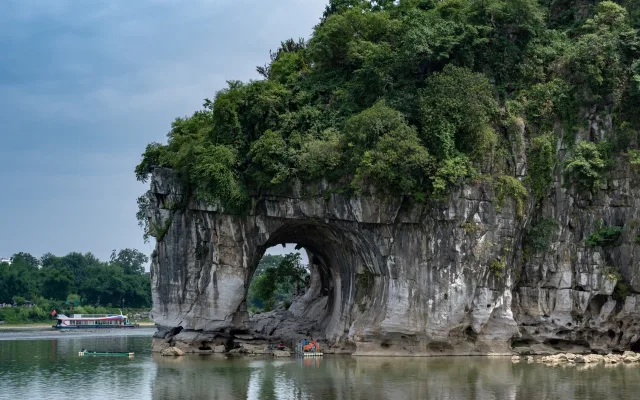
Yangshuo is a small town in Guangxi on the Li River, set among karst hills. This is the very landscape printed on the 20 yuan note, the one that in the popular imagination stands for Chinese nature as a whole. Unlike Guilin, Yangshuo is compact, surrounded by villages and rice fields, and has long lived off tourism, with all the pluses and minuses that such a specialisation brings.
Where the landscape actually is
The karst towers run along the river for tens of kilometres, but the canonical view is on the Xingping to Yangdi stretch, roughly 25 km upstream from Yangshuo. That is exactly where the drawing on the banknote was made, and the spot is marked with signs. If you want that particular shot, the thing to plan for is Xingping and not the waterfront in Yangshuo itself.
Getting about on the water
- The Guilin to Yangshuo cruise. The boats run down the Li for four to five hours and cover the most spectacular stretch. The main scenario is to arrive in Yangshuo by water rather than by road. Tickets vary according to the class of vessel.
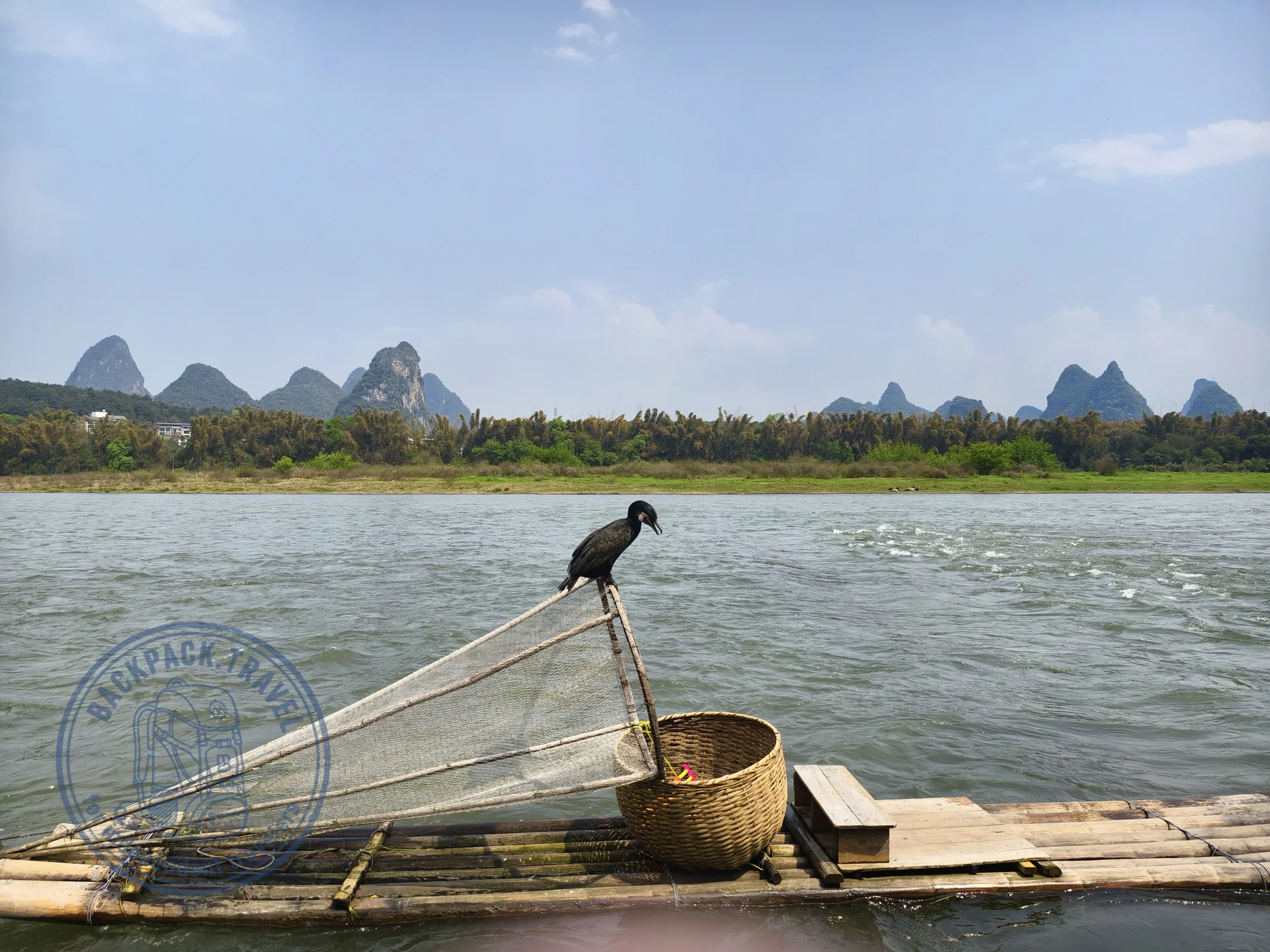
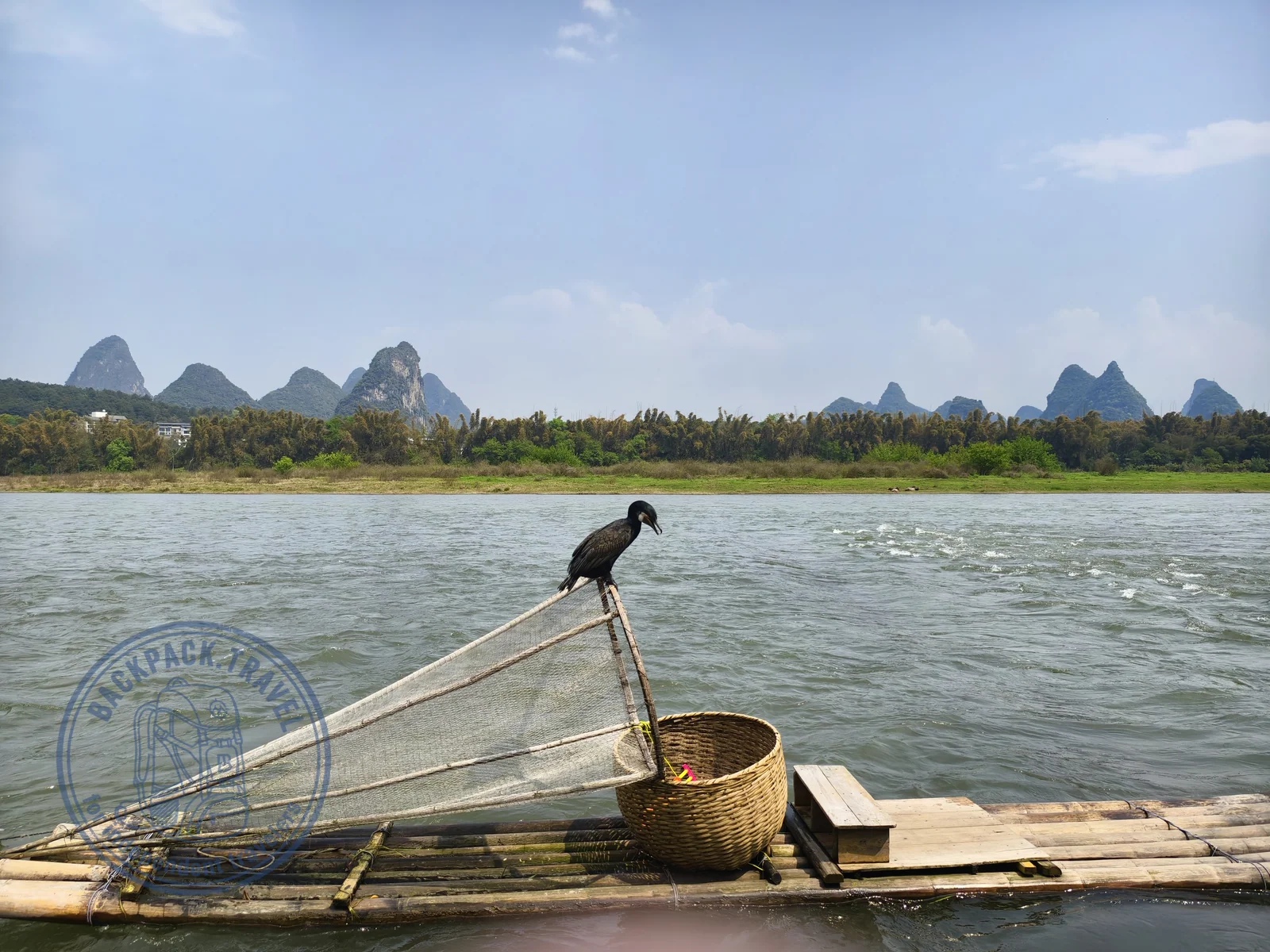
- Bamboo rafts on the Li River from Xingping are a short version of the same route, an hour and a half to two hours. They are bamboo in name only: these days they are plastic tubes with an engine.
- Rafts on the Yulong River, a tributary west of Yangshuo, mean calm water among fields and low hills. An hour to an hour and a half, with the rafts punted along with a pole. The scenery is gentler than on the Li, but there are far fewer people.
In the dry months the water level drops and some of the routes are shortened or cancelled, which is a normal state of affairs rather than a swindle.
On land
- The Li River waterfront in Yangshuo is the town's river frontage with a view of the hills; people stroll here in the evening, and the boats leave from here in the morning.
- West Street (Xijie) is the main pedestrian street, with bars, cafes and shops, and it is loud in the evenings. There is nothing to see there, but it is a handy way to get your bearings.
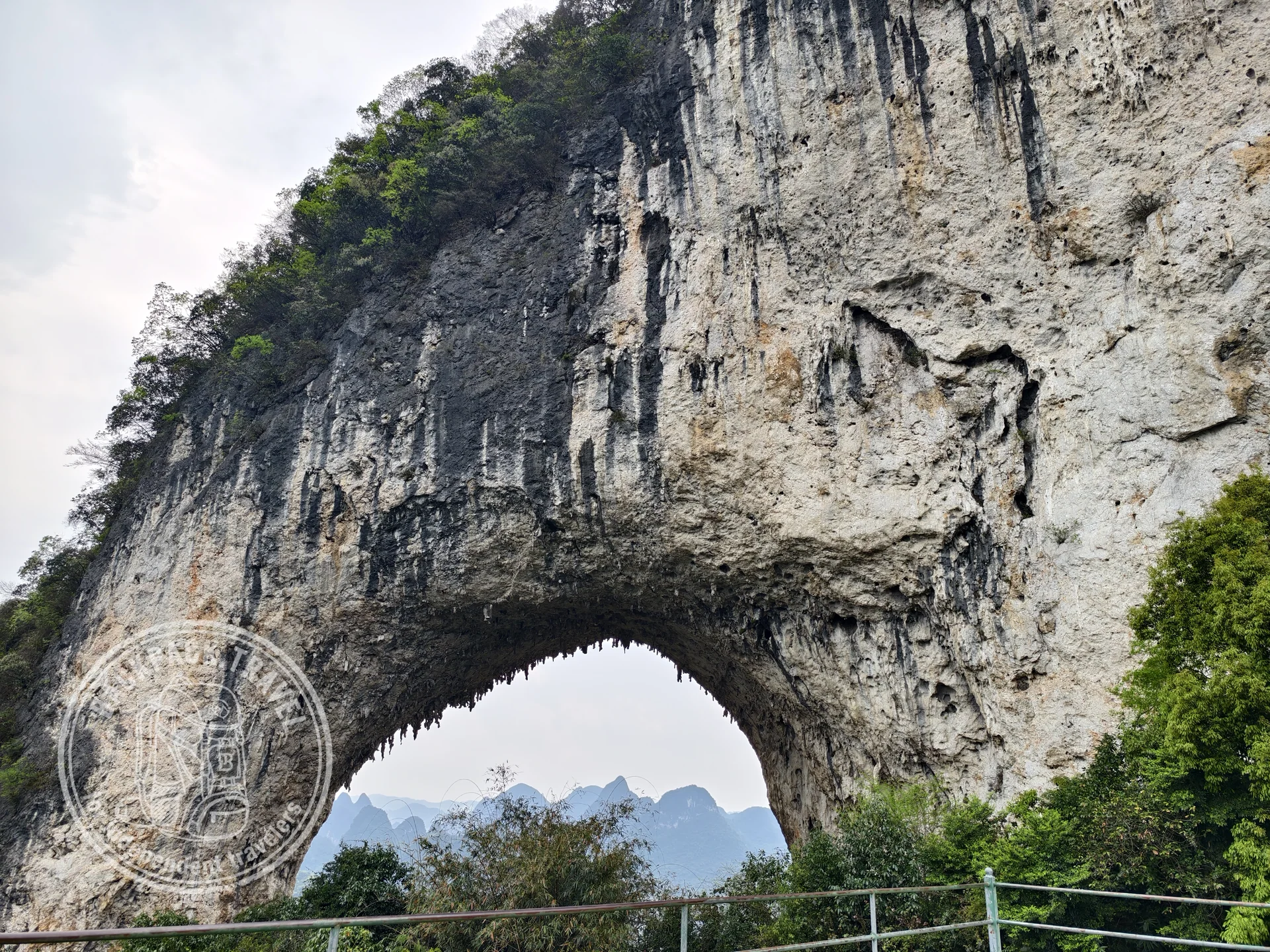
- Moon Hill (Yueliang) is a hill with an arch pierced right through it, about 9 km from the centre, half an hour by bicycle. A staircase leads to the top.
- Bicycles and scooters are the main local transport. There is a rental place on every corner, and a day spent riding along the fields gives you more than any guided tour.
- Rock climbing. Yangshuo is the largest climbing area in Asia: hundreds of bolted routes on limestone walls, along with schools and equipment hire.
A separate word about the cormorant fishermen: fishing with trained birds really was a trade here, but today it is staged. Elderly fishermen in conical hats go out on the water for photographers for a fee, usually at dawn or under lights after dark. It should not be taken for a living tradition.
How to get there
- From Guilin the bus takes about an hour and a half and is the simplest way.
- The high-speed train arrives at Yangshuo station, which is not in the town but next to Xingping, 25–30 km away. A bus runs from the station to the centre and takes about an hour. Bear this in mind: a 25-minute train from Guilin turns in practice into an hour and a half with the transfer.
- The nearest airport is in Guilin.
How much time to allow
In a single day you will manage only the boat trip and West Street, which is not enough. The optimum is two or three days: a cruise or a bamboo raft, a day on a bicycle around the villages, and a trip to Xingping, where the view on the 20 yuan note was taken from. A week or more is for those who have come to climb, or simply to live quietly beneath the karst hills.
What to combine it with
Yangshuo is either a day trip from Guilin or a continuation of it, and there is no other option: the airport, the stations and all the logistics are there. Guilin is also where people set out for the Longji rice terraces, several hours into the mountains and a full day of its own. From there it is easy to travel on to Guangzhou (about two and a half hours) or to Guiyang.
When to go
April to May and September to October are the times to come. Summer is hot and humid with heavy downpours, but the rivers are full and everything is green; winter is cool and damp, and fog often settles in. The holiday weeks at the beginning of May and of October are best avoided: the town overflows and the boats are booked out in advance.
Who will not take to it
Yangshuo is a resort town living off a stream of visitors, and it shows: West Street is noisy until late, souvenirs are sold along the waterfront, and all the "folk crafts" are aimed at the camera. The sights here are secondary, since the whole point lies in the landscape and in moving slowly through it. If you want museums and temples there is no reason to come, as there are practically none. The weather can ruin the trip entirely: in rain and fog the river loses its point, and there is no fallback plan to be found in town.