Description
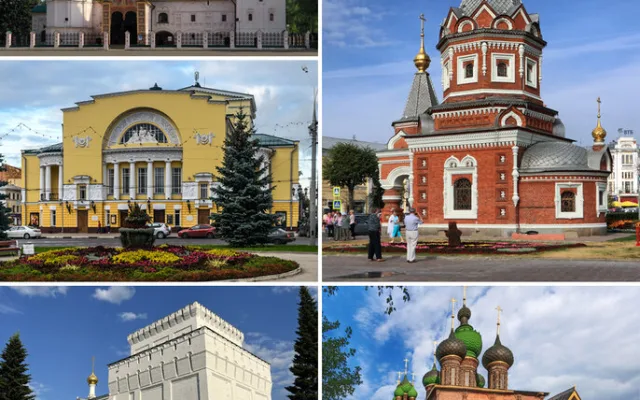
The largest city on the Golden Ring, with a historic centre inscribed on the UNESCO World Heritage List. It stands at the confluence of the Volga and the Kotorosl, and is rich in 17th-century churches and cultural events.
Wiki
Yaroslavl is the one city on the Golden Ring — the classic tourist circuit of medieval towns north-east of Moscow — where, once you have seen the ancient churches, there is a full urban life waiting: landscaped embankments, specialty coffee shops, craft beer bars, restaurants and a busy historic centre. Unlike intimate Suzdal or Plyos, Yaroslavl is a major regional capital with both merchant and industrial scale.
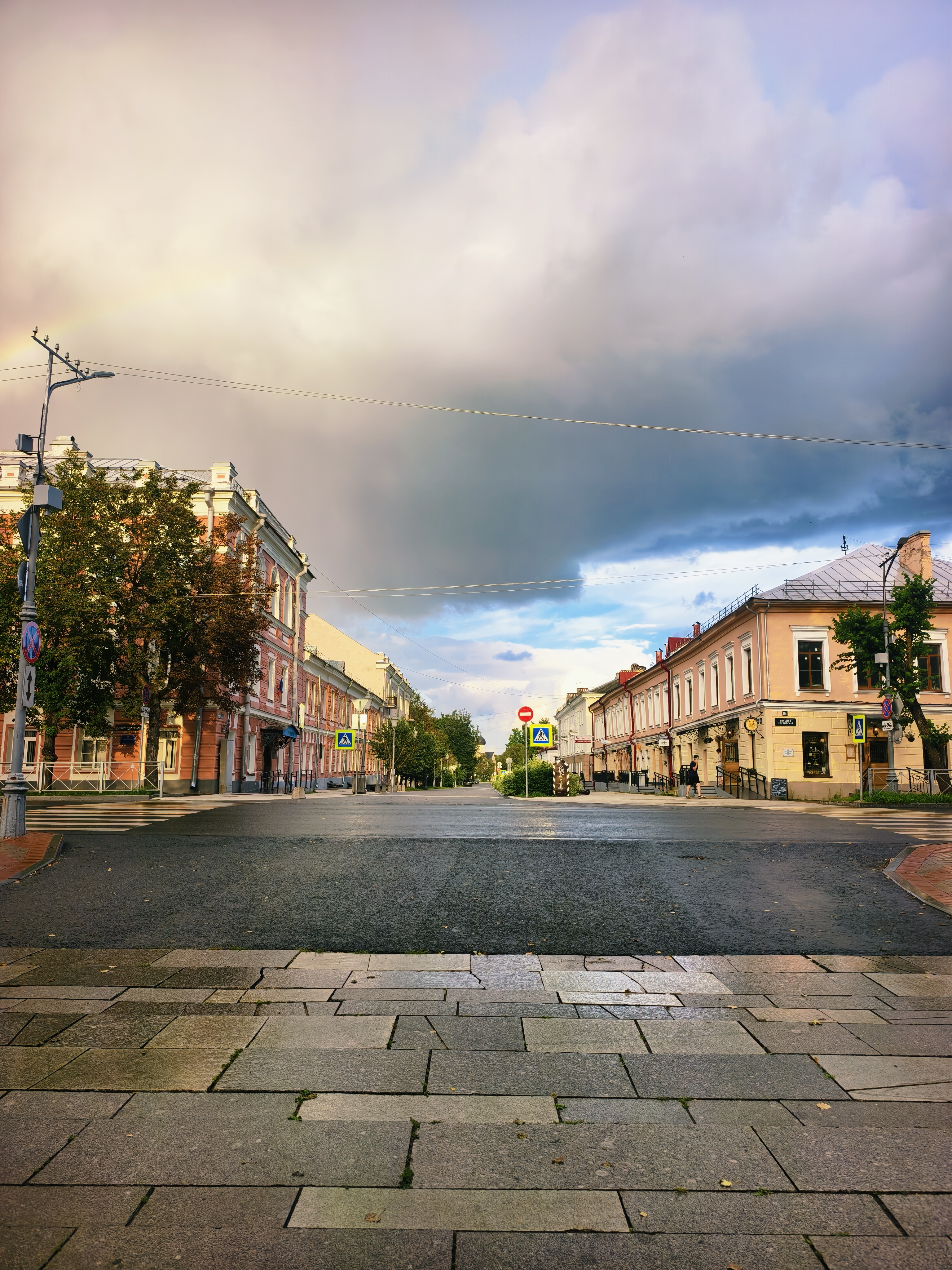
The historic centre, set in the bend where the Volga meets the Kotorosl, was added to the UNESCO World Heritage List in 2005. It was laid out to Catherine the Great's regular town plan of 1778 and is easily covered on foot without using public transport. All prices below are as of 2026, at roughly 82 rubles to the US dollar.
How many days to allow
Minimum: 1 day (an express tour of the key locations inside the boulevard semicircle and the Strelka).
Optimum: 2–3 full days.
Day 1: The Strelka, the Volga and Kotorosl embankments, the Church of Elijah the Prophet, the museum reserve (the Saviour Transfiguration Monastery), the pedestrianised Kirov Street and an evening on Nakhimson Street.
Day 2: The churches beyond the Kotorosl (Zavolzhye and Tolchkovo), the Korovniki district, the Governor's Garden and the Art Museum, Damansky Island, an evening at the theatre.
Day 3: A trip to the Tolga Monastery by river bus, or an excursion to a neighbouring town (Rostov Veliky or Tutaev).
Getting there
From Moscow
Train (the recommended option):
- Daytime express services (nos. 102/104/106): departing from Yaroslavsky station. Journey time 2 hr 55 min to 3 hr 20 min. A seat costs from 900 to 1,600 rubles (about $11–20).
- The Lastochka fast regional train and long-distance services passing through: up to 10–12 times a day.
Bus: departing from the Shchyolkovsky (Central) and Severnye Vorota (Khovrino metro) bus terminals. Journey time 4 to 5.5 hours (depending on traffic leaving Moscow and roadworks on the M-8). Tickets from 800 to 1,200 rubles (about $10–15).
Car: along the M-8 "Kholmogory" highway (270 km). At weekends, getting out of Moscow in the morning takes 4.5–5.5 hours.
From St Petersburg
Train: the daily overnight service no. 045A / 607A. Departing from Moskovsky station, journey time 11.5–12 hours. Platskart (an open-plan carriage of bunks, the cheapest sleeper class) from 2,100 rubles (about $26); kupe (a closed four-berth compartment) from 3,500 rubles (about $43).
Plane: direct flights from Pulkovo to Tunoshna Airport (IAR), 3–4 times a week. Flight time 1 hr 20 min. Tickets from 3,200 rubles (about $39). From Tunoshna to the Yaroslavl bus station there is the suburban bus no. 183A (100 rubles, about $1.20, 40 min) or a taxi (800–1,200 rubles, $10–15).
Orientation and transport
The historic centre of Yaroslavl is bounded by the Volga and Kotorosl embankments, and on the west by Pervomayskaya Street (the boulevard semicircle).
On foot: all the main sights in the centre lie within a radius of 2.5 km.
Public transport: buses and trolleybuses. A fare paid by bank card or a local transport card costs 34 rubles (about $0.40), in cash 38 rubles. The main transport hubs are Bogoyavlenskaya Square and Volkov Square.
Taxi: Yandex Go and similar apps. A ride across the centre costs 150–250 rubles (about $2–3); from the centre to Korovniki or the Church of St John the Baptist, 250–350 rubles ($3–4).
River transport: a river bus (a "Moskva"-class boat) runs from the Tveritskaya embankment and the river terminal to the Tolga Monastery. The fare is 50 rubles (about $0.60) and the trip takes about an hour.
What to see
The Strelka and the Dormition Cathedral
- Address: the park area at the junction of the Volga and the Kotorosl.
- Price: entry to the park is free; the Dormition Cathedral is free to enter.
- Hours: the cathedral is open daily 08:00–19:00, the park around the clock.
The Strelka (the "spit") is the place where the city was founded by Prince Yaroslav the Wise in 1010. The lower tier of the park was rebuilt for the city's millennium (2010): here stand a complex of musical fountains, the monument to the millennium of Yaroslavl and a commemorative column.
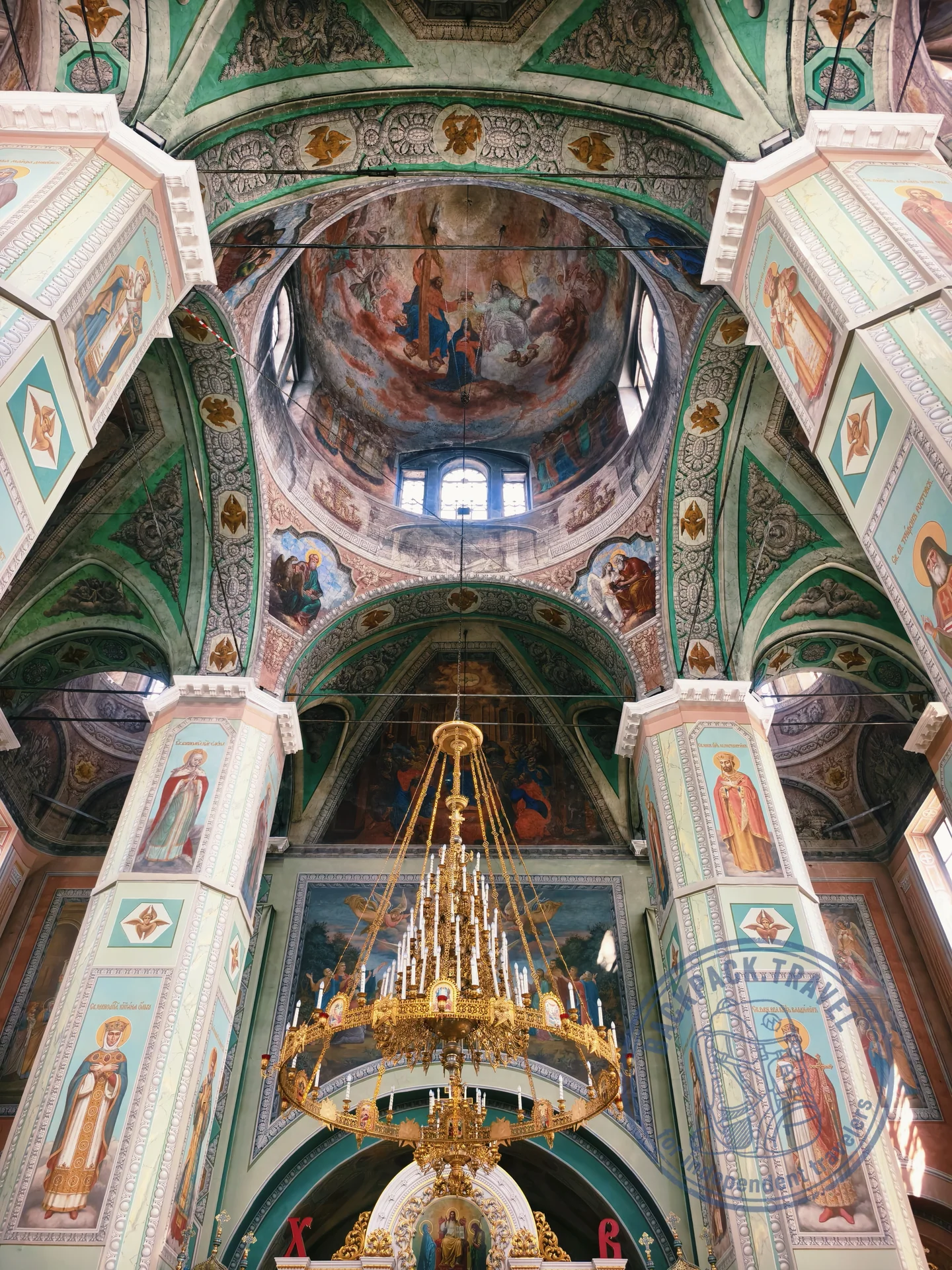
On the upper tier rises the Dormition Cathedral, a large modern reconstruction consecrated in 2010 on the site of the historic church of 1215, which was blown up in 1937. Inside are an immense five-tier iconostasis and the relics of the sainted princes Vasily and Konstantin of Yaroslavl.
The Volga and Kotorosl embankments
- Orientation: north from the Strelka along the Volga, and west along the Kotorosl.
The two-level Volga embankment is one of the most beautiful promenades on the river.
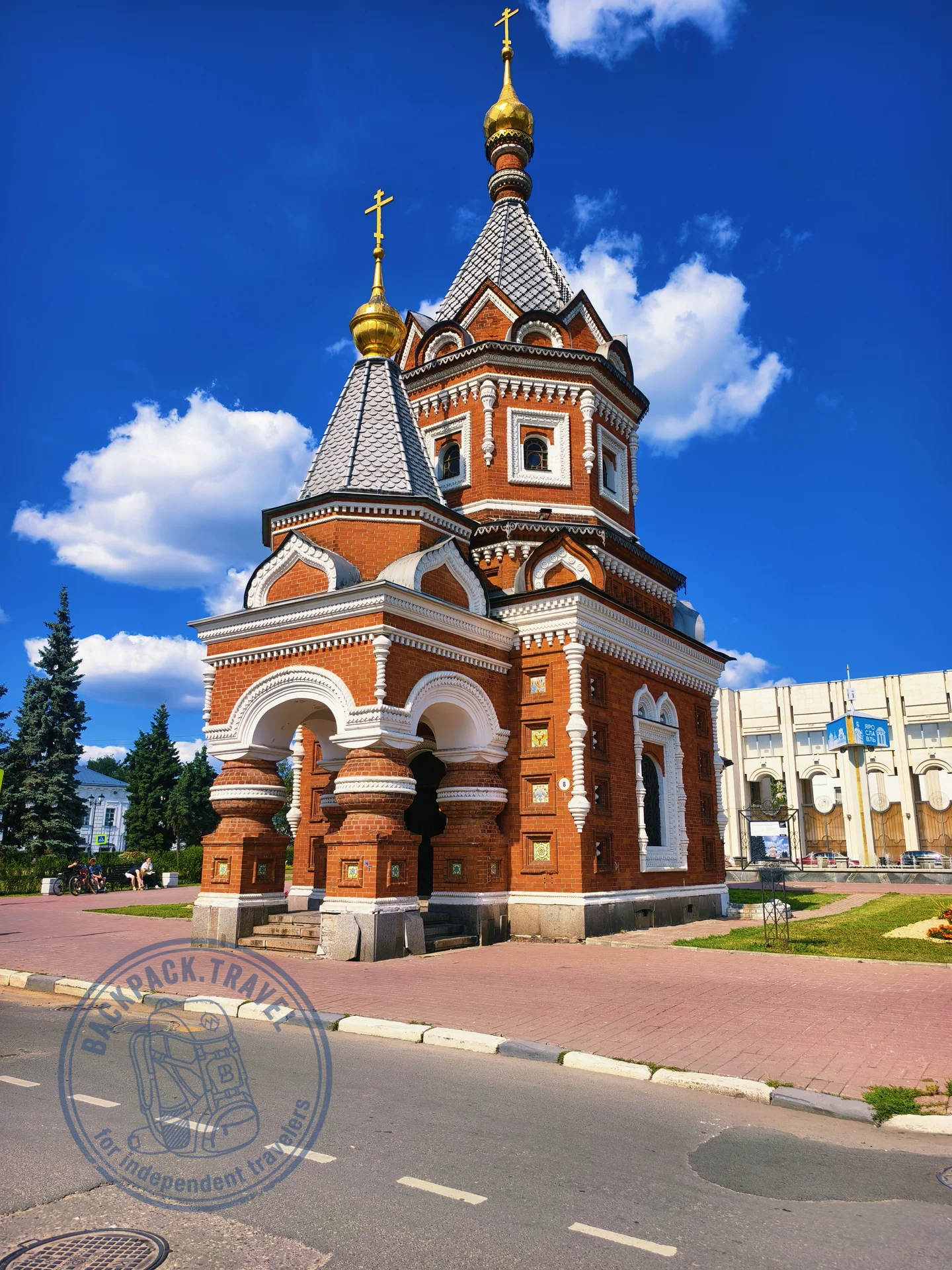
- The rotunda pavilion (1840): at the Myakushkinsky descent — the city's principal photographic symbol.
- The river terminal: a monument of Soviet modernism.
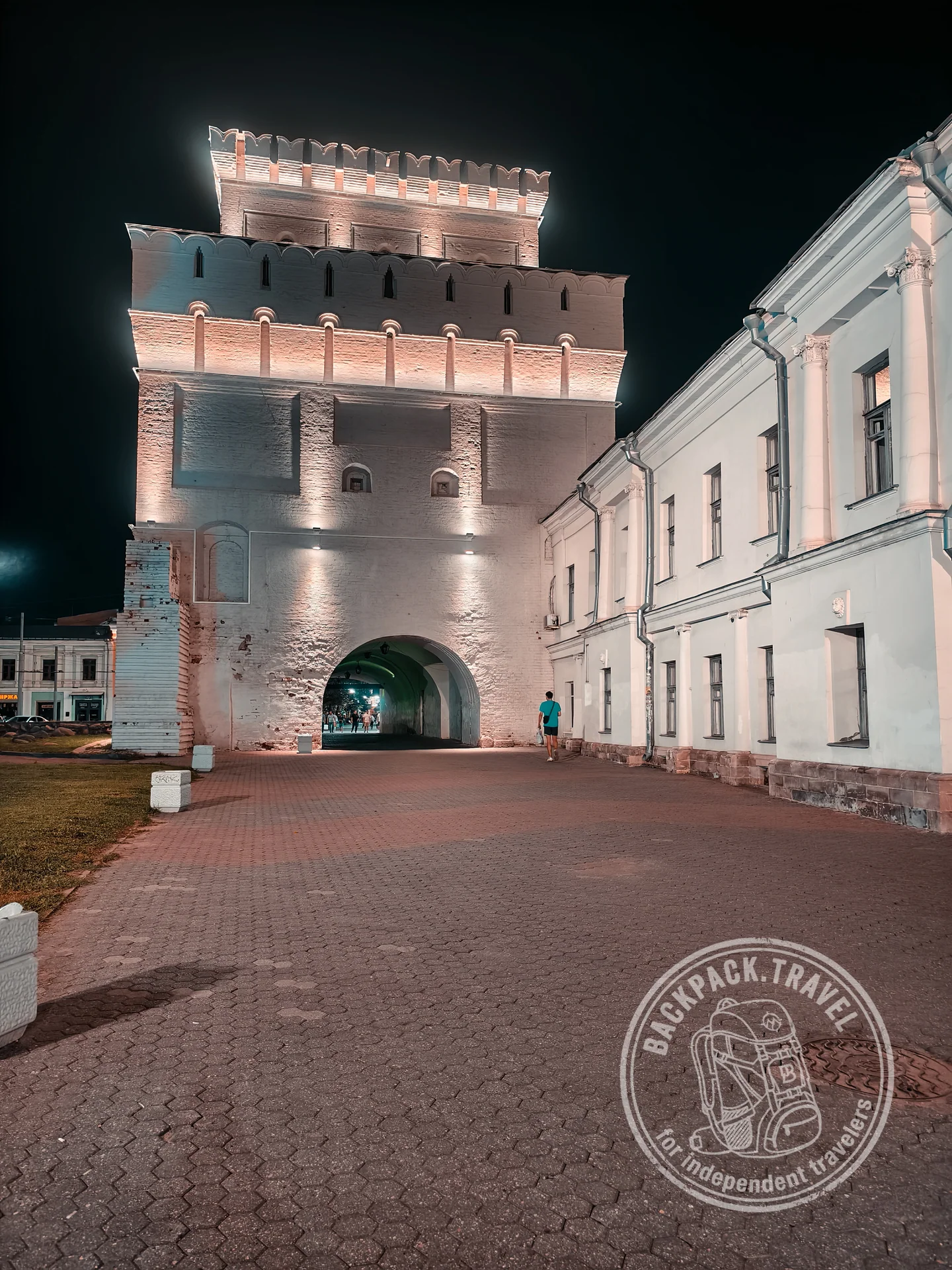
- The Volga (Arsenal) Tower (1660s): one of the two surviving towers of the stone fortifications of the Zemlyanoy Gorod, the "Earthen Town" (2a Volzhskaya Naberezhnaya).
The Church of Elijah the Prophet
- Address: 7 Sovetskaya Square.
- Hours: May–October, daily 08:30–20:00 (in rain the frescoes are covered for conservation).
- Price: entry 250 rubles (about $3), concessions 150 rubles ($2).
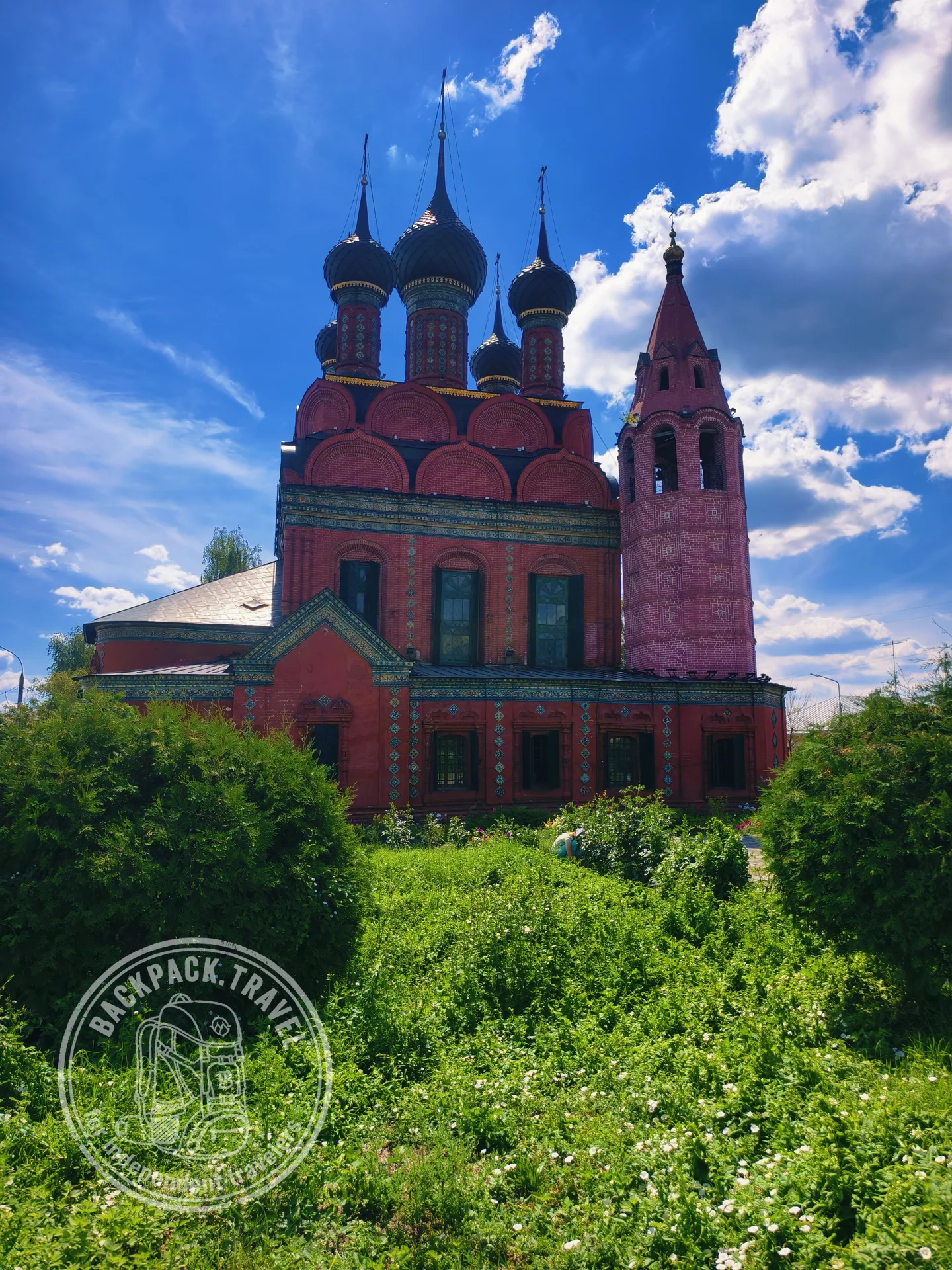
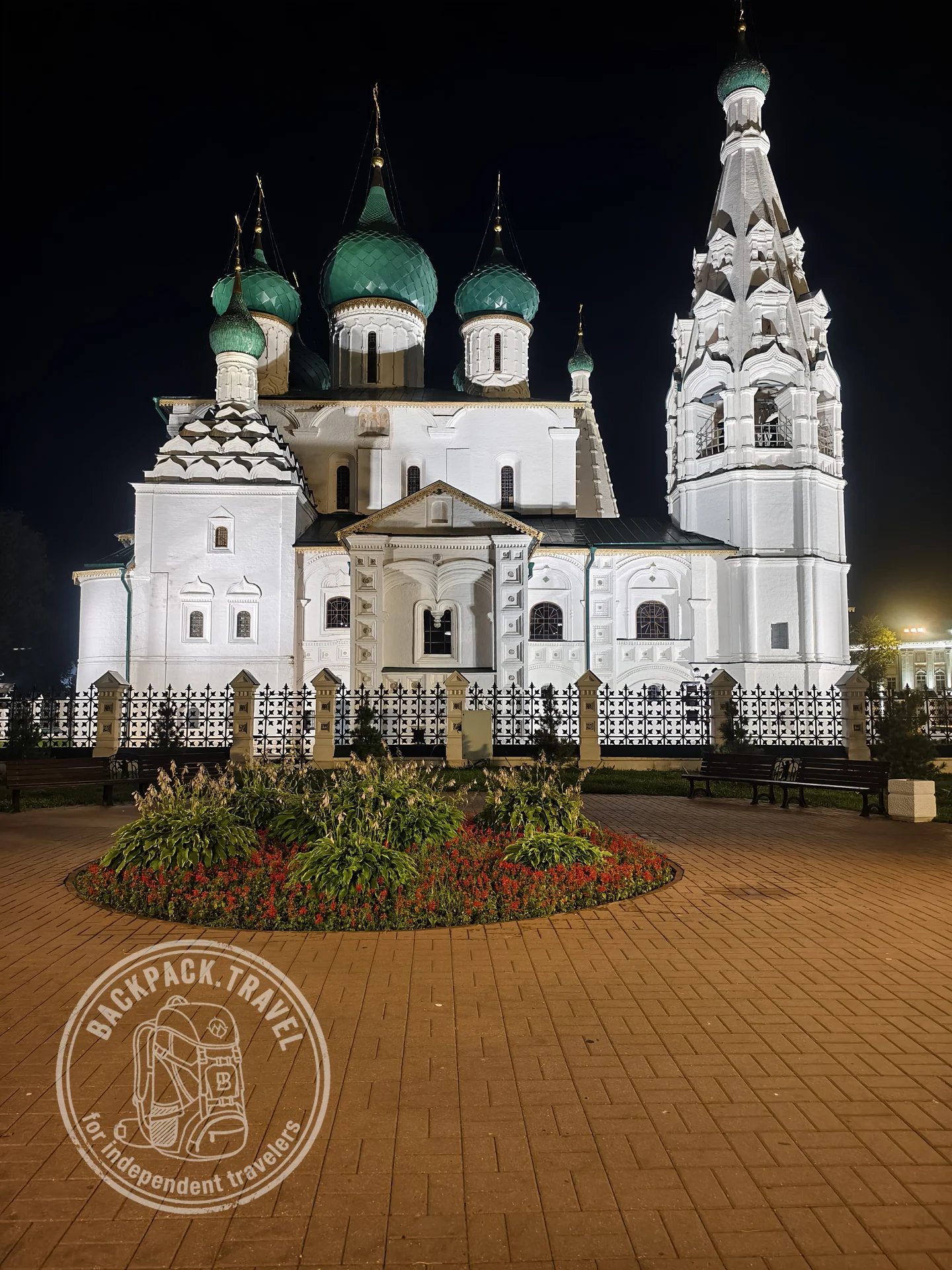
The chief architectural masterpiece of the 17th-century Yaroslavl school of building. It was constructed in 1647–1650 at the expense of the Skripin merchant family. Inside, the unique wall paintings of 1680–1681 survive complete, the work of a team of Kostroma and Yaroslavl masters led by Guriy Nikitin and Sila Savin. The 17th-century iconostasis retains its carved detail and original icons.
The Korovniki district (an ensemble of 17th-century churches)
- Address: 2 Portovaya Street.
- Getting there: buses nos. 4, 4A, 79 to the "Portovaya" stop, or a taxi from the centre (10 min, about 250 rubles or $3).
- Price: viewing from outside is free.
One of the most impressive and least tourist-worn ensembles in Yaroslavl, on the right bank of the Volga. It comprises:
- The Church of St John Chrysostom (1649–1654): with a magnificent glazed-tile surround to the central altar window (the tiled frame is 5 metres wide).
- The Church of the Vladimir Icon of the Mother of God (1669): the ensemble's heated winter church.
- The "Yaroslavl Candle" bell tower (1680s): an octagonal tented tower 37 metres high, one of the most slender in Russia, standing free exactly between the two churches of the ensemble.
The Church of St John the Baptist at Tolchkovo
- Address: 8 2nd Osvobozhdeniya Street.
- Getting there: bus no. 7 or 65 to the "Mukomolny Zavod" or "Zavod Luch" stop, then 10 minutes on foot. A taxi from the centre costs 250 rubles (about $3).
- Hours: May–October, Wed–Sun 10:00–17:00. Closed in rain and damp weather.
- Price: 200 rubles (about $2.50).
The only fifteen-domed church in Russia, and the building depicted on the reverse of the 1,000-ruble banknote. It is the summit of 17th-century Yaroslavl architecture (built 1671–1687). Outside, the walls are laid in shaped brick and glazed tiles. Inside are more than 500 narrative wall paintings executed by the workshop of Dmitry Plekhanov. A separate 45-metre baroque bell tower stands within the perimeter.
The park of culture and leisure on Damansky Island
- Address: an island in the Kotorosl (entry by the Damansky footbridge from Podzelenye).
- Hours: daily 10:00–22:00.
- Price: entry to the island is free; the rides cost from 150 to 350 rubles (about $2–4).
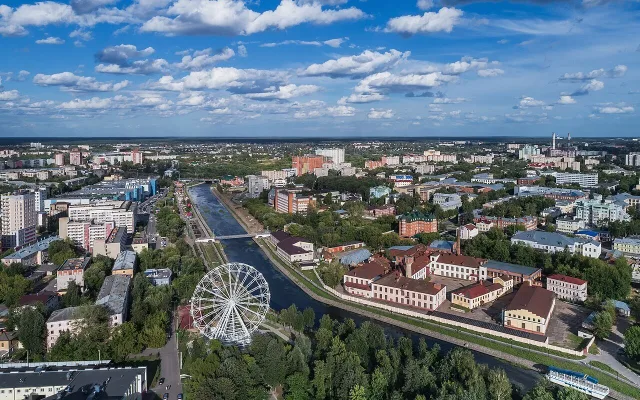
The city's main island park. It is joined to the Kotorosl embankment by a bridge hung with newlyweds' padlocks. There is a Ferris wheel with views over the Strelka and the Kotorosl, fairground rides, bicycle and scooter hire, a ropes course and green avenues for picnics.
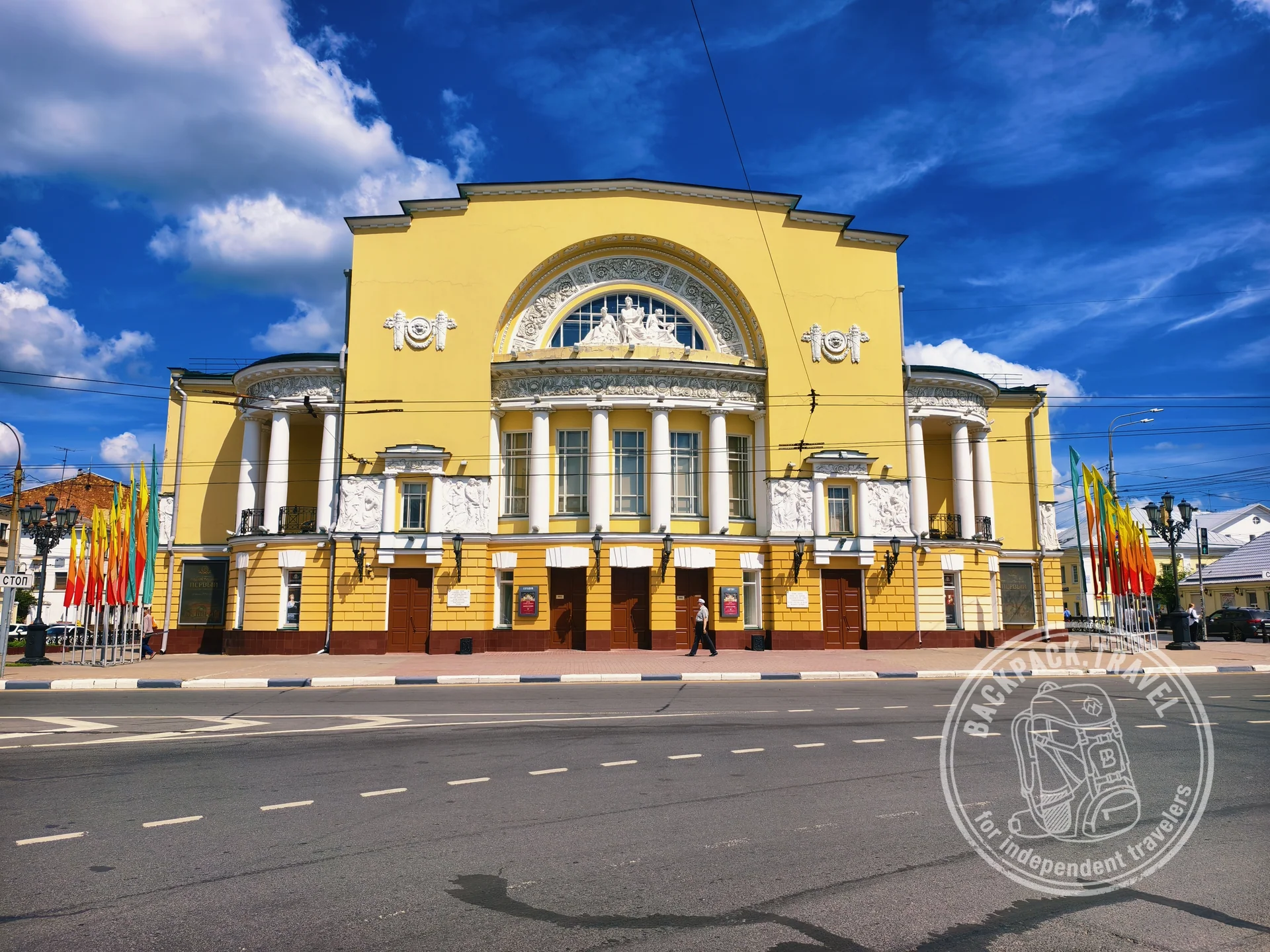
The Fyodor Volkov Russian Academic Drama Theatre
- Address: 1 Volkov Square.
- Price: tickets from 400 to 2,500 rubles (about $5–31; book 2–4 weeks ahead).
The first professional Russian public theatre, founded by Fyodor Volkov in 1750. The present neoclassical building dates from 1911. The repertoire combines Russian classics with contemporary drama.
The Tolga Convent of the Presentation
- Address: 1 Tolga settlement.
- Getting there: river bus from the river terminal (May–September, 50 rubles or about $0.60, 1 hour) or bus no. 34 from Krasnaya Square.
- Hours: 06:00–20:00. Entry free.
A working convent founded in 1314. It is known for the miracle-working Tolga Icon of the Mother of God, a 16th-century cedar grove (open to visitors on the feast of the Tolga Icon, 21 August), and picturesque landscaped grounds with a pond and black swans.
Museums
1. The Yaroslavl Museum Reserve (the Saviour Transfiguration Monastery)
- Address: 25 Bogoyavlenskaya Square.
- Hours: grounds daily 08:00–20:00; displays Tue–Sun 10:00–18:00 (closed Monday).
- Price: a combined ticket for the grounds and exhibitions costs 600 rubles (about $7); climbing the belfry 300 rubles ($4); a separate ticket to the Transfiguration Cathedral 250 rubles ($3).
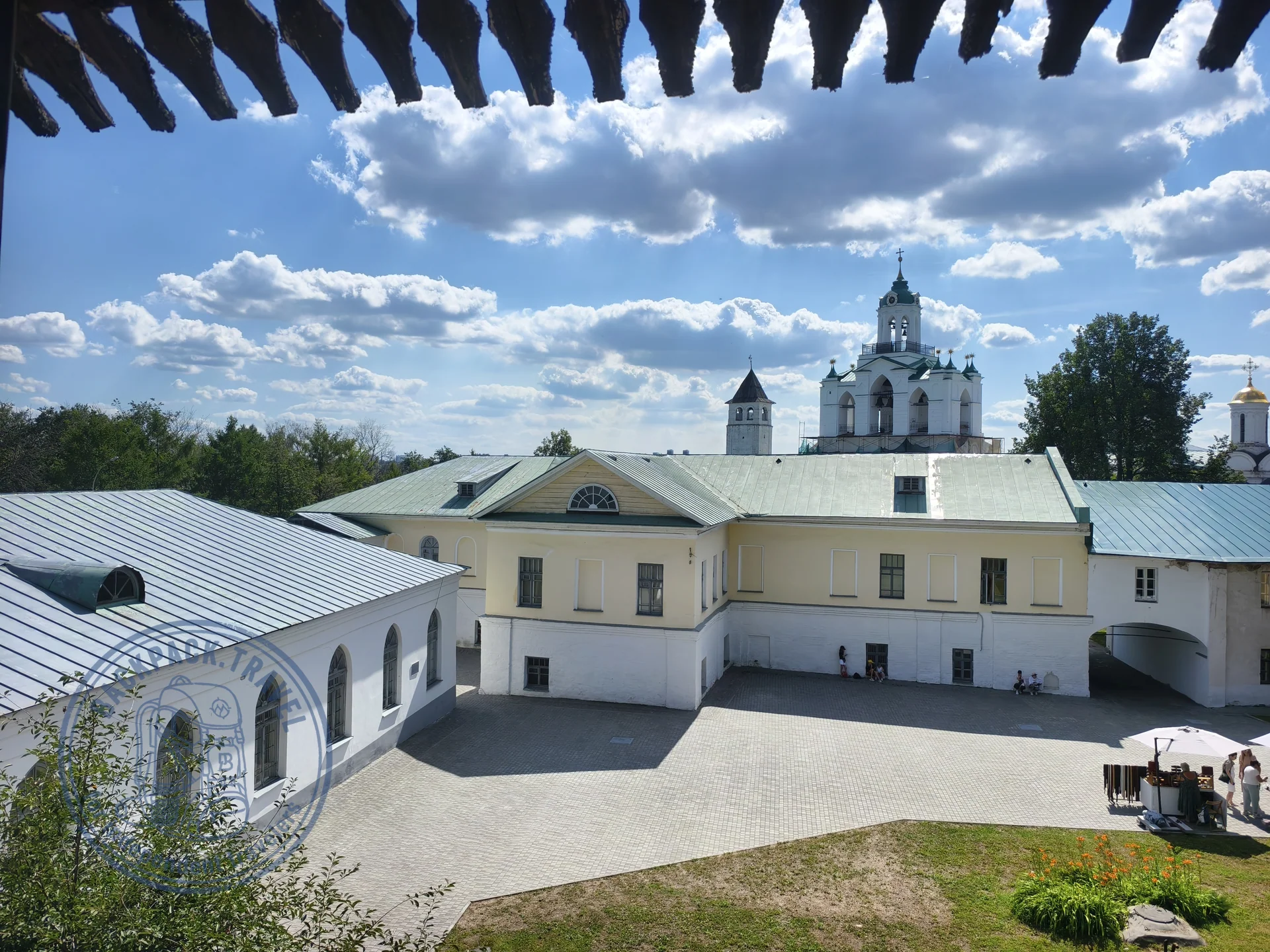
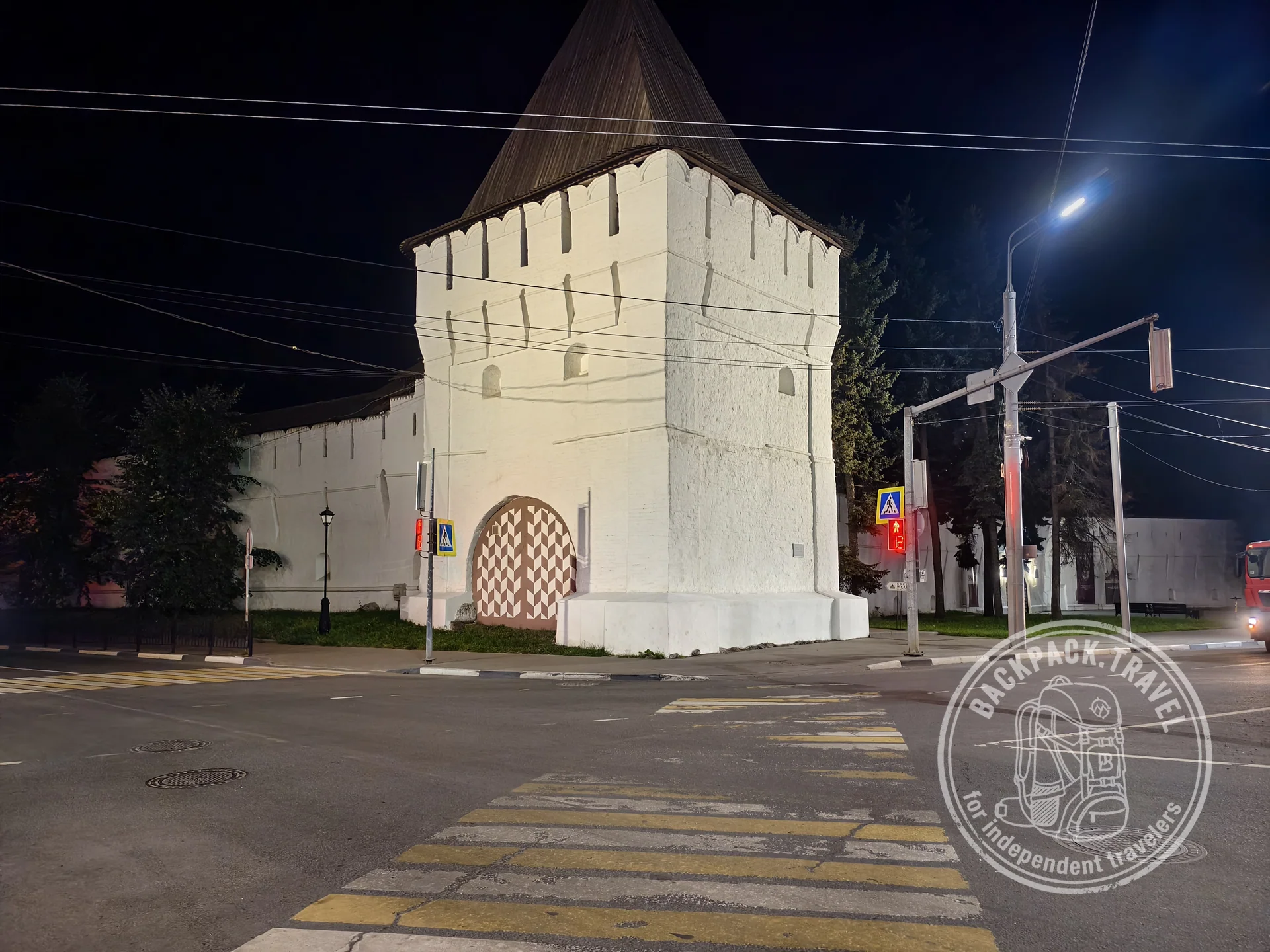
It is often wrongly called the "Yaroslavl Kremlin". Founded in the 12th century, it was the richest of the fortified monasteries. It was here, at the end of the 18th century, that the only surviving manuscript copy of The Tale of Igor's Campaign, the great epic poem of medieval Rus, was found.
- The Transfiguration Cathedral (1516): the oldest surviving building in Yaroslavl, with frescoes from the reign of Ivan the Terrible (1563–1564).
- The viewing platform on the belfry: the best panorama of the historic centre and the Kotorosl (height 32 m).
- The enclosure of Masha the bear: the living emblem of Yaroslavl, in the museum's care since 1988 (she comes out to visitors in spring and summer). The bear is the city's heraldic animal.
2. The Yaroslavl Art Museum and the Governor's Garden
- Address: 23 Volzhskaya Naberezhnaya.
- Hours: Tue–Sun 10:00–18:00, closed Monday.
- Price: the "Russian Avant-Garde" and "Merchant Portrait" displays cost 300 rubles (about $4); entry to the Governor's Garden 150 rubles ($2).
The largest regional art museum in Russia, housed in the former governors' residence (1820s).
The collection: Yaroslavl icon painting of the 16th–17th centuries, merchant portraiture of the 18th–19th centuries, works by Ivan Aivazovsky, Alexei Savrasov, Ivan Shishkin and Konstantin Korovin, and a collection of Russian avant-garde art.
The Governor's Garden: a park with sculptures, a fountain and a summer concert programme.
3. The "Music and Time" Museum (the private museum of John Mostoslavsky)
- Address: 33b Volzhskaya Naberezhnaya.
- Hours: daily 10:00–19:00.
- Price: adults 400 rubles (about $5), schoolchildren and pensioners 300 rubles ($4). A guided tour is included.
The first private museum in post-Soviet Russia, opened in 1993 by the conjuror and collector John Mostoslavsky. The display includes working antique clocks, gramophones, record players, music boxes, barrel organs, bells, flat irons and porcelain. Every exhibit is in working order — during the tour the guides wind up the music boxes and play the records.
4. The "Golden Ring Show Model" Museum
- Address: 2/23 Sovetsky Lane.
- Hours: daily 10:00–20:00.
- Price: adults 780 rubles (about $10), children (under 13) 490 rubles ($6).
A large interactive scale model (1:87) bringing together all the towns of the Golden Ring. Details include moving trains and cars, day alternating with night (every 10 minutes), thousands of miniature inhabitants staged in individual scenes, and interactive buttons.
5. The V. Yu. Orlov Museum
- Address: 15 Volzhskaya Naberezhnaya.
- Hours: Wed–Mon 10:00–19:00, closed Tuesday.
- Price: adults 300 rubles (about $4).
A private museum in an 18th-century merchant mansion. The display covers porcelain from the private Popov, Gardner and Kuznetsov factories, along with collections of decorative cast iron (from Kasli and Kusa) and of silver.
Where to stay
The ideal location to stay is inside the boulevard semicircle (Pervomayskaya Street), between the Volga embankment, Kirov Street and Bogoyavlenskaya Square.
Budget (hostels and apartments):
- Gutentag Hostel (Deputatskaya Street) — a bed from 800 rubles (about $10), a double from 2,200 rubles ($27). Central, with a clean kitchen.
- Apartments by the Strelka or on Kirov Street — from 2,000 to 3,500 rubles ($24–43) a night.
Mid-range (3–4-star hotels):
- Kupechesky Dom Hotel (Maksimova Street) — from 3,800 rubles (about $46) a night.
- Ioann Vasilievich Hotel (34 Revolyutsionnaya Street) — from 4,500 rubles (about $55) a night. Themed rooms styled after Soviet films.
- Paradnaya Hotel (Volkov Square) — from 4,000 rubles (about $49) a night.
Premium / boutique:
- Music and Time Boutique Hotel (Volzhskaya Naberezhnaya) — from 7,000 rubles (about $86) a night.
- Ring Hotel 4(Svobody Street) — from 6,500 rubles (about $79) a night, with a spa complex and pool.
Food and drink
Yaroslavl is the gastronomic centre of the Golden Ring. On local restaurant menus, look out for Volga fish (pike-perch, pike, catfish, sterlet), Volga ukha (a clear fish soup), Yaroslavl cheeses and Volga rasstegai (open-topped pies with a fish filling).
Atmospheric and themed restaurants
Ioann Vasilievich (34 Revolyutsionnaya Street)
A restaurant themed on the cult 1973 Soviet comedy Ivan Vasilievich Changes Profession (which was filmed in the kremlin at nearby Rostov). The rooms are decorated as the apartments of the film's characters and as tsar's chambers. What to try: "twirled hare kidneys" (a dish name taken from the film), aubergine caviar, and Volga pike-perch. Average bill: 1,500–2,500 rubles (about $18–31).
Pelmennaya No. 1 (10/25 Kirov Street)
A styled dumpling house with a wide choice of pelmeni and vareniki (filled with soup, fish, game or berries). Average bill: 500–900 rubles (about $6–11).
Skazka. Eda i Vino (27 Svobody Street)
A modern Russian restaurant with a traditional Russian stove and a wine list. Average bill: 1,800–3,000 rubles (about $22–37).
Market and food halls
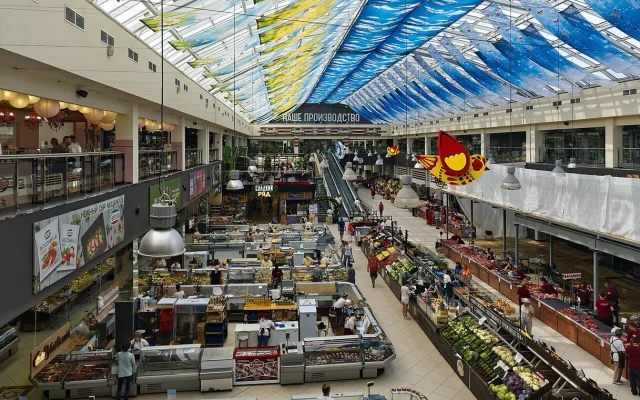
The food market on Deputatskaya Street (15/43 Deputatskaya Street)
A modern gastronomic quarter and farmers' market in the city centre. Counters serving Asian, European and local Volga food, artisan cheeses and smoked Volga fish (pike-perch, bream, sterlet).
Canteens (quick and cheap)
- The Bazar chain (5 Komsomolskaya Street / 19 Svobody Street) — a canteen with a concept. Average bill: 300–500 rubles (about $4–6).
- Stolovaya No. 1 / Tarelka (in the centre) — average bill: 250–400 rubles (about $3–5).
Coffee shops and craft bars
- Utrenny Kofe / Kofe i Vafli (Kirov Street / Nakhimson Street) — specialty coffee and all-day breakfasts.
- Hophead Craft Beer Pub (18 Nakhimson Street) — a selection of local and imported craft beer, and infused spirits.
Festivals and events
Yaroslavl City Day — the last Saturday in May. Costumed processions, a crafts fair on the Strelka and the Volga embankment, concerts on Sovetskaya Square, an air show and evening fireworks over the Volga.
The Transfiguration Festival — mid-August (timed to the feast of the Transfiguration). The leading international festival of bell-ringing art and music. The best bell-ringers in Russia perform on the belfry of the Saviour Transfiguration Monastery, with concerts of bell and symphonic music and night-time light shows.
Museum Night — the second-to-last Saturday in May. The museum reserve, the Art Museum and the private museums stay open until midnight, with special tours of the belfry and theatrical performances.
Feast on the Volga — mid-August. The largest food festival in the Volga region, held on the Strelka. Dozens of cookery masterclasses and a food court staffed by the region's best restaurants.
Day trips from Yaroslavl
Yaroslavl is an ideal base for excursions to the ancient towns of the Volga region.
1. Rostov Veliky (58 km / 1 hour)
- Getting there: suburban train from Yaroslavl-Glavny (40–50 min, 180–300 rubles or about $2–4) or bus (1 hour, 200 rubles, $2.50).
- What to see: the Rostov Kremlin (the filming location for Ivan Vasilievich Changes Profession), the Rostov bell chimes on the cathedral belfry, Lake Nero, the Spaso-Yakovlevsky Monastery.
2. Tutaev (38 km / 50 minutes)
- Getting there: bus no. 128/161 from the bus station (50 min, 130 rubles, about $1.60).
- The peculiarity: a town on two banks of the Volga with no bridge. In summer there is a ferry crossing (50–100 rubles, about $1).
- What to see: the Resurrection Cathedral with its giant icon of the All-Merciful Saviour (3 metres), and the Romanov side with its 19th-century wooden Russia.
3. Kostroma (83 km / 1.5 hours)
- Getting there: the bus is quickest (1.5 hours, 300–350 rubles, about $4); suburban trains take longer and involve a change.
- What to see: the Ipatiev Monastery (the "cradle of the Romanovs"), the trading rows of the 18th–19th centuries, the Cheese Museum.
4. Myshkin (100 km / 2 hours)
- Getting there: bus (2–2.5 hours, 350–400 rubles, about $4–5).
- What to see: the Mouse Museum (the town's name comes from the Russian word for mouse), the Museum of Unique Machinery, and masterclasses in blacksmithing and pottery.
When to go
May – September: the best time. The river navigation season is open and the summer terraces are working. City Day falls at the end of May, and the Transfiguration Festival and Feast on the Volga in August.
Golden autumn (late September – mid-October): ideal for photography. Panoramas from the belfry framed by yellow and red foliage.
Winter (December – February): the snow-covered churches are photogenic, but there are frosts down to −20 °C and wind off the Volga. An ice rink is laid on Sovetskaya Square.
Safety and practical advice
- Safety: the city is calm, and the centre is well lit and patrolled, including late in the evening.
- Dress for churches: women need headscarves and skirts, men trousers rather than shorts.
- Frescoes: the Church of Elijah the Prophet and the Church of St John the Baptist are only open in dry weather (May–October). In rain they close to protect the wall paintings.
- Booking: reserve tickets for the Volkov Theatre, and tables at Ioann Vasilievich or Skazka for the weekend, 1–2 weeks ahead.