 Города и дороги
Description
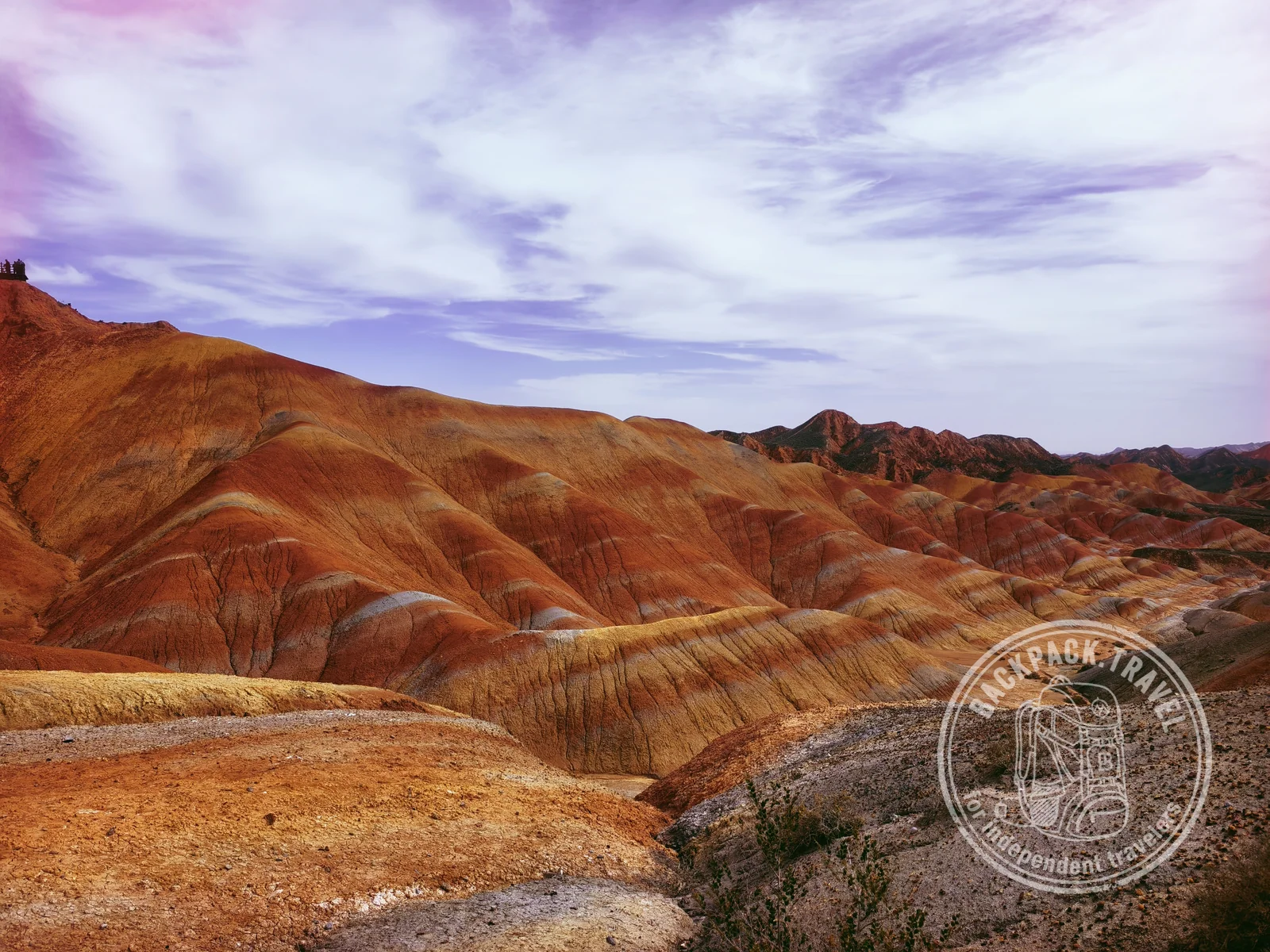
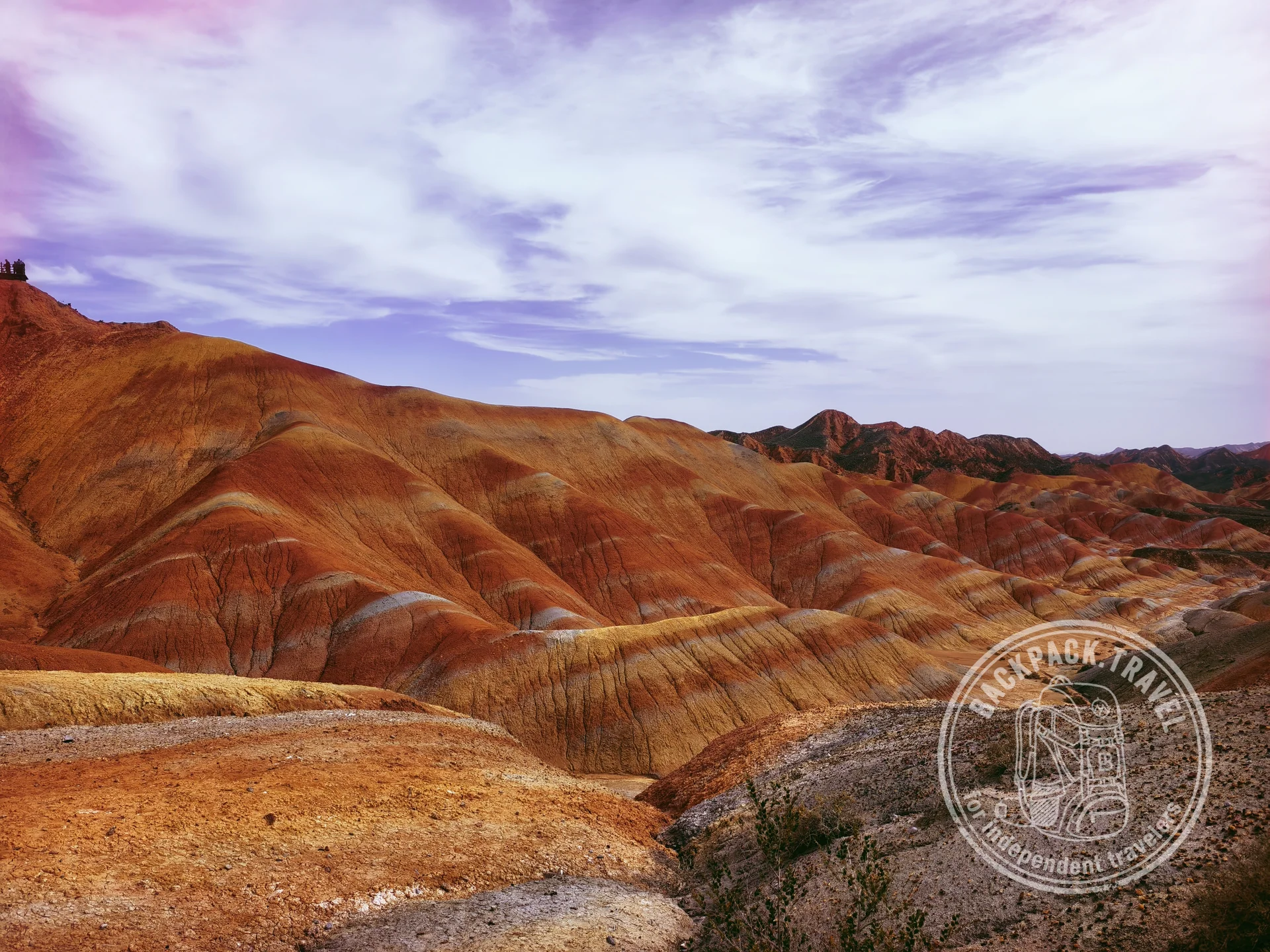
A city in Gansu beside the Danxia Rainbow Mountains, layered hills of red, yellow and white sandstone. In the city itself stands the largest reclining Buddha in China, in Dafo Temple.
Wiki
Zhangye is a city in the middle of the Hexi Corridor, between the desert and the snowy Qilian range. The Zhangye commandery was established under the Western Han in 111 BC, and from then on it was one of the anchor points on the road from China into the Western Regions; Marco Polo, by his own account, spent about a year here. Today people come to the city for two things: the coloured Danxia hills half an hour's drive away, and the enormous reclining Buddha in the centre.
What to see
- The Danxia Rainbow Mountains are layered hills of red, ochre, yellow and white sandstone about 30 km west of the centre, on the lands of Linze and Sunan counties. The geopark covers around 510 square kilometres, and the section that is open has four viewing platforms, with compulsory shuttle buses running between them. You do not walk around the site on foot: the distances are long and the slopes are closed to climbing.
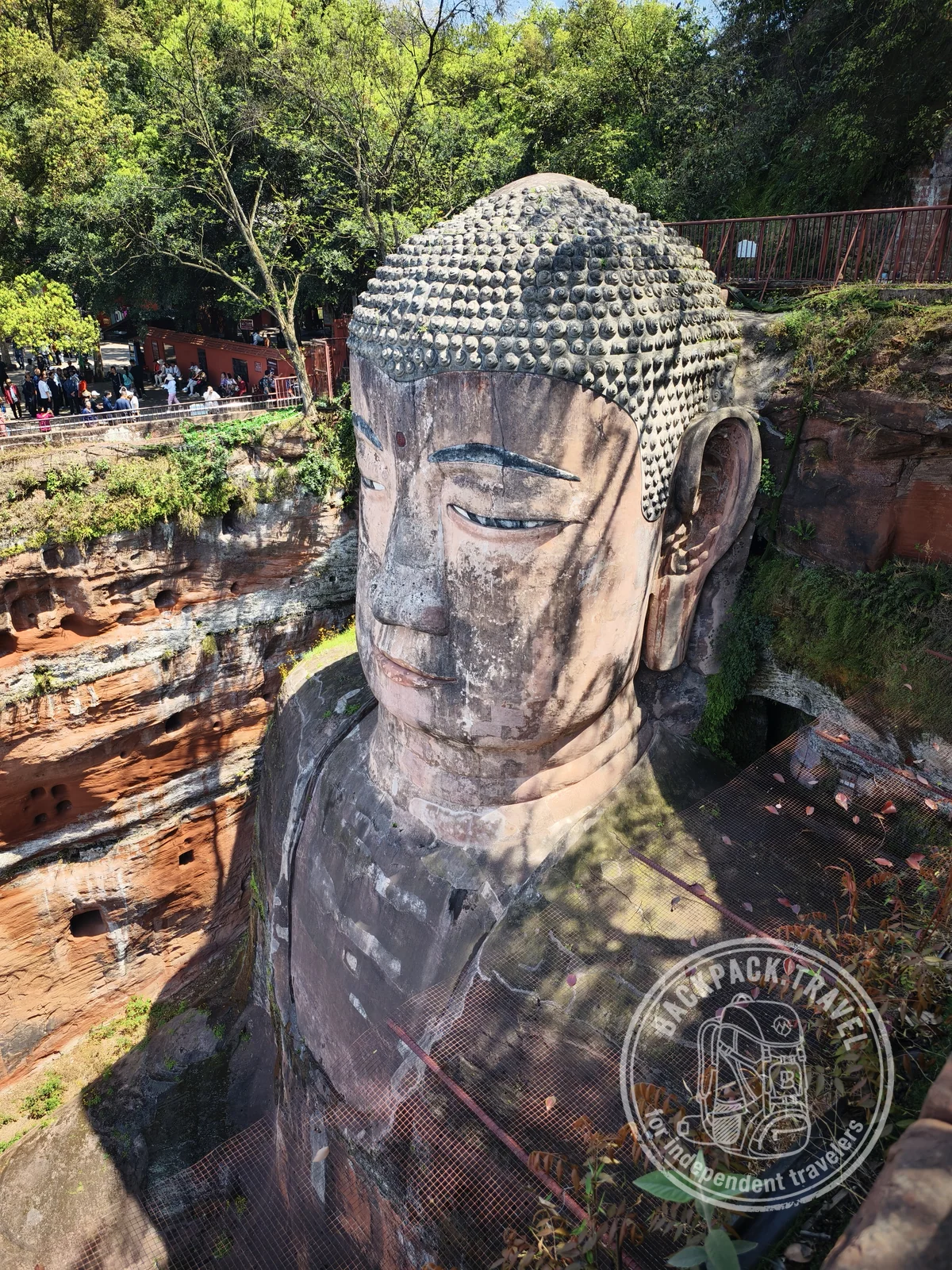
- Dafo Temple is a monastery founded around 1098 under the Western Xia state. In the main hall lies a figure of the Buddha entering nirvana, made of clay on a wooden frame and about 35 metres long, the largest statue of its type in China. The hall itself is impressive: some 48 metres long and 33 metres high, it is one of the few surviving wooden buildings of the Western Xia. The monument has been under state protection since 1996 and underwent a major restoration in 2005-2006. Tradition has it that Kublai Khan was born here, though there is no confirmation of that.
- The Wooden Pagoda is a multi-tiered tower in the old centre, a couple of blocks from Dafo Temple, and a quarter of an hour is enough to look it over.
- Mati Si is a Buddhist cave monastery in the foothills of the Qilian Mountains south of the city, with cells and halls cut into a rock face. It is a separate half-day excursion, but it comes with mountains and a different landscape.
When to see Danxia
The colour of the hills depends on the light, and that is the main thing to plan around.
- The best time is the hour or hour and a half before sunset, and the first hour or hour and a half after sunrise. At midday, with the sun high, the colour washes out and photographs come out pale.
- After rain the rock darkens and the contrast grows stronger, so if you run into bad weather, do not cancel the trip but move it to the next morning.
- The shuttles run from early morning until evening, and a ticket usually allows two entries. The conditions change, so check at the ticket office.
- Take a windbreaker: the platforms are exposed to the wind, and in the evening it is noticeably colder there than in the city.
How much time to allow
If you are passing through between trains, half a day will go on Dafo Temple and the centre. The working minimum is a full day: the temple in the morning and Danxia towards evening, when the colour of the hills shows most strongly. A second day is worth allowing as a reserve against bad weather and for the trip out to Mati Si.
Zhangye does not need more than two days: the city is entirely ordinary and there is nowhere in it to walk.
Getting there
Zhangye sits on the Lanzhou-Xinjiang high-speed line: Zhangye West station opened on 26 December 2014. Jiayuguan is about 212 km away, an hour or more by high-speed train, and Dunhuang around four and a half hours. In the other direction the line leads to Lanzhou and Xining, and westwards to Hami, Turpan and Urumqi. The logical chain on the route is Dunhuang, Jiayuguan, Zhangye. Public transport does run to the Danxia geopark, but with restrictions on the timetable; more often people take a car or a seat in a transfer so as not to depend on the last service after sunset.
When to go
The climate is dry and harsh: precipitation is around 133 mm a year, almost all of it falling between May and September. May to June and September to October are the best: moderate temperatures, clean air and the Qilian Mountains in view. Summer is hot and crowded, winter is cold and windy, and the short day makes it hard to catch the evening light on the hills.
Who won't enjoy it
Danxia is a place of a single impression: you arrive, walk round four platforms, take your photographs and leave. For anyone not keen on landscape photography an hour is more than enough, and in poor light the hills look like brown slopes — pictures on the internet are often pushed hard on saturation. You cannot walk the site on your own, as it all comes down to the shuttle and the boardwalks, and in season there are crowds. Zhangye itself is an unremarkable Chinese city without atmosphere, and there is nothing to do in the evening. It is worth coming if you are interested in geology and photography, or in Buddhist sculpture: the reclining Buddha in Dafo Temple remains something well worth a stop of its own.