Afghanistan
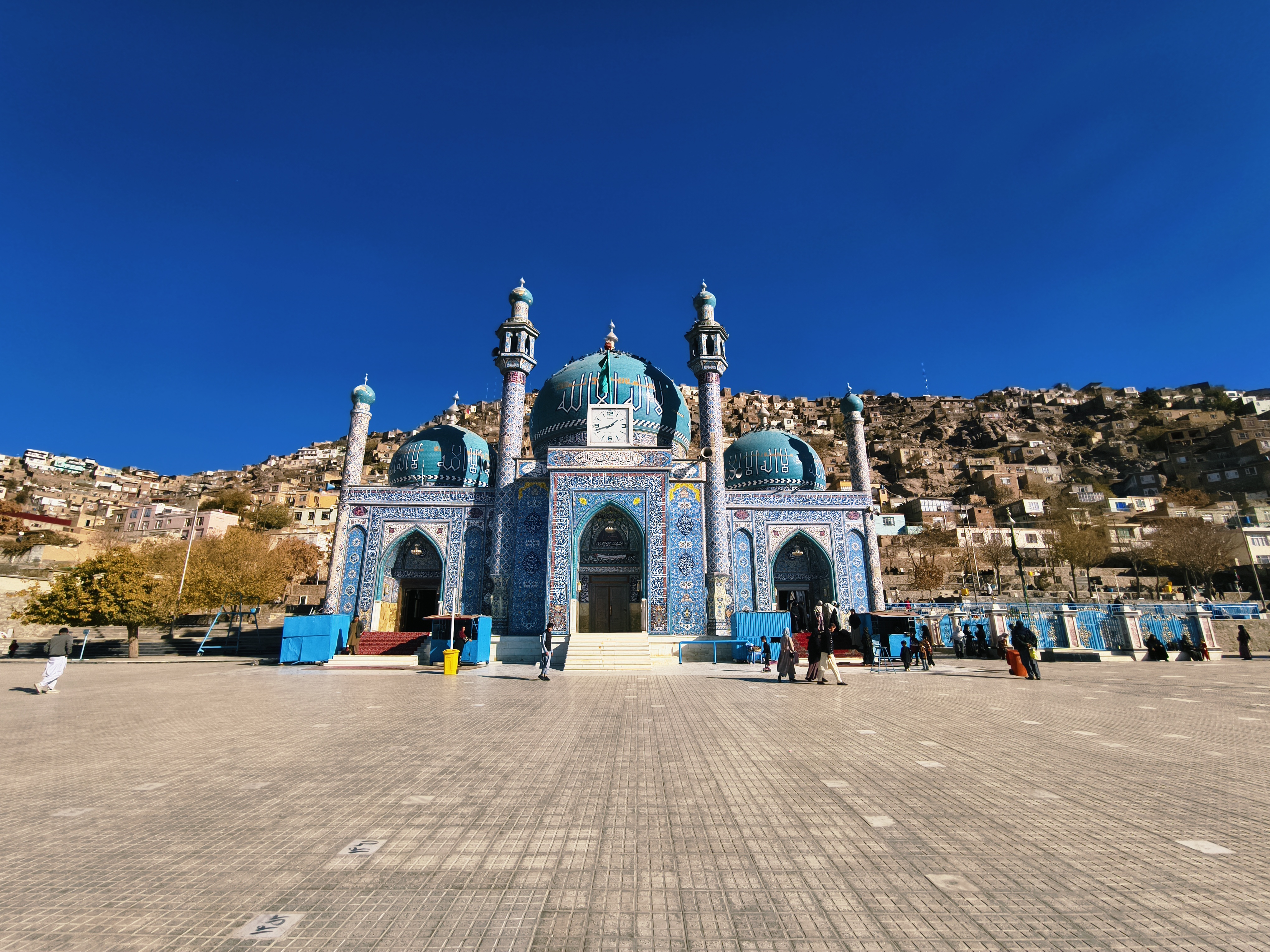
AFA land at the crossroads of civilisations — the Blue Mosque of Mazar-i-Sharif, the Buddha niches of Bamiyan, the turquoise lakes of Band-e-Amir and the stark beauty of the Hindu Kush. Ruled by the Taliban since August 2021. Despite near-universal official advice against travel, Afghanistan still receives some 7,000–9,000 visitors a year. Going means a visa, provincial permits, a guide and full compliance with sharia law.
Where to go #
Kabul
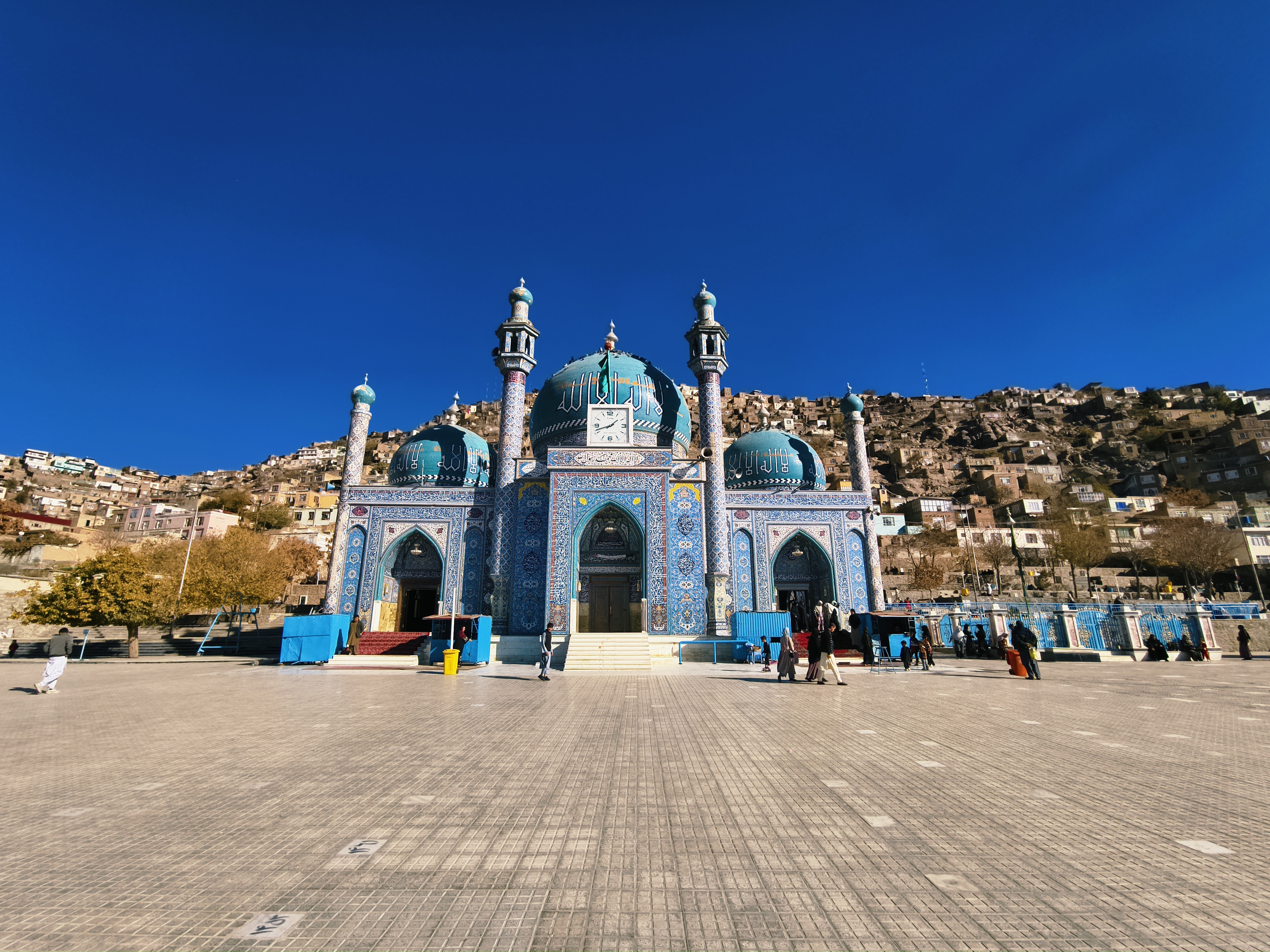
Kabul is the capital of Afghanistan, set at the foot of the Hindu Kush. Highlights include the Darul Aman Palace, the Chicken Street bazaar and the National Museum.
Herat
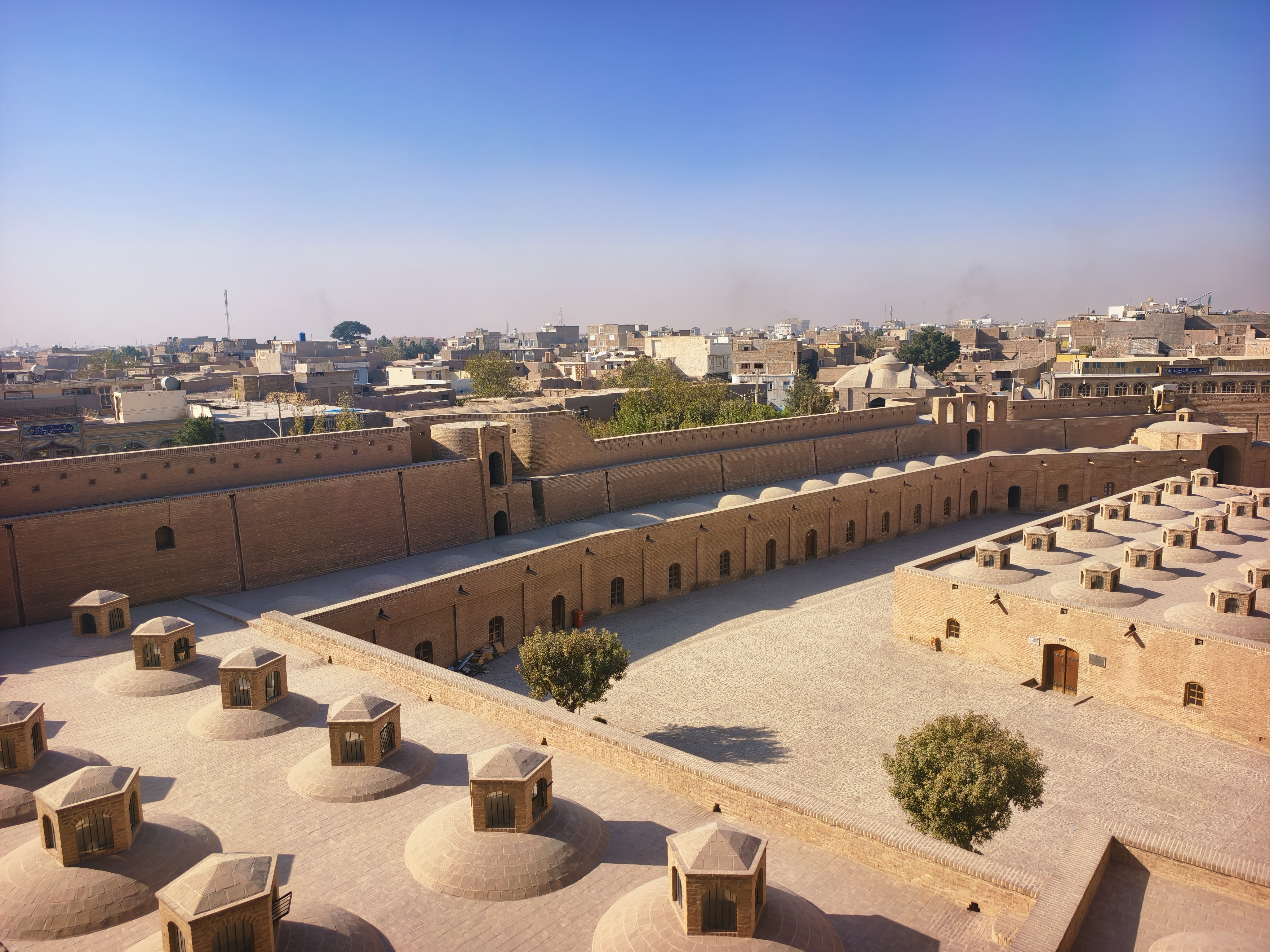
Herat is an ancient Silk Road city in western Afghanistan: the Friday Mosque under turquoise tile, the Ikhtiyaruddin Citadel, and the leaning minarets of the Musalla complex.

Mazar-i-Sharif
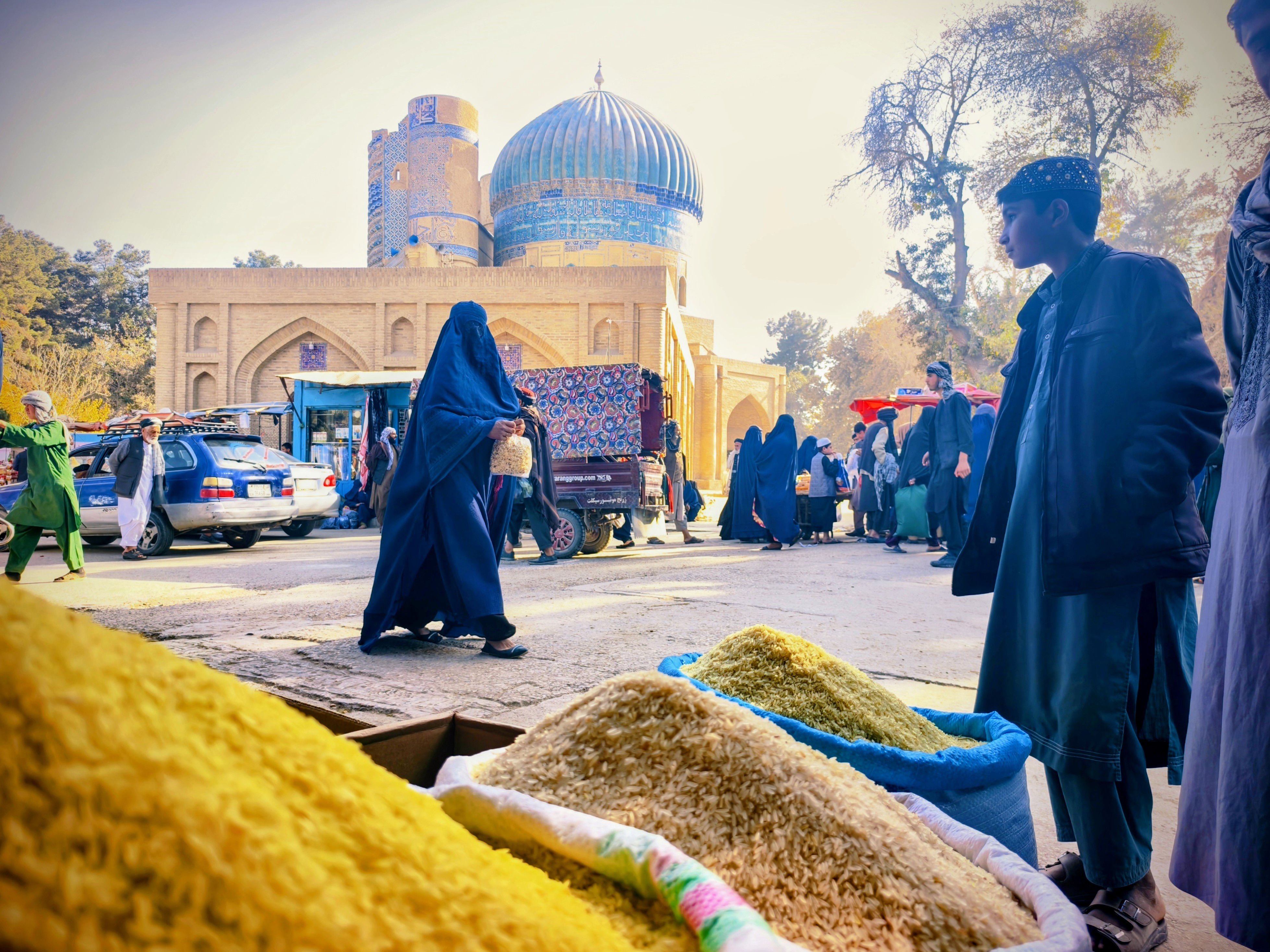
Mazar-i-Sharif is known for its Blue Mosque, the shrine of Hazrat Ali with its thousands of white doves, and the Aqcha Gate. The city also hosts the spring Nowruz festival.
Balkh
Balkh is one of the oldest cities in the world, known for the walls of Bactra, the 9th-century Khoja Piyada mosque and the shrine of Abu Nasr Parsa.

Bamiyan
Bamiyan is a town in a high valley of the Hindu Kush, known for its 6th-century Buddha niches, cave monasteries, the ruins of Shahr-e Gholghola and the turquoise lakes of Band-e-Amir.
What to see #
Band-e-Amir: Six high-altitude turquoise lakes held back by natural travertine dams, sitting at over 2,900 metres in the Hindu Kush.
What to see first? Band-e-Haibat, whose water is so blue and so clear that photographs of it are routinely accused of being edited.
The Bamiyan Buddhas: Enormous empty niches in the cliff face where the colossal statues stood until 2001.
Even without the figures themselves, the scale of the cave complex and the sweep of the valley below are genuinely overwhelming.
The Blue Mosque: An architectural masterpiece in Mazar-i-Sharif, faced with thousands of patterned tiles in every shade of blue.
Thousands of white pigeons live in the courtyard and have become the living symbol of the place.
Shahr-e-Gholghola: The ruins of the City of Screams, destroyed by Genghis Khan's army and never rebuilt.
Climb to the top of the fortress for the best view over the whole Bamiyan valley and the ridges around it.
Gardens of Babur: A restored historic park in Kabul holding the tomb of the founder of the Mughal empire.
It is the one place in the capital where you can spend an hour in the shade and forget the traffic entirely.
Jihad Museum: In Herat, worth a trip for its exhibition on the war with the Soviet Union.
Entry is 10 dollars and the interior is full of detailed dioramas and captured military hardware.
Minaret of Jam: A unique twelfth-century tower hidden deep in a gorge in Ghor province.
Getting there is genuinely difficult, but it is one of the most astonishing structures anywhere in Central Asia.
Prices #
Cash: Bring crisp, new US hundred-dollar bills and nothing else. Small denominations and worn or marked notes get a bad rate or are refused outright.
Cards: Visa, Mastercard, Amex and UnionPay are all useless here. The country has no ATMs that dispense cash against a foreign card, and Wise or Revolut will not help you either, so whatever you carry in is your entire budget.
Exchange: Money is changed at the Sarai Shahzada market in Kabul or with street dealers sitting behind baskets of banknotes. The afghani has been trading around 65 to 70 to the dollar through 2026.
Budget: A frugal traveller gets by on 30 to 40 dollars a day. Change is given in afghanis only, so break a large note early and keep small bills for taxis and tea.
| Item | Price (USD) |
|---|---|
| Lunch in a simple cafe | 2.50 |
| Street bolani | 0.50 |
| Palau in a restaurant | 5.00 |
| Bottled water, 1.5 l | 0.30 |
| Green tea | 0.20 |
| Taxi across town | 2.00 |
| SIM card with data | 5.00 |
| Entry to Band-e-Amir | 3.00 |
| Herat museum ticket | 10.00 |
| Car hire per day | 60.00 |
| Night in a guesthouse | 15.00 |
| Naan flatbread | 0.15 |
| Kilo of pomegranates | 1.00 |
| Cup of shir chai | 0.25 |
| Plate of mantu | 2.00 |
Getting around #
Getting in: Kabul is reached on connecting flights, most commonly through Dubai with flydubai or through Istanbul with Turkish Airlines, both of which link easily to London, Frankfurt, Paris, Amsterdam and the US east coast. Ariana Afghan Airlines and Kam Air also run regional routes from Islamabad and Delhi.
Domestic flights: Kam Air is the time-saver for hops to Herat or Mazar-i-Sharif instead of a full day on the road. Schedules are unreliable, so always build in a spare day in case your flight simply does not happen.
Between cities: Long-distance travel is by shared taxi, almost always an ageing Toyota Corolla. Drivers wait until every seat is sold, and a seat from Kabul to Bamiyan runs about 15 dollars.
In town: Kabul taxis have no meters, so agree the fare before you get in. Moving around the capital in the evening is slow going, between the traffic and the dust.
Road conditions: The route north to Mazar-i-Sharif through the famous Salang tunnel is in acceptable shape. Many mountain roads, though, are still unpaved and genuinely dangerous in winter.
Driving yourself: Not advised for foreigners, given the checkpoints and the difficulty of navigating without local knowledge.
Where to stay #
Booking: The big booking platforms do not operate here, so you arrange rooms over WhatsApp instead. Save hotel numbers before you arrive and message ahead to confirm prices and availability.
Kabul: Independent travellers tend to land at Kabul City Walk, which has large rooms and staff used to foreigners. At the Khyber, ask for anything above the second floor unless you want the street noise all night.
Bamiyan: The Gholghola Hotel is the standard choice, though the service is firmly stuck in another decade. The staff try hard and will bring you extra heaters when the mountain nights turn cold.
The provinces: In Herat the Sadaf International still carries a certain faded grandeur. In Mazar-i-Sharif the decent guesthouses cluster around the Blue Mosque.
Conditions: Expect power cuts that can run to twelve hours a day, and pack a torch. Hot water is far from universal and is often switched on for a couple of hours only, on request.
House rules: Unmarried men and women are officially barred from sharing a room. Solo women may find their choice of hotel restricted by rules that vary from one establishment to the next.
What to eat #
The staple: The national dish is palau, fragrant rice cooked with meat, sweet carrot and raisins. Every province makes it differently, with its own set of local spices.
Meat: Do not leave without trying kabob made from tender lamb, or chapli kabob, the spiced flat patties fried on street griddles. Meat always arrives with hot naan, baked in tandoor ovens right there on the pavement.
Snacks: The great street food is bolani, thin fried flatbread stuffed with greens or potato. Mantu, big dumplings under a thick yoghurt and lentil sauce, are equally easy to find.
Drinks: Alcohol is totally banned and simply does not exist, not even in expensive restaurants. People drink green tea with cardamom or saffron, and dogh, a salty yoghurt drink that is a lifesaver in summer.
Cheap eats: Naan costs almost nothing and is sold by the stack in every bakery in town. Afghan fruit is outstanding, especially the pomegranates and melons, which cost next to nothing in season.
Restaurants: Kabul does have higher-end places where a full dinner comes to around 20 dollars a head.
Safety #
Checkpoints: Expect frequent document checks by armed patrols on the roads between provinces. Keep your passport and a printed copy of your entry permit somewhere you can reach without unpacking.
Photography: Photographing military sites, checkpoints or any armed personnel is absolutely forbidden. Never photograph local women either, without explicit permission from the men accompanying them.
Drones: Bringing in or flying a drone is banned and the kit will be confiscated at the border. Any flying camera reads as espionage to the authorities, and that is not an argument you will win.
Risk level: Most Western governments advise against all travel to Afghanistan because of the continuing threat of attacks, and you should check your own government's travel advisory before committing. Street crime has fallen, but the risk of kidnapping or being caught in crossfire has not gone away.
Registration: Foreigners must report to the department of culture on arrival in each new city. It is usually a formality, though officials occasionally want a short conversation first.
Medical care: Competent treatment exists only in private clinics in Kabul, and hardly at all in the provinces.
Etiquette and culture #
Hospitality: The tradition of mehmandosti holds that a guest is a gift from God, and it is not a figure of speech. Complete strangers will press tea on you in the street or invite you home for lunch.
What men wear: Men are better off in the traditional perahan tunban, which draws far less attention than Western clothing. Shorts and vests are read as indecent and can provoke real hostility from patrols.
What women wear: A hijab is compulsory for foreign women, along with clothing loose enough to hide the shape of the body entirely. Some conservative provinces expect the face covered too, leaving only a mesh panel for the eyes.
Etiquette: Women are not supposed to speak loudly in public or draw attention to themselves in any way. Men should not attempt conversation with local women or hold eye contact with them.
Religion: Friday is the main day off and most businesses close for prayers. When the call to prayer sounds, cities go quiet and even drivers may pull over.
Entertainment: Music in public spaces is banned, and even chess sits under an unofficial prohibition, so keep headphones in and expectations low.
Connectivity #
Networks: Four operators cover the country: AWCC, Roshan, Etisalat and MTN. A SIM with a data bundle costs around 5 dollars and can be bought at Kabul airport on arrival.
Registration: Buying locally means handing over your actual passport plus the address of your hotel. It can take a while, since foreigner registration is now tightly controlled.
Internet: Speeds in 2026 remain poor, and 4G really only works in city centres. Hotel Wi-Fi is often slower than mobile data and drops constantly.
Apps and access: Social networks work, but a VPN is usually needed for stable access, so install one before you fly. WhatsApp and Telegram are the reliable way to reach guides, drivers and hotels.
Power: A power bank is not optional here, given rolling blackouts. Connectivity has occasionally gone down nationwide for several days at a stretch.
eSIM: International eSIMs such as Airalo or UniSIM work and can be paid for by card before you arrive, which saves dealing with registration on day one.
Phrasebook #
| English | Dari | Pronunciation |
|---|---|---|
| Hello (peace be upon you) | سلام علیکم | Salaam alaikum |
| How are you? | چطور هستید؟ | Chetor astid? |
| I'm well | خوب هستم | Khub astam |
| Thank you | تشکر | Tashakor |
| Yes / No | بلی / نخیر | Bale / Nakhair |
| How much is it? | چند است؟ | Chand ast? |
| That's expensive | قیمت است | Qimat ast |
| Cheaper, please | ارزانتر | Arzantar |
| Water | آب | Aab |
| Tea | چای | Chai |
| Bread | نان | Naan |
| Rice | برنج | Birinj |
| Beautiful! | قشنگ است | Qashang ast |
| Where is the hotel? | مهمانخانه کجاست؟ | Mehmankhana kojast? |
| Help! | کمک کنید | Komak konid |
| Friend | دوست | Dost |
| Brother (friendly address) | لالا | Lala |
| No problem | مشکل نیست | Mushkel nist |
| Foreigner | خارجی | Kharijee |
| Please | لطفاً | Lotfan |
| Goodbye | خدا حافظ | Khoda hafez |
| Sorry / excuse me | ببخشید | Bebakhshid |
Good to know #
Consular reality: Most Western embassies in Kabul closed in 2021 and have not reopened, so assume nobody can come and get you. Leave a copy of your itinerary with someone at home and know which neighbouring capital handles your country's consular affairs remotely.
Permits: Before leaving the capital, get your provincial permits through the Afghan Tour office. They are free but need copies of your passport and entry stamp, and the office is always shut on Fridays.
Insurance: You need a policy that explicitly covers active conflict zones, of the kind SafetyWing sells. Standard travel insurance is void in Afghanistan and will not get you out if something goes wrong.
Navigation: Download offline maps before you go, because mobile data will vanish on the road. It also helps to carry the names of key destinations printed in Dari to show taxi drivers.
Contacts: Keep the local airline representative's number for anything to do with tickets, since online changes rarely work. A WhatsApp number for your guide or guesthouse manager is just as important.
Odds and ends: Carry a couple of spare passport photos for immigration cards and permits. Do not bring pork products or any images that could be considered indecent.