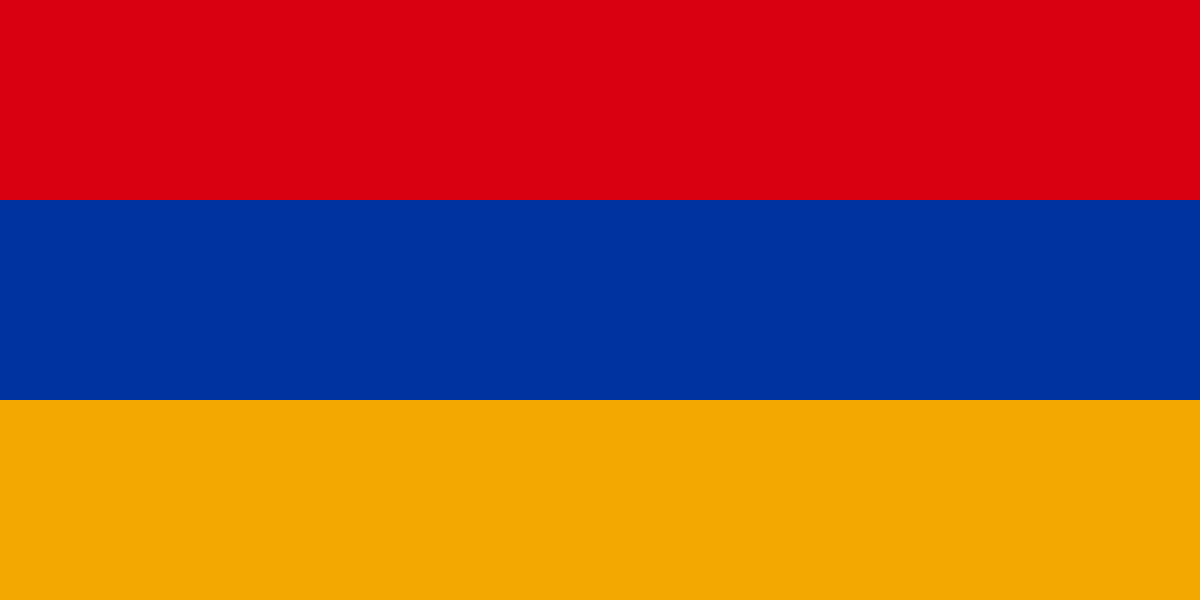
Armenia
AMThe world's oldest Christian nation, with spectacular mountain monasteries, generous food and legendary hospitality. Armenia is compact — a week covers the essentials: Ararat on the horizon, the temple at Garni, the monasteries of Geghard and Tatev, Lake Sevan. Yerevan is one of the most relaxed and safest cities in the region, Russian is understood almost everywhere, and short flights from across Europe and Asia make it an easy short break.
Where to go #
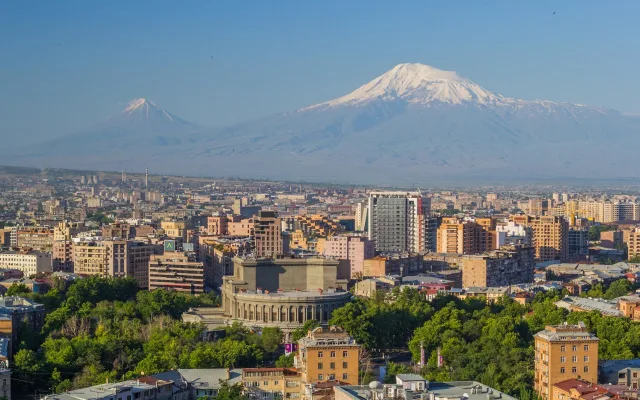
Yerevan
Yerevan is the capital of Armenia, known for landmarks such as the Cascade complex and the colourful Vernissage market. The city is famous for its pink tuff and its view of Mount Ararat.
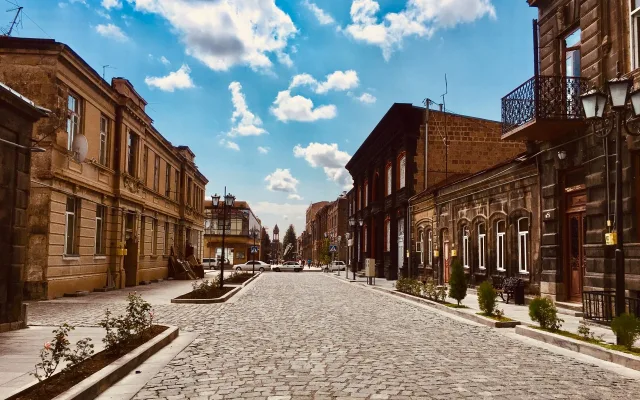
Gyumri
Gyumri is Armenia's second city, known for its rich history, 19th-century architecture and craft workshops.
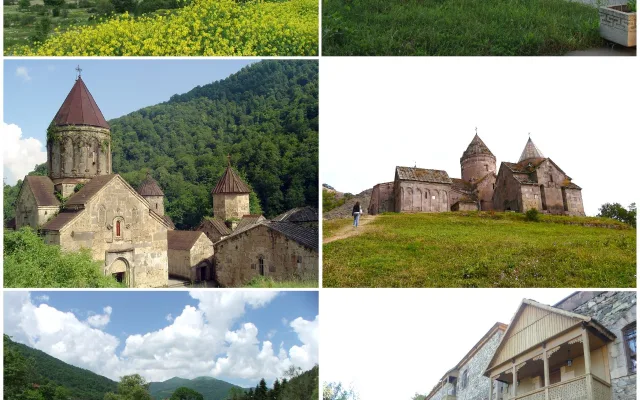
Dilijan
Armenia's forested north, often called "the Armenian Switzerland": beech woods, the Haghartsin and Goshavank monasteries and a national park of marked trails.
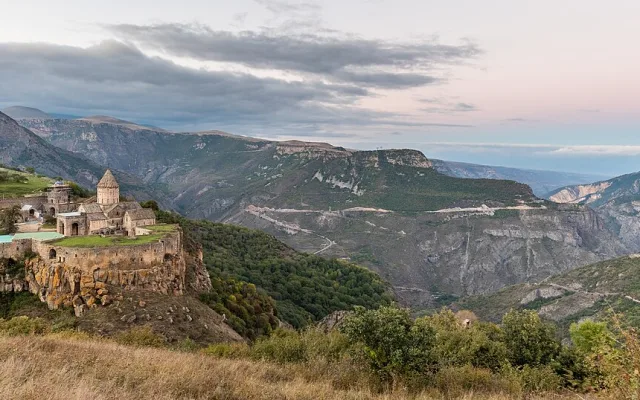
Tatev
A tiny Syunik village with a spectacular tenth-century monastery on a cliff edge and the record-breaking Wings of Tatev cable car.
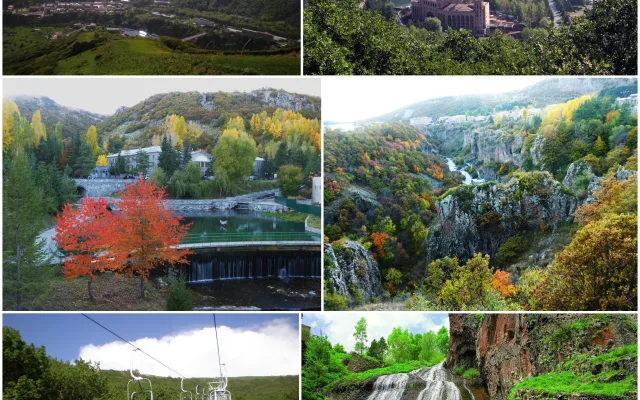
Jermuk
An Armenian mountain spa town at 2,080 m: free thermal mineral water from the drinking gallery, a 70-metre waterfall and monasteries nearby.
What to see #
Tatev Monastery: The strongest impression in the south, reached by a cable car that flies you over a gorge.
The ride leads to a fortified monastery on a cliff, but note that it does not run on Mondays. The walls are massive and the views over the Vorotan canyon are the ones people remember.
Garni and Geghard: The classic pairing, and you can do both in half a day from Yerevan.
Garni keeps the columns of a Hellenistic pagan temple, while Geghard's chambers are carved directly into the rock. The acoustics inside are so good that a single voice sounds like a choir.
Khor Virap: The place with the postcard view of Mount Ararat.
Come early before the mountain disappears into haze, and climb down into the deep pit where Saint Gregory was held for years. It is the closest you can get to the mountain from this side.
Noravank: A two-storey church in a canyon of red rock, at its best in late afternoon light.
The drive in through the narrow gorge is half the pleasure if you are behind the wheel. The narrow stair up the facade leads to the upper level and a full view of the canyon.
Echmiadzin: The spiritual centre of the country, with the ancient cathedral and the ruins of Zvartnots on the way.
It makes a neat morning before a flight, since the airport is right there. Zvartnots is a paid archaeological park with remarkable carved capitals still standing.
Noratus: A vast field of a thousand carved khachkar stones near Lake Sevan, and consistently underrated.
It is free, quiet, and you can spend hours reading the medieval patterns. Local women sell knitted socks at the gate and will tell you the legends attached to the stones.
Prices #
Currency: The Armenian dram (AMD) is the local money. Exchange booths at the airport and across Yerevan take dollars and euros without fuss, and euros generally move slightly better.
Cards: Visa and Mastercard are accepted almost everywhere in Yerevan, from restaurants to museums, and Amex much less often. Outside the capital, assume you will be paying cash.
Cash: In the regions, at markets and in small guesthouses only paper drams will do. Keep small notes for the shared minibuses and for fruit sellers along the roads.
ATMs: Machines are plentiful in the cities and most accept foreign cards, though each charges its own fee. A Wise or Revolut card saves you the double conversion on larger withdrawals.
Tipping: Restaurant bills often already include ten percent service, but waiters appreciate a little more. Round taxi fares up if the driver did well.
| Item | Price (USD) |
|---|---|
| Lunch in a canteen | 5 |
| Dinner for two | 25 |
| Street shawarma | 2 |
| Coffee in a jazve | 1.5 |
| Bottle of wine | 8 |
| Metro ride | 0.4 |
| Taxi across town | 3 |
| Litre of petrol | 1.4 |
| Night in a guesthouse | 30 |
| SIM card with data | 5 |
| Museum ticket | 4 |
| Souvenir khachkar | 10 |
| Sevan crayfish, per kg | 12 |
| Tatev cable car | 24 |
Getting around #
Getting in: Zvartnots airport has direct flights from Paris, Rome, Milan, Vienna, Frankfurt and Athens, plus budget services from several European cities, and connections through Dubai, Doha or Istanbul from further afield. The overland route from Georgia is the other common way in.
Marshrutkas: The cheap way between towns, leaving from the Kilikia or Northern stations. There is often no timetable and vans go when they fill, so arrive early.
Taxis: In the cities use a ride app such as GG or Yandex. Fares are very low, and drivers will often offer themselves as a guide for a whole day at a sensible price.
Car hire: The best option for freedom of movement, and local agencies undercut the international brands. Book a specific car ahead, since the fleet is small.
Roads: Main routes between cities are in decent shape, but the mountains bring potholes and switchbacks. Expect assertive local driving and cows on the carriageway.
Trains: Modern fast trains run from Yerevan to Gyumri and beat the bus comfortably. In summer there are also services out to Lake Sevan, which spares you the traffic leaving the capital.
From the airport: Bus 201 runs into the centre, though at night you will want a taxi through an app. Ignore the touts in arrivals, whose prices are several times the app fare.
Where to stay #
Guesthouses: The warmest option in the provinces, where you are treated as a member of the household. Breakfasts are large enough to make lunch optional and the hosts will help with anything.
Apartments: In Yerevan, renting a whole flat usually beats a hotel on price. It also lets you cook from the markets, which is half the pleasure of being here.
Boutique hotels: The centre has plenty of stylish conversions in old tufa buildings. Prices in 2026 remain reasonable for what you get in the middle of the city.
Eco-camps: In the south and around Sevan you will find barrel cabins and transparent domes. A good way to wake up to mountains or a full sky of stars.
Hostels: There are not many, and they tend to feel like large Armenian flats with a shared kitchen. Pick one inside the Yerevan ring road to save yourself the daily walk in.
Booking: In high season, May to September, the good places in Gyumri and Dilijan go early. Aim to lock accommodation in two or three weeks ahead for a fair price and a real choice.
What to eat #
Khorovats: Proper Armenian barbecue, big pieces of meat over coals. Order the vegetables cooked alongside it as well, since they are peeled at the table and make the best side dish you will eat here.
Lavash: Thin wheat flatbread baked on the wall of an underground tonir oven. Any cafe brings it free, but the best is bought hot from a village bakery on the roadside.
Zhengyalov hats: A flatbread stuffed with dozens of kinds of wild herbs, originally from Karabakh. Light, healthy and best tried at a market or a specialist stall.
Khash: A ritual winter soup of beef trotters, eaten early in the morning with a shot of vodka. It is heavy and not for everyone, but it explains a great deal about the culture.
Sweets: Buy gata, layered pastry filled with butter and sugar, made differently in every region. At markets look for sujukh, walnuts strung through grape must, and alani, dried peaches stuffed with nuts.
Drinks: Armenian wine is in the middle of a genuine revival, so order an Areni red or a Voskehat white. Coffee is called surj and is made in a jazve on hot sand, served in tiny cups with water.
Safety #
Overall: Armenia is among the safest countries anywhere, and walking alone at night is unremarkable. People are helpful to the point of insistence if a visitor is stuck.
Traffic: The main hazard is unpredictable driving on mountain roads and casual speeding. Cross carefully even on a marked crossing, since giving way to pedestrians is not a strong local habit.
Drinking water: Yerevan is full of pulpulak drinking fountains delivering clean mountain water. It is entirely safe, so there is no reason to buy plastic bottles.
Mountains: Weather in the highlands turns fast even when it is hot in the valley. Carry a windproof layer and closed shoes for monastery walks, and watch where you step for snakes.
Scams: Rare, but check prices in advance at the airport and around the popular churches. Agree a taxi fare before setting off unless you are using an app.
Signal: In remote gorges and on the passes the mobile network drops out. Download offline maps before you set out, and glance at your own government's travel advisory regarding the border areas.
Etiquette and culture #
Hospitality: Not politeness so much as doctrine. If you are invited for coffee, do not try to pay, as it will offend, but bring something small for the table.
The table: Any lunch turns into a ceremony of long, philosophical toasts. The tamada leads and is not interrupted, and the first toast is always to peace in the house and to the meeting.
Churches: Armenian churches are austere, with almost no gold or painting, just old stone and candlelight. Women may cover their heads, men remove hats, and everyone keeps their voice down.
Vardavar: The best summer festival, when everyone throws water over everyone else in the street. Do not take offence at a bucket of water, since nobody stays dry and it counts as a blessing.
Duduk: The deep, mournful sound of this apricot-wood instrument is the voice of the country. Try to catch a live performance at Geghard, where the rock amplifies it.
Conversation: Armenians are welcoming and curious about visitors, and many speak good Russian or English. Avoid raising regional politics with people you have just met and you will make friends quickly.
Connectivity #
Language: Most people over thirty speak fluent Russian, and younger people in the capital speak good English. Signage in Yerevan is often trilingual, so you will not be stuck even in the villages of Syunik or Lori.
Operators: The choice in 2026 is Viva, Ucom or Team. A SIM takes five minutes to set up in any phone shop with a passport, and generous data bundles cost only a few dollars a month.
Coverage: 4G and 5G are solid in Yerevan and the major towns. On mountain roads the signal goes, so navigate from downloaded maps.
eSIM: For a short trip, activate a virtual SIM before you fly. Airalo, Yesim and similar providers have you online the moment you land.
Messaging: WhatsApp and Telegram are how you reach guides and accommodation owners. Voice calls over the internet work well and remove any need for roaming.
Post: For a postcard, look for a HayPost office, which are reliable. Stamps cost almost nothing and the card will take two or three weeks to reach Europe or North America.
Phrasebook #
| English | Armenian | Pronunciation |
|---|---|---|
| Hello | Բարև ձեզ | Ba-REV dzez |
| Thank you | Շնորհակալություն | Shnor-ha-ka-lu-TYUN |
| Yes / No | Այո / Ոչ | A-YO / Voch |
| How much is it? | Ինչ արժե՞ | Inch ar-ZHE |
| That's expensive | Թանկ է | Tank e |
| Beautiful | Սիրուն է | Si-RUN e |
| Tasty | Համով է | Ha-MOV e |
| Very good | Շատ լավ | Shat lav |
| Water | Ջուր | Jur |
| Bread | Հաց | Hats |
| Sorry | Ներողություն | Ne-ro-ghu-TYUN |
| How are you? | Ոնց ես | Vonts es |
| Where is the toilet? | Որտեղ է զուգարանը | Or-TEGH e zu-ga-RA-ne |
| Please | Խնդրեմ | Khn-DREM |
| Goodbye | Ցտեսություն | Tse-te-su-TYUN |
| The bill, please | Հաշիվը, խնդրում եմ | Ha-SHI-ve, khn-DRUM em |
| Brother, mate (slang) | Ախպեր | Akh-PER |
| Dear one (used constantly) | Ջան | Jan |
| Fine, alright then | Դե լավ | De lav |
| Wow (slang) | Վայ | Vai |
Good to know #
Pharmacies: Yerevan has them on every corner and many medicines are sold without prescription. Bring anything specialised from home anyway, since brand names differ.
Power: Armenia uses the European type C and F sockets with two round pins. Travellers from the UK or North America need an adapter, but the voltage is standard.
Apps: Download GG or Yandex for taxis, and Wolt or Glovo for food delivery. For walking, Maps.me with the whole country downloaded is the most reliable option.
Souvenirs: Beyond brandy and wine, look at pomegranate-motif ceramics, silver jewellery and dried fruit. The Vernissage market is the place for hand-beaten copper coffee pots.
Opening hours: Most museums close on Mondays, which catches people out. Restaurants in central Yerevan serve until midnight and grocery shops are often open around the clock.
Consular help: Many countries have an embassy in Yerevan and others cover Armenia from Tbilisi or Moscow. Check which applies to your passport and save the number before you leave the capital.