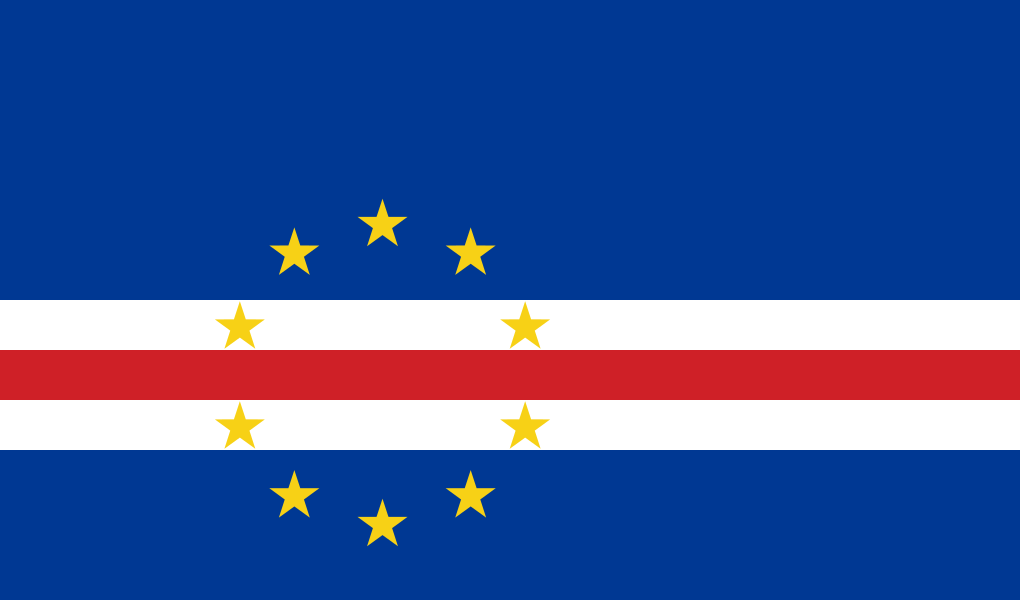
Cape Verde
CVAn archipelago of ten volcanic islands in the Atlantic, where African rhythms are woven through Portuguese culture. Cape Verde means the white beaches of Sal, the dramatic mountain trails of Santo Antão and the active volcano on Fogo. The islands are known for morna music, Creole cooking and year-round sunshine. There is no mass tourism here — only the ocean, the wind and genuine African hospitality.
Where to go #
Praia
The capital on Santiago island is worth a trip for the noisy Sucupira market and the historic centre perched on its cliff. You can do the old Plateau quarter in a day, and there is even a Soviet-era armoured car parked in town, a gift from 1962.
Mindelo
The cultural heart of the country on Sao Vicente, and the birthplace of morna music. People come for the old colonial port atmosphere, live music in the bars and the best carnival in the country each February.
Santa Maria
Where to go on Sal if you want flawless beaches and kitesurfing. The town is built entirely around visitors, with plenty of restaurants and souvenir shops selling African crafts shipped in from the mainland.
Ribeira Grande
One of the most authentic towns on mountainous Santo Antao, with narrow lanes and old churches. It is the obvious place to start walks into the lush green valleys and out to hidden waterfalls.
Sao Filipe
A picturesque colonial town on Fogo, built on the lip of a high cliff above a black sand beach. Choose it as your base before heading up into the caldera of the active volcano.
What to see #
Pico do Fogo: A menacing 2,829-metre cone, and climbing it will be the main adventure of the whole trip. People actually live inside the caldera on the lava fields and make a distinctive wine with a mineral edge to it.
Paul Valley: What to see on Santo Antao before anything else is the terraced coffee and sugarcane fields. The walking trails here are considered the finest in the Atlantic, and the views down the canyon genuinely stop you in your tracks.
Cidade Velha: The oldest town in the archipelago sits near the capital and carries UNESCO protection. Worth a trip for the Portuguese fort of Sao Filipe and the sixteenth-century pillory that speaks bluntly about the slave trade.
Salinas de Pedra de Lume: Where to go on Sal once the ocean palls is the salt lake inside a volcanic crater. The salt concentration is higher than the Dead Sea, so you simply lie on the surface without effort.
Shark Bay: An odd and memorable spot where you stand in shallow water surrounded by real lemon sharks. Local guides bait them with fish so they come right into the shallows, which makes for photographs nobody at home believes.
The Viana dunes: A miniature desert on Boa Vista, built by winds carrying sand straight off the Sahara. It gets oversold by the party crowd, but it is perfect for long, quiet walks with nothing but sand around you.
Prices #
Currency: The Cape Verdean escudo is pegged firmly to the euro at 110.265. Euros in cash are accepted everywhere, but shops round the rate down to 100, so changing money at a bank or withdrawing from an ATM leaves you better off.
Changing money: Be careful at the airport, where a flat commission of 350 escudos or more is standard. Change just enough for your transfer and take the rest to a bank on a weekday before 15:00.
Cards: On the larger islands Visa and Mastercard work in supermarkets and town hotels, while Amex is barely known. For the smaller islands and anywhere rural, carry a thick wad of small escudo notes.
Withdrawals: A Wise or Revolut card saves you your home bank's markup and works fine in the bank machines in Praia, Mindelo and Santa Maria. Always decline the machine's own conversion offer, since the rate it gives you is worse.
Tipping: Around ten percent in restaurants is normal unless service is already on the bill. Taxis have no meters, so agree the fare in advance and round up in the driver's favour.
| Item | Price (USD) |
|---|---|
| Lunch at a local cafe | 6 |
| Dinner for two with wine | 45 |
| Coffee on the Plateau | 1 |
| Half-litre of beer | 2 |
| Bottled water 1.5l | 1 |
| Local cheese, per kilo | 5 |
| Pack of cigarettes | 6 |
| Litre of petrol | 2 |
| Ferry ticket | 35 |
| Taxi from Sal airport | 15 |
| Shared minibus ride | 1 |
| Jeep hire per day | 65 |
| Domestic flight | 80 |
| Shark bay tour | 35 |
Getting around #
Getting in: Sal and Praia take the international traffic, most conveniently through Lisbon with TAP or Casablanca with Royal Air Maroc. Seasonal charter and scheduled flights also run from London, Amsterdam, Paris, Brussels and Milan straight to Sal and Boa Vista, which is the cheapest way in from Europe.
Island flights: Cabo Verde Airlines links the islands, but delays with no explanation are routine. Leave a full day's margin before any international departure rather than cutting it fine.
Ferries: Boats work the whole archipelago, though the Atlantic here can be brutal. Stewards hand out sick bags as you board, and you should take two, because the crossings are genuinely rough.
Aluguers: These are the local shared minibuses, which leave only when full. It is the cheapest way to move around, and riding on the bench in the pickup bed costs half what a seat in the cab does.
City buses: Praia has a proper network run by Solatlantico, linking the Plateau with the outer districts. The fare is 43 escudos, paid in cash to the driver, who will almost certainly not have change for you.
Taxis: Every inhabited island has them and none of them has a meter. From Sal airport to Santa Maria the asking price is 15 to 20 euros, and walking a little way from the terminal to find a private driver can halve it.
Renting a vehicle: On Boa Vista a four-wheel drive makes sense for exploring the wild beaches and the dunes. You will need your national licence and some confidence on dirt roads, because tarmac exists only in the towns.
Where to stay #
Guesthouses: The most rewarding option for an independent traveller is a small colonial-style pension. The owners often live on site and will tell you where to find the best cachupa or a reliable mountain guide.
Town hotels: In Praia and Mindelo, stay in the historic centres so the markets are within walking distance. There is nothing to do in the outskirts after dark, while the centre stays lit and safe.
Apartments: On Sal it pays to rent a flat if you are staying a week. Having your own kitchen saves a great deal, since resort restaurant prices are inflated for visitors.
Eco-lodges: On Santo Antao you can stay in the Paul valley right among the coffee plantations. It is a particular kind of experience with minimal comforts, but the sunrises over the ridges and the total silence at night make up for it.
Sleeping at the airport: Sal's terminal is decent enough, with benches upstairs where you can wait out the night. The air conditioning is moderate, so ordinary clothes are enough for a short sleep on the marble.
Tourist tax: Any legal accommodation will add roughly two euros per person per night. It is charged separately from the room rate, so keep small escudo notes handy at check-in.
What to eat #
Cachupa: The national stew of corn, beans and vegetables, simmered for hours. There is a rich version with meat or sausage and a plain one, most often served fried for breakfast the following morning.
Fresh catch: Never buy fish from an informal market stall in the heat; go to the pier at about eleven instead. There you can pick up tuna or wahoo for very little and any beach cafe nearby will cook it for you.
Grogue: The local sugarcane spirit, which comes in at up to fifty percent. It is an acquired taste and fairly harsh neat, but it works beautifully in ponche, mixed with molasses, citrus juice and honey.
Volcanic wine: On Fogo the vines grow directly in the ash, which gives the wine an unusual mineral character. A bottle costs around eight dollars and is best bought from the producers inside the caldera itself.
Street snacks: Pasteis are fried tuna pastries sold by locals on any busy corner. They cost pennies and make a fast lunch on the road if you are relaxed about simple, well-spiced African food.
Shop prices: Almost everything is imported, so milk and yoghurt cost more than in Europe. Portuguese wine, on the other hand, is cheap, and the local goat cheese is a genuine delicacy.
Safety #
Ocean currents: The biggest danger on these islands is the rip currents, which drag even strong swimmers out to sea. Swim only at supervised beaches and stay out of the water entirely when the red flag is up.
Street guides: In Cidade Velha and Praia someone may attach himself to you offering a free tour. At the end he will demand payment aggressively, so decline politely but firmly at the start.
Petty theft: On Sal's beaches do not leave phones or money unattended. In the capital, avoid dark side streets outside the centre after sunset, since street robberies do occasionally happen.
Health: Tap water is not for drinking and is often non-potable by design. There is no malaria on the islands, but sunburn arrives in half an hour, so factor 50 and a hat are essential for everyone.
Taxi scams: Drivers will quote triple the real fare while insisting the buses have stopped running. Check with a passer-by or ask your guesthouse for the going rate before you set off.
Pushy helpers: At Shark Bay and the salt lakes people will try to rent you footwear. If you brought your own water shoes, walk past and ignore the theatrical explanations of why you cannot possibly manage without theirs.
Etiquette and culture #
Morabeza: This one word describes the defining local quality, a mix of hospitality and openness. Being invited into someone's home for coffee for no particular reason is normal and entirely sincere.
Morna: Melancholy songs about longing for home, made famous worldwide by Cesaria Evora. Live performances in the bars of Mindelo are not a tourist show but part of ordinary life, and you should hear at least one.
Sodade: A philosophical idea of gentle sadness that runs through the whole culture. You feel it in the architecture and the songs, reflecting the history of a people whose lives were always tied to the ocean.
February carnival: Mindelo's parade competes seriously with Brazil in scale and commitment. The city stops for a week, accommodation prices leap and the streets become extraordinary.
Religion: Most islanders are Catholic, so towns go quiet on Sundays. Respect that, and cover shoulders and knees when going into any church.
Language: The official language is Portuguese, but everyday conversation happens in Creole. English is understood only around the Sal resorts, so a few words of the local speech will make you friends quickly.
Connectivity #
Local operators: There are two, CV Telecom and Unitel T+. You can buy a SIM at the airport with your passport, and 4G coverage is solid in the town centres and at every popular resort.
eSIM: Virtual SIMs from Airalo and similar providers work well here and save you hunting for an office. Packages cost around nine dollars, which is convenient for maps and messaging in your first hours on the islands.
Speeds: Guesthouses generally have Wi-Fi, but it behaves unpredictably. If you need to work, rely on mobile data and buy a generous local package up front.
Messaging: Every familiar social network works without restriction. WhatsApp calls are the most dependable way to reach home, since ordinary international calls are very expensive.
Topping up: Scratch cards are sold in any kiosk, though topping up through the operator's app is easier. Keep a reserve of escudo cash in case a card payment is declined.
In the mountains: On Santo Antao and inside the Fogo caldera the signal drops out because of the terrain. Download offline maps in advance so you do not get lost on trails where signposts are scarce.
Phrasebook #
| English | Portuguese | Pronunciation |
|---|---|---|
| Hello | Ola / Bom dia | oh-LAH / bon DEE-ah |
| Good evening | Boa noite | BOH-ah NOY-tuh |
| Thank you | Obrigado | oh-bree-GAH-doo |
| Please | Por favor | por fah-VOR |
| How much is it? | Quanto custa? | KWAN-too KOOSH-tah |
| Yes / No | Sim / Nao | seeng / nowng |
| Where is the toilet? | Onde e o WC? | ON-duh eh oo veh-SEH |
| I don't understand | Nao entendo | nowng en-TEN-doo |
| Help! | Ajuda! | ah-ZHOO-dah |
| Water | Agua | AH-gwah |
| Beer | Cerveja | ser-VEH-zhah |
| The bill, please | A conta, por favor | ah KON-tah por fah-VOR |
| Left / Right | Esquerda / Direita | esh-KER-dah / dee-RAY-tah |
| Delicious! | Sabroso! | sah-BROH-zoo |
| Mate, buddy (slang) | Mambas | MAM-bash |
| It's all great (slang) | Tudo nice! | TOO-doo nice |
| Longing, homesickness | Sodade | so-DAH-duh |
| Hi, all good? (Creole) | Oi, tud dret? | oy, tood DRET |
| Goodbye | Tchau | chow |
| Hotel | Hotel | oh-TEL |
| Beach | Praia | PRY-ah |
| Fish | Peixe | PAY-shuh |
Good to know #
Electricity: The islands use standard European sockets, so most European travellers need no adapter, while British, American and Australian plugs do. Voltage is 220, and rural power cuts happen, which makes a power bank genuinely useful.
The sun: This close to the tropics the sun burns even under cloud. Wear a hat and decent sunglasses, because hours of glare off the ocean will do your eyes no favours.
Insects: Mosquitoes are not numerous but they come out in the evening, especially in the rainy season. There is no malaria, but ordinary repellent will save you a lot of itching.
Water: Buy water in supermarkets, where five-litre containers work out cheapest. On mountain hikes, plan on two litres per person, since there are effectively no sources along the trails.
Medical kit: Pack motion sickness tablets, something for an upset stomach and plasters before you go. Local pharmacies carry a limited range and many familiar medicines cost more here than at home.
Insurance: Choose a policy covering active pursuits if you intend to trek in the mountains. For a serious injury the only real option doctors can offer is a flight to Portugal, which costs a fortune without cover.