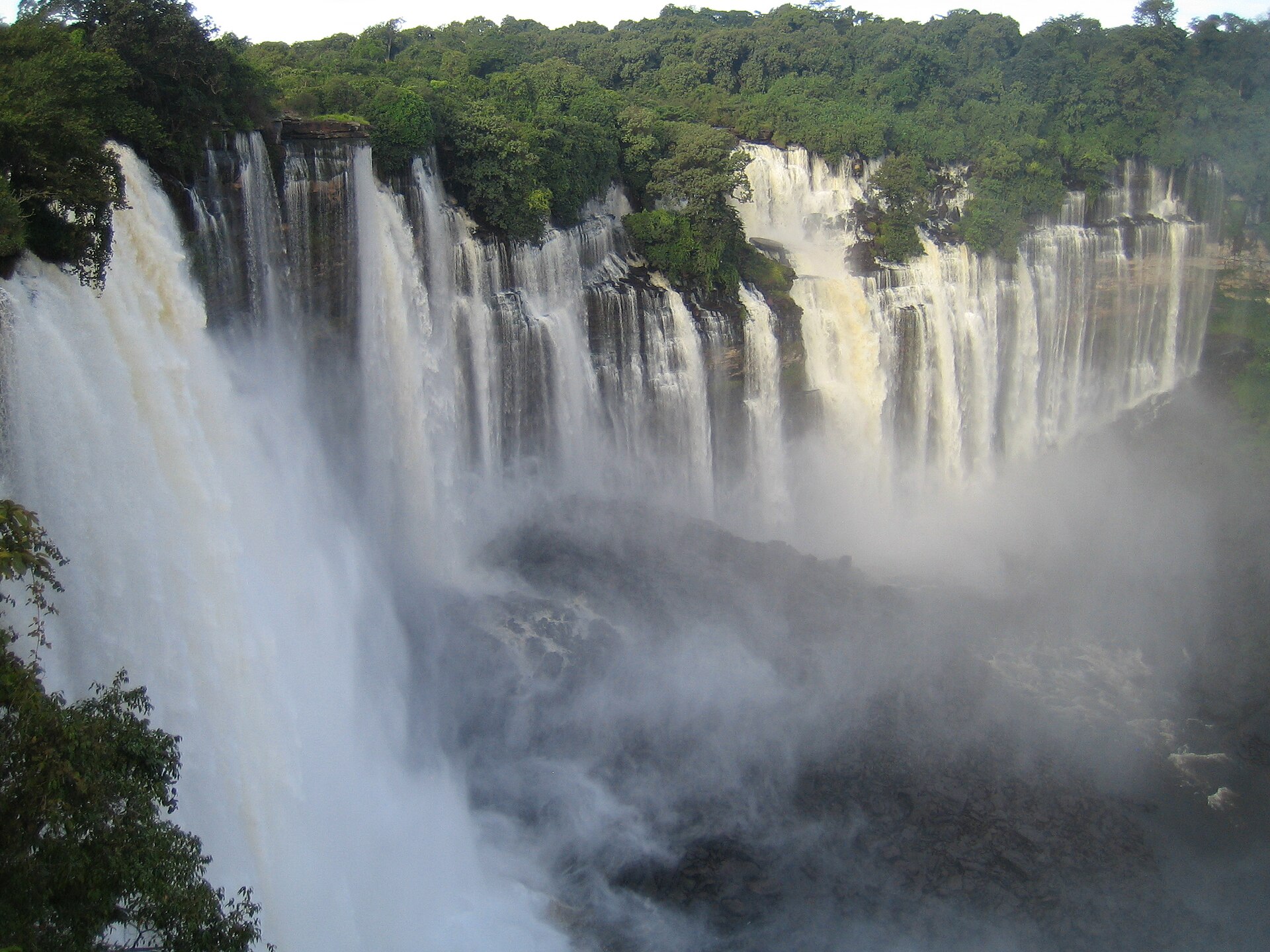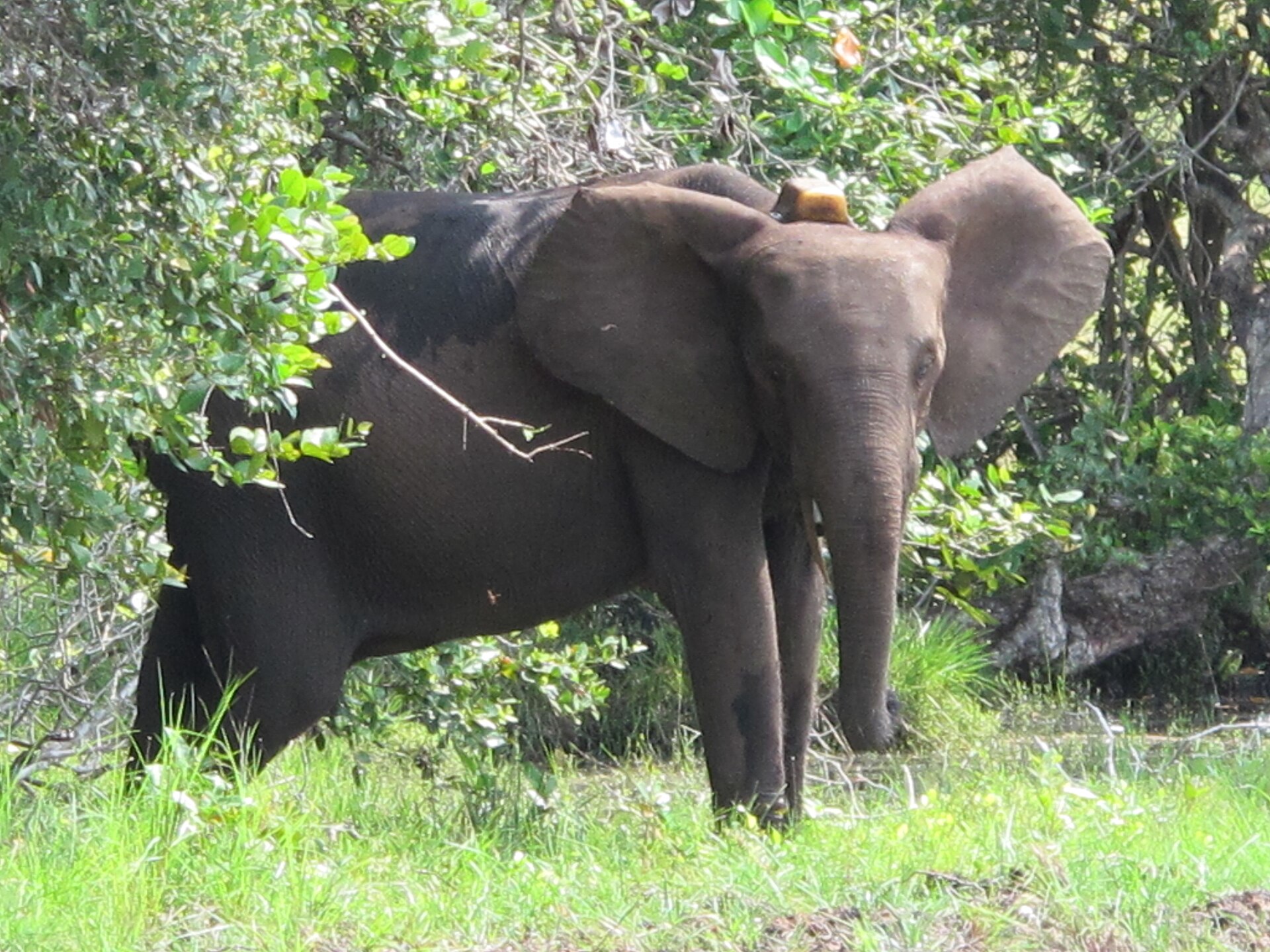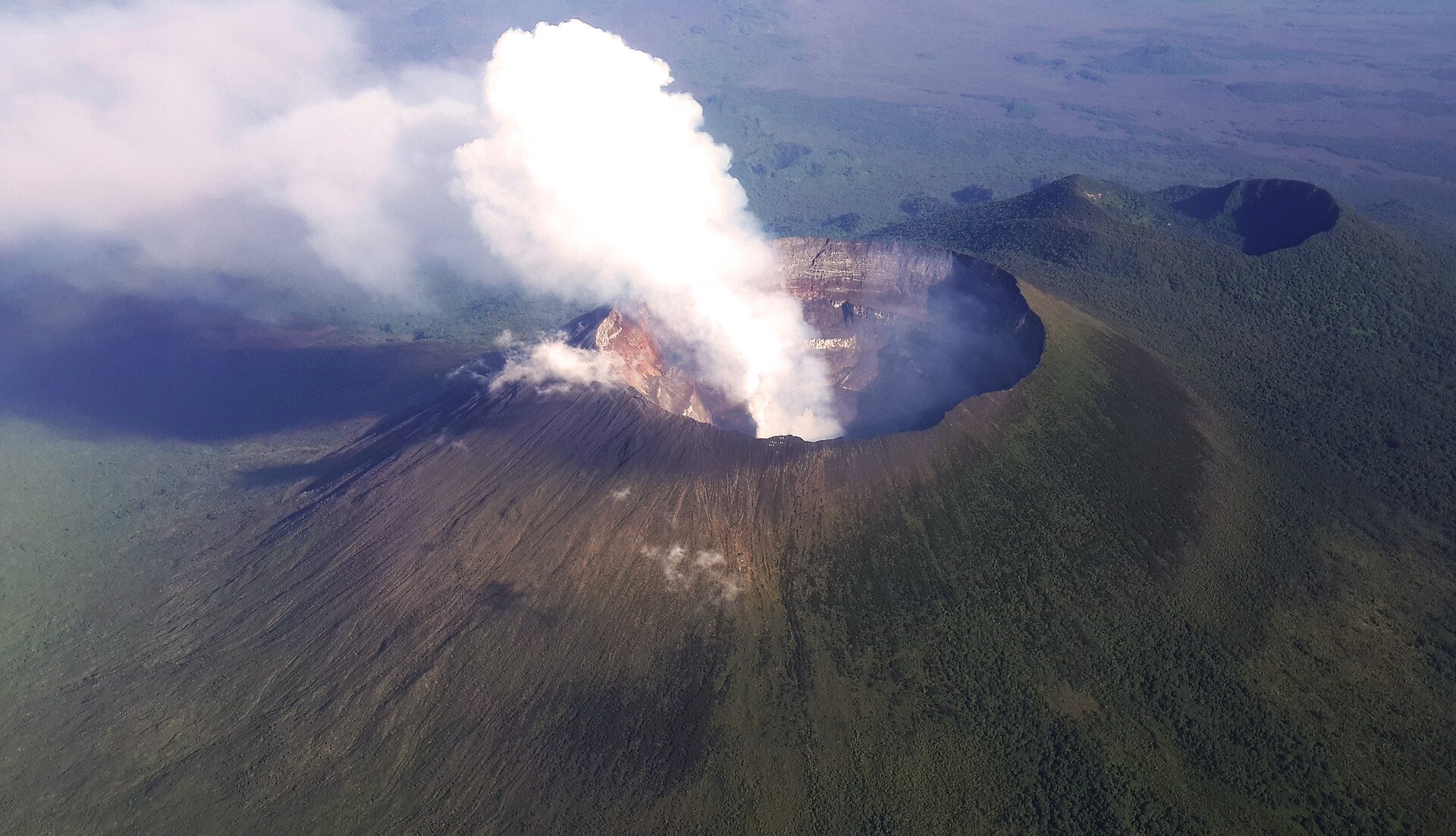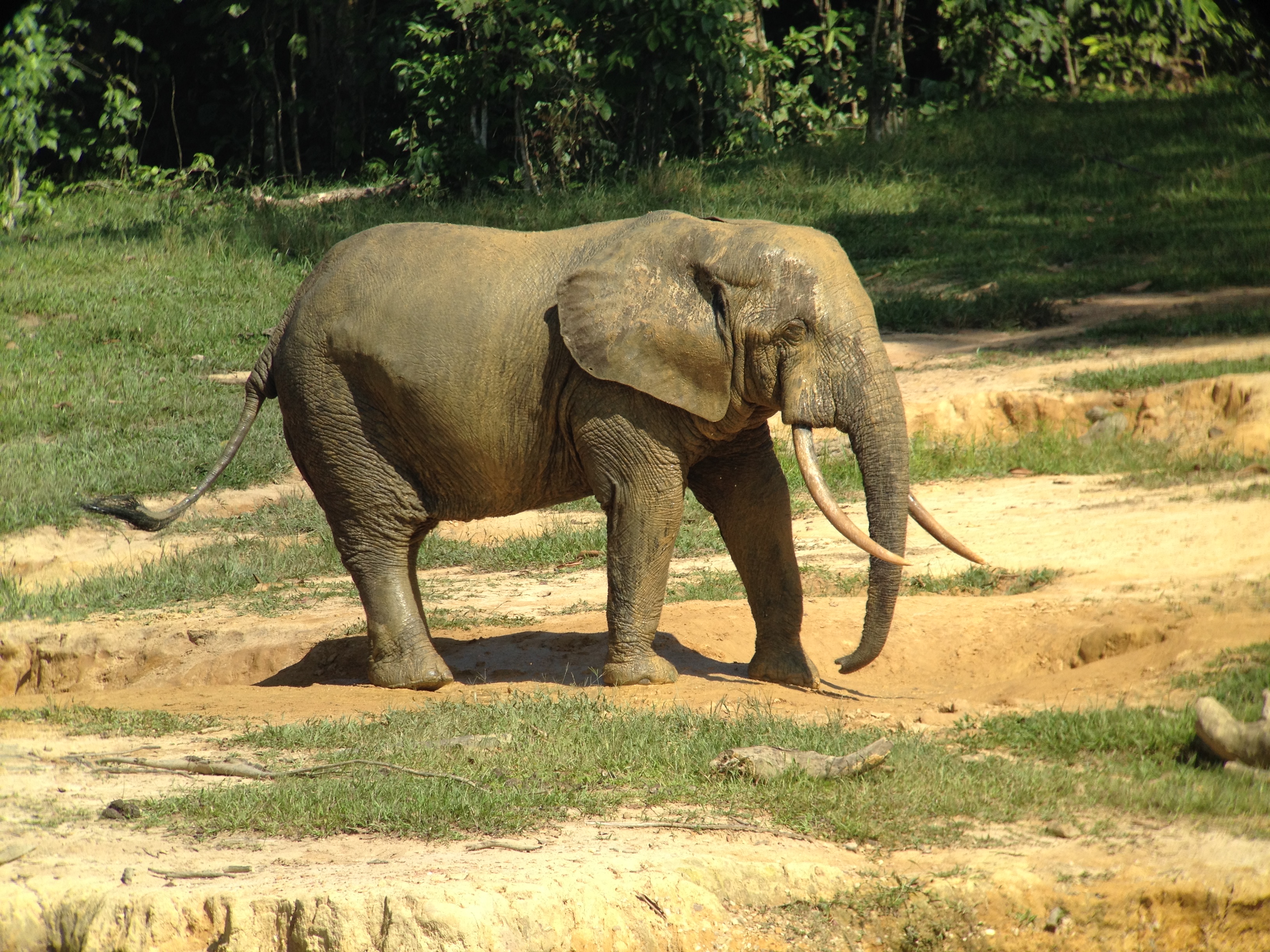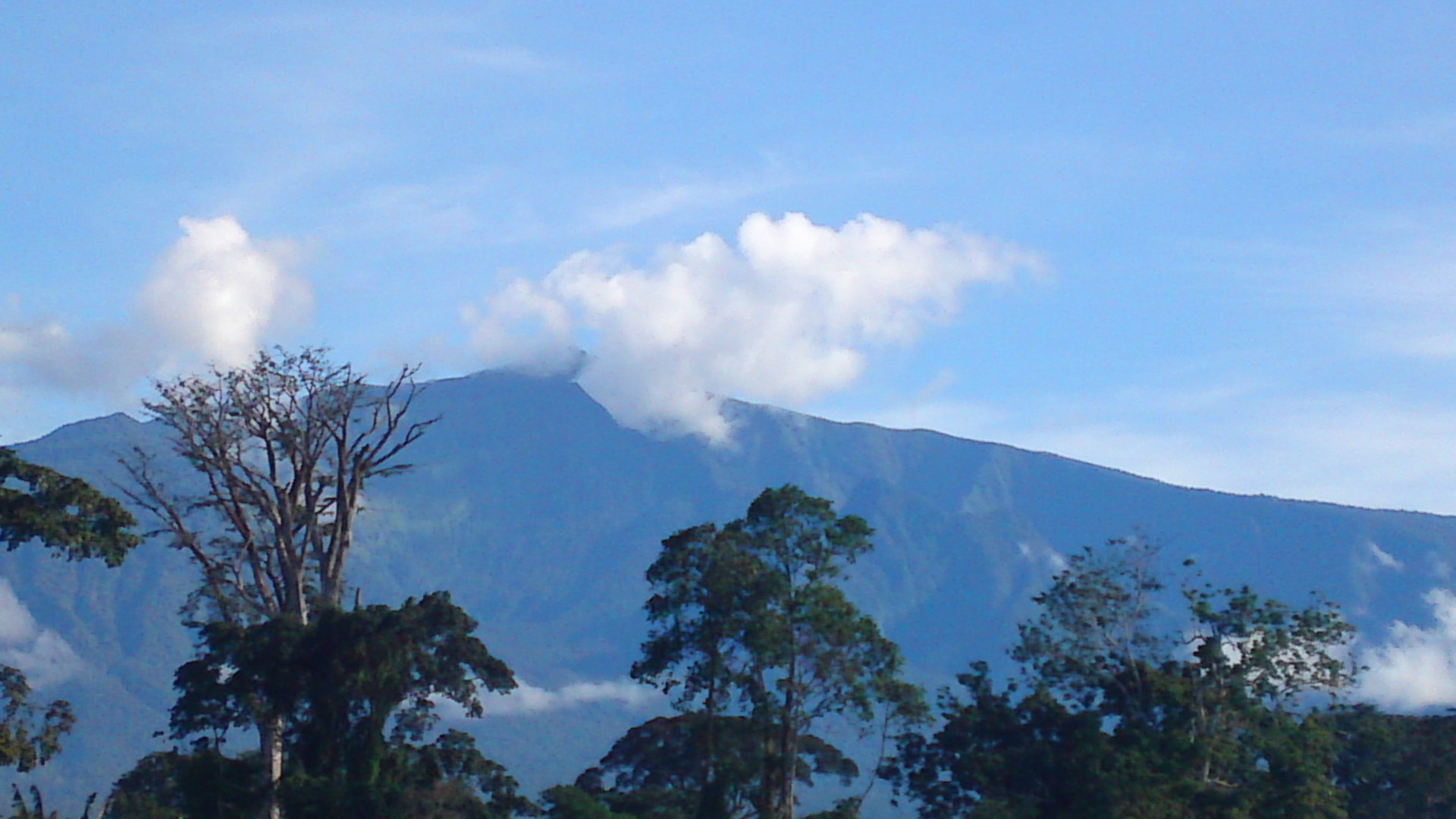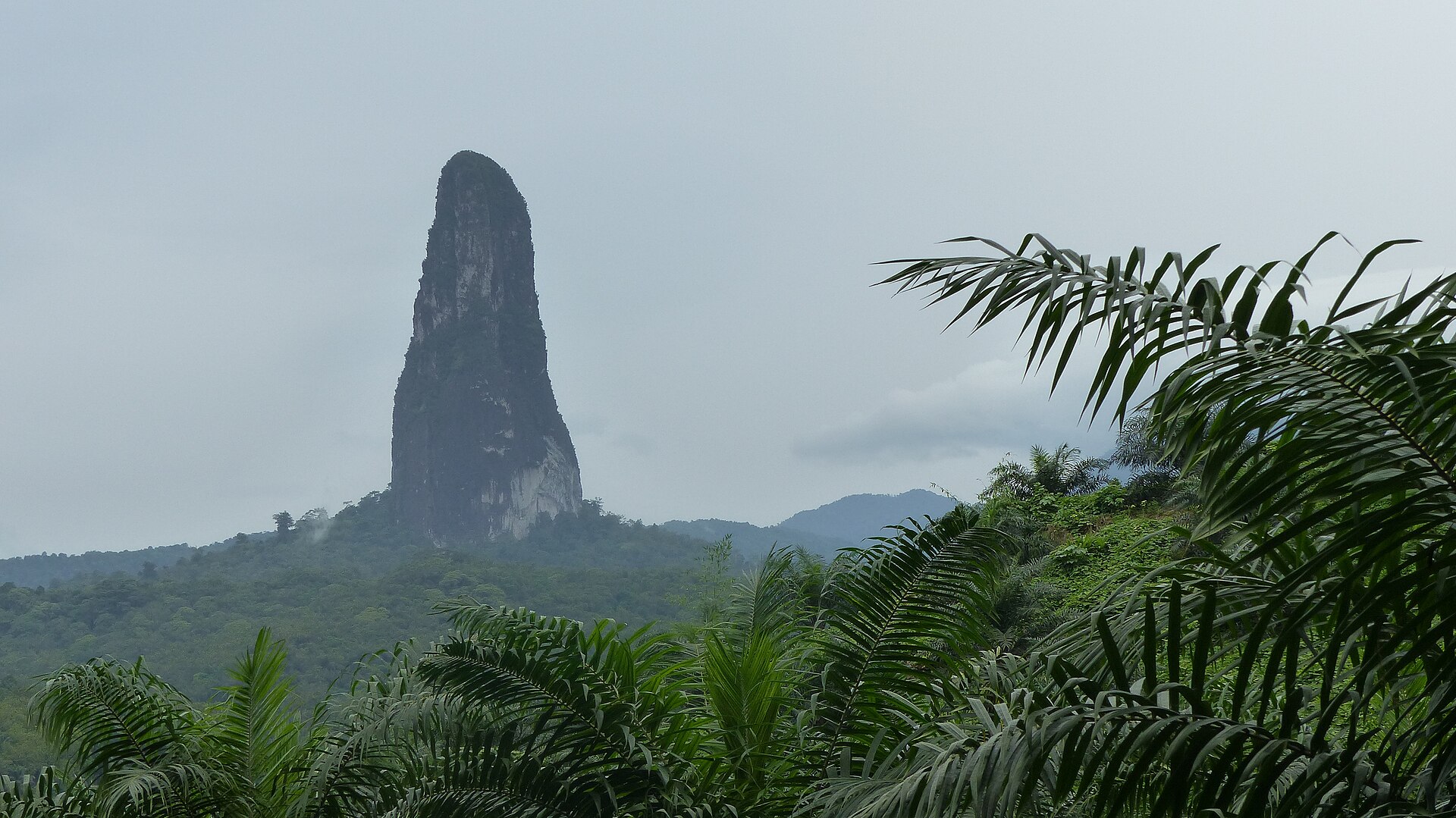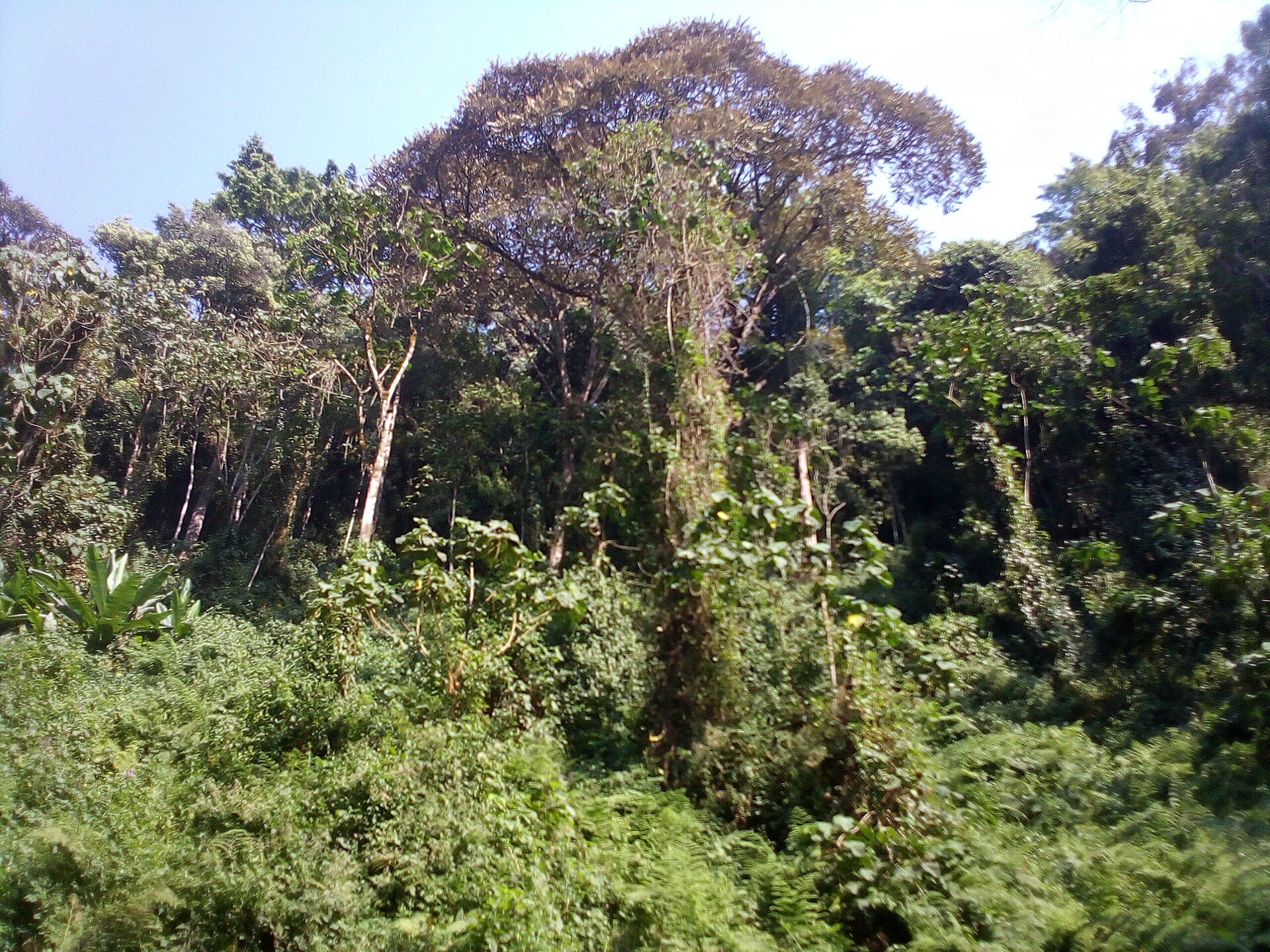

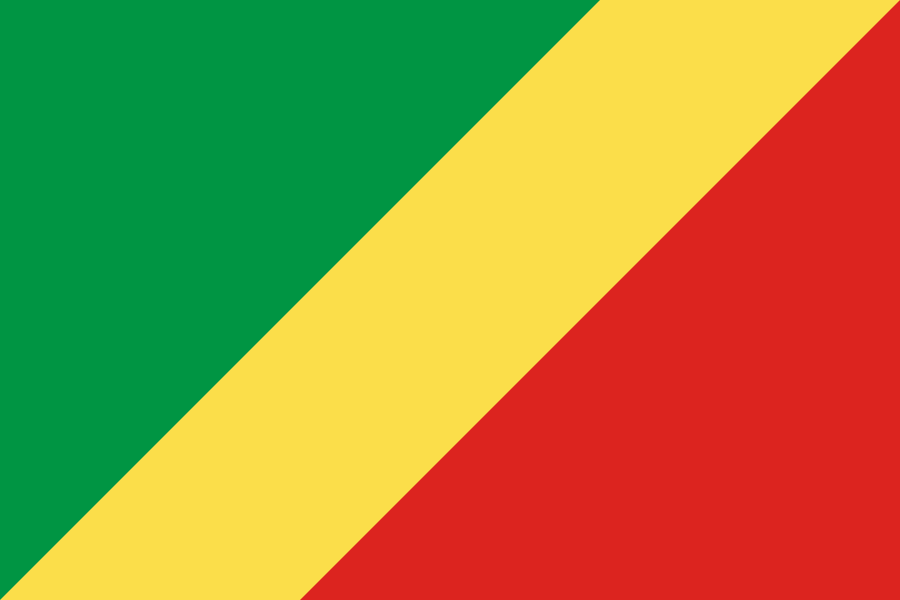
The Republic of the Congo, or Congo-Brazzaville, is a small oil-rich country in Central Africa holding some of the last untouched equatorial forest on the planet. Odzala-Kokoua National Park is one of the finest places anywhere to watch western lowland gorillas and forest elephants. Brazzaville and Kinshasa face each other across the Congo River, the closest pair of national capitals in the world. The country is steadier than the neighbouring DRC but still demanding: expensive, poorly served by infrastructure and almost devoid of tourist facilities.
Where to go
#Brazzaville
The capital sits on the bank of an enormous river, and the promenade gives you a clear view across to Kinshasa on the far side. See the Basilica of Sainte-Anne and the Nabemba Tower while you are here. The Total and Makélékélé markets deliver the full noise and colour of urban Central Africa.
Pointe-Noire
The country's ocean port and oil capital, worth a trip for the Atlantic beaches. The mood is considerably more relaxed than in the capital, with decent nightlife and good seafood restaurants. Take in the Notre-Dame cathedral while you are there.
Ouésso
The northern outpost, and where you go if you are heading into untouched jungle. The town is the jumping-off point for Odzala-Kokoua and Nouabalé-Ndoki national parks. You reach it by road on the RN2 or on one of the infrequent domestic flights.
Dolisie
The third city, ringed by the scenic hills and forests of the Mayombe. It is an important rail junction on the line from the capital down to the coast. Travellers often break the journey here to see southern Congo's landscape.
Oyo
A town in the centre of the country, known as the president's birthplace. It has unusually good roads and, by local standards, developed infrastructure among green hills. It works well as a rest stop on the long haul north.
What to see
#Odzala-Kokoua: This is the reason most people come, for the gorillas and forest elephants. The park offers eco-lodges in the middle of primary rainforest, and the open bai clearings let you watch wild animals with nothing between you and them.
Nouabalé-Ndoki: A wild block of forest in the north where dozens of gorillas and buffalo gather at the Mbeli Bai clearing. This is for genuine explorers ready to walk long distances. Infrastructure is minimal and the wilderness is entirely intact.
The Congo River: The second-largest river in the world by volume, and a pirogue trip on it is essential. The ferry from Brazzaville to Kinshasa takes only twenty minutes but requires a DRC visa. Sunset from the promenade is the thing to catch in a day in the capital.
Basilica of Sainte-Anne: The most beautiful building in the city, with an unusual emerald-green roof and fine stained glass. Entry is free and it is a good quiet pause in a noisy capital. The architecture combines European tradition with African motifs.
Léfini Reserve: Much closer to the capital than the northern parks, and home to rescued gorillas. The savannah and rivers here suit a short two-day trip and make an accessible alternative to a full northern expedition.
Mayombe forest: The mountain range the railway crosses on its way to the ocean. The views from the train window over dense jungle and deep ravines rank among the best rail scenery in Africa, and are reason enough to take the train.
Prices
#Currency: The official money is the CFA franc (XAF), pegged to the euro, which makes euros by far the best currency to bring. Dollars are changed at banks but the notes must be new, undamaged and unstamped.
Cards: Congo runs on cash almost everywhere. Visa and Mastercard work only at a couple of expensive capital hotels and at airline offices, and Amex nowhere. Ordinary shops and taxis have no terminals at all.
ATMs: You can withdraw at BGFI branches in Brazzaville and Pointe-Noire. Daily limits are low and fees noticeable, and in the provinces you will not find a working machine.
Exchange: Use official banks, which trade on weekday mornings. Street changers at the markets may quote slightly better, but the fraud risk is too high to be worth it.
Tipping: Around ten percent at proper restaurants. In local eateries and taxis, rounding up is enough, though anyone who helps you with anything will expect something.
| Item | Price (USD) |
|---|---|
| Lunch at a local cafe | 6.00 |
| Restaurant dinner | 25.00 |
| Litre of petrol | 1.10 |
| Water 1.5 l | 0.80 |
| Local beer 0.6 l | 2.50 |
| Taxi across town | 5.00 |
| Train to Pointe-Noire | 35.00 |
| SIM card with data | 7.00 |
| Guesthouse per night | 55.00 |
| Coffee in the capital | 3.00 |
| Kilo of bananas | 1.50 |
| Ferry to Kinshasa | 20.00 |
| Grilled fish from a stall | 4.00 |
| National park entry per day | 35.00 |
Getting around
#Getting there: Air France flies non-stop from Paris to both Brazzaville and Pointe-Noire, which is the smoothest route from Europe. Ethiopian via Addis Ababa, Turkish via Istanbul and Royal Air Maroc via Casablanca all serve the country, and from North America you connect through Paris or Addis.
Trains: La Gazelle runs between Brazzaville and Pointe-Noire. It is a superb way to see the Mayombe hills, but expect delays; first class takes about twelve hours if things go well.
Buses: Scheduled coaches link the main cities and southern roads are largely sealed. Brazzaville to Oyo takes around five hours. In the rains, the northern dirt roads turn to swamp.
Domestic flights: Services connect Brazzaville, Pointe-Noire and Ouésso, and flying north saves days of driving. Buy at the ticket office rather than online, which frequently fails.
Taxis: The blue cabs in the capital have no meters, so agree the fare before you get in. A short hop across the centre runs two to three thousand francs, and hiring a car with driver for the day works out better value.
Car hire: Driving yourself is not advisable given the traffic. The sensible option is a 4x4 with a local driver at 100 to 150 dollars a day, which also smooths over police checkpoints and breakdowns.
On the river: Pirogues and barges work the Congo and its tributaries and remain the main route north. Tourist boats operate from the capital's waterfront, and river travel shows you villages no road reaches.
Where to stay
#In the capital: Brazzaville has everything from international chains to modest apart-hotels. Look in Poto-Poto or near the riverfront. Service often lags well behind the price, so adjust expectations.
Guesthouses: The best choice if you want to save money and meet other travellers and expats. The popular ones are plain but have a courtyard, a restaurant, reliable security and their own water supply.
Eco-lodges: Odzala and Nouabalé-Ndoki have expensive all-inclusive lodges, and they are the only comfortable way to stay deep in the forest with guides. Book directly, several months ahead.
Provincial towns: Smaller places have a couple of local hotels and no more. Facilities are basic, meaning a fan rather than air conditioning and unreliable hot water, but rates drop to 30 or 40 dollars.
Booking: The big platforms miss most properties, especially at the budget end. Messaging the owner directly is often the only way, and always get a written confirmation, since you will need it for the visa.
What to expect: Power and water cuts are simply normal. Even good hotels can lose internet for a day, so bring a strong power bank and accept a degree of digital detox outside the capital.
What to eat
#Staples: Cooking here is built on cassava, which becomes fufu. Try pondu, a thick stew of cassava leaves with oil and fish. It is filling and very cheap in any roadside eatery in the country.
Fish and meat: On the Brazzaville waterfront order grilled capitaine or tilapia, served with fried plantain and fiery pili-pili sauce. Avoid untreated water and ice, which is the fastest way to lose several days of your trip.
Moambe: The celebration dish, chicken in a thick palm nut sauce. It is rich and distinctive, and the capital's restaurants still make it to traditional recipes.
Bushmeat: You will see game on menus, but decline meat from wild forest animals. It is a conservation issue and a genuine disease risk, so stick to beef or chicken.
Drinks: Primus and Ngok lager are sold everywhere, cost little and are perfectly good in the heat. Cities also stock French wine, though imported alcohol is expensive.
Fruit: Markets are piled with pineapple, mango and papaya of exceptional quality. Buy them whole and wash them yourself with bottled water, which is both the safest and the cheapest way to snack.
Safety
#Overall: The Republic of the Congo is one of the steadier countries in the region, but do not switch off. Petty theft is common in the cities, so do not wave a phone around in a crowd, and use a licensed taxi after dark.
The Pool region: The area south of the capital was unstable for years. Before planning to drive from Brazzaville to the coast, check recent news; it is calm now but that can change quickly.
Checkpoints: Military patrols on the highways are frequent. Be polite, do not argue and never photograph them. Checks pass quickly if your passport and insurance are in order.
Malaria: Present across the whole country year-round. Take prophylaxis, use repellent and check the window screens in your room before you go to sleep.
Wildlife: In the northern forest the hazards are snakes and insects. Wear high closed boots and thick trousers for gorilla trekking, follow the guide exactly and never approach forest elephants alone.
Photography: There is a strict ban on photographing any government or military installation, including bridges, airports and anyone in uniform. Breaking it can cost you your camera or your liberty, so read your own government's travel advisory before you go.
Etiquette and culture
#The Sapeurs: La Sape is the country's calling card, men in immaculate designer suits against a backdrop of poor neighbourhoods. They are usually friendly and happy to pose if you show genuine interest.
Music: Congolese rumba plays out of every speaker. Brazzaville is one of Africa's great music cities with constant live shows, and dancing is simply part of life, so join in.
Greetings: Greeting someone is a whole ritual involving a long handshake and enquiries after the family. Learning a couple of phrases in Lingala wins people over instantly, and respect for elders outranks any formal rule.
Photographing people: Always ask first. Many Congolese either believe a photograph takes something from them or simply do not want to be an attraction. Buying something small from a market trader usually settles the matter.
Religion: People here are devout, and Sunday service is the event of the week. Cities empty out and choirs carry from the churches. Dress modestly if you go and respect the way the congregation does things.
Markets: Haggling is expected, especially if you are a mundele, the local word for a white foreigner. Treat it as a game, smile, and expect to halve the opening price on souvenirs or clothing.
Connectivity
#Language: French is the state language and the only one that will get you through officialdom, hotels and transport. English is barely understood even in expensive hotels, there are no English menus or signs, and travelling here without functional French or a properly loaded offline translator is genuinely difficult.
Lingala: This is the language of the markets and the music, spoken across Brazzaville and the north. Knowing "mbote" and "matondo" will make friends of taxi drivers. In the south, Kituba is more common.
SIM cards: MTN and Airtel are the operators, and you buy a SIM with your passport at an official shop, including at the airport. Data bundles are cheap, though quality drops outside the cities and vanishes in the parks.
eSIM: International eSIMs have limited partner coverage here and are not a reliable substitute. Buy a local SIM instead, and treat connectivity in the north as absent rather than slow.
Internet: Guesthouse wifi is often paid and intermittent. Mobile 4G in Brazzaville is reasonably stable and is the better bet, but in the provinces expect nothing.
Power and messaging: Bring a large power bank, since cuts last hours and remote lodges run generators only in the evening. Sockets are European type, and all correspondence with hotels and drivers happens over WhatsApp, in French.
Phrasebook
#| English | French / Lingala | Pronunciation |
|---|---|---|
| Hello | Bonjour | bon-ZHOOR |
| Hello (Lingala) | Mbote | m-BO-teh |
| Thank you | Merci | mer-SEE |
| Thank you (Lingala) | Matondo | ma-TON-do |
| How are things? (Lingala) | Sango nini? | SAN-go nee-NEE |
| All good (Lingala) | Malamu | ma-LA-moo |
| How much is it? | C'est combien? | say kom-BYEN |
| That's expensive! | C'est cher! | say SHAIR |
| White foreigner | Mundele | moon-DEH-leh |
| Help me | Aide-moi | ed-MWAH |
| I don't understand | Je ne comprends pas | zhuh nuh kom-PRAHN pah |
| Water | L'eau | loh |
| Food | La nourriture | la noo-ree-TOOR |
| Mate (slang, Lingala) | Moninga | mo-NEEN-ga |
| Beer | Bière | bee-YAIR |
| Where are the toilets? | Où sont les toilettes? | oo son lay twa-LET |
| Please | S'il vous plaît | seel voo PLEH |
| Goodbye | Au revoir | oh ruh-VWAR |
| Yes | Oui | wee |
| No | Non | non |
| It's delicious! | C'est bon! | say BON |
| Sorry | Pardon | par-DON |
Good to know
#Yellow fever: A valid international vaccination certificate is mandatory. Without the yellow card you will be refused boarding or turned back at the border, so sort it well before you fly.
Consular help: Only a limited number of countries maintain a mission in Brazzaville, and many cover Congo from Kinshasa or Libreville. Find out which applies to your passport and note the number down.
Connectivity: Install a reliable VPN before departure, since social media is occasionally throttled. Offline Google Maps are essential in cities where the street layout defeats live navigation.
Medical kit: Bring everything you might need, including antibiotics and treatment for food poisoning. Specific drugs are hard to source locally, and you want a large supply of repellent and sunscreen.
Documents: Carry paper copies of your passport, visa and vaccination certificate, kept separately from the originals, plus scans in the cloud. Police check documents in the street and on the highways.
Crossing to Kinshasa: The ferry leaves from the Beach port in central Brazzaville. Border formalities can eat a couple of hours, and your DRC visa must already be in your passport before you turn up.
Frequently asked questions
#Yes, nearly all nationalities do, and you should arrange it in advance at a Congolese embassy or through the e-visa system. You will need a passport valid for six months, photographs, a hotel booking or invitation letter, and a yellow fever certificate.
It is one of the calmer countries in the region, but basic precautions are essential. Avoid walking alone at night, keep valuables out of sight and carry document copies. The Pool region south of the capital is currently stable but worth checking before you drive through it.
Euros are the best option, since the CFA franc is pegged to the euro at a fixed rate. Dollars can be changed at capital banks but must be new and pristine. Cards are accepted almost nowhere, so plan on cash.
A yellow fever certificate is mandatory for entry and you will not be admitted without it. Hepatitis and typhoid cover are strongly advised, along with malaria prophylaxis and comprehensive travel insurance.
The domestic flight takes about an hour and is the fastest option. For the experience, La Gazelle train runs through the Mayombe hills in roughly twelve hours. Coaches also run, but road conditions can stretch the journey considerably.
You cannot organise it entirely independently, since park access is only permitted with guides. You can, however, reach Ouésso or Mbomo on your own and negotiate on the spot with the park administration or an eco-lodge, which comes out cheaper than a package.
French is the state language and the medium for everything official. English is very rarely understood, so functional French or a good phrasebook is close to essential. A few greetings in Lingala are useful everywhere in daily life.
The dry season from June to September has the least rain and the best road conditions, and is the prime window for the national parks. A shorter dry spell from December to February also works well for the north.
Updated
The data on this page goes out of date. Visa rules and permitted stays, border requirements, prices and budgets, transport and local conditions all change fast, and we do not re-check every page every day. We show the date of our last check where we have one, but before you travel, verify with official sources: the country’s consulate, its immigration service, its e-visa portal and your carrier.